Jan 29, 2015
Today, the International Commission of Jurists (ICJ) salutes Dr Lydia Foy for her courage and determination and congratulates her for bringing legal recognition of transgender people finally within reach in Ireland.
During a period spanning over two decades, Dr Lydia Foy was forced repeatedly to bring legal proceedings challenging the Irish authorities’ continuing failure to issue her with a new birth certificate reflecting legal recognition of her female gender.
The ICJ intervened before the High Court in Dublin as an amicus curiae, a friend of the court, in the latest case brought by Dr Foy. She sought an effective remedy against the Irish State’s violation of her right to respect for her private life as a result of the authorities’ failure to make provisions for the legal recognition of her acquired gender identity.
Today, 29 January 2015, the Irish state and Dr Foy formally settled the case before the High Court following the publication and introduction of the Gender Recognition Bill in the Oireachtas (the Irish Parliament), and the start of the parliamentary debate on the Bill.
It is high time that Ireland enacts legislation giving effect to their international human rights legal obligation to legally recognize people’s preferred gender identity. The ICJ urges the Irish authorities to proceed promptly to ensure that trans persons in Ireland obtain as of right a birth certificate showing the gender that they prefer. In doing so, the Irish authorities should ensure that each person, whatever their gender identity, may enjoy their internationally recognized human rights without discrimination, including their right to respect for their private life.
Background
In October 2014 the ICJ filed written legal submissions in Dr Foy’s case to assist the High Court in the determination of certain points of law relating to the right to an effective national remedy under the European Convention on Human Rights. The organization’s submissions addressed, among others, the requirement that a domestic remedy be effective in law and practice. Namely, that a remedy must be accessible and enable the enforcement of the substance of the rights at stake; and that the national authority before which recourse is had must be capable of granting an appropriate relief, and offer reasonable prospects of success.
The ICJ was represented pro bono by Gráinne Gilmore BL and Elizabeth Mitrow and Wendy Lyon of KOD Lyons Solicitors.
Jan 20, 2015
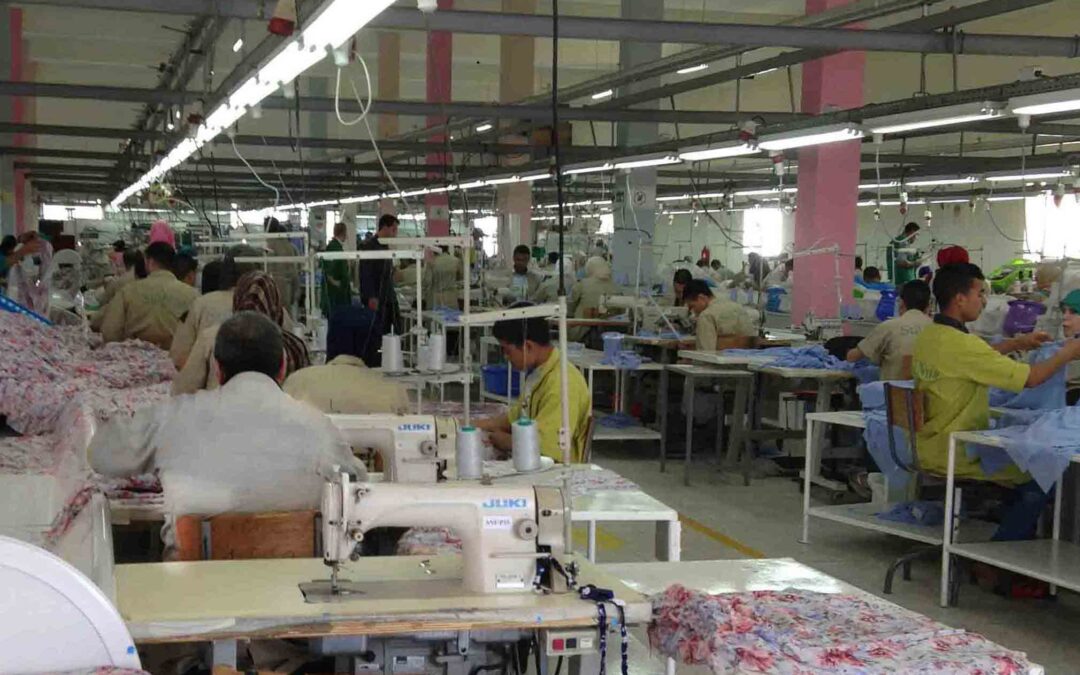
Ahead of the upcoming review of the 4th periodic report of Morocco on its implementation of the International Covenant on Economic, Social and Cultural Rights, the ICJ has submitted an information to the UN Committee in charge of monitoring the Covenant.
The ICJ submission to the UN Committee on Economic, Social and Cultural Rights draws the Committee’s attention to major concerns over the protection of rights in the country, including the right to just and favourable conditions, the right to an adequate standard of living or the right to health.
The ICJ submission aims at contributing to the development of a list of issues that the Committee will address to the State of Morocco to obtain further information on specific aspects dealt with in the State report.
The Committee will examine Morocco’s fourth periodic report and the State’s response to its list of issues before issuing recommendations at the 56th session in September 2015.
Morocco-ICJ submission to CESCR-Advocacy-legal submission-2015-FRE (full text in PDF)
Read also:
Report: impact of special economic regimes on social rights in Morocco
Morocco: ICJ concludes mission on access to justice for social rights
Morocco: access to justice for economic, social and cultural rights
Dec 19, 2014
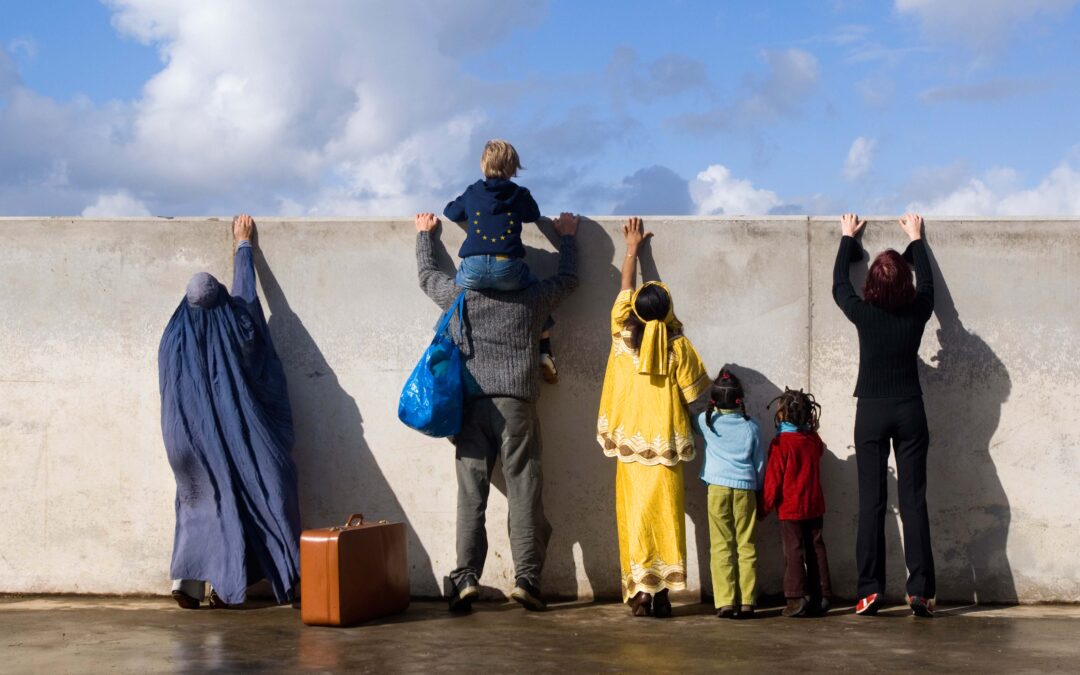
The ICJ presented today an expert opinion on the international law applicable to administrative detention of non-citizens before the Constitutional Court of Bosnia and Herzegovina.
The ICJ submitted its expert opinion in the appeal no. AP-2742/13 related to Mr Imad Al-Husin. This expert opinion focuses on the international legal obligations and standards, as well as the attendant jurisprudence applicable to Bosnia and Herzegovina pertaining to the basis for the detention of foreign nationals for the purpose of impeding unlawful entry or performing a deportation.
This ICJ expert opinion was written at the request of the applicant’s lawyers. It was produced pro bono in full independence.
Bosnia-ICJ Expert Opinion Const Court-Advocacy-Legal submission-2014-ENG (read the expert opinion in English)
Bosnia-ICJ Expert Opinion Const Court-Advocacy-Legal submission-2014-BOS (read the expert opinion in Bosnian)

Nov 4, 2014
The ICJ has submitted information to the UN Committee on Economic, Social and Cultural Rights in advance of its examination of Nepal’s third periodic report under the International Covenant on Economic, Social and Cultural Rights (ICESCR).
The ICJ submission draws the Committee’s attention to issues concerning Nepal’s failure to comply with certain obligations under ICESCR as a result of the fact that Nepal has undermined the independence and effective functioning of the National Human Rights Commission. The submission also voices concern over Nepal’s failure to provide a) an effective remedy for forced displacements during the armed conflict, and b) adequate rehabilitation support and compensation for human rights abuses during the armed conflict.
The Committee will examine Nepal’s third periodic report during its 53rd session in November 2014, following which it will adopt Concluding Observations setting out recommendations to the Government.
Nepal-CESCR53-LegalSubmission-2014-EN (download full ICJ submission in PDF)
Oct 21, 2014
The ICJ, REDRESS and OMCT have submitted information to the UN Committee against Torture in advance of its examination of the combined 3rd to 5th periodic reports of the USA under the Convention against Torture and Other Cruel, Inhuman or Degrading Treatment or Punishment (CAT).
The joint submission draws the Committee’s attention to issues concerning the CIA ‘Rendition, Detention and Interrogation’ Program, detention at Guantanamo Bay, and Military Commission proceedings. It identifies key violations of the CAT, including those concerning:
- Article 13 on the right to complain of torture;
- Article 14 on the right to redress for torture and ill-treatment;
- Article 9 concerning failures to cooperate with criminal investigations in other jurisdictions;
- Article 15 on the prohibition against the use of evidence obtained by torture.
The Committee will examine the combined third to fifth periodic reports of the United States of America during its 53rd session in November 2014, following which it will adopt Concluding Observations setting out recommendations to the Government.
USA-CAT53-LegalSubmission-2014-EN (download full submission in PDF)

![Smoke rises after an Israeli air strike on the village of Taybeh in southern Lebanon [Source: Al Jazeera]](https://www.icj.org/wp-content/uploads/2026/03/Screenshot-2026-03-20-at-15.56.24-300x200.png)