Dec 15, 2020 | News
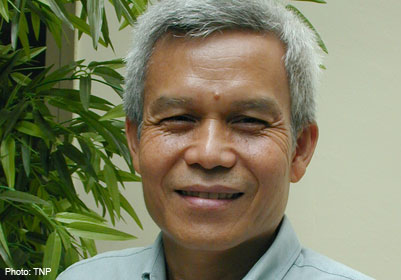
On 15 December 2020, the eighth anniversary of the enforced disappearance of Lao civil society leader Sombath Somphone, the ICJ joined 53 organizations and 19 individuals in reiterating its calls on the Government to reveal his fate and whereabouts and to investigate his and all other cases of alleged enforced disappearance in the country.
The statement condemned the Government’s ongoing failure to adequately investigate all allegations of enforced disappearance in Laos, which has been compounded by years of near complete lack of commitment to address this serious crime or provide an effective remedy or reparation to its victims and their families.
In June 2020, during the third Universal Periodic Review (UPR) of Laos, the Government refused to accept all five recommendations that called for an adequate investigation into Sombath’s enforced disappearance. The Government failed to support another eight recommendations that called for investigations into all cases of alleged enforced disappearances in Laos. Despite the government accepting that “the search for missing Lao citizens, including Sombath Somphone, is the duty of the Lao government”, it has failed to evidence any political will to effectively execute or fulfill this duty.
Sombath Somphone was last seen at a police checkpoint on a busy street in Vientiane on the evening of 15 December 2012. Footage from a CCTV camera showed that Sombath’s vehicle was stopped at the police checkpoint and that, within minutes, unknown individuals forced him into another vehicle and drove him away in the presence of police officers. CCTV footage also showed an unknown individual driving Sombath’s vehicle away from the city center. The presence of police officers at Sombath’s abduction and their failure to intervene strongly indicates State agents’ participation in Sombath’s enforced disappearance.
Lao authorities have repeatedly claimed they have been investigating Sombath’s enforced disappearance, but have failed to disclose any new findings to the public since 8 June 2013. They have not met with Sombath’s wife, Shui Meng Ng, since December 2017. No substantive information about the investigation has been shared by the authorities with Ng or Sombath’s family, indicating that, for all intents and purposes, the police investigation has been de facto suspended.
The statement reiterated a call for the establishment of a new independent and impartial investigative body tasked with determining Sombath’s fate and whereabouts, with the authority to seek and receive international technical assistance to conduct a professional and effective investigation in accordance with international standards. This is a call which multiple signatory organizations have been making since his enforced disappearance in 2012.
The statement further urged the Lao government to ratify the International Convention for the Protection of All Persons from Enforced Disappearance (ICPPED), which Laos signed in September 2008; incorporate its provisions into the country’s legal framework, implement it in practice, and recognize the competence of the Committee on Enforced Disappearances to receive and consider communications from or on behalf of the victims.
The full statement is available here.
Contact
Kingsley Abbott, ICJ Senior Legal Adviser, e: kingsley.abbott(a)icj.org
Dec 15, 2020 | Agendas, Events
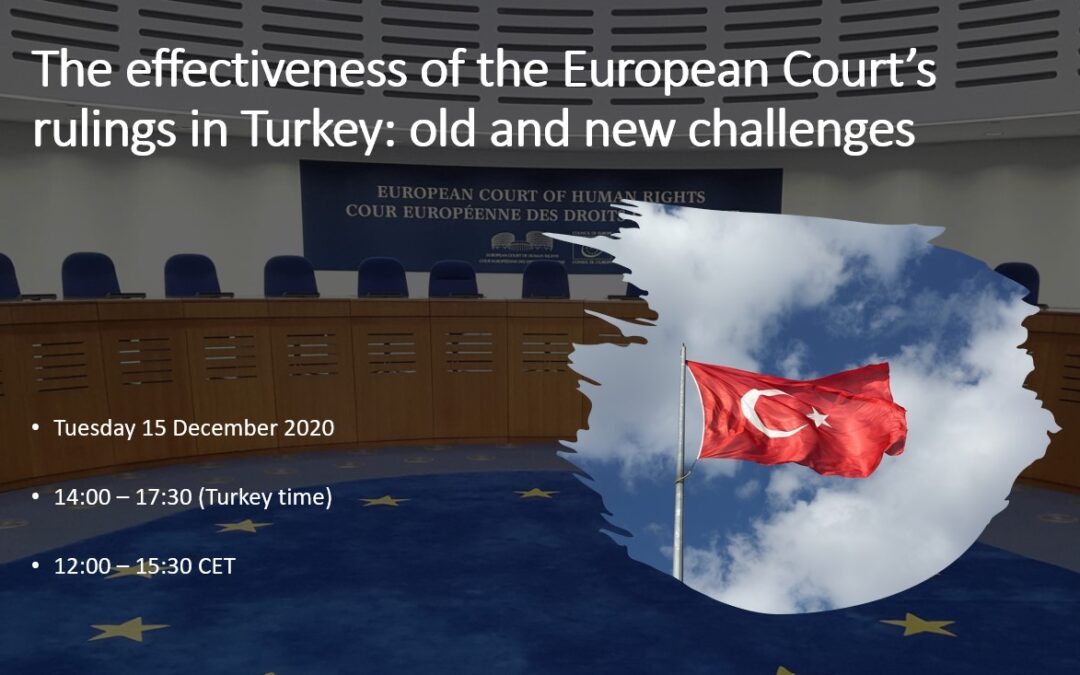
Join ICJ and IHOP in this online conference in which Turkish and international experts will discuss the current challenges in Turkey to promptly and fully implement the judgments of the Court and how to improve the execution of judgments in the Turkish national system.
Turkey is the Council of Europe member state with the third highest number of European Court of Human Rights judgments awaiting execution, after the Russian Federation and Ukraine. As a Party to the European Convention on Human Rights and founding member of the Council of Europe, Turkey has committed to implement all rulings of the Strasbourg Court, yet the results of this commitment are far from clear.
Implementation of the European Court judgments is a key indicator in Europe of a country’s commitment to human rights and the rule of law, and failure to implement judgments fundamentally undermines access to justice for victims of human rights violations by watering down the impact of their litigation before the Court.
Failure to implement judgments through general implementation measures reforming laws, policies and practices, also leads to persistent, repeated violations of the States’ obligations under the European Convention on Human Rights. This problem has existed for many years in Turkey, leaving long-standing systemic human rights problems unsolved. Recently civil society has denounced the Turkish authorities’ attempts to circumvent the general application of certain new key rulings of the European Court.
In this conference, Turkish and international experts will discuss the current challenges in Turkey to promptly and fully implement the judgments of the Court and how to improve the execution of judgments in the Turkish national system:
– Justice Egbert Myjer, Former Judge at the European Court of Human Rights and Commissioner of the ICJ,
– Prof. Philip Leach, Professor of Human Rights Law at Middlesex University
– George Stafford, Director at European Implementation Network
– Emma Sinclair-Webb, Turkey Director, Human Rights Watch
– Kerem Altıparmak, ICJ Legal Consultant
– Ayşe Bingöl Demir, Turkey Human Rights Litigation Support Project Co-Director, Lawyer
– Prof. Başak Çalı, Professor of International Law, Co-Director of the Centre for Fundamental Rights at the Hertie School
The event will be introduced and moderated by Feray Salman, General Coordinator of the Human Rights Joint Platform (IHOP), Roisin Pillay, Director of the ICJ Europe and Central Asia Programme, and Massimo Frigo, Senior Legal Adviser of the ICJ Europe and Central Asia Programme.<
TO REGISTER WRITE TO: ihop@ihop.org.tr
IHOPICJ-ZoomConference-ExecutionECtHRTurkey-Agenda-2020-ENG (download the agenda in English)
IHOPICJ-ZoomConference-ExecutionECtHRTurkey-Agenda-2020-TUR (download the agenda in Turkish)
The event is part of the REACT project: implemented jointly by ICJ and IHOP, this project seeks to support the role of civil society actors in turkey in ensuring effective access to justice for the protection of human rights. This project is funded by the European Union. The views expressed in the event do not necessarily reflect the opinion of the EU.
Dec 11, 2020 | Доклад миссии установления фактов, Доклады, Новости, Публикации
Сегодня, опубликовав отчет о миссии, касающейся судебной системе Таджикистана, Международная комиссия юристов (МКЮ) призвала госорганы Таджикистана принять комплексные меры по реформированию судебной системы с тем, чтобы обеспечить ее независимость и уполномочить эффективно защищать права человека.
В отчете МКЮ Без сдержек и противовесов: судебная система Таджикистана дается подробный обзор организации и функционирования судебной системы при отправлении правосудия в Таджикистане. На основе анализа законов и информации, полученной во время миссии в страну МКЮ обнаружила некоторые слабости судебной системы и предложила рекомендации относительно институтов и процедур судебного управления.
«В Таджикистане имели место неоднократные попытки реформировать систему правосудия, как мы это смогли продемонстрировать в докладе, но к настоящему моменту они не привели к созданию судебной системы с сильными институтами самоуправления, которые были бы способны защищать и поддерживать судей в независимом применении права», – сказал Тимур Шакиров, старший правовой советник Программы МКЮ по Европе и Центральной Азии. «Среди многих иных вопросов, доклад указывает на проблему практически полного отсутствия оправдательных приговоров в Таджикистане, феномен, который можно рассматривать как лакмусовую бумажку судебной власти в ее способности выполнять свою роль самостоятельно», – подчеркнул он.
В докладе содержится ряд рекомендаций, в частности, в отношении руководящих органов судебной власти, системы назначения судей, судебной гарантии пребывания в должности и дисциплинарной системы для судей, с целью повышения независимости и эффективности судебных органов.
«Существует очевидная необходимость в осуществлении серьезной институциональной реформы для изменения системы саморегулирования, которая позволила бы осуществлять независимое отправление правосудия без формальной или неформальной проверки или одобрения со стороны руководства», – добавил Шакиров.
Отчет доступен на русском и английском языках.
Дополнительная информация:
В апреле и мае 2019 года МКЮ провела исследовательскую миссию по вопросам независимости судебной власти в Таджикистане. По завершении миссии МКЮ выразила озабоченность относительно независимости судей, а также функционирования судебных институтов и процедур в законодательстве и на практике.
Tajikistan-Judiciary-Publications-Reports-Mission report-2020-RUS
Dec 10, 2020 | News
ICJ’s 16 Days of Activism Against Gender-Based Violence underscores the need for justice systems to be more responsive.
The campaign commenced on 25 November, International Day for the Elimination of Violence against Women, and ended today on Human Rights Day. The campaign presented “an impact story” poster series, Facebook live interviews and opinion pieces on gender-based violence in Africa, Asia, Latin America, Middle East and North Africa.
The campaign underscored that harmful traditional norms and gender stereotypes provide the backdrop for the systematic and widespread abuse of women and girls’ human rights across the globe; it also emphasized the need to maintain essential services for survivors of gender-based violence (GBV) during COVID-19 lockdowns, including ensuring a continuum of adequate criminal justice response.
“Violence against women and girls around the world has increased in this global pandemic. Governments have a duty to ensure that their response to Covid-19 includes preventing such violence. For instance, all hotline services for reporting domestic violence must remain open during lockdowns and be considered part of essential services. The police must likewise be ready to act speedily if required. They must be made aware that women and girls are especially vulnerable at this time,” said ICJ Commissioner Ambiga Sreenevasan from Malaysia.
Throughout the campaign, the ICJ also underscored the ongoing need to support civil society organizations’ and women human rights defenders’ response to GBV, as well as the need to strengthen the judiciary’s capability to respond to GBV by enhancing its reliance on international human rights law and standards.
“The authorities have turned a blind eye to gender-based violence for far too long and it is time to prioritize combatting the phenomenon effectively, including through legislative reform and awareness raising,” said ICJ Commissioner Marwan Tashani from Libya.
Poster Series
Imrana Jalal (ICJ Commissioner, Fiji)
Mikiko Otani (ICJ Commissioner, Japan)
Ambiga Sreenevasan (ICJ Commissioner, Malaysia)
Marwan Tashani (ICJ Commissioner, Libya)
Kaajal Ramjathan-Keogh (ICJ Africa Regional Programme Director)
Saïd Benarbia (ICJ MENA Programme Director)
Carolina Villadiego Burbano (ICJ Legal and Policy Adviser, Latin America)
Sexual Violence & Criminal Law in Zimbabwe
Amy Alabado Avellano (Family Court Judge, Philippines)
Savithri Wijesekera (Executive Director of Women In Need, Sri Lanka)
Nahla Haidar (ICJ Commissioner, Lebanon)
Saman Zia-Zarifi (ICJ Secretary General)
Tshabalala v S (South African Constitutional Court judgment on the doctrine of common purpose applied to rape)
Infographic
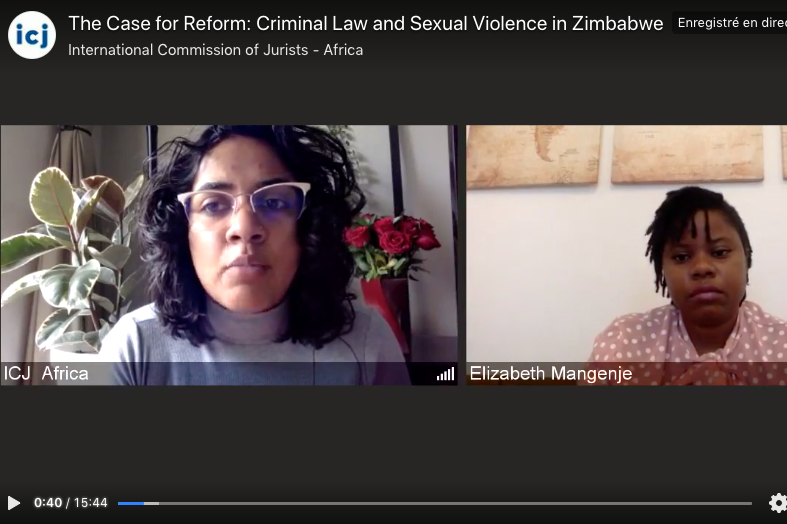
The Case for Reform: Criminal Law and Sexual Violence in Zimbabwe
Facebook Live Interviews
The Case for Reform: Criminal Law and Sexual Violence in Zimbabwe with Elizabeth Mangenje (ICJ Legal Adviser, Africa Regional Programme)
The State of GBV in the Middle East and North Africa Region with Nahla Haidar El Addal (ICJ Commissioner, Lebanon)
Women’s Access to Justice – What does justice mean for women in the context of COVID-19? (Joint initiative of ICJ, UN Women, and OHCHR)
Women’s Access to Justice – What does justice mean for women prisoners? (Joint initiative of ICJ, UN Women, and OHCHR)
Op-eds
Mujeres, justicia y pandemia, by Carolina Villadiego Burbano
Yet another treaty aims to protect African women. But how will it be enforced? by Nokukhanya Farisè and Tanveer Rashid Jeewa
Dec 8, 2020 | News
The ICJ with partners has intervened in European Court for Human Rights case concerning collective expulsions, including of children from Croatia.
The ICJ and partners (European Council for Refugees and Exiles, Dutch Council for Refugees, AIRE Center and the Hungarian Helsinki Committee) intervened today in the case S.B. v Croatia (Application No. 18810/19) at the European Court for Human rights.
The case concerns collective expulsion of migrants, including children, from Croatia to Bosnia and Herzegovina, and excessive use of force.
In the intervention, the organisations have highlighted international legal standards regarding the principle of non-refoulement and prohibition of collective expulsions. They also point to the need to take into account specific vulnerabilities of asylum seekers and children in order to guarantee enhanced safeguards afforded to them under international and EU law.
The organisations also note that in operations aimed at imposing restrictions on freedom of movement or deprivation of liberty to carry out an expulsion, the use of force should only be employed exceptionally and subject to strict necessity and proportionality requirements. The lack of resistance to law enforcement officials, per se renders force unlawful.
Please find the third party intervention here.