Dec 8, 2020 | Editorial, Noticias
Una opinión editorial de Carolina Villadiego Burbano, Asesora Legal para America Latina de la CIJ, y Carlos Lusverti, Consultor de la CIJ.
Los derechos humanos de las mujeres se han visto severamente afectados durante la pandemia de COVID-19 alrededor del mundo y Venezuela no es una excepción a esta tendencia. En medio de la crisis de derechos humanos generalizada que el país atraviesa desde 2014, y que ha tenido un impacto desproporcionado en mujeres y niñas, la COVID-19 y las medidas extraordinarias adoptadas por el gobierno para atender la pandemia han agravado la situación de derechos humanos de las mujeres.
En octubre de 2020, esta situación fue reconocida por el Consejo de Derechos Humanos de las Naciones Unidas.
Teniendo en cuenta lo anterior, en este texto analizamos las afectaciones al derecho a la salud y al derecho a una vida libre de violencia que enfrentan las mujeres en Venezuela durante la pandemia, con el objetivo de presentar algunas recomendaciones.
La salud de las mujeres está en riesgo
De acuerdo con la Comisión Económica para America Latina (CEPAL), las mujeres en Latinoamérica están significativamente afectadas durante la pandemia, y en el sistema de salud “representan el 72,8% del total de personas ocupadas en ese sector en la región.”
En Venezuela, el sistema de salud ya se encontraba en estado crítico antes que la pandemia envolviera al país, y la COVID-19 ha agravado la situación.
Durante varios años, distintas instituciones y organizaciones han descrito el terrible estado del sistema de salud en el país, y desde que estalló la pandemia, la Comisión Interamericana de Derechos Humanos (CIDH) y Human Rights Watch han mencionado la necesidad de proteger el derecho a la salud de las personas en Venezuela; la Alta Comisionada de las Naciones Unidas para los Derechos Humanos ha dado declaraciones similares.
Durante la pandemia, los limitados servicios de salud fueron direccionados principalmente a atender la COVID-19.
Esto tuvo como resultado una disminución del acceso a los servicios de salud no relacionados con COVID-19, incluidos aquellos necesarios para la atención en salud sexual y reproductiva y para mujeres gestantes.
Así, un grupo de 91 organizaciones de la sociedad civil y varias personas expresaron su preocupación por casos de mujeres embarazadas con sospechas de COVID-19 a quienes se les habría negado la atención oportuna, así como la suspensión de servicios pre y post natales en los centros de salud materna.
Este grupo destacó la necesidad de que las autoridades garanticen los derechos de las mujeres y niñas, incluyendo la atención en salud sexual y reproductiva.
Además, en cantidades alarmantes, las mujeres son responsables principales del cuidado de personas dependientes o que necesitan cuidado en el hogar, lo que las ha expuesto a riesgos adicionales durante la pandemia.
La Asociación Venezolana de Educación Sexual Alternativa (AVESA), una ONG local, ha documentado cómo las medidas de encierro y cuarentena han incrementado las tareas domésticas y han profundizado los problemas económicos que las mujeres ya estaban experimentando antes de la pandemia.
Las autoridades venezolanas deben actuar de manera más efectiva para proteger los derechos de las mujeres durante la pandemia de conformidad con sus obligaciones legales derivadas del derecho internacional de los derechos humanos.
En efecto, Venezuela es parte de varios tratados de derechos humanos que prevén estas obligaciones, incluyendo la Convención Interamericana para Prevenir, Sancionar y Erradicar la Violencia contra la Mujer (“Convención de Belém do Pará”) y la Convención de la ONU sobre la Eliminación de todas las Formas de discriminación contra la mujer (“CEDAW” por sus siglas en inglés).
El Comité de la CEDAW ha declarado que los Estados deben “[a]bordar el impacto desproporcionado de la pandemia en la salud de la mujer”; “[g]arantizar los servicios de salud sexual y reproductiva en tanto servicios esenciales”; “[p]roteger a las mujeres y niñas de la violencia de género”; y “[f]ortalecer la respuesta institucional, la difusión de información y la recopilación de datos”, entre otras recomendaciones.
Adicionalmente, las autoridades venezolanas deben adoptar políticas para la prevención y tratamiento de la COVID-19 con perspectiva de género, considerando un enfoque interseccional y los diferentes contextos en los que las mujeres pueden vivir en Venezuela, incluyendo la situación de pobreza.
Además, las autoridades deben asegurar la asignación adecuada de recursos al sistema de salud, garantizar el derecho a la salud del personal de la salud, y brindar servicios de salud sexual y reproductiva para todas las mujeres.
El hogar es un lugar inseguro para las mujeres
En 2019, organizaciones de la sociedad civil venezolana reportaron que en el 58.6% de los casos de violencia contra las mujeres, los perpetradores fueron sus parejas. Adicionalmente, en un 7,7% de los casos, los ataques fueron perpetrados por exparejas. De acuerdo con el monitoreo de medios que realiza COTEJO, durante ese año, 107 mujeres fueron víctimas de feminicidios.
El representante en Venezuela del Fondo de Población de las Naciones Unidas (UNFPA) dijo que, durante el primer semestre de 2020, ocurrieron más feminicidios que muertes por COVID-19. Por su parte, el Ministerio Público reportó el ingreso de 185 causas del delito de feminicidio durante 2020.
De otro lado, desde el inicio de la pandemia y hasta comienzos de octubre, la mayoría de juzgados y tribunales estuvieron cerrados, por lo cual, las mujeres han enfrentado mayores obstáculos para acceder a la justicia durante la pandemia.
Además, la Oficina de la ACNUDH dijo en julio que ha observado “una falta de diligencia debida en los procesos de investigación relativos a casos de violencia de género” en Venezuela.
Asimismo, según informó el Centro de Justicia y Paz (CEPAZ), una ONG local, existen varios obstáculos para el acceso a la justicia de las mujeres, incluida la evasión de las responsabilidades policiales cuando las mujeres acuden a presentar denuncias o la falta de respuestas rápidas por parte las fiscalías que dan lugar a que las víctimas tengan que pedir información de manera reiterada.
Por este motivo, las autoridades venezolanas deben abordar la violencia de género de conformidad con sus obligaciones legales derivadas del derecho internacional, incluyendo aquellas contenidas en la Convención Interamericana de Belem Do Pará que enfatiza que el Estado debe “actuar con la debida diligencia para prevenir, investigar y sancionar la violencia contra la mujer” (artículo 7b).
Asimismo, las autoridades venezolanas deben garantizar que el sistema de justicia brinde servicios a las mujeres víctimas de violencia de género, e incluir la adopción de protocolos específicos para la investigación efectiva y la protección de las víctimas.
Las autoridades deben cumplir la reciente sentencia de la Corte Interamericana de Derechos Humanos (caso Lopez Soto de 2018), y deben implementar programas de capacitación permanentes y obligatorios para los servidores públicos que laboran en el sistema judicial y en el sistema de salud, y que intervienen en los casos de mujeres víctimas de cualquier tipo de violencia.
Finalmente, las autoridades venezolanas deben permitir la acción legítima de las organizaciones humanitarias, quienes pueden brindar ayuda humanitaria con perspectiva de género durante la pandemia.

Dec 7, 2020 | News
The ICJ called today on the Council of the EU, the European Parliament and the European Commission to give a central role to the judiciary and ensure effective judicial remedies to prevent and redress human rights violations, in the draft Regulation on “Terrorist Content Online”.
The call comes as the final phase of the negotiations between the EU institutions on the draft Regulation begin this Thursday 10 December..
The ICJ is concerned that without procedures that incorporate core rule of law principles in the Regulation, there is a risk of improper and overreaching suppression of content that will undermine freedom of expression and other rights online.
Among the ICJ ‘s concerns with the proposal as it currently stands, is that it does not provide for mandatory judicial authorization and judicial review of orders by national authorities to remove content online deemed to be “terrorist”.
According to draft Article 4 of the proposal, national “competent authorities” would have the power to issue a decision requiring a hosting service provider to remove “terrorist” content or disable access to it within one hour from receipt of the removal order.
The ICJ considers that the power to issue removal orders to censor content online within an hour, without prior judicial authorisation, risks leading to excessive, arbitrary or discriminatory interference with the freedoms of expression, religion, assembly and association online as well as with rights to privacy and data protection of persons residing or present in EU Member States.
Under international and EU human rights law applicable to EU Member States, any restriction on these rights must be prescribed by law so that their application is clear and foreseeable, must be necessary and proportionate in the circumstances of the individual case, must be non-discriminatory and must allow access to an effective remedy. Furthermore, any person must have access to a court of law to access justice against breach of their rights.
The proposal, if approved without modifications, would allow – as yet undetermined – national authorities to order the removal of content online from host service providers, even if these are residing outside of their State or of the EU, without any authorisation from a court of law.
Furthermore, the definition of “terrorist” content relies heavily on a recent EU Directive on Combatting terrorism (2017/541) that allows for excessively wide criminalisation of forms of expression, such as the offence of “glorification of terrorism”.
The proposal is also likely to trigger a jurisdictional quagmire among EU Member States that will in the medium term be counter-productive to the objective of countering terrorism.
The power of a non-judicial authority of a Member State to issue orders binding upon public and private entities of another Member State, without prior judicial approval on the constitutionality and lawfulness of the order and of the rights in each jurisdiction, will seriously undermine mutual trust among jurisdictions, a core principle for the functioning of the EU Area of Freedom, Security and Justice. This is particularly important in light of the serious threats to the Rule of Law occurring in certain EU Member States that are already impairing the functioning of other EU criminal cooperation instruments, such as the European Arrest Warrant.
The ICJ therefore calls on all the actors heading the negotiations on the EU Regulation on “Terrorist Content Online” to adjust the current draft in order to provide for a central role of judicial authorities of EU Member States in the scheme of the Regulation by requiring designated “competent authorities” under Article 4 of the Regulation to be judicial authorities; to provide for judicial review, and to include adequate safeguards in the Regulation to ensure the protection of the human rights of any person subject to their jurisdiction.
Background
In 2018 the European Commission published a proposal of the EU Regulation on “Terrorist Content” Online. The aim of the Regulation is to establish uniform rules to prevent the misuse of hosting services for the dissemination of terrorist content online.
The Regulation has been since discussed by the Council of the EU and the European Parliament, who are currently in the final stages of negotiation in the EU legislative procedure in closed sessions among representatives of the European Parliament, the Council of the EU and the European Commission (the so-called trialogue procedure).
Contact:
Karolina Babicka, Legal Adviser, Europe and Central Asia Programme, e: karolina.babicka(a)icj.org
Massimo Frigo, Senior Legal Adviser, Europe and Central Asia Programme, e: massimo.frigo(a)icj.org, t: +41 79 749 99 49
Dec 2, 2020 | News
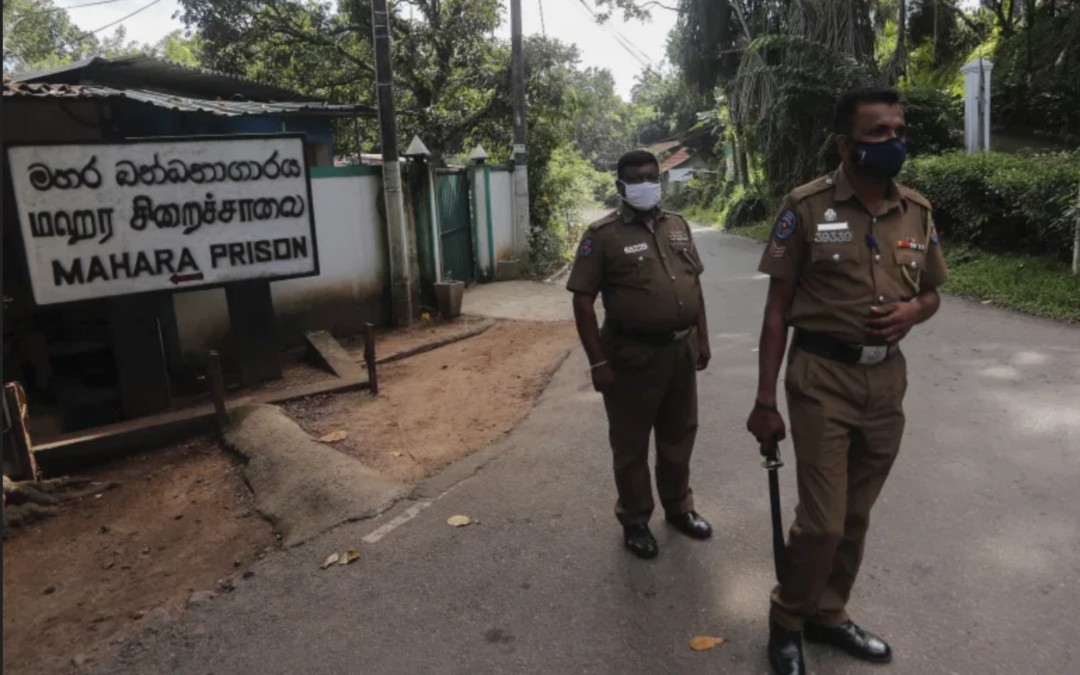
The ICJ today called upon the Sri Lankan authorities to conduct a prompt, thorough and impartial investigation into the events involving the use of lethal force by prison guards at Mahara prison on 29 and 30 November, which left at least nine inmates killed and over hundred others injured.
The action by the guards was taken in response to unrest resulting from protests by inmates over unsafe and overcrowded conditions in the context of the COVID-19 pandemic.
The ICJ also called for urgent measure to address the unsafe conditions in Sri Lankan prisons to protect the right to health and life, including where necessary by releasing detainees.
“The tragic events of Mahara prison are a consequence of the failure of the Sri Lankan authorities to effectively address the situation of prison conditions, which has turned into a full blown human rights and public health crisis in the wake of the COVID-19 pandemic”, said Ian Seiderman, ICJ Legal and Policy Director
The unrest was the culmination of a series of protests staged by the prisoners demanding an increase in coronavirus testing and new isolation facilities for infected prisoners. According to Senaka Perera, President of the Committee for Protecting the Rights of the Prisoners, around 200 inmates of the Mahara prison have been infected with COVID-19.
While the Minister of Rehabilitation and Prison Reforms and the Inspector General of Police have instructed the Criminal Investigation Department to probe the unrest caused at the Mahara Prison, the Minister of Justice has formed a separate five-member committee, chaired by former High Court Judge Kusala Saorini Weerawardena, to conduct its own investigation.
The ICJ recalls that under international law, the use of lethal force by State authorities is only permissible where strictly necessary to protect life. This standard should govern any investigation, and those responsible for unlawful conduct resulting in death or injuries to prisoners must be held to account.
“In addition to ensuring accountability and redress for any violations at the Mahara Prison, the authorities must act swiftly to meet the legitimate grievances of detainees throughout the country”, added Ian Seiderman.
“An effective response is not optional, but is necessary to fulfill the State’s legal obligation to provide for equal access to healthcare and health services to prisoners, who are among the most vulnerable to the ravages of COVID-19 in highly unsafe, enclosed and overcrowded environments.” Seiderman added.
The incident follows a wave of similar protests in several other prisons in the country. On 18 November, five inmates who were under quarantine at the Old Bogambara Prison attempted to break out and an inmate was shot dead when the prisoner officers opened fire at the fleeing inmates.
The ICJ called for the release of detainees who are particularly at risk of losing their life or suffering severe health effects from COVID-19. This would also apply to other convicts who could be released without compromising public safety, such as those sentenced for minor, non-violent offences.
Background
Speaking in Parliament on Monday, Minister of Rehabilitation and Prison Reforms Dr. Sudharshini Fernandopulle stated that the Government has taken steps to reduce overcrowding by directing COVID-19 positive prisoners out of the prisons to the Welikanda Hospital and moving all women inmates to the Kandakadu Rehabilitation Centre. She also stated that a mechanism has been put in place to obtain bail for those arrested for minor drug offences. Moreover, a presidential pardon has been granted to over 600 convicts of minor offences who were in remand due to their inability to pay the required fine.
Several UN bodies, including the WHO and OHCHR, came together in recommending that States consider limiting the deprivation of liberty including pretrial detention, to a measure of last resort and enhance efforts to resort to non-custodial measures.
Contact
Osama Motiwala, Communications Officer – osama.motiwala(a)icj.org
Nov 29, 2020 | News
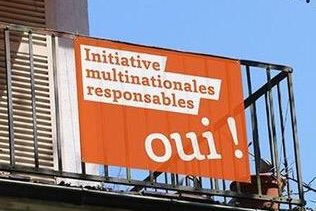
The ICJ and its Swiss section (ICJ-CH) regret the results of the vote yesterday in Switzerland rejecting the popular initiative for responsible businesses. While the majority of the popular vote approved the initiative, there was no majority of voters in a majority of Cantons.
Under the Swiss constitution, to be approved, such initiative amending the constitution needs the majority of both the popular vote in Switzerland and in a majority of Cantons part of the Swiss Confederation.
“The strong support gathered by this initiative, expressed in the majority of the popular vote, is encouraging, and a strong message that the Federal Parliament and the Federal Council must take into account in the process of the implementation of the legislative counter-proposal and in further legislation,” said Marco Sassòli, ICJ commissioner.
A counter-proposal prepared by the Federal Council is now approved by default. This counter-proposal foresees due diligence obligations for some sectors and reporting obligations, but no specific legal liability.
The proposed initiative would have required multinationals based in Switzerland to respect human rights also abroad, and to carry out human rights due diligence to identify and prevent potential human rights abuses.
It would also have clarified the multinational’s legal responsibility for violations of internationally recognized human rights and environmental norms by enterprises that it controls and operate abroad.
Nov 23, 2020 | Agendas, Events, News
The International Commission of Jurists and the Human Rights Joint Platform (IHOP) invite you to a Zoom workshop where Turkish and international experts will discuss the plight of violence against women in Turkey in light of the Council of Europe’s Istanbul Convention.
To participate, please register by writing an email to ihop@ihop.org.tr (the Human Rights Joint Platform).
Join our great panel of speakers:
– Dame Silvia Cartwright, ICJ Commissioner, former Governor-General and High Court judge of New Zealand, former CEDAW member
– Prof. Dr. Feride Acar, former Member of CEDAW, former Chair of GREVIO
– Zuzanna Warso, Lawyer, Helsinki Foundation for Human Rights of Poland
– Hülya Gülbahar, Women rights activist, Lawyer
– Nebahat Akkoç, Chair of KAMER Foundation
– Yasemin ÖZ, Lawyer, Kaos GL
– Feray Salman, General Coordinator of the Human Rights Joint Platform (IHOP)
– Massimo Frigo, ICJ Senior Legal Adviser
IHOPICJ-ZoomConference-WomenAccess2Justice-Agenda-2020-ENG (download the agenda in English)
IHOPICJ-ZoomConference-WomenAccess2Justice-Agenda-2020-TUR (download the agenda in Turkish)
The event is part of the REACT project: implemented jointly by ICJ and IHOP, this project seeks to support the role of civil society actors in turkey in ensuring effective access to justice for the protection of human rights. This project is funded by the European Union. The views expressed in the event do not necessarily reflect the opinion of the EU.