Jun 4, 2020 | News
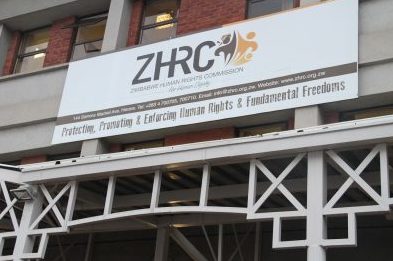
The ICJ today urged the country’s authorities to take immediate measures to fully reconstitute the Zimbabwe Human Rights Commission (ZHRC) after its operations were effectively suspended following the expiry of the terms of office of four of its Commissioners on 7 May 2020.
One Commissioner had already resigned in 2018 meaning that the ZHRC no longer has the constitutionally required quorum for it to make certain decisions that are fundamental to the protection of human rights in Zimbabwe.
“The inability by the ZHRC to fully execute its constitutional mandate has serious implications on the ability of individuals -in particular victims of human rights violations -to access justice,” said Arnold Tsunga, Director of the ICJ Africa Programme.
“The role of ZHRC, as Zimbabwe’s national human rights institution is critical in providing an avenue for redress to victims of human rights violations and the general public,” he added.
Zimbabwe has been witnessing an escalation of human rights violations requiring investigation by a fully functioning and effective Commission.
This spate of human rights violations has had a disproportionate impact on the poor and economically vulnerable in the context of the Covid-19 lockdown measures.
There have been an increase in targeting of human rights defenders, civil society leaders and political opposition, which have included acts of enforced disappearance and torture and other ill-treatment.
The ICJ underlined that while redress for such violations required strong and independent judiciary as a guarantor of human rights, the role of fully functional ZHRC was critical to complement that of the judiciary.
The ICJ called upon the authorities in Zimbabwe, and in particular the Parliamentary Committee on Standing Rules and Orders, to act expeditiously to ensure that the vacant positions are filled without any further delay to enable the ZHRC effectively perform and discharge its constitutional mandate.
The ICJ said that failure by the responsible authorities to act expeditiously to fill the vacant positions violated the core values and principles the Constitution of Zimbabwe, in particular section 324 of the Constitution which provides that “all constitutional obligations must be performed diligently and without delay”.
In addition, the President to fill in any vacant position within three months of death or resignation of a Commissioner. The position of Commissioner Khombe became vacant on the 30 October 2018, and has not been filled to date.
Additional Information
The ZHRC is established as an independent institution under Chapter 12 of the Zimbabwe constitution with the general objective to “support and entrench human rights and democracy; to promote constitutionalism; to promote transparency and accountability in public institutions; to secure the observance of democratic values and principles by the State and all institutions and agencies of government, and government-controlled entities; and to ensure that injustices are remedied.”
On 26 May the Chairperson of the ZHRC, Dr. E.H Mugwadi, wrote a letter notifying “partners and stakeholders” of the retirement of four Commissioners, namely Dr Ellen Sithole (former Deputy Chairperson), Dr Joseph Kurebwa, Kwanele M. Jirira and Japhet Ndabeni-Ncube with effect from 7 May. The Chairperson noted that the retirement had left the Commission lacking the quorum to fulfil its constitutional obligations, particularly with respect to make policy resolutions and the adoption of monitoring and investigation reports. The Commission had also been unable to adopt Commission reports its activities.
International standards for effective and credible National Human Rights Institutions (NHRIs) are contained in the United Nations Principles relating to the Status of National Institutions (Paris Principles), which provide that NHRIs must be adequately resourced with sufficient institutional capacity to perform and discharge their responsibilities.
Contact:
Arnold Tsunga, ICJ Africa Director, t: +263 777 283 249; e-mail: arnold.tsunga(a)icj.org
Blessing Gorejena, ICJ Senior Legal Adviser, t: +263 772 151 989, e-mail: Blessing.Gorejena(a)icj.org
Jun 4, 2020 | News
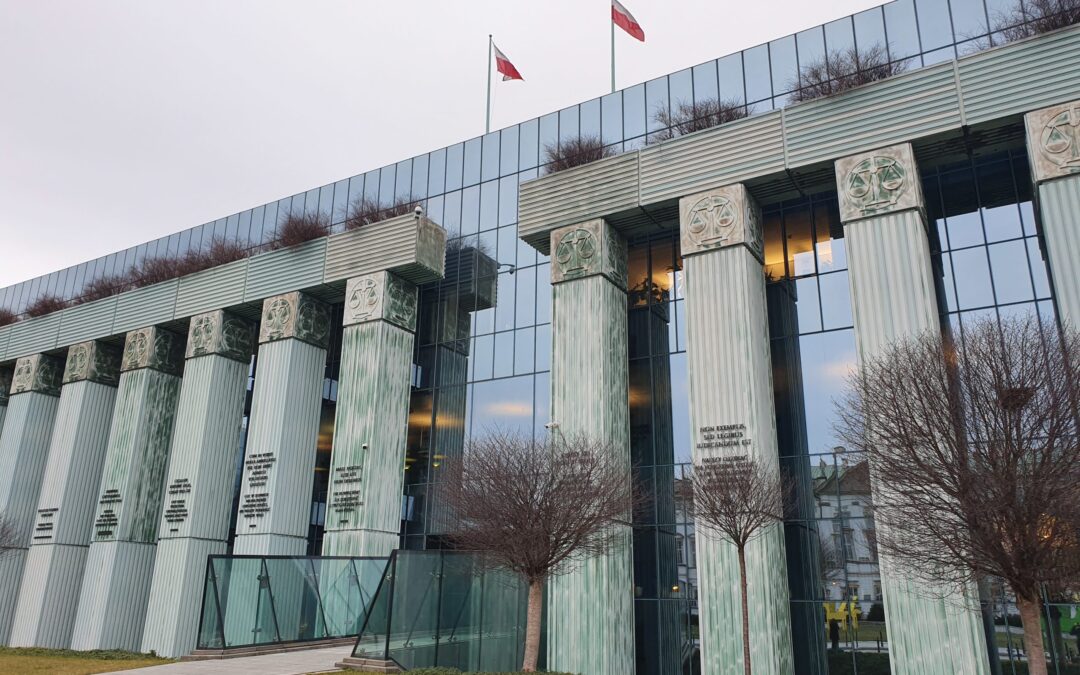
The ICJ today raised concern at the threat of criminal proceedings against Judge Igor Tuleya on charges arising from the judge’s independent exercise of his judicial functions. The ICJ called on the Disciplinary Chamber of the Supreme Court not to lift his immunity at its 9th June hearing.
Judge Tuleya faces prosecution for having allowed the presence of media in a sensitive case concerning the investigations on the 2017 budget vote in the Polish House of Representatives (Sejm) that took place without the presence of the opposition.
He has been charged with ‘failing to comply with his official duties and overstepping his powers’ for having allegedly disclosed a secret of the investigation to ‘unauthorized parties’.
The accusations stem from the initiative of the judge to allow media and the public in the courtroom while issuing his ruling. Usually rulings on investigations are issued behind closed doors in Poland but the criminal procedure code allows judges to make the hearing public “in the interest of justice”.
“Judge Tuleya should not face any criminal proceedings to begin with for his actions in delivering his ruling in public, which is in accordance with national law”, said Massimo Frigo, Senior Legal Adviser for the ICJ Europe and Central Asia Programme. “His immunity must be maintained and the ‘Muzzle Act’ that allowed for these abusive prosecutions should be immediately scrapped.”
These proceedings are the first case of implementation the draconian Act amending the Law on the Common Courts, the Law on the Supreme Court and Some Other Laws, signed into law on 4 February and widely known as the ‘Muzzle Act’, which gave competence to waive judicial immunity to the Disciplinary Chamber of the Supreme Court.
“As highlighted by the recent ruling of the EU Court of Justice, the Disciplinary Chamber of the Supreme Court is not independent and is open to undue influence or interference by political authorities. It should therefore not rule on issues pertaining to the disciplinary or criminal responsibility of judges, including a waiver of their immunity,” Massimo Frigo added.
Background
On 19 November, the Court of Justice of the European Union (CJEU) delivered a ruling in the case A.K. and others (C-585/18, C-624/18, C-625/18), on a preliminary question by the Supreme Court of Poland. The preliminary question asked whether the recently established Disciplinary and Extraordinary Chambers of the Supreme Court could be considered to be independent.
The CJEU ruled that a court cannot be considered independent “where the objective circumstances in which that court was formed, its characteristics and the means by which its members have been appointed are capable of giving rise to legitimate doubts, in the minds of subjects of the law, as to the imperviousness of that court to external factors, in particular, as to the direct or indirect influence of the legislature and the executive and its neutrality with respect to the interests before it and, thus, may lead to that court not being seen to be independent or impartial with the consequence of prejudicing the trust which justice in a democratic society must inspire in subjects of the law.”
Based on this ruling, the Labour, Criminal and Civil Chambers of the Supreme Court declared that the Disciplinary and Extraordinary Chambers of the Supreme Court were not properly constituted and independent.
According to the UN Basic Principles on the Independence of the Judiciary, judges are entitled to a fair hearing in all disciplinary proceedings (principle 17). In order for such a hearing to be fair, the decision-maker must be independent and impartial.
International and European standards on the independence of the judiciary provide that judges should have immunity from criminal prosecution for decisions taken in connection with their judicial functions in the absence of proof of malice, and any procedure for removing immunity must itself be independent (see for instance, UN Special Rapporteur on the Independence of Judges and Lawyers, paras 65-67 and 98; Council of Europe Committee of Ministers, para 68; Consultative Council of European Judges, para 20; ICJ Practitioners Guide no 13, pp. 27-30).
On 26 February 2020, the Polish Prosecutor’s Office requested a waiver of Judge Tuleya’s immunity in order to press criminal charges which might lead to imprisonment. The waiver will be examined on the 9 June 2020 by the Disciplinary Chamber of the Supreme Court appointed by the government.
In an open letter of 5 February 2020, 44 ICJ Commissioners and Honorary Members denounced the recent legislative changes adopted by the Polish government threatening the role and the rights of judges and denouncing the risks faced by legal practitioners when fighting for the rule of law. Two weeks later, the risks highlighted by the letter have become reality for an increasing number of Polish judges, including Judge Tuleya.
Contact:
Massimo Frigo, Senior Legal Adviser, Europe and Central Asia Programme, e: massimo.frigo(a)icj.org, t: +41 22 979 38 00

Jun 3, 2020 | Новости, Статьи
МКЮ призывает российские власти возбудить безотлагательное, независимое и тщательное расследование в связи с применением физической силы в отношении адвокатов Натальи Маговой, Дианы Ципиновой и Людмилы Кочесоковой, а также задержанием Дианы Ципиновой сотрудниками Министерства внутренних дел по Кабардино-Балкарии 21 мая 2020 года. Ответственные лица должны быть привлечены к ответственности, подчеркнула МКЮ.
По словам адвокатов, которые подтверждаются видеозаписями, размещенными в Интернете, они прибыли в ОМВД по Кабардино-Балкарии, чтобы представлять своего клиента, Ратмира Жилокова, еще одного адвоката, который был задержан 20 мая 2020 года, также в результате предполагаемого насилия со стороны полиции. Несмотря на просьбы адвокатов о предоставлении доступа к подзащитному, им не разрешили с ним встретиться. Вместо этого они были удалены из здания ОМВД с применением физической силы рядом сотрудников, что привело к драке. Кроме того, Диана Ципинова была задержана на несколько часов в здании ОМВД. Позже и она, и Ратмир Жилоков были освобождены.
«Применение физической силы в отношении адвокатов с целью воспрепятствовать их свиданию с подзащитным явно противоречит международному праву и стандартам в области прав человека, в том числе касающимся роли юристов», – отметил сегодня Тимур Шакиров, старший юридический советник Региональной программы МКЮ по Европе и Центральной Азии.
МКЮ также выражает обеспокоенность по поводу уголовного преследования адвоката Дианы Ципиновой (после инцидента 21 мая 2020 года) и Ратмира Жилокова, который был задержан 20 мая 2020 года, очевидно, в связи с попыткой защитить офис своего клиента от действий властей, которые он расценивал как незаконный обыск. Оба адвоката обвиняются в применении насилия в отношении сотрудников полиции.
Как сообщается, уголовное дело в отношении Дианы Ципиновой и Ратмира Жилокова было возбуждено после того, как они пожаловались на применение физической силы со стороны сотрудников МВД по Кабардино-Балкарской Республике.
МКЮ подчеркивает, что в соответствии с Принципами ООН, касающимися роли юристов, государства должны обеспечивать, чтобы юристы могли выполнять все свои профессиональные обязанности без запугивания, препятствий, преследования и неоправданного вмешательства, а также чтобы они не подвергались судебному преследованию за любые действия, совершенные в соответствии с признанными профессиональными обязанностями, нормами и этикой, а также угрозам такого преследования. Международное право в области прав человека также гарантирует право лица, лишенного свободы, встречаться со своим адвокатом.
Властям следует принять эффективные меры для предотвращения подобных действий в отношении адвокатов в будущем, а также для обеспечения того, чтобы адвокатам не препятствовали в представлении интересов своих клиентов в соответствии с законом, заявила МКЮ.
Кроме того, МКЮ призывает соответствующие власти прекратить уголовное расследование в отношении адвокатов в связи с попытками получить свидание со своими клиентами и защитить их интересы, а также в связи с любыми другими действиями, совершенными в рамках представительства доверителей, которые соответствовали их профессиональным обязанностям, нормам и этике.
Справочная информация:
По сведениям, размещенным на официальном сайте Следственного управления Следственного комитета РФ по Кабардино-Балкарии, в отношении Дианы Ципиновой и Ратмира Жилокова возбуждены уголовные дела по статье 318.1 (применение насилия, не опасного для жизни и здоровья представителя власти в связи с исполнением им своих должностных обязанностей) Уголовного кодекса Российской Федерации. В частности, Диана Ципинова обвиняется в применении насилия в отношении сотрудников ОМВД по Кабардино-Балкарской Республике 21 мая 2020 года, когда она запросила доступ к своему подзащитному. Ратмир Жилоков обвиняется в применении насилия в отношении сотрудников полиции, прибывших в офис его доверительницы для проведения обыска 20 мая 2020 года.
30 мая 2020 года суд первой инстанции избрал в отношении Дианы Ципиновой меру пресечения в виде запрета определенных действий сроком на два месяца.
Адвокат Ратмир Жилоков, который был задержан 20 мая и освобожден 21 мая 2020 года, утверждает, что сотрудники, которые прибыли в офис его доверительницы для производства обыска, не предоставили ему никаких правовых оснований или документа на производство обыска и что он подвергся насилию, когда оспаривал незаконность их действий. Суд первой инстанции избрал в его отношении меру пресечения в виде запрета определенных действий сроком на два месяца.
Федеральная палата адвокатов Российской Федерации выступила в поддержку адвокатов, подвергла критике вмешательство в их профессиональную деятельность и активно участвовала в защите адвокатов.
Ранее МКЮ уже выражала обеспокоенность в связи с насилием и запугиванием в отношении российских адвокатов.

Jun 3, 2020 | Nouvelles
L’ICJ est en première ligne pour fournir des outils juridiques efficaces et uniques pour lutter contre les mesures d’urgence illégales autour du Covid-19. Un appel de fonds d’urgence est lancé pour soutenir cette lutte.
Alors que le monde se concentre sur les effets de la pandémie sur la santé mondiale, des violations de l’Etat de Droit et des Droits de l’Homme ont lieu quotidiennement:
- Impossibilité d’accéder aux soins de santé des populations en Inde, en Libye et en Afrique du Sud;
- Interdictions de fait de l’avortement dans certains États des États-Unis;
- L’incapacité de s’attaquer adéquatement à la montée en flèche de la violence domestique dans le monde pendant le confinement;
- Les droits des réfugiés, des apatrides et des migrants démunis sont bafoués dans le monde entier;
- Les minorités LGBT se voient refuser l’accès aux abris pour leur protection;
- Interdiction de l’éducation sexuelle en Pologne;
- L’interdiction par la Hongrie de la reconnaissance légale du genre;
- … et plus
L’ICJ est en première ligne pour documenter, défendre et fournir des outils juridiques efficaces à la société civile et à la communauté juridique pour mettre fin à ces abus.
Cliquez sur Donate pour soutenir l’ICJ dans sa lutte contre ces attaques exceptionnelles contre les droits humains les plus fondamentaux.

Jun 3, 2020 | News
The ICJ is on the front lines to provide efficient and unique legal tools to fight illegal Covid-19 emergency measures. An emergency funding appeal is launched to support this fight.
While the world is focusing on the global health effects of the pandemic, rule of law and human rights violations are taking place, daily, unaccounted for:
- Failure to access healthcare of all people in India, Libya and South Africa;
- Enacting effective bans on abortion in some states in the USA;
- Failure to adequately tackle skyrocketing domestic violence around the globe during lockdown;
- Rights of refugees, stateless persons and destitute migrants being trampled on worldwide;
- LGBT minorities refused access to shelters;
- The abuse of emergency measures to restrict freedom of speech and erode the rule of law in Hungary;
- Attacks on the independence of the judiciary in Poland;
- Curtailing of due process and fair trial rights
- … and more.
The ICJ is on the front lines to document, advocate and provide efficient legal tools for civil society and the legal community to stop these abuses.
Please click on Donate to support ICJ fight against these exceptional attacks on the most basic of Human Rights.