Apr 16, 2020 | News
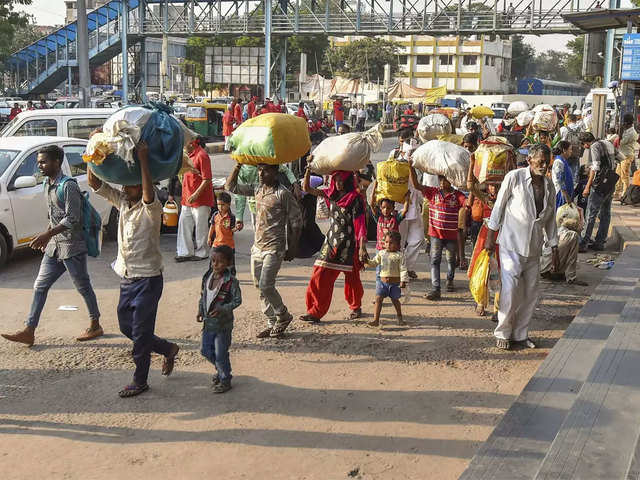
The ICJ today called on the Indian Government to take effective measures to mitigate the disproportionate impact of the lockdown on internal migrant workers and guarantee the right to a minimum adequate standard of living to all, in line with India’s international obligations and Indian law.
The call comes just as India announced its second lockdown period starting April 15, 2020, extending the prior 21-day lockdown period, 2020, to 40 days. On March 29, 2020, the Government had also issued a circular prohibiting movement of migrant workers and an order stating that migrant workers be given food and shelter. It banned evictions of all migrant workers for a month.
“While the measures taken by the Government so far are important, they have proved inadequate. The Government’s efforts need to be targeted towards internal migrant workers and respond to the multiple layers of discrimination and risks they face,” said Maitreyi Gupta, ICJ India International Legal Advisor.
The announcement of the second lockdown has led to thousands of migrant workers in Mumbai and Surat protesting this decision and demanding the right to return home. It came soon after more than 500,000 migrant workers and their families attempted to travel distances of hundreds of kilometers on foot to return to their homes after the first lockdown period was announced on March 24, 2020. This massive internal displacement has led to the deaths of 22 internal migrant workers and their family members, including seven children.
The ICJ called on the Indian authorities to ensure that any restrictions on freedom of movement of migrant workers, protected under international law, is strictly necessary and proportionate and does not result in other human rights violations.
The ICJ is particularly concerned by civil society and media reports indicating that some internal migrants have not eaten for several days and are at the brink of starvation, while others have started rationing their meals to one meal a day.
“The situation of internal migrant workers in India is wholly unacceptable. If their urgent needs are not addressed in a way that respects their human rights, it will only serve to compound the current crisis,” said Frederick Rawski, ICJ Asia-Pacific Director. “We call on the Indian Government to take all necessary measures to bring an end to this deplorable situation.”
The UN High Commissioner for Human Rights Michelle Bachelet on April 2, 2020 also expressed concern at the “plight of India’s internal migrants” and said “more needs to be done as the human tragedy continues to unfold before our eyes”.”
The UN Committee on Economic, Social and Cultural Rights has already called on States to implement “targeted programmes to protect the jobs, wages and benefits of all workers,” and take measures to ensure the “extraordinary mobilization of resources to deal with the COVID-19 pandemic”.
The ICJ urged India to take to all necessary measures to fulfill its obligations to protect the right to adequate standard of living of all internal migrant workers and other vulnerable populations. This includes ensuring access to quality health systems and facilities; minimum essential food; adequate shelter; sanitation and potable water; and timely information.
To download the statement with background information, click here.
Contact
Maitreyi Gupta, ICJ India Legal Adviser, t: +91 77 560 28369 e: maitreyi.gupta(a)icj.org
Frederick Rawski, ICJ Asia-Pacific Director, t: +66 64 478 1121; e: frederick.rawski(a)icj.org
Apr 14, 2020 | Адвокаси, Краткий анализ
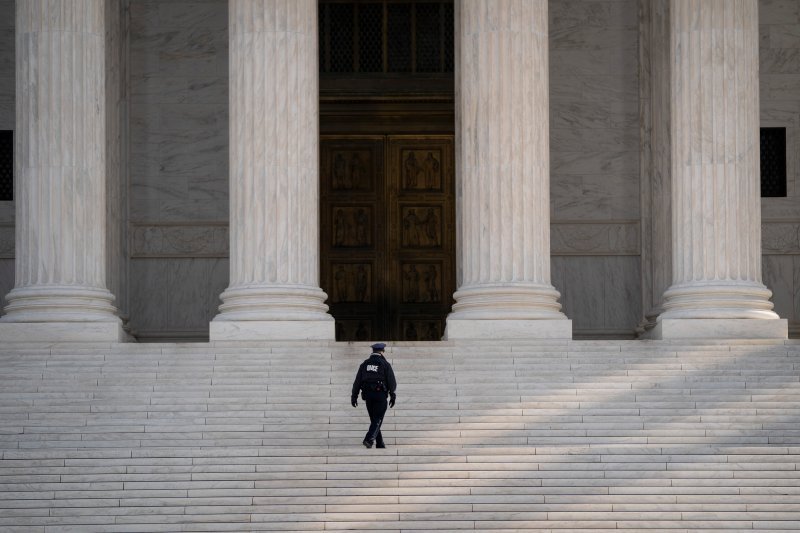
В то время как судебные органы по всему миру стремительно ограничивают и сокращают свою деятельности перед лицом пандемии COVID-19, МКЮ публикует соответствующие рекомендации с точки зрения прав человека и верховенства права.
В информационной записке излагается особая и основополагающая роль судов в международном праве в области прав человека, в том числе, в чрезвычайных ситуациях, перед тем как будут рассмотрены такие ключевые вопросы, как приостановление «несрочных» дел, изменения в порядке слушаний, включая использование видео-конференц-связи и устранение последствий практики откладывания дел.
В заключение документ кратко излагает соображения о том, что судьи вынуждены принимать более высокую степень терпимости к риску, чем те, та, что может быть применима в случае некоторых других профессий или государственных учреждения, что обусловлено основополагающей ролью судебной власти в обеспечении прав человека и верховенства права.
Universal-ICJ courts covid-Advocacy-Analysis brief-2020-RUS (PDF)
Apr 10, 2020 | News
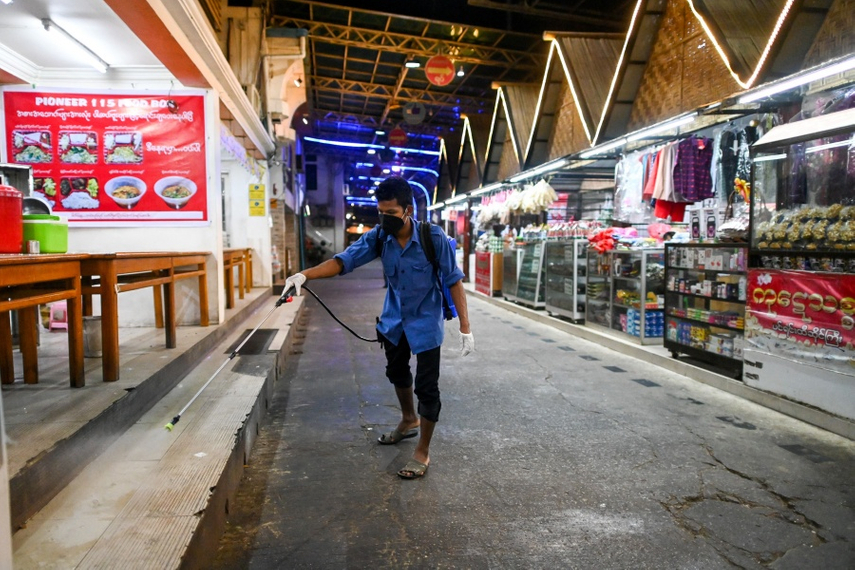
The ICJ today called upon the Myanmar government to ensure that everyone in the country, particularly those from communities affected by conflict, has access to critical information about COVID-19. This call includes putting an immediate end to restrictions on internet access in Rakhine and Chin States.
The ICJ said that there must not be undue restrictions on the right of people to seek and impart such information, in line with international law and standards protecting the right to freedom of expression and information.
“Access to information is absolutely essential for the protection of communities, especially their right to health during the COVID-19 outbreak,” said Frederick Rawski, ICJ Director for Asia and the Pacific. “This is especially true in areas of Myanmar affected by conflict. The wholesale blocking of internet access in Rakhine and Chin States, including access to websites of popular ethnic media outlets, has no justifiable basis in international law and will only serve to undermine efforts to mitigate the spread of the virus.”
On 26 March 2020, the Minister of Transport and Communications stated in a media interview that despite the COVID-19 pandemic, the internet shutdown in Rakhine and Chin States would not be lifted until hate speech, misinformation and the conflict with the Arakan Army are addressed. The Minister’s statement appears to defy the UN Secretary-General’s appeal for a global ceasefire as well as the respective statements of members of Myanmar’s diplomatic community and of several ethnic armed organizations, including the Arakan Army, to cease hostilities in light of the COVID-19 pandemic. On 9 April 2020, the UN Special Rapporteur on Myanmar called for the same.
Instead, on 30 March 2020, pursuant to section 77 of the Telecommunications Law, the Ministry of Transport and Communications (MoTC) ordered major telecommunications networks to take down hundreds of websites on the dubious ground of containing misinformation. The MoTC did not disclose the full list of websites ordered to be blocked as well as the factual and legal basis that justified issuing the order. Under Section 77, the MoTC can direct a telecommunications provider to suspend services in the event of an “emergency situation.” It is not clear whether the misinformation relates to COVID-19 or if the pandemic is the pretext for the order.
As of 1 April 2020, media outlets of the Rakhine and Karen ethnic communities were among the websites to which access was blocked from major telecommunications providers. Access to Voice of Myanmar’s website, whose editor-in-chief had faced charges under Myanmar’s Counter-Terrorism Law until 9 April 2020 for publishing an interview with the Arakan Army, was also blocked.
The ICJ has previously expressed concern at the Myanmar Government’s use of the Telecommunications Act to justify an internet shutdown in the context of the conflict in Rakhine State. This practice does not comply with human rights law and standards. The Act itself is fundamentally flawed and must be amended. Among other defects, the Act does not define the scope of an “emergency situation.”
“Keeping these overbroad restrictions in place in the midst of the COVID-19 pandemic puts the government in violation of international law. It is also counterproductive to the goal of stopping the spread of the virus and minimizing its impact on the country’s most vulnerable populations,” said Rawski.
Download the statement in Burmese here.
Contact:
Frederick Rawski, ICJ Asia-Pacific Regional Director, e: Frederick.rawski(a)icj.org
Related work:
Event: ICJ hosts workshop on fair trial rights for Myanmar’s ethnic media
Report: Curtailing the Right to Freedom of Expression and Information in Myanmar
Statement: States must respect and protect rights in fighting COVID-19 misinformation
Apr 9, 2020 | Events, News
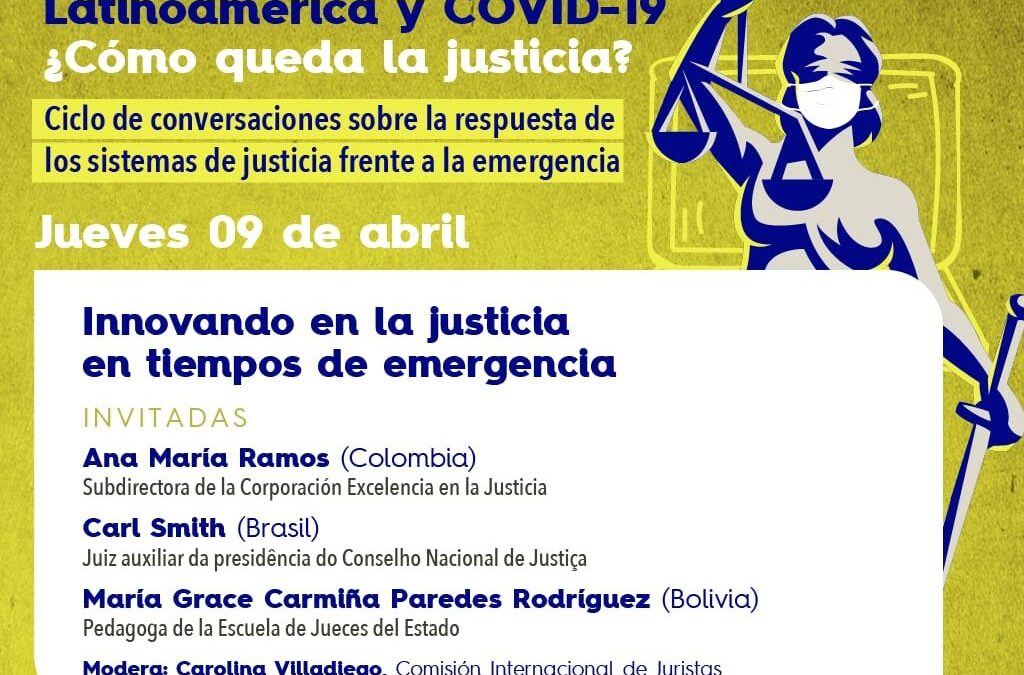
Various States in the Latin American region have adopted exceptional measures to address the pandemic and manage the health crisis. These measures impact peoples’ human rights and freedoms. A series of webinars will cover this topic. The third one takes place today.
Access to justice and the right to an effective remedy are particularly at risk. In that regard, it is worth analyzing: How are justice systems reacting to the pandemic? What is required to continue guaranteeing access to justice, especially for those people and groups most vulnerable? How does this pandemic affect the provision of services in the justice sector? How can justice systems innovate to respond to this situation?
In order to address these questions, the ICJ together with DPLF, Fundación Construir, Fundación Tribuna Constitucional, Observatorio de Derechos y Justicia, and Fundación para la Justicia y el Estado Democrático del Derecho, supports an initiative of webinars led by a group of women human rights defenders in Latin America.
The webinars will be held in Spanish and through the Zoom platform. Registrations for each webinar can be made by sending an email to info@dplf.org Registered persons will receive the zoom link where the activity can be followed.
The first three conversations are as follows:
- Essential justice services in times of emergency: Thursday 02 of April
At: 14.00 México-Central America/ 15 hours Colombia-Perú-Ecuador/ 16.00 Washington-Bolivia/ 17.00 Chile -Argentina/ 22.00 Geneva
- Working from home and being a judge: challenges for women that are judges: Tuesday 07 of April
At 14.00 México-Central America/ 15.00 Colombia-Perú-Ecuador / 16.00 Washington-Bolivia / 17.00 Chile -Argentina/ 22.00 Geneva
- Innovating in the justice system during times of emergency: Thursday 09 of April
At 14.00 México-Central America/15.00 Colombia-Perú-Ecuador/ 16.00 Washington-Bolivia/ 17.00 Chile -Argentina/ 22.00 Geneva
Apr 8, 2020 | Noticias
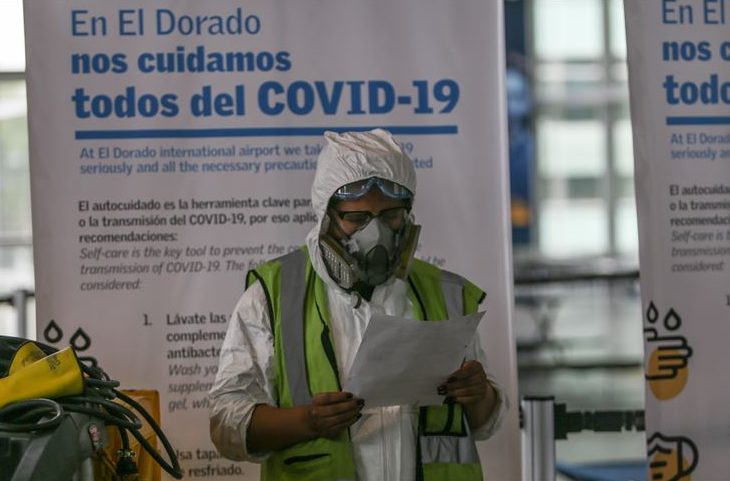
Por décadas, un número importante de colombianos han sido víctimas de crímenes atroces relacionados con el conflicto armado. En particular, los defensores de derechos humanos han sido blancos de violaciones de derechos humanos y abusos serios, como asesinatos, amenazas de muerte y hostigamientos.
Solo este año, la Oficina de la Alta Comisionada de las Naciones Unidas para los Derechos Humanos (ACNUDH) ha recibido información sobre 56 posibles casos de asesinatos de defensores de derechos humanos. Desafortunadamente, el brote del COVID-19 no ha detenido la violencia contra defensores de derechos humanos.
Al respecto, desde el primer caso confirmado de COVID-19 en el país, el 6 de marzo de 2020, la Organización de Estados Americanos (OEA) y Amnistía Internacional han reportado el asesinato de seis defensores de derechos humanos. Los perpetradores de estos crímenes todavía no han sido identificados.
En igual sentido, las violaciones de derechos humanos y abusos contra comunidades locales tampoco se han detenido. A decir verdad, lo contrario parece ser lo cierto. Así, por ejemplo, se ha denunciado que grupos armados ilegales, incluyendo grupos paramilitares y nuevos grupos formados por disidentes de la guerrilla de las FARC-EP, están aprovechado la pandemia para cometer acciones ilegales con mayor libertad, principalmente en áreas rurales del país. Entre las acciones cometidas por estos grupos, se destaca el desplazamiento forzado de 250 personas y el confinamiento de 770 familias por los combates entre un grupo paramilitar y un grupo guerrillero. Ambas acciones tuvieron lugar en la región pacífica del país, en la cual el conflicto se ha intensificado luego del Acuerdo Final de Paz. Adicionalmente, se conoce de al menos tres desmovilizados de las FARC-EP que han sido asesinados en marzo de 2020.
A pesar de la gravedad de la situación anteriormente descrita, la respuesta del gobierno colombiano a la crisis provocada por el COVID-19 se ha centrado en la creación e implementación de medidas no relacionadas con el conflicto. Al respecto, el gobierno ha decretado regulaciones de gran importancia para mitigar los efectos sociales y económicos creados por el virus. Entre otras regulaciones, el presidente decretó un estado de emergencia y una cuarentena nacional obligatoria por 19 días desde el 25 de marzo de 2020. De igual forma, el gobierno estableció una serie de ayudas sociales y económicas en favor de quienes se verán más afectados por la cuarentena.
Ninguna de estas medidas fue diseñada considerando la situación particular de los defensores de derechos humanos. Como consecuencia, su protección no es un elemento central de las políticas colombianas para hacer frente a la pandemia. Si se considera que la implementación del Acuerdo Final de Paz y los derechos de las víctimas no son prioridades del actual gobierno, el enfoque adoptado no es completamente inesperado. En todo caso, para ser justos, se debe reconocer que los programas estatales para la implementación del Acuerdo han continuado operando durante la pandemia.
Ahora bien, podría argumentarse que la pandemia tiene el potencial de afectar predominantemente derechos humanos que no están relacionados con el conflicto armado. Por lo tanto, desde este punto de vista, la priorización de medidas no relacionadas con el conflicto armado está justificada y es requerida. Si bien esta posición se basa en una premisa valida, que es que la pandemia causada por el COVID-19 crea varios desafíos que van más allá de los problemas de derechos humanos relacionados con el conflicto, ignora un elemento central de la realidad colombiana: la existencia de un conflicto en curso.
Actualmente, el conflicto afecta directamente una parte considerable de la población colombiana, incluyendo la mayoría de los defensores de derechos humanos. Sobre este tema, fue reportado que, el año pasado, las acciones cometidas por grupos ilegales en el marco del conflicto afectaron a al menos 10 de los 32 departamentos de Colombia. En ese sentido, ignorar la importancia del conflicto puede llevar a que algunas medidas para hacer frente a la pandemia resulten ineficaces. Lo anterior, ya que, en las zonas afectadas por el conflicto, la protección de los derechos humanos requiere abordar los desafíos específicos que la pandemia ha creado en esos territorios. Por ejemplo, la presencia de grupos ilegales puede conllevar a que no se realicen pruebas para el COVID-19 a los miembros de las comunidades locales o que no puedan acceder a servicios de salud. Igualmente, debido a la cuarentena, los grupos ilegales pueden identificar más fácilmente la localización de defensores de derechos humanos y tomar represalias contra ellos.
En relación con los defensores de derechos humanos, también debe mencionarse los problemas relacionados con el acceso a medidas de seguridad adecuadas. Sobre este tema, Amnistía Internacional ha denunciado que los esquemas y medidas de seguridad de algunos defensores de derechos humanos han sido reducidos por la pandemia. De igual forma, una organización no gubernamental local expresó preocupación por la decisión de la Unidad Nacional de Protección de suspender indefinidamente las sesiones de la Comisión en donde se definen las medidas de protección.
En consideración con lo anterior, y más allá de las consideraciones políticas y de las prioridades generales del gobierno, es imperativo que el gobierno adopte una perspectiva integral para enfrentar la pandemia. Esto implica abordar el impacto diferencial que la pandemia puede tener en las personas que lideran los procesos de transformación social y legal, en las zonas afectadas por el conflicto. En particular, deben implementarse o adaptarse medidas eficaces de protección para defensores de derechos humanos durante la crisis del COVID-19. Asimismo, deben garantizarse y cumplirse los derechos de acceso a un recurso efectivo y a la reparación, de conformidad con los estándares internacionales.
Adicionalmente, el gobierno nacional debe hacer mayores esfuerzos para obtener un cese de hostilidades humanitario por parte de todos los grupos ilegales durante la crisis del COVID-19. Un cese de hostilidades humanitario contribuiría a (i) proteger a la población civil contra actos violentos, (ii) implementar las medidas relacionadas con la pandemia en las zonas de conflicto y (iii) evitar la proliferación del virus en comunidades vulnerables. Esta es una medida crucial que ya ha sido solicitada por organizaciones civiles nacionales, el jefe de la misión de verificación de Naciones Unidas en Colombia, la OEA y algunos parlamentarios. Hasta la fecha, solo un grupo armado ilegal ha aceptado un cese de hostilidades: el Ejercito de Liberación Nacional (ELN), la guerrilla activa más grande en Colombia, la cual decretó un cese al fuego unilateral durante abril.
En conclusión, reconocer la importancia del conflicto es esencial para hacer frente a las implicaciones en los derechos humanos creadas por las crisis del COVID-19. Esto es necesario para contar con políticas integrales que enfrenten la pandemia, así como para asegurar que los problemas y necesidades en las zonas afectadas por el conflicto no sean desconocidas y agravadas durante la crisis del COVID-19. Sobre este punto, como recientemente fue afirmado por el Secretario General de Naciones Unidas, debe tenerse presente que las personas más vulnerables durante un conflicto son también quienes tienen mayor riesgo de sufrir pérdidas devastadoras como consecuencia de esta pandemia.