Nov 26, 2019 | Comunicados de prensa, Noticias
Las finalistas del Premio Martin Ennals 2020 son tres mujeres excepcionales – Huda Al-Sarari, Norma Ledezma y Sizani Ngubane – reflejo del lugar preponderante que actualmente ocupan las mujeres en la defensa de los derechos humanos. La CIJ es miembro del jurado.
En Yemen, Huda Al-Sarari denuncia la existencia de prisiones secretas y numerosos casos de tortura.
En México, Norma Ledezma lucha contra los feminicidios y casos de desaparición.
En Sudáfrica, Sizani Ngubane promueve el acceso de las mujeres a la educación y a la tierra.
Tres mujeres candidatas: un estreno
El Premio Martin Ennals recompensa cada año a defensores o defensoras de los derechos humanos procedentes del mundo entero que se distinguen por su profundo compromiso, un compromiso que a menudo pone en peligro su vida.
Para la edición de 2020, el jurado ha elegido por primera vez como candidatas a tres mujeres que defienden los derechos fundamentales de sus comunidades en contextos delicados.
«La Fundación Martin Ennals se enorgullece de rendir homenaje al valiente trabajo de tres mujeres. La selección de nuestro jurado para el Premio Martin Ennals 2020 refleja el importante impulso mundial de individuos que, sea cual sea su género, trabajan por el respeto de los derechos humanos, y de los derechos de las mujeres en particular», señala Isabel de Sola, directora de la Fundación Martin Ennals.
«Las finalistas del Premio Martin Ennals 2020 trabajan en continentes distintos, pero las tres tienen en común su resistencia, su determinación, su enorme rigor y, por último, el impacto positivo y concreto de su trabajo», subraya Hans Thoolen, presidente del jurado.
Las finalistas
En Yemen, en un conflicto que causa estragos desde 2005, Huda Al-Sarari, abogada yemení, ha desvelado la existencia de varios centros de detención secretos en los que se han cometido las peores violaciones de derechos humanos: torturas, desapariciones e incluso ejecuciones sumarias.
En Sudáfrica, las mujeres se enfrentan a una discriminación que se traduce en una violencia de género muy extendida. En las comunidades rurales, las mujeres a menudo se ven expropiadas de sus tierras, y se las priva de la educación y del acceso a la justicia. Sizani Ngubane fundó una organización de más de 50.000 mujeres procedentes de zonas rurales del país y desde hace más de 40 años lucha con éxito para que se reconozcan sus derechos.
En México, con el Estado de derecho desmoronándose, la población civil paga el elevado precio de la violencia y la impunidad generalizadas. Las mujeres son las principales víctimas de ese desmoronamiento: cada año se cometen más de 3.500 feminicidios. Norma Ledezma, madre de una de las víctimas, se dedica a acompañar a las familias del estado de Chihuahua en su acceso a la justicia.
Los finalistas han sido seleccionados por las organizaciones representadas en el jurado: la CIJ, Amnesty International, Human Rights Watch, Human Rights First, International Federation for Human Rights, World Organisation Against Torture, Front Line Defenders, EWDE Germany, International Service for Human Rights y HURIDOCS.
Velada de entrega del Premio, el 19 de febrero de 2020 El Premio Martin Ennals 2020 será otorgado a una de las tres finalistas el 19 de febrero de 2020 durante una velada pública y retransmitida en livestream. El evento es organizado por la Ciudad de Ginebra que, fiel a su compromiso en favor de los derechos humanos, respalda el Premio desde hace numerosos años.
Contacto
Olivier van Bogaert, Director de comunicación de la CIJ, miembro del jurado, t: +41 22 979 38 08 ; e: olivier.vanbogaert(a)icj.org
Universal-MEA2020bios-News-2019-SPA (biografías completas de las finalistas, en PDF)

Nov 26, 2019 | News
Three exceptional women – Huda Al-Sarari, Norma Ledezma and Sizani Ngubane – are the finalists for the 2020 Martin Ennals Award, a demonstration of the leading position now occupied by women in the defence of human rights. The ICJ is member of the MEA Jury.
In Yemen, Huda Al-Sarari has exposed and challenged the existence of secret prisons and many cases of torture.
In Mexico, Norma Ledezma is fighting against femicides and disappearances.
In South Africa, Sizani Ngubane is fighting for access for women to education and to land.
Three women nominated: a first
Each year, the Martin Ennals Award rewards human rights defenders from around the world who distinguish themselves by their strong commitment to promoting human rights – often at the risk of their own lives.
In 2020, for the first time the Jury nominated three women who defend the fundamental rights of their communities in sensitive contexts.
“The Martin Ennals Foundation is proud to recognize the courageous work of three women. For the 2020 edition, our Jury’s choice reflects the ever-greater global impetus of individuals – whatever their gender – who are committed to respect for human rights and women’s rights in particular,” said Isabel de Sola, Director of the Martin Ennals Foundation.
“The finalists for the 2020 Martin Ennals Award work on different continents, but all three have in common their resilience, determination, a tremendous rigour and, finally, the positive and concrete impact of their work,” added Hans Thoolen, Chairman of the Jury.
In Yemen, where the conflict has been ongoing since 2005, Huda Al-Sarari, a Yemeni lawyer, unveiled the existence of several secret detention centres where the worst violations of human rights were committed: torture, disappearances or even extrajudicial executions.
In South Africa, women face discrimination, the worst expression of which is widespread gender violence. In rural communities, they frequently have their land expropriated and are deprived of access to education and justice. Sizani Ngubane founded an organization of more than 50,000 women from rural areas in her country and has fought successfully for over 40 years for the recognition of their rights.
In Mexico, the civil population is paying a high price for the weakness of the rule of law which is underpins widespread violence and impunity. Women are the primary victims, with more than 3,500 femicides committed each year. Norma Ledezma, who is the mother of one of the victims, puts all her energy into supporting families seeking access to justice in the state of Chihuahua.
The finalists were selected by a jury made up of representatives of ten of the world’s leading human rights organizations: the ICJ, Amnesty International, Human Rights Watch, Human Rights First, International Federation for Human Rights, World Organisation Against Torture, Front Line Defenders, EWDE Germany, International Service for Human Rights and HURIDOCS.
The 2020 Martin Ennals Award will be given to one of the three finalists on 19 February 2020 at a livestreamed public ceremony. The event is hosted by the City of Geneva which, as part of its commitment to human rights, is a longstanding supporter of the Award.
Contact
Olivier van Bogaert, Director Media & Communications, ICJ representative in the MEA Jury, t: +41 22 979 38 08 ; e: olivier.vanbogaert(a)icj.org
Chloé Bitton, Communications Manager, Martin Ennals Foundation, t +41 22 809 49 25 e: cbitton(a)martinennalsaward.org
Universal-MEA2020bios-News-2019-ENG (full bios of finalists, in PDF)
Universal-MEA2020bios-News-2019-ARA (full story and bios of finalists in Arabic, PDF)
Nov 25, 2019 | Multimedia items, News, Video clips
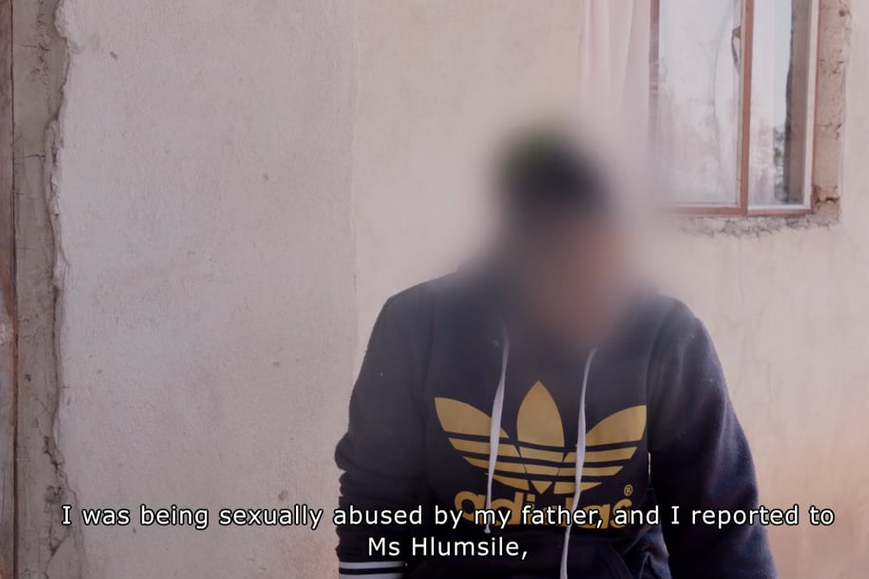
The ICJ just launched a 15 minute documentary showing contributions by the ICJ and local human rights defenders in bringing the Sexual Offences and Domestic Violence (SODV) Act to pass in Mbabane, Eswatini.
The documentary was launched at an SODV Act media training held with the Cooperation for the Development of Emerging Countries (Cospe) and the Editor’s Forum. The training was aimed at taking a human rights-based approach to understanding the Act, following pushback from those who have expressed the view that parts of the Act are an as an affront to Swazi tradition and culture.
In an effort to combat the various challenges presented by SGBV, the Kingdom of Eswatini introduced the Sexual Offences and Domestic Violence (SODV) Act in 2018. The Act complies with its commitments under international and regional human rights law to fight the scourge of SGBV in the country.
The documentary highlights the way in which the Act is expected to be instrumental in combatting the scourge of sexual and gender-based violence, as well as areas in which it has been contested. The documentary was well-received by participants of the training and opened up an engaging dialogue about its usefulness.
The media is at the forefront of informing public discourse about the Act and it is hoped that this training provided some much-needed clarity around the Act.
Watch the documentary:
Contact
Khanyo Farisè (Legal Associate): e: Nokukhanya.Farise(a)icj.org
Shaazia Ebrahim (Media Officer): e: shaazia.ebrahim(a)icj.org
Nov 25, 2019 | News
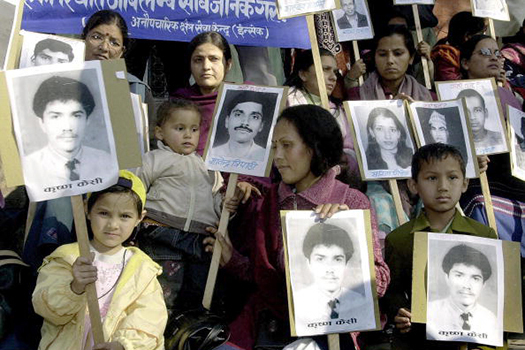
Nepal has made no real progress on questions of justice, truth and reparations for victims of gross human rights violations and abuses during its 10-year conflict, the ICJ, Amnesty International, Human Rights Watch (HRW) and TRIAL International said today.
The Comprehensive Peace Agreement to end the war was signed on November 21, 2006.
While two commissions have been set up to address conflict-era atrocities, they have not been effective and impunity and denial of access to justice to victims remain prevalent. The four human rights organizations are particularly concerned about the recent moves that suggest that the government will go forward with the appointing of commissioners without making necessary reforms to the legal framework.
“Last week marked the 13th anniversary of the Comprehensive Peace Agreement that ended the conflict in Nepal. It is astonishing that so little progress has been made in responding to the clearly articulated concerns and demands of conflict victims,” said Frederick Rawski, ICJ’s Asia-Pacific Director. “These demands have included a transparent and consultative process for the appointment of commissioners, and a genuine good-faith effort by political leaders and lawmakers to address serious weaknesses in the existing legal framework.”
On November 18, a five-member committee formed by the government to recommend names for commissioners to be appointed to the Truth and Reconciliation Commission and the Commission on the Investigation of Enforced Disappearances published a list of candidates. Concerns have been raised by victims and civil society that the government will simply re-appoint past commissioners or make political appointments that will not be adequately impartial and independent.
“It is deeply disappointing that the government has repeatedly attempted to appoint the commissioners without adequate consultation and transparency . The commissions will not gain the trust of the victims and the international community if the political parties continue to interfere in the appointment process,” said Biraj Patnaik, South Asia Director at Amnesty International.
Importantly, the move suggests that the commissions will be re-constituted without amending the legal framework governing the transitional justice process and ensuring its compliance with Nepal’s international human rights law obligations, as directed by Nepal’s Supreme Court and demanded by civil society and victims.
Victims and civil society organizations have issued public statement making it clear that they oppose any appointments prior to the amendment of the legal framework. Notably, the National Human Rights Commission, in its statement commemorating 13th Anniversary of CPA, stated that “…the commission will not support any decision, work or activities that might hurt the sensitivity of the conflict victims…”.
“The government’s move has not only undermined victims’ role in the transitional justice process, but has also once again brought into question its commitment to uphold its international law obligations and ensuring justice for conflict-era crimes,” said Tomás Ananía, TRIAL International’s Nepal Program Manager.
The ICJ, Amnesty International, Human Rights Watch and TRIAL International have repeatedly expressed concern that effective transitional justice mechanisms require strong legal foundations consistent with international law and good practices, and the political will to address the concerns of victims of the conflict. All four organisations reiterated their calls to amend the the 2014 Transitional Justice Act to make it consistent with the Supreme Court’s rulings and international human rights standards, as well as for the initiation of a genuine consultative and transparent process for the appointment of commissioners.
Concerns raised about the existing, and proposed, legal frameworks include: disparities between the definitions of specific crimes under international law and human rights obligations and violations under national, and international law; inadequate provisions to ensure that serious crimes under international law are subject to criminal accountability (including punishment proportionate to the seriousness of the crimes); and a reliance on compensation at the expense of other forms of reparation and remedy for conflict survivors and their families.
Under the principle of universal jurisdiction states may make it possible for their domestic criminal justice system to investigate and prosecute crimes such as torture, committed by any person, anywhere in the world.
This means that a citizen of any country, including Nepal, suspected of such crimes faces the risk of arrest and prosecution for these crimes in countries that apply universal jurisdiction. This is more likely if the Nepali authorities do not appear able and willing to prosecute those responsible for such crimes, the organizations said.
“After initial pledges to ensure truth, justice, and reparations for conflict victims, it appears that the government is once again determined to protect those responsible for the crimes,” said Meenakshi Ganguly, South Asia director at Human Rights Watch. “The international community should remind Nepal that whitewashing egregious crimes will not help to dodge universal jurisdiction.”
Contact:
Download the complete press-release in English and Nepali. (PDF)

Nov 24, 2019 | Editorial, Noticias
Una opinión editorial de Alejandro Salinas Rivera, Comisionado de la CIJ (Chile)
A casi un mes de iniciadas las protestas sociales, las fuerzas políticas llegaron a un acuerdo que podría permitir abordar la crisis social evidenciada con las protestas.
Durante varios días, millones de personas salieron a las calles para solicitar reformas profundas para garantizar los derechos económicos, sociales y culturales. La mayoría de las protestas fueron pacíficas; sin embargo, algunos actos de violencia fueron perpetrados.
La reacción inicial de las autoridades gubernamentales y de otros líderes políticos no permitió abordar con seriedad las preocupaciones y las demandas ciudadanas. Además, hay denuncias sobre graves violaciones de los derechos humanos cometidas por miembros de la fuerza pública. Por ejemplo, el Instituto Nacional de Derechos Humanos (INDH) indicó que representa a 489 personas que sufrieron actos que pueden constituir violaciones a los derechos humanos, y hay más de 200 personas heridas en los ojos por balines de goma.
Acuerdo político alcanzado recientemente
El 15 de noviembre, los partidos políticos con representación parlamentaria (a excepción del Partido Comunista y de pequeños partidos de izquierda), firmaron un acuerdo político que propone un camino para abordar la crisis: la definición de un procedimiento para adoptar una nueva Constitución.
Pero, ¿por qué es tan importante esto en Chile? Porque la Constitución chilena fue redactada y adoptada en 1980 durante la dictadura militar, y aunque se le han introducido modificaciones durante la democracia (1990), todavía refleja el modelo político y social que gobierna el país. La Constitución siempre ha sido considerada como una camisa de fuerza que impide introducir cambios sociales que el país necesita, ya que otorga al Estado un papel subsidiario en la garantía de ciertos derechos económicos y sociales.
El acuerdo político alcanzado estableció una hoja de ruta para realizar el cambio constitucional. Primero, en abril de 2020 se realizará un plebiscito para preguntarle a las personas: a) ¿Quiere usted una nueva Constitución? (Aprueba/ Rechaza); y b) ¿Qué tipo de órgano debiera redactar la nueva Constitución? (Convención Mixta Constitucional o Convención Constitucional).
En segundo lugar, después de los resultados del plebiscito, se llevarán a cabo las elecciones de los miembros que integrarán el organismo encargado de redactar la nueva Constitución (octubre 2020), y después de su redacción, habrá un plebiscito ratificatorio obligatorio.
Este acuerdo político genera esperanza para que se realice un cambio que permita abordar las demandas sociales y mejorar el diseño institucional que se encarga de garantizar los derechos económicos y sociales. Sin embargo, el acuerdo por sí solo no es suficiente. Es necesario, además, tomar medidas inmediatas que permitan lograr acuerdos sustanciales y fortalecer, ahora, la capacidad institucional.
Otras acciones que deben realizarse
Además del acuerdo político alcanzado, hay otras acciones que se deben realizar. Por ejemplo, se debe:
- Adoptar acuerdos políticos específicos que hagan viable el proceso constitucional acordado y que garanticen que dicho proceso responda a las demandas ciudadanas. Así, debe modificarse la Constitución para permitir la convocatoria al plebiscito, y se debe implementar dicho mecanismo en abril de 2020.
- Adoptar políticas públicas específicas para materializar los derechos económicos y sociales que no requieren cambios constitucionales; solo requieren voluntad política. Por ejemplo, se pueden introducir mejorías significativas a los sistemas de salud, de educación y de pensiones.
- Investigar, de manera pronta y efectiva, la actuación de la policía y de las fuerzas de seguridad en el marco de las protestas. Esto requiere una revisión completa de los protocolos de actuación y, posiblemente, la adopción de reformas institucionales.
- Investigar, de manera pronta y efectiva, las denuncias en contra de miembros de la policía y de las fuerzas de seguridad por violaciones graves de los derechos humanos y, cuando la evidencia lo amerite, enjuiciar y sancionar a los responsables. El rol independiente de los jueces y los fiscales es clave para cumplir con esta obligación.
- Investigar, de manera pronta y efectiva, los actos de violencia cometidos durante las protestas, y cuando la evidencia lo amerite, enjuiciar y sancionar a los responsables.
- Fortalecer las instituciones públicas, como las fuerzas policiales (Carabineros), el Instituto Nacional de Derechos Humanos, las oficinas gubernamentales a cargo de las políticas públicas sociales, entre otras.
En suma, el camino que se avecina no es fácil y está lleno de obstáculos para Chile, pero proporciona una esperanza para abordar la crisis social. Por ejemplo, cambiar la Constitución era una tarea pendiente de la democracia chilena, y ahora parece posible. Entre los próximos pasos se encuentra el diseño de un modelo político y social que garantice la equidad, que permita la solidaridad y que garantice plenamente los derechos humanos.