Jul 18, 2019 | News
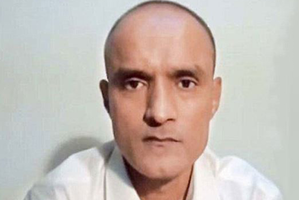
The International Commission of Jurists (ICJ) today welcomed the decision of the International Court of Justice (ICJ-CIJ for its acronym) upholding the right of consular access and notification for Indian national Kulbhushan Jadhav.
The Court determined that Pakistan had unlawfully denied Jadhav consular access before and after his summary trial by a military court.
It emphasized that any “potential prejudice and the implications for the evidence and the right of defence of the accused should receive close scrutiny during the review and reconsideration.”
The Court categorically held that Article 36 of the Vienna Convention on Consular Relations (VCCR) “does not exclude from its scope certain categories of persons, such as those suspected of espionage,” as argued by Pakistan.
“The decision by the International Court today is a resounding affirmation that there can be no curtailment of the right to consular access by foreign nationals by States that are Party to the VCCR,” said Ian Seiderman, Legal and Policy Director of the ICJ.
“Consular access is essential to ensure a fair trial for foreign nationals and this human right must not in any way be made contingent upon the offence foreign nationals are charged with.”
The International Court called on Pakistan to give effect to the Court’s ruling by providing effective review and reconsideration of both his conviction and sentence, including by taking account of the principles of the right to a fair trial.
The ICJ has pointed out that Pakistan’s military justice system and procedures are incompatible with the right to a fair trial. Under international standards, military tribunals are never permissible in prosecutions against civilians for offences carrying the death penalty.
Since 3 March 2016, Kulbhushan Jadhav has been in custody of the Pakistani authorities. The circumstances of his arrest remain in dispute between the Parties.
India was informed of the arrest on 25 March 2016. On 10 April 2017, Pakistan’s military announced Kulbhushan Jadhav had been convicted and sentenced to death by a military court for “espionage and sabotage activities against Pakistan.”
India had brought the case against Pakistan before the International Court of Justice, alleging “egregious violations” of the VCCR by Pakistan because of the denial of consular access to Jadhav.
In response, Pakistan had primarily argued that Jadhav is a an Indian spy involved in acts of terrorism in Pakistan, and the VCCR is not applicable to spies or “terrorists” due to the inherent nature of the offences of espionage and terrorism.
“States around the world continue to use counter terrorism and national security as a justification to curtail human rights – the International Court of Justice’s affirmation that the protections under the VCCR are not conditional is hugely significant in this context,” said Ian Seiderman.
The International Court also held that it considered a continued stay of Jadhav’s execution as constituting “an indispensable condition for the effective review and reconsideration of the conviction and sentence.”
In May 2017, the Court had asked Pakistan to take all measures at its disposal to ensure that Jadhav is not executed pending the final decision in the proceedings.
The ICJ considers the death penalty a violation of the right to life and cruel, inhuman or degrading punishment and notes that a large majority of States, in repeated UN resolutions, have called on retentionist states to declare a moratorium on the practice with a view to abolition.
Background
In addition to the arguments regarding espionage and terrorism, Pakistan also relied on a bilateral agreement on consular access, signed by India and Pakistan in 2008, arguing that the agreement overrides the obligations under the VCCR. The International Court of Justice, however, rejected this argument, on the ground that, among other things, obligations under the VCCR may be enhanced or clarified by bilateral treaties, but cannot be diluted or undermined.
India had requested a number of other measures of relief from the Court, including the annulment of Kulbhushan Jadhav’s death sentence; a declaration that Kulbhushan Jadhav’s military trial was in violation of the VCCR and international human rights law, including the International Covenant on Civil and Political Rights (ICCPR); a directive restraining Pakistan from giving effect to the death sentence; and a directive to release Kulbhushan Jadhav and ensure his safe passage to India.
However, in accordance with its jurisdictional competencies and prior precedents, the Court denied these remedies to India. As “appropriate reparation” in this case, the Court directed Pakistan to effectively review and reconsider Jadhav’s conviction and sentence “to ensure that full weight is given to the effect of the violation of the rights set forth in Article 36 of the Vienna Convention.”
Contact
Ian Seiderman: ICJ Legal and Policy Director, e: ian.seiderman(a)icj.org
Frederick Rawski: ICJ’s Asia Pacific Region, e: frederick.rawski(a)icj.org

Jul 18, 2019 | News
The ICJ and the International Bar Association’s Human Rights Institute (IBAHRI) have jointly sent international observers to attend the second hearing of the criminal trial on the “Gezi Park” protest at the Silivri Prison Courthouse in Istanbul, scheduled to take place on 18 and 19 July 2019.
The ICJ and IBAHRI observers will be monitoring a trial hearing before İstanbul 30th Assize Court with prinicipal defendant Osman Kavala, and 15 others; Ali Hakan Altınay, Ayşe Mücella Yapıcı, Ayşe Pınar Alabora, Can Dündar, Çiğdem Mater Utku, Gökçe Yılmaz, Handan Meltem Arıkan, Hanzade Hikmet Germiyanoğlu, İnanç Ekmekci, Memet Ali Alabora, Mine Özerden, Şerafettin Can Atalay, Tayfun Kahraman, Yiğit Aksakoğlu and Yiğit Ali Ekmekçi.
The observers will report directly to the IBAHRI and ICJ Secretariats on the proceedings following the mission.
The Gezi Park protests began in May 2013 as an effort by a group of environmentalists to save a park in central Istanbul from being rezoned, but soon turned into nationwide demonstrations.
The protest was quelled by police with the use of tear gas and water cannons against the protesters in Taksim Square. Following a six-year investigation into the events, the 657-page indictment issued by the Istanbul Chief Public Prosecutor’s Office was accepted by the 30th A Court in Istanbul on 4 March 2019.
The defendants are to be charged under Turkish Criminal Code Article 312 (attempt to overthrow the Turkish Government or attempt to prevent it from fulfilling its duties), Article 151 (damage to property), Article 152 (qualified damage to property), Article 174 (possession or exchange of hazardous substances without permission), Article 153 (damaging places of worship and cemeteries), Article 149 (qualified robbery), Article 86 (intentional injury); crimes under the Law on Firearms, Knives and Other Tools no. 6136, and crimes under the Law on Protection of Cultural and Natural Assets no. 2863.
The total sentence asked for by the prosecution for these offences amounts to approximately 47,520 years imprisonment.
Contact:
Massimo Frigo, Senior Legal Adviser, t: +41 22 979 38 05 – e: massimo.frigo(a)icj.org
Jul 17, 2019 | News
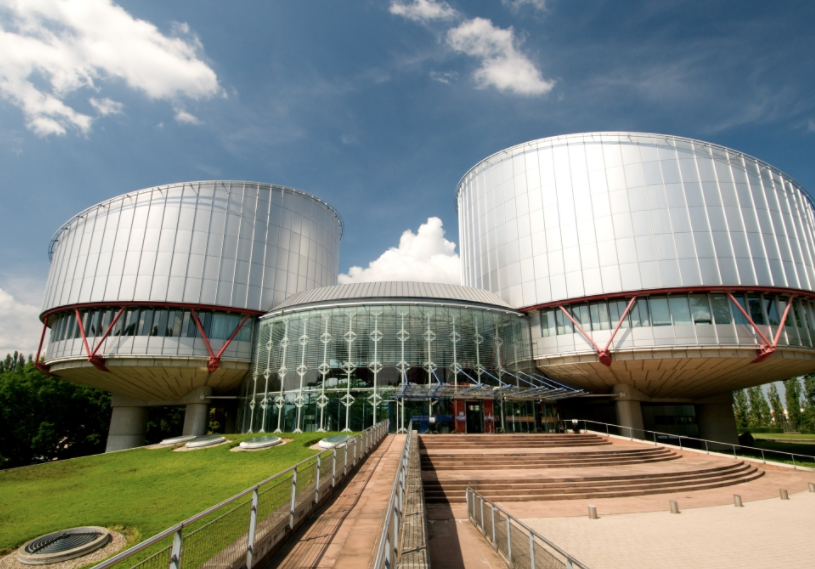
On 16 July 2019, the European Court of Human Rights found Russia’s refusal to register associations set up to promote and protect the rights of lesbian, gay, bisexual and transgender (LGBT) people to violate the rights to freedom of association and to be discriminatory on the grounds of sexual orientation.
The Court’s judgment was informed by a third party intervention submitted jointly by the ICJ, the European Human Rights Advocacy Centre (EHRAC) and ILGA-Europe on 29 July 2016.
The cases were brought by Russian individuals and non-profit organizations (Rainbow House, Movement for Marriage Equality and Sochi Pride House) (Zhadanov and others v. Russia).
The organizations’ registration requests were refused by the authorities and the domestic courts because of formal irregularities in their applications and because their aim was to promote LGBT rights.
In a unanimous judgment, the Court reiterated the importance for individuals to be able to join together to act collectively and establish legal entities. Rejecting as “unconvincing” the Government’s assertion that the applications were refused on procedural grounds, the Court found that in order to obtain registration the organizations would have had to renounce their aims of promoting LGBT rights: “Those grounds touched upon the very core of the applicant organisations and affected the essence of the right to freedom of association”.
Referring to Russia’s submission that the organisations were refused registration to prevent social or religious hatred and disorder, the Court reminded States that they have a positive duty to guarantee the proper functioning of associations, even when they annoy or give offence.
In the present case, rather than taking steps to enable the organizations to carry out their activities without fear of violence, the authorities instead “decided to remove the cause of the tension and avert a risk of disorder by restricting the applicants’ freedom of association”.
The Court therefore found the refusal to register the organizations was not necessary in a democratic society (in breach of Article 11 ECHR).
Having found that the decisive ground for refusing the organizations’ applications for registration was their aim of promoting LGBT rights, the Court held that the applicants had suffered a difference in treatment based on their sexual orientation which could not be reasonably or objectively justified (in breach of Article 14 ECHR in conjunction with Article 11).
EHRAC, ILGA-Europe and ICJ’s joint intervention, drafted by Jeremy McBride QC of Monckton Chambers (UK), focused on the extent of legitimate restrictions on the right to freedom of association for the protection of morals, arguing that it was impossible to protect individual rights if citizens were unable to create associations to defend common interests and needs.
It submitted that any restrictions on this right should be strongly justified and legitimate aims which permitted interference should be interpreted narrowly.
“This judgment reaffirms the vital importance for individuals to be able to group together and organize themselves around shared causes. States must act positively to ensure that this right is meaningful, particularly when people belong to vulnerable or marginalised minority groups or hold unpopular views,” said Joanne Sawyer, Lawyer, EHRAC.
“We are very pleased with European Court’s pioneering judgment confirming the vital right to freedom of association for those promoting rights of LGBTI people. This judgment sends a key message to LGBTI activists in Russia and other countries across Europe who are facing similar discriminatory restrictions – refusal to register associations cannot be justified on the ground of protection of morals,” said Arpi Avetisyan, Senior Litigation Officer, ILGA-Europe.
“The ICJ welcomes the Court’s conclusion that Russia’s refusal to register associations established to promote and protect the human rights of LGBT people cannot be justified on the grounds of protecting moral values or the institutions of the family and marriage,” added Livio Zilli, ICJ Senior Legal Adviser.
Jul 15, 2019 | News
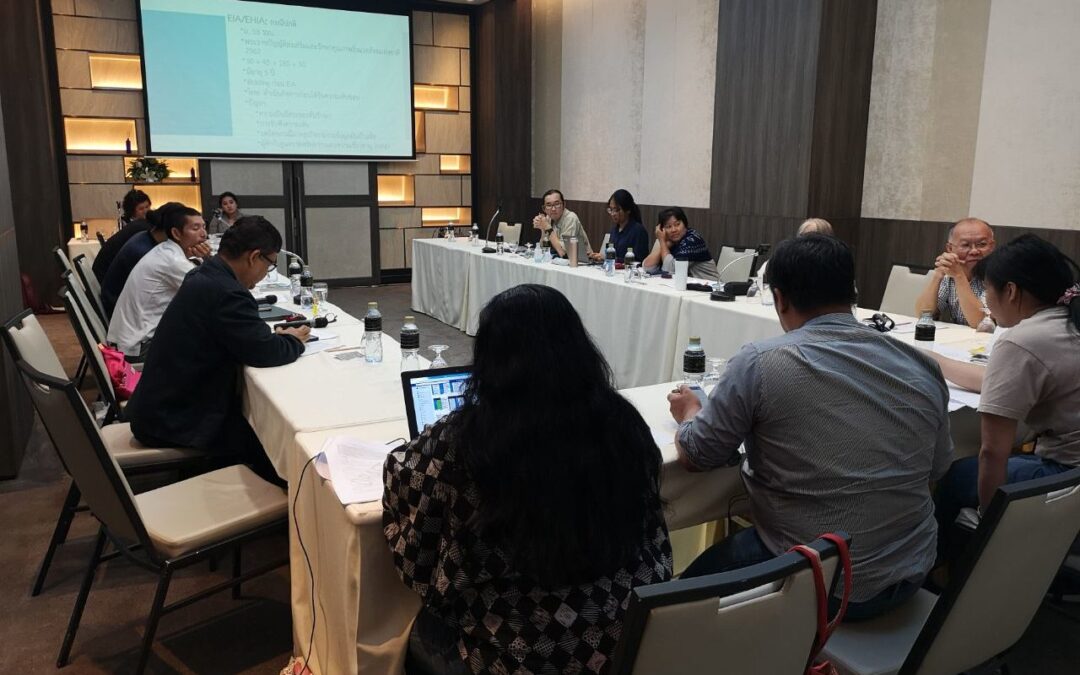
On 13 July 2019, the ICJ hosted a discussion on the human rights consequences of Special Investment Zones in Thailand particularly focusing on the legislative frameworks of Thailand’s Special Economic Zones (SEZs) and the Eastern Economic Corridor (EEC).
Lawyers, members of civil society organizations and academics from across Thailand attended the discussion.
The participants explored existing adverse impacts and potential future impacts on human rights arising from the implementation of the current EEC and SEZ legal frameworks.
The discussion focused on: (i) governing authorities of the SEZs and EEC; (ii) designation of target areas and land acquisition; (iii) environment, health and well-being of the local communities; (iv) other rights of affected individuals and communities; (v) issues pertaining to workers and labour rights and (vi) roles of other stakeholders, including financial institutions, the National Human Rights Commission of Thailand, and the corporate sector.
The participants considered concerns with respect to Thailand’s duty to protect human rights under international human rights standards and identified key issues of concern relating to the legal frameworks of the EEC and SEZs.
During their discussion, the participants highlighted the lack of meaningful participation of affected individuals or communities at the policy and law-making levels and the absence of a formalized way for such individuals and communities to voice their concerns regarding their inability to exercise their rights connected to economic, cultural and social development and international human rights law.
The participants highlighted that the processes of land acquisition and classification of State-owned lands in the areas of SEZs and the EEC were allegedly not carried out in a human rights-compliant manner, and were not in line with the UN Basic Principles and Guidelines on Development-Based Evictions and Displacement.
Key concerns were raised regarding people and communities who has been living on lands upon which they depend for their livelihoods but to which they do not hold land title deeds.
Some participants also stressed the importance of strengthening Environmental Impact Assessment (EIA) and Environmental & Health Impact Assessment (EHIA) procedures.
Proposed improvements included the hiring of independent consultants to carry out EIA and EHIA assessments, effective review by an independent body to ensure the credibility of assessment reports, and other mechanisms to ensure effective monitoring and follow-up on assessments.
Participants also called for the following rights to be respected in the implementation of development-based policy:(i) the right to genuinely and meaningfully take part in public affairs; (ii) the right to take part in cultural life; (iii) the right to secure one’s livelihood; (iv) the right to enjoyment of the highest attainable standard of physical and mental health; (v) the right to water and sanitation; and (vi) the right of access to justice, which encompasses the right to effective remedy and guarantees of the due process of law.
They also urged financial institutions which fund the development of the EEC and SEZs to take a more active role to prevent and mitigate human rights risks.
This discussion will provide the foundation for further work and analysis by the ICJ in detailing the human rights consequences of special investment zones frameworks in Thailand, focusing on the implementation of SEZs and EEC policies. It will also provide the basis for ICJ strategic advocacy at the national level.
Background
The Eastern Economic Corridor (EEC) and Special Economic Zones (SEZs) are flagship economic schemes of the Thai government to boost Thailand’s economy after the military coup in 2014 through large-scale investments into special investment zones covering areas in 13 provinces of Thailand.
In 2015, 10 SEZs were established in 10 different provinces of Thailand as a means to create economically-productive areas in border cities linked to other countries in Southeast Asia.
The SEZs were established towards enhancing growth in 13 target industries. Each SEZ will have different targets depending on each location development and province strategy.
Launched in 2016, the EEC builds upon the former Eastern Seaboard project and is being developed in the eastern coastal provinces of Rayong, Chonburi, and Chachoengsao purportedly to encourage investment into 10 next-generation industries that use innovation and high technology.
The EEC is also designated to be a pilot model in developing other SEZ areas in the future.
The EEC is currently already in operation in part. Most of the SEZs are currently in the process of land acquisition or classification.
Criticisms raised during the discussion noted that (i) the SEZs and EEC had been established without carrying out assessments with the full participation of affected persons, groups and communities; (ii) local residents had been forced off their land without fair or adequate compensation; and (iii) allowing fast-track environmental impact assessments (EIA) could result in undermining the overall objective and effectiveness of EIA.
Jul 12, 2019 | News, Publications, Reports
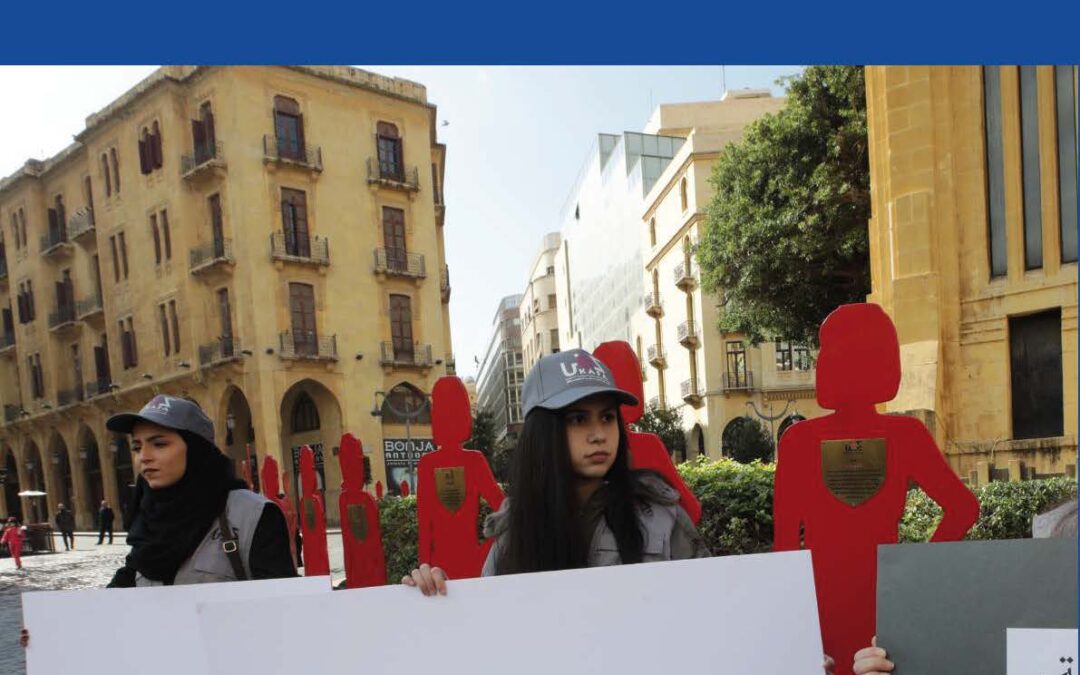
In a report published today, the ICJ called on the Lebanese authorities to prevent, address and ensure accountability for all forms of gender-based violence (GBV) against women and girls, including by adopting legislative, judicial and other appropriate measures.
The report Gender-based Violence in Lebanon: Inadequate Framework, Ineffective Remedies concludes that the persistence of GBV against women and girls in Lebanon is rooted in entrenched patriarchal norms and cultural stereotypes about the roles and responsibilities of women and men in society prevalent throughout the country, including within the judiciary and among other law enforcement officials.
Moreover, legal frameworks and ineffective procedures for the investigation, prosecution and adjudication of GBV fail to adequately protect women’s rights, the report says.
While steps taken by the Lebanese authorities to remedy some deficiencies in the legal framework are commendable, there is still a long way to go to dismantle the web of legal provisions, including in the Criminal Code, the Nationality Law and Personal Status Laws, which discriminate against women or fail to adequately protect their rights.
“Gender discrimination embedded in family laws and in practices is one root cause of violence against women and girls,” said Roberta Clarke, Chair of the ICJ’s Executive Committee.
“Discrimination and economic dependency act as barriers to women’s access to justice,” she added.
The ICJ is particularly concerned that discriminatory practices and bias against women continue to undermine criminal investigations and prosecutions in GBV cases.
“Lebanon should provide for gender-sensitive investigations and evidence-gathering procedures in order to enable women to report violence against them, and ensure that any case of gender-based violence is prosecuted effectively whenever warranted by the evidence, even where no formal complaint has been lodged or when a complaint is withdrawn,” said Kate Vigneswaran, Senior Legal Adviser for the ICJ’s Middle East and North Africa Programme.
Based on an analysis of 30 judicial decisions related to GBV cases and other research, the ICJ found that stereotyping by justice system actors results in direct and indirect discrimination against women.
This, in turn, greatly diminishes the chance that judges granting remedies are both free from biased assumptions and effective, thereby undermining the justice system’s impartiality.
“Judges must decide gender-based violence cases based on the law and facts of the case, rather than pre-conceived cultural beliefs and social stereotypes that are biased against women,” said Said Benarbia, ICJ MENA Director.
“Courts must not use ‘honour,’ ‘fit of fury’ and victim blaming to shield perpetrators of violence against women from accountability,” he added.
Contact:
Said Benarbia, Director, ICJ Middle East and North Africa Programme, t: +41-22-979-3817; e: said.benarbia@icj.org
Kate Vigneswaran, Senior Legal Adviser, ICJ Middle East and North Africa Programme, t: +31-62-489-4664; e: kate.vigneswaran@icj.org
Additional information
This week, ICJ Commissioner Roberta Clarke led the delegation that met with Lebanese authorities and justice and civil society actors in Beirut to present the ICJ’s report and discuss its findings and recommendations.
The delegation met with Chief Justice Jean Fahed, President of the Lebanese Cassation Court and the High Judicial Council; Mrs. Claudine Aoun Roukoz, President of the National Commission for Lebanese Women; George Fiani, head of the Legal Aid Division of the Beirut Bar Association; representatives of the office of the Prime Minister and the office of the Minister of State for Economic Empowerment of Women and Youth; members of the Internal Security Forces; a member of the National Human Rights Institution; and representatives of civil society and the United Nations.
Lebanon-Gender Violence-Publications (full report, English, in PDF)
Lebanon-Gender Violence-Publications-ARA (full report, Arabic, in PDF)
Lebanon-GBVReport2 launch-News-Press releases-2019-ARA (full story, Arabic, in PDF)