Jul 4, 2019 | Доклады, Доклады судебного наблюдения, Новости, Публикации
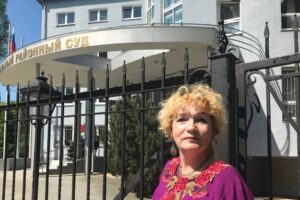
Сегодня МКЮ опубликовала юридическое заключение, в котором анализируется пересмотр уголовного дела в отношении правозащитника из Кыргызстана Азимжана Аскарова. Пересмотр дела имел место в свете решения Комитета по правам человека ООН, признавшего многочисленные нарушения прав человека в ходе первого судебного процесса по делу. МКЮ пришла к выводу о том, что данные нарушения не были исправлены в ходе пересмотра дела.
В частности, МКЮ отмечает, что в ходе пересмотра не были должным образом исследованы заявления Аскарова о пытках, которым он подвергался во время заключения под стражей. Не было проведено новое расследование, суд не допросил новых свидетелей и не подверг критическому анализу доказательства, которые легли в основу обвинительного приговора. В результате в ходе пересмотра дела не была соблюдена презумпция невиновности и требования справедливого судебного разбирательства.
Следовательно, обвинительный приговор по делу Азимжана Аскарова подлежит отмене, а сам Аскаров должен быть освобожден, заявляет МКЮ.
«Проведенный нами анализ показал, что несмотря на многолетний процесс Азимжан Аскаров был лишен права на справедливое судебное разбирательство и эффективное расследование по жалобам на пытки. Мы призываем власти Кыргызстана принять меры в свете данных выводов и отменить обвинительный приговор в отношении Аскарова, а самого Аскарова освободить из-под стражи. Если этого не будет сделано, решение Комитета ООН по правам человека останется неисполненным», – заявила Роушин Пиллей, директор Региональной программы МКЮ по странам Европы и Центральной Азии.
МКЮ пришла к выводу о необходимости возбудить расследование по жалобам на пытки и иные нарушения прав человека в отношении Аскарова, и ему должно быть предоставлено надлежащее возмещение ущерба, причиненного в связи с указанными нарушениями.
Общие сведения
15 сентября 2010 года Азимжан Аскаров, известный правозащитник из Кыргызской Республики, был признан виновным в убийстве сотрудника правоохранительных органов, покушении на соучастие во взятии заложника, незаконном ношении оружия, возбуждении межэтнической ненависти и организации массовых беспорядков.
Международная комиссия юристов (МКЮ) наблюдала за процессом с самого начала судебного разбирательства вплоть до осуждения Аскарова, и выявила многочисленные нарушения прав человека в ходе содержания Аскарова под стражей, судебного разбирательства по его делу и вынесения обвинительного приговора в 2010 году.
В 2016 г. Комитет по правам человека ООН (КПЧ) принял Соображения, в которых признал нарушения прав Аскарова, гарантированных Международным пактом о гражданских и политических правах (МПГПП). КПЧ указал, что Кыргызстан обязан выплатить Аскарову надлежащее возмещение ущерба, принять необходимые меры к его незамедлительному освобождению, отменить обвинительный приговор и, при необходимости, осуществить пересмотр дела с соблюдением гарантий справедливого судебного разбирательства.
По итогам решения КПЧ Верховный Суд Кыргызской Республики направил дело Азимжана Аскарова на новое рассмотрение по вновь открывшимся обстоятельствам в Чуйский областной суд. Пересмотр дела проходил с 4 октября 2016 года по 24 января 2017 г. Обвинительный приговор отменен не был: имело место лишь «возобновление» производства по делу.
В основу Юридического заключения МКЮ легли выводы наблюдателей, присутствовавших на ряде заседаний в Чуйском областном суде, а также анализ материалов дела. Судебный процесс анализируется в свете национального законодательства Кыргызстана, а также относимого международного права и соответствующих стандартов. От лица МКЮ заключение подписали следующие комиссары: Азхар Качалия, судья Верховного апелляционного суда ЮАР; Николас Братца, бывший председатель Европейского суда по правам человека; профессор Хуан Мендес, бывший Специальный докладчик ООН по вопросу о пытках и иных видах жестокого, бесчеловечного и унижающего достоинство обращения и наказания.
Полный текст юридического заключения доступен по ссылке: Kyrgyzstan-Askarov report II-Publications-Reports-Trial Observation reports-RUS

Jul 4, 2019 | News, Publications, Reports, Trial observation reports
In a legal opinion issued today analyzing the retrial of the Kyrgyz human rights defender Azimjan Askarov, which followed the UN Human Rights Committee finding of multiple human rights violations in his first trial, the ICJ concludes that these violations have not been remedied by the retrial.
In particular, the ICJ finds that the retrial did not effectively examine allegations of the torture of Askarov in detention. It failed to conduct new investigations, hear new witnesses or question the elements on which the initial conviction was based. As a result, the retrial did not respect the presumption of innocence or comply with the requirements of a fair trial.
As a consequence, Azimjan Askarov’s conviction should be quashed and he should be released, the ICJ said.
“This analysis shows that despite years of court hearings, Azimjan Askarov has never been afforded a fair trial or an effective investigation into his allegations that he was tortured. We call on the Kyrgyz authorities to act on these findings and to quash his conviction and release him from detention. Without this, the decision of the UN Human Rights Committee will remain unimplemented ” said Róisín Pillay, ICJ Europe and Central Asia Director.
An investigation into allegations of torture and other violations of Askarov’s human rights should be launched, the ICJ concluded, and he should be accorded full reparations for violations of his human rights.
Background
Azimjan Askarov, a prominent human rights defender in the Kyrgyz Republic, was convicted on 15 September 2010 of complicity in the murder of a law enforcement officer, attempted complicity in hostage-taking, illegal possession of firearms, incitement of interethnic hatred, and organization of riots.
The ICJ has followed his case since the initial trial and Askarov’s eventual conviction – and identified multiple violations of his human rights in detention, trial and conviction in 2010.
In 2016, the UN Human Rights Committee (HRC) adopted Views in which it found violations of Askarov’s rights under the International Covenant on Civil and Political Rights (ICCPR). The HRC decided that Kyrgyzstan was to make full reparation to Askarov; take appropriate steps to immediately release him; quash his conviction and, if necessary, conduct a new trial in due compliance with fair trial guarantees.
Following the HRC decision, the Supreme Court of the Kyrgyz Republic remanded the case of Azimjan Askarov for retrial to the Chuy Regional Court due to new circumstances. The retrial took place from 4 October 2016 to 24 January 2017. The retrial proceeded without quashing the defendant’s conviction but with “resumption” of the proceedings in the case.
The ICJ legal opinion is based on the findings from the observation of a number of hearings before the Chuy Regional Court and analysis of documents in the case. It assesses the proceedings in light of Kyrgyzstan’s domestic law as well as relevant international law and standards. The opinoin is signed on behalf of the ICJ by ICJ Commissioners Justice Azhar Cachalia, Judge of the Supreme Court of Appeal of South Africa; Justice Nicolas Bratza, former President of the European Court of Human Rights, Professor Juan Mendez, former UN Special Rapporteur on Torture and Other Cruel, Inhuman and Degrading Treatment or Punishment.
The full text of the legal opinion is available below.
In English: Kyrgyzstan-Askarov report II-Publications-Reports-Trial observation report-2019-ENG
In Russian: Kyrgyzstan-Askarov report II-Publications-Reports-Trial observation reports-2019-RUS
Jun 29, 2019 | News
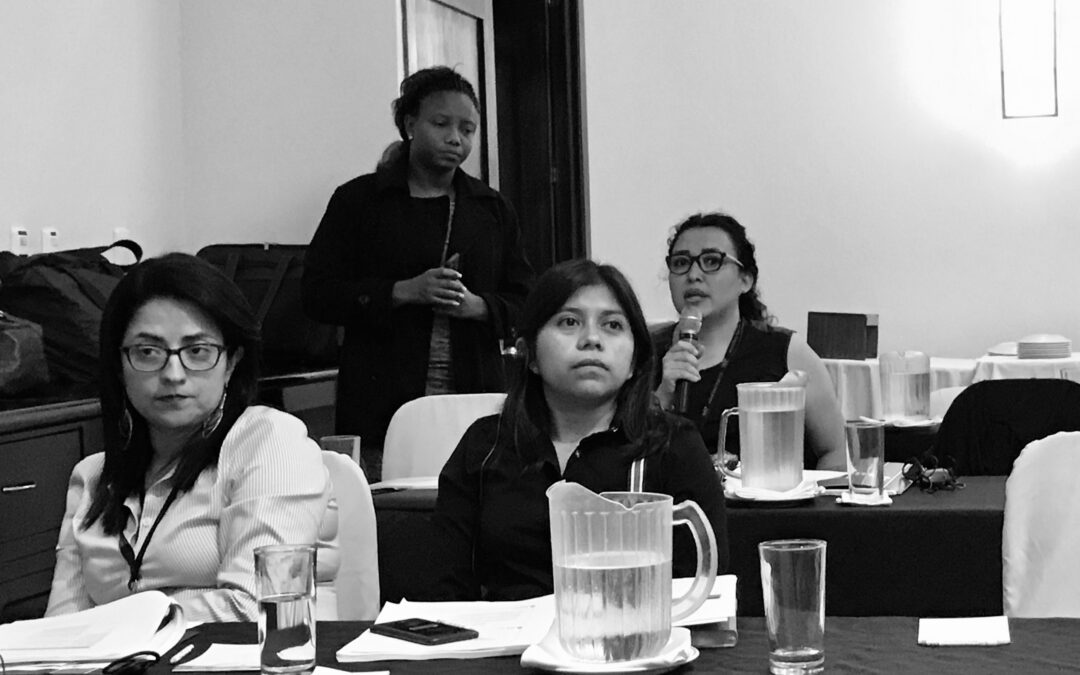
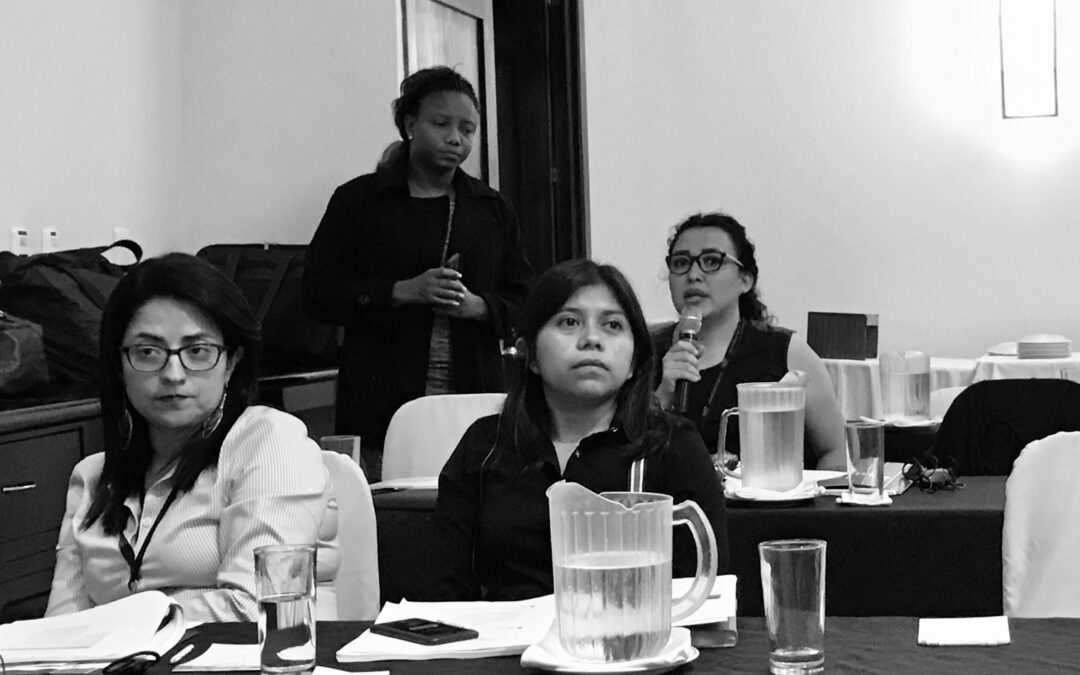
Between 26 and 29 June 2019, in Guatemala City, ICJ and its partner, Fundación de Antropología Forense de Guatemala (FAFG), with the support of the Asociación Guatemalteca de Jueces por la Integridad (AGJI) and the Bufete de Derechos Humanos (BDH), undertook trainings of more than 12 judges and 20 prosecutors on the international law and standards that apply to the investigation of unlawful death and enforced disappearances.
The workshops were conducted as part of the project under the ICJ’s Global Accountability Initiative entitled, Promoting justice for extrajudicial killings and enforced disappearances in Colombia, Guatemala and Peru, supported by the EU European Instrument for Democracy and Human Rights (EIDHR).
Opening remarks were given by Tomás Pallás Aparisi, Head of Cooperation at the EU Delegation to Guatemala, Delia Dávila, Magistrate from the Supreme Court of Guatemala and Haroldo Vasquez, President of the Asociación Guatemalteca de Jueces por la Integridad AJGI.
Ramón Cadena, Director of the ICJ’s Central America Office, addressed the international law and standards that apply to the investigation and prosecution of unlawful death and enforced disappearances and their relevance to Guatemala. Edgar Pérez, director of Bufete de Derechos Humanos (BDH) discussed the situation of enforced disappearances in Guatemala and the value and applicability of international law and standards. Marco García, a representative of FAFG, outlined the role of forensic science in the investigation of unlawful death and enforced disappearances.
Kingsley Abbott, Senior Legal Adviser & Coordinator of the ICJ’s Global Accountability Initiative, provided an overview of the revised Minnesota Protocol on the Investigation of Potentially Unlawful Death (2016), which formed the core of the materials used at the workshops.
The ICJ took the opportunity of the workshops to visit the office of its partner, the Asociación de Familiares de Detenidos-Desaparecidos de Guatemala (FAMDEGUA) and meet with Justice Delia Marina Davila Salazar of the Supreme Court of Justice of Guatemala.
Contacts:
Kingsley Abbott, Senior Legal Adviser & Coordinator of the ICJ’s Global Accountability Initiative, email: kingsley.abbott(a)icj.org
Carolina Villadiego Burbano, ICJ Legal and Policy Adviser, Latin America, and Regional Coordinator of the Project, email: carolina.villadiego(a)icj.org
Jun 29, 2019 | Artículos, Noticias
Entre el 26 y el 29 de junio de 2019, en la Ciudad de Guatemala, la CIJ, junto con la Fundación de Antropología Forense de Guatemala (FAFG), y el apoyo de la Asociación Guatemalteca de Jueces por la Integridad (AGJI) y el Bufete de Derechos Humanos (BDH), llevó a cabo actividades de capacitación dirigidas a más de 12 jueces y 20 fiscales, acerca de los estándares internacionales que se aplican en la investigación de las ejecuciones extrajudiciales y las desapariciones forzadas.
Las actividades se llevaron a cabo en el marco del proyecto “Promoviendo justicia para ejecuciones extrajudiciales y desapariciones forzadas en Colombia, Guatemala y Perú”, bajo la Iniciativa Global de rendición de cuentas de la CIJ, y con el apoyo del Instrumento Europeo para la Democracia y los Derechos Humanos (IEDDH).
Las actividades contaron con la presencia de Tomás Pallás Aparisi, Jefe de Cooperación de la Delegación de la Unión Europea en Guatemala; Delia Dávila, Magistrada de la Corte Suprema de Guatemala; y Haroldo Vásquez, Presidente de la Asociación Guatemalteca de Jueces por la Integridad (AGJI).
En estas actividades, Ramón Cadena, director de la Oficina de Centroamérica de la CIJ, se refirió a la importancia de los estándares internacionales aplicables a la investigación y al enjuiciamiento de las ejecuciones extrajudiciales y desapariciones forzadas. Además, Edgar Pérez, director del Bufete de Derechos Humanos (BDH), analizó la situación de las desapariciones forzadas en Guatemala y el valor y la aplicabilidad de los estándares internacionales en el país.
Asimismo, Marco García, miembro de la FAFG, describió el papel de la ciencia forense en la investigación de estas graves violaciones a los derechos humanos. Finalmente, Kingsley Abbott, asesor legal senior y coordinador de la Iniciativa Global de Rendición de Cuentas de la CIJ, proporcionó una visión general acerca de los contenidos del “Protocolo de Minnesota sobre la Investigación de Muertes Potencialmente Ilícitas” (versión revisada de 2016).
La CIJ aprovechó la realización de estas actividades de capacitación para visitar a la Asociación de Familiares de Detenidos-Desaparecidos de Guatemala (FAMDEGUA) y reunirse con la jueza Delia Marina Dávila, de la Corte Suprema de Justicia de Guatemala.
Contactos:
Kingsley Abbott, asesor legal senior y coordinador de la iniciativa global de rendición de cuentas de la CIJ. Correo electrónico: kingsley.abbott(a)icj.org
Carolina Villadiego, Asesora Legal, América Latina, y coordinadora regional del proyecto. Correo Electrónico: carolina.villadiego(a)icj.org
Jun 28, 2019 | News, Publications, Reports, Thematic reports
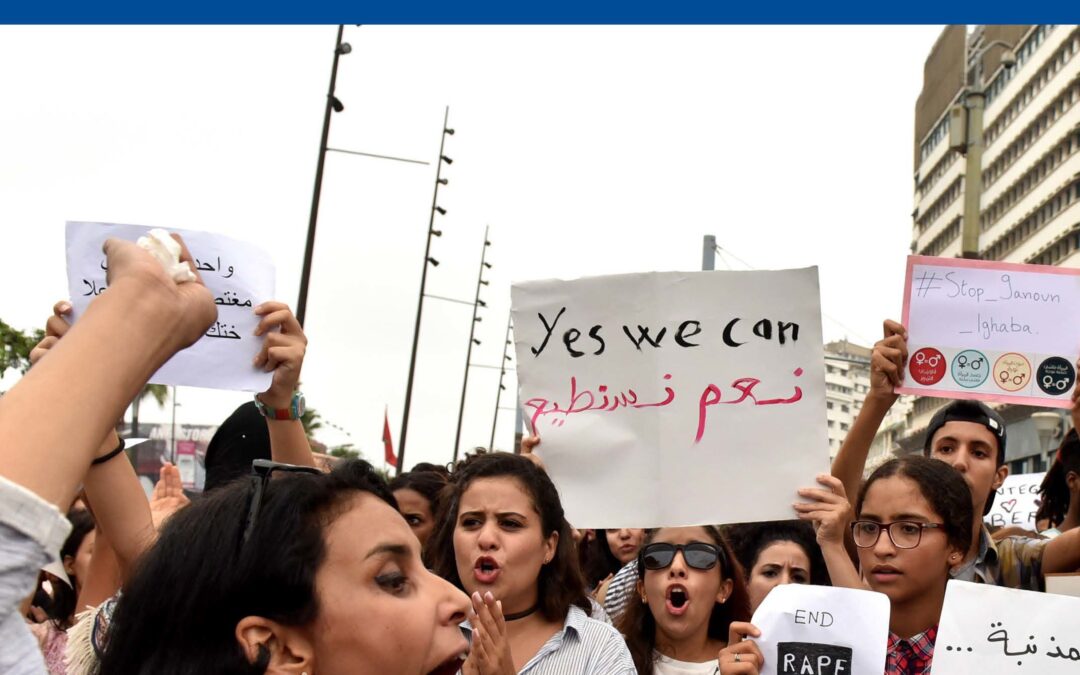
In a report released today in Rabat, the ICJ called for the removal and eradication of legal obstacles and discriminatory judicial attitudes hindering women’s and girls’ ability to seek justice and redress for sexual and gender-based violence (SGBV) in Morocco.
The ICJ’s report Obstacles to Women’s and Girls’ Access to Justice for Gender-based Violence in Morocco (available in English and Arabic) explores the various obstacles that women seeking justice in Morocco face, and addresses recommendations to the Moroccan government and judiciary with a view to improving access to justice and effective remedies for women and girls who are victims of SGBV.
“The Moroccan authorities should amend Law 103/13 and the Penal Code to ensure compliance with international human rights law and standards. Morocco’s Office of the Public Prosecutor and the country’s judicial authorities, including the High Judicial Council, should ensure that detailed guidelines on investigation and prosecution of SGBV crimes are developed and complied with, and that awareness-raising programmes be rolled out to counter judicial stereotyping and victim-blaming,” said Saïd Benarbia, Director of the Middle East and North Africa Programme at the ICJ.
Notwithstanding the recent adoption of Law 103/03 on combatting violence against women, SGBV has not been adequately addressed; it remains widespread in Morocco, with a profoundly detrimental human rights impact on victims and society at large. Law 103/3 fails to define rape in a manner consistent with relevant international law and standards, with the crime still addressed through the lens of morality and public decency, rather than as a violation of one’s bodily integrity and autonomy; Law 103/3 also fails to criminalize child and early marriage, lending support to this harmful practice.
In addition to discriminatory laws and procedures, women and girls seeking justice and redress as survivors of SGBV in Morocco have to face a judiciary that often harbours biased assumptions, and propounds negative gender stereotypes, including cultural norms rooted in patriarchy.
Against this background, the ICJ’s report analyses how exceedingly lenient sentences – for instance in cases of marital rape – and the heightened risk women and girls face of being charged with consensual extramarital sexual relations deter them from seeking justice and redress in case of physical and sexual abuse of which they may be victims, either at the hands of their husband or of individuals with whom they are not married.
To begin addressing women’s and girls’ predicament in these and other respects related to SGBV, the report calls on the Moroccan authorities to:
- Adopt legislation that recognizes one’s right to sexual autonomy, and that recognizes equal relationships as requiring free and full consent of both parties;
- Adequately define and fully criminalize through a gender-neutral definition acts of rape, including by criminalizing marital rape as a separate offence;
- Repeal Article 490 of the Penal Code criminalizing extramarital sexual relations, and ensure that Article 19 of the Family Code on the minimum age of marriage is stringently observed;
- Enact policies, legislative and procedural measures aiming at enhancing the effectiveness of judicial and other public sector services related to women’s access to justice, including enforcing spousal and child support, providing free legal assistance to victims of SGBV, granting protection orders, and adopting other urgent measures;
- Develop and enforce guidelines on investigating and prosecuting SGBV crimes;
- Develop a national protocol for SGBV-related medical, forensic examinations, and ensure forensic-testing services be available and affordable;
- Provide training and awareness-raising programmes aimed at countering judicial stereotyping, victim-blaming and other harmful practices.
Contact:
Saïd Benarbia, Director of the ICJ Middle East and North Africa Programme, t: +41.22.979.3817, e: said.benarbia(a)icj.org
Additional information:
ICJ Commissioner Martine Comte led the delegation that met with different Moroccan authorities, justice and civil society actors this week in Rabat in order to present ICJ’s report and discuss its findings and recommendations. The ICJ delegation met with Mr Mohamed Aujjar, Minister of Justice; Mr Taoufik El Maimouni, President of the Commission on Justice, Legislation, and Human Rights at the Chamber of Deputies; Mr Larbi Tabit, Secretary General at the Minister of Solidarity, Women, Family and Social Development; Ms Amina Bouayach, President of the National Human Rights Council and representatives of the judiciary and of the civil society.
Download:
Morocco-Obstacles GBV-Publications-Reports-Thematic report-2019-ENG (full report in English, PDF)
Morocco-Obstacles GBV-Publications-Reports-Thematic report-2019-ARA (full report in Arabic, PDF)
Morocco-Women HR report-News-2019-ARA (News story in Arabic, PDF)