May 7, 2018 | News
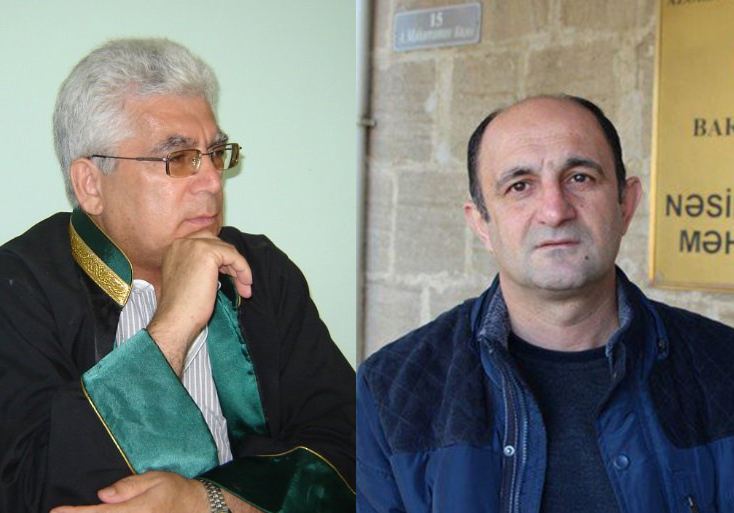
The ICJ today denounced the decision of the Presidium of the Azerbaijan Bar Association, of 23 April 2018, to suspend the licences of two Azerbaijan human rights lawyers Asabali Mustafayev (photo, on the left) and Nemat Karimli (photo, on the right).
The ICJ called on the Presidium to reverse their decision and allow the lawyers to resume their practice.
It stressed that disciplinary proceedings pending against the lawyers should be immediately terminated.
The ICJ said that the decision of the Presidium was contrary to international standards on the role of lawyers including the right to freedom of expression as guaranteed under international law.
The ICJ understands that the proceedings against the two lawyers, initiated following a submission of the Deputy Prosecutor General, were related to the critical statements made by the lawyers in the media, regarding high profile criminal cases.
Nemat Karimli, had stated in media interviews that his client Afgan Mukhtarli, an opposition activist convicted on charges of smuggling, had been illegally and forcibly transferred from Georgia to Azerbaijan and that his life could be at risk if he was returned to Azerbaijan.
The lawyer also complained of excessive searches and being prevented from communicating in private while visiting his client in detention.
The disciplinary proceedings against Asabali Mustafayev relate to allegations he made on social media that the prosecution of politician Gozal Bayramli, on a charge of smuggling, was politically motivated.
Both lawyers were charged with spreading false statements and slanderous information about investigative authorities.
The submission of the Prosecutor to the Bar Association, on 25 October 2017, alleged that lawyers Nemat Karimli and Asabali Mustafayev in their interviews to the media had “politicized” the criminal cases of Bayramli and Mukhtarli, tried to mislead the public and slandered investigative authorities. According to the information provided by the lawyers, no evidence had been attached to this submission.
Instead, the Disciplinary Commission collected evidence to submit to the Presidium of the Bar Association, which subsequently suspended the licence of the lawyers.
Furthermore, the lawyers state that, contrary to what is required by the Law on Lawyers and Advocates Activities, they have not received a copy of the opinion of the Disciplinary Commission submitted to the Presidium of the Bar Association.
The ICJ is concerned that the suspension of the lawyers’ licences, for comments which drew attention to possible violations of human rights, may violate the lawyers’ right to freedom of expression.
These comments appear to be within the bounds of lawyers professional responsibility to protect their clients in every appropriate way (UN Basic Principles, principle 13(b)).
The right to freedom of expression is protected under international treaties to which Azerbaijan is a party, including by Article 19 of the International Covenant on Civil and Political Rights (ICCPR) and article 10 of the European Convention on Human Rights (ECHR).
The UN Basic Principles on the Role of Lawyers specify that lawyers “…have the right to take part in public discussion of matters concerning the law, the administration of justice and the promotion and protection of human rights …”.
The European Court of Human Rights has emphasized that lawyers are entitled to comment in public on the administration of justice, provided that their criticism does not overstep certain bounds, based on principles of dignity, honor, integrity, and respect for the fair administration of justice.
The ICJ emphasizes that protection of lawyers’ freedom of expression, in particular as regards issues of the rule of law and the administration of justice, is not only important to the individuals in question, it also serves as an important safeguard for the protection of human rights.
Where lawyers are subject to disciplinary sanctions for such statements, the role of lawyers in upholding the rule of law in the administration of justice is undermined.
The ICJ therefore calls on the Azerbaijan Bar Association to lift the disciplinary sanctions that would unjustifiably interfere with lawyers’ freedom of expression.
The ICJ also calls on the Azerbaijan Bar Association to ensure that the lawyers subject to disciplinary proceedings obtain a copy of the opinion to be able to prepare their arguments and defence.
Background
Asabali Mustafayev represented Gozal Bayramli who was found guilty and sentenced to three years in prison for smuggling €12,000 ($13,400) in cash. Mustafayev had expressed his opinion about the arrest of Gozal Bayramli in his social media profile, alleging that it was politically motivated. He stated that when he shared this opinion he was not yet engaged as Gozal Bayramli’s lawyer.
Nemat Karimli represented Afgan Mukhtarli, an opposition activist based in Tbilisi, who was convicted of smuggling € 10,000, illegally crossing the border and resisting police arrest and was sentenced to six years in prison. Karimli in an interview stated that Mukhtarli was taken to Azerbaijan illegally and called on the Georgian authorities not to hand him to Azerbaijan authorities since it might endanger Mukhtarli’s life.
May 7, 2018 | Новости, Статьи
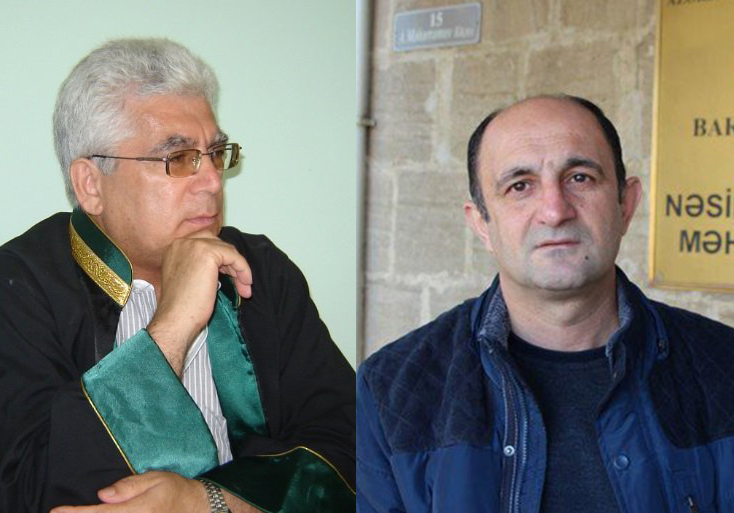
Сегодня МКЮ осудила решение Президиума Ассоциации Адвокатов Азербайджана 23 апреля 2018 года о приостановлении лицензий двух азербайджанских адвокатов по правам человека, Асабали Мустафаеву (фото, слева) и Немату Каримли (фото, справа).
МКЮ призвала Президиуму отменить свое решение и позволить адвокатам возобновить свою практику.
Она подчеркнула, что дисциплинарное разбирательство в отношении адвокатов должно быть немедленно прекращено.
МКЮ сказала, что решение Президиума противоречит международным стандартам в отношении роли юристов, включая право на свободу выражения, гарантированное международным правом.
МКЮ понимает, что судебное разбирательство в отношении двух адвокатов, инициированное по представлению заместителя Генерального прокурора, связано с критическими заявлениями адвокатов в СМИ в отношении высокопоставленных уголовных дел.
Немат Керимли заявил в интервью СМИ, что его клиент Афган Мухтарли, активист оппозиции, осужденный по обвинению в контрабанде, был незаконно и насильственно переведен из Грузии в Азербайджан и что его жизнь может оказаться под угрозой, если он будет возвращен в Азербайджан.
Адвокат также жаловался на чрезмерные обыски и был лишен возможности общаться наедине при посещении его клиента в заключении.
Дисциплинарное разбирательство против Асабали Мустафаева связано с утверждениями, которые он сделал в социальных сетях, о том, что обвинение политика Гозала Байрамлы в контрабанде было политически мотивировано.
Оба адвоката обвинялись в распространении ложных заявлений и клеветнической информации о следственных органах.
Представление прокурора Ассоциации адвокатов 25 октября 2017 года утверждало, что адвокаты Немат Керимли и Асабали Мустафаев в своих интервью СМИ «политизировали» уголовные дела Байрамлы и Мухтарли, пытались ввести в заблуждение публику и оклеветали следственные органы. Согласно информации, предоставленной адвокатами, к этому представлению не было представлено никаких доказательств.
Вместо этого Дисциплинарная комиссия собрала доказательства для представления Президиуму Ассоциации адвокатов, который впоследствии приостановил действие лицензии адвокатов.
Кроме того, адвокаты заявляют, что, вопреки требованиям Закона о адвокатуре и адвокатской деятельности, они не получили копии мнения Дисциплинарной комиссии, представленной в Президиум Ассоциации адвокатов.
МКЮ обеспокоена тем, что приостановление действия лицензий адвокатов, из-за комментариев, которые привлекли внимание к возможным нарушениям прав человека, может нарушить право адвокатов на свободу выражения.
Эти комментарии, как представляется, входят в рамки профессиональной ответственности юристов за защиту своих клиентов всеми возможными способами (Основные принципы ООН, принцип 13 (b)).
Право на свободу выражения мнения защищено в соответствии с международными договорами, участником которых является Азербайджан, в том числе статьей 19 Международного пакта о гражданских и политических правах (МПГПП) и статьей 10 Европейской конвенции о защите прав человека (ЕКПЧ).
В Основных принципах ООН по роли юристов указывается, что юристы «… имеют право участвовать в публичном обсуждении вопросов, касающихся права, отправления правосудия и поощрения и защиты прав человека …».
Европейский суд по правам человека подчеркнул, что адвокаты имеют право публично комментировать о судебном разбирательстве при условии, что их критика не превзойдет определенные рамки, основанные на принципах достоинства, чести, добросовестности и уважения справедливого отправления правосудия.
МКЮ подчеркивает, что защита свободы слова адвокатов, в частности в вопросах верховенства закона и отправления правосудия, не только важна для отдельных лиц, но и служит важной гарантией защиты прав человека.
В тех случаях, когда адвокаты подвергаются дисциплинарным санкциям за такие заявления, роль юристов в обеспечении верховенства закона в отправлении правосудия подорвана.
В связи с этим МКЮ призывает Ассоциацию адвокатов Азербайджана отменить дисциплинарные санкции, которые необоснованно вмешиваются в свободу слова адвокатов.
МКЮ также призывает Ассоциацию адвокатов Азербайджана обеспечить, чтобы адвокаты, подлежащие дисциплинарному разбирательству, получили копию мнения, чтобы иметь возможность подготовить аргументы и защиту.
Дополнительная Информация
Асабали Мустафаев представлял Гозала Байрамлы, который был признан виновным и приговорен к трем годам тюремного заключения за контрабанду в размере 12 000 евро (13 400 долларов) наличными. Мустафаев высказал свое мнение об аресте Гозала Байрамли в своем профиле в социальных сетях, утверждая, что он политически мотивирован. Он заявил, что, когда он высказал это мнение, он еще не участвовал в качестве адвоката Гозала Байрамли.
Немат Керимли представлял Афгана Мухтарли, активист оппозиции из Тбилиси, который был осужден за контрабанду в размере 10 000 евро, незаконно пересек границу и сопротивлялся аресту полиции и был приговорен к шести годам лишения свободы. Каримли в интервью заявил, что Мухтарли был незаконно доставлен в Азербайджан и призвал власти Грузии не передавать его властям Азербайджана, поскольку это может поставить под угрозу жизнь Мухтарли.
May 3, 2018 | Feature articles, News
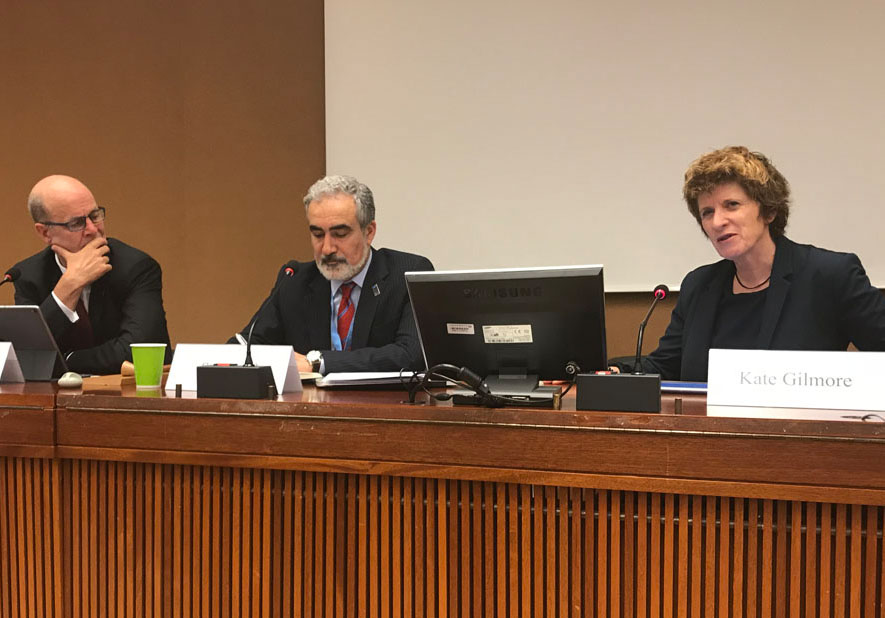
On 3 and 4 May 2018, the ICJ supported by UNAIDS and OHCHR convened an expert meeting on global principles addressing criminalization’s detrimental impact in the areas of sexuality, reproduction, drug use and HIV.
The expert meeting of leading jurists from around the globe aimed at laying the foundations for a set of principles to address the misuse and abuse of the criminal law and its detrimental impact on health, equality and human rights.
The expert group focused on the criminalization of conduct relating to four principal areas: sexuality, reproduction, personal drug use, and the overly broad criminalization of HIV exposure, transmission and non-disclosure.
In these areas, international human rights authorities, as well as domestic courts, have regularly found criminal law provisions to be contrary to international law and standards, and to have a deleterious effect on public health.
“We need to understand why the blunt instrument of the criminal law is used against and affects real people, and why the criminal law ought not to apply in our four areas of concern. Where the criminal law is misused, that is a betrayal of the rule of law. The rule of law must be our guiding compass,” said Justice Cameron, Constitutional Court of South Africa.
“The principles we hope to develop must facilitate the availability of tools which can impact key populations where they are in conflict with the law. They are often at risk of blackmail, stigma and discrimination. It falls on courts to make the difficult decisions. Judges can then consider legality, legitimate purpose and questions of necessity and proportionality in light of a broader understanding of the human rights principles at stake and the relevant scientific evidence,” said Judge Mbaru, Industrial Court of Kenya.
“The law is required to guarantee rights but at same time it can impose arbitrary restrictions. Often those restrictions in the form of the criminal law purport to be necessary in order to ‘protect’ people. That purported purpose ought to be closely scrutinised,” said Justice Ortiz, Constitutional Court of Columbia.
Sam Zarifi, Secretary General of the ICJ, stated: “The misuse of the criminal law affects the most marginalized groups of people and, in particular, the dispossessed and disenfranchised.”
“The centrality of the rule of law at a time when it is under threat globally, and our crucial obligation to stand against laws that are arbitrary, unequal and discriminatory,” he added.
Tim Martineau, Acting Deputy Executive Director of UNAIDS said: “The application of human rights principles to criminal law is key in order to address the detrimental impact of such laws in the areas of sexuality, reproduction, drug use and HIV.”
“While there was significant progress in HIV prevention, treatment and care, there was a big discrepancy in HIV prevention in relation to key populations who are more vulnerable to HIV infection in many respects because of a lack of legal protection, and the unjust criminalization of their behaviour,” he added.
Kate Gilmore, Deputy High Commissioner for Human Rights, stated that the criminal law can readily become a tool of repression or oppression. She said: “Wrongful deployment of criminal law betrays universal human rights standards. By eroding rather than protecting physical and mental integrity specifically in the contexts of sexuality, reproduction and gender identity, misuse of criminal law seeks a wrongful “regulation” of the body of women in particular, with devastating consequences for women’s and girls’ autonomy, health and well being.”
She emphasized that “the criminal law plays an essential role in the recognition, protection and enforcement of rights including by tackling impunity for violations for those rights.”
ICJ, UNAIDS and OHCHR consider that the envisaged principles will help legislators, judges and advocates in the development and review of criminal laws that have adverse consequences on health, equality and human rights particularly where they relate to key populations.
May 3, 2018 | News
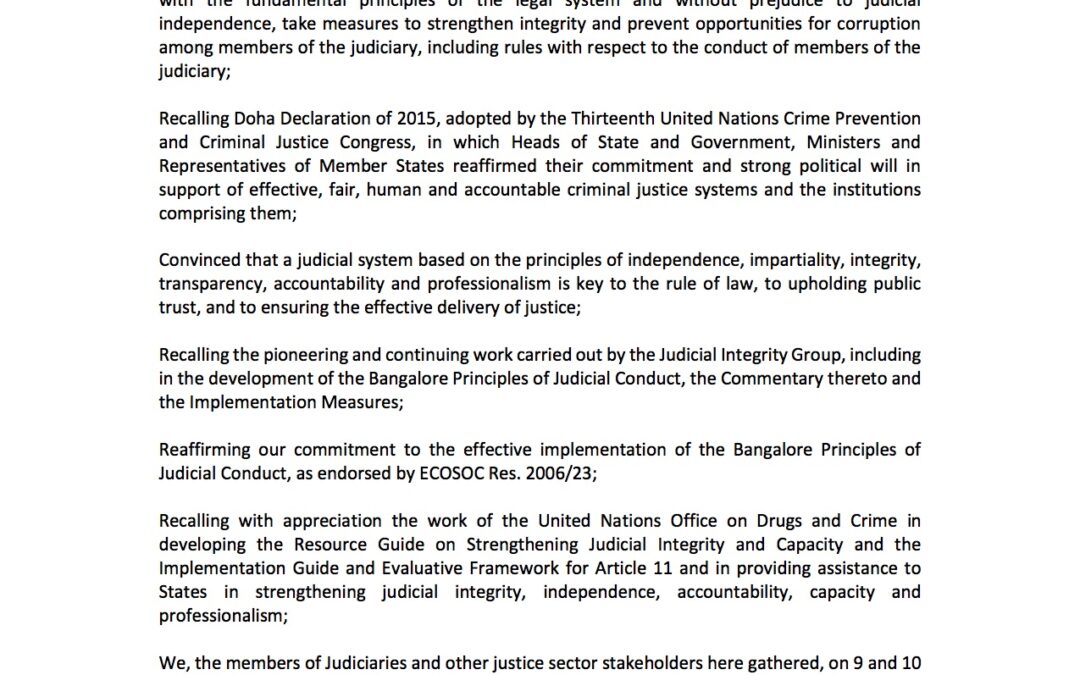
The UN Office on Drugs and Crime (UNODC) today published a Declaration on Judicial Integrity, adopted by Chief Justices and other judges and stakeholders at the launch of a new Global Judicial Integrity Network in Vienna.
ICJ actively participated in the launch event, which took place 9-10 April at the UN offices in Vienna, Austria. It was one of the largest-ever gatherings of Chief Justices and other senior judges, together with other experts and stakeholders.
In addition to organising a panel discussion on judicial selection and appointment procedures in Southern and East Africa, the ICJ made the following statement to the plenary session of the launch event:
Throughout the decades since its inception in 1952, the primary and most effective means by which the International Commission of Jurists has worked to promote the rule of law around the world is precisely by bringing judges from different countries together to share experience and expertise with one another, and together to seek solutions to the common challenges they face. The Judicial Integrity Network should make a huge contribution by creating a platform for this kind of judge-to-judge engagement to take place on a global scale and a continuous basis. The sessions today and yesterday have truly illustrated the very great potential of the Network. The ICJ strongly supports the efforts of UNODC, Chief Justices, and other stakeholders to bring the Network into being, and we look forward to participating in it, promoting it, and using it in our own work with judiciaries around the world, in the years ahead.
The plenary session also accepted, by consensus, the ICJ’s proposal to include key language from the UN Basic Principles on the Independence of the Judiciary, in the Declaration.
The Declaration, Terms of Reference, and Participants List is available on the UNODC website here or can be downloaded from the following links:
Declaration on Judicial Integrity (UNODC event 2018)
UNODC GJIN Terms of Reference 2018
ICJ Practitioners Guide no 13, on Judicial Accountability, can be downloaded here: Universal-PG 13 Judicial Accountability-Publications-Reports-Practitioners Guide-2016-ENG

Apr 30, 2018 | Comunicados de prensa, Noticias
La CIJ enumera varias consideraciones y recomendaciones para asegurar la elección de un Fiscal General independiente.
La CIJ expresa:
1. La Junta Proponente para la elección del Fiscal General deberá llevar a cabo un proceso público y transparente, con el objeto de devolver al pueblo de Honduras la credibilidad en la justicia y presentar al Congreso Nacional una nómina de 5 personas seleccionadas por razones fundadas en méritos de capacidad, idoneidad, independencia, integridad moral y honestidad. En la segunda fase, el Congreso Nacional también deberá de implementar un proceso público y transparente, que permita nuevamente la fiscalización por parte de la sociedad hondureña del proceso de elección de la cabeza del Ministerio Público.
2. En la primera fase, la Junta Proponente debería utilizar las herramientas del perfil, tabla de gradación y entrevista pública, con el objeto de determinar a fondo si la o el profesional reúne las condiciones para ser preseleccionada por razones fundadas en méritos de capacidad, honestidad, independencia, integridad moral e idoneidad y no únicamente por predilecciones o prejuicios. La CIJ ha podido constatar en procesos similares anteriores, que la Junta Proponente cumple con los requerimientos formales, pero no hace un esfuerzo para seleccionar a los mejores candidatos y cumplir así con los estándares internacionales sobre el fondo de la elección, y en particular las Directrices sobre las funciones de los fiscales, de las Naciones Unidas.
3. Dado el controvertido desempeño en la función del actual Fiscal General, la CIJ considera que no es recomendable su reelección, toda vez que existen legítimas y serias dudas de que no reúna las condiciones establecidas por los estándares internacionales. En este sentido, es necesario e importante, investigar y definir si el Fiscal General actual, actuó con absoluta independencia y honestidad durante su gestión.
4. La Junta Proponente y el Estado de Honduras deben asegurar que el proceso de elección del próximo Fiscal General en todas sus fases, garantice una elección de personas únicamente basada en méritos, idoneidad y competencia profesional e integridad moral y honestidad y no en predilecciones o prejuicios. Ello constituye una salvaguarda fundamental para una recta e independiente administración de justicia y para evitar riesgos de parcialidad del Fiscal General.
5. Al respecto la Comisión Interamericana de Derechos Humanos (CIDH) también ha reconodido la importancia de que los Estados establezcan salvaguardas para evitar las negociaciones entre partidos políticos. La CIJ considera que estas salvaguardas serían necesarias y apropiadas para la actual elección, tomando en cuenta que en Honduras las negociaciones entre partidos políticos, son una práctica constante y reiterada en estos procesos;
6. Si bien es importante la presencia de la Sociedad Civil en la Junta Nominadora, la CIJ pudo constatar que existen razones fundadas para cuestionar dicha participación, por tratarse de un proceso de participación viciado. Así lo ha declarado la Sala Constitucional, al resolver con lugar la inconstitucionalidad de la reforma de la Ley del Ministerio Público, que habilitaba la participación de un representante de la sociedad civil en la Junta Proponente.
7. En tal sentido, la CIJ considera que la Junta Proponente debería ceñirse a lo establecido en la Ley con respecto a la integración de la dicha Junta. El Presidente de la Junta Proponente debería verificar que todos los miembros de dicha Junta, sean idóneos para integrarla y que cuenten con las calificaciones jurídicas apropiadas, para llevar a cabo tan importante misión con transparencia, independencia, imparcialidad y honestidad.
8. La CIJ insta a la Misión de Apoyo contra la Corrupción y la Impunidad en Honduras (MACCIH), que lleve a cabo una investigación profunda acerca de este proceso y para determinar el cumplimiento de los estándares internacionales, cuyo respeto constituye la principal garantía para que el próximo Fiscal General, sea una persona independiente y electa en base a méritos y no por preferencias.
Ramón Cadena, Director de la CIJ para Centro América expresó: “La o el Fiscal General es una autoridad pública que en nombre de la sociedad y del interés público, debe asegurar la aplicación de la ley y perseguir los delitos. Por ello, el Estado de Honduras debe llevar a cabo un proceso que permita culminar con la elección de un Fiscal General independiente y designado por razones fundadas en méritos y no en predilecciones, y que reuna las condiciones exigidas por los estándares internacionales.”