Jul 16, 2018 | Multimedia items, News, Video clips
Changes within the Commission enhance the organization’s capacity to respond to increased threats to rights protection via erosion of the rule of law, particularly in relation to the independence of the judiciary.
The ICJ is pleased to announce new leadership at the ICJ as Professor Robert K. Goldman (US) has been elected President of the organization and Justice Radmila Dragicevic-Dicic (Serbia) has been elected Vice-President, a role she will undertake jointly with Professor Carlos Ayala (Venezuela) who was also appointed Vice-President earlier in the year.
Professor Robert K. Goldman served as Acting President of the ICJ following the sad passing of former President Professor Sir Nigel Rodley in 2017.
The President and Vice-Presidents are supported by the Executive Committee, which has also been bolstered by new members Justice Sir Nicolas Bratza (UK), former President of the European Court of Human Rights; Dame Silvia Cartwright (New Zealand), former Governor-General of New Zealand; and Shawan Jabarin (Palestine), prominent human rights activist and Director General of Al-Haq, an independent Palestinian non-governmental human rights organization.
“I am honoured to have been elected President of the ICJ and to be able to work with such proficient and inspiring jurists amongst ICJ leadership and in the wider Commission itself, without whom the ICJ could not provide the expertise and leadership it does on such a wide range of human rights issues,” said Professor Robert K. Goldman, ICJ President.
“Those that have taken on a new role in ICJ leadership will help guide the organization in augmenting efforts to defend the rule of law amidst the current political backdrop of increasing antipathy and hostility towards rights protections,” he added.
In addition to these changes in the senior leadership of the ICJ, the organization is also pleased to welcome five new members:
Justice Chinara Aidarbekova (Kyrgyzstan), judge of the Constitutional Chamber of the Supreme Court of Kyrgyzstan; Gamal Eid (Egypt), prominent lawyer and human rights defender; Jamesina Essie L. King (Sierra Leone), Commissioner of the African Commission on Human and Peoples’ Rights; Michael Sfard (Israel), prominent human rights lawyer who has represented many Israeli and Palestinian individuals and organizations; and Ambiga Sreenevasan, former President of the Malaysian Bar Council.
“The ICJ is alarmed by the increasing volume of worldwide attacks on the institutions that uphold human rights both at an international level, where UN mechanisms are constantly condemned rather than supported and enhanced to maximize their efficacy; and also on the local level, for example when we see the independence of the judiciary, an essential element of maintaining rights protections, coming under attack in places like Guatemala, Poland and South Korea,” said Saman Zia-Zarifi, ICJ Secretary-General.
“The ICJ relies on its global advocates of human rights to advance and defend the rights of others through the culmination of their vast and varied expertise and I am pleased to welcome our newest Commissioners to help in this regard, ” said Zia-Zarifi.
A further nine Commissioners were elected to serve additional terms on the Commission:
Professor Roberto Garreton (Chile), Professor Robert K. Goldman, Hina Jilani (Pakistan), Professor Jose Antonio Martin Pallin (Spain), Justice Sanji Monageng (Botswana), Tamara Morschakova (Russia), Dr Jarna Petman (Finland), Belisario dos Santos Jr (Brazil) and Justice Philippe Texier (France).
Hina jilani (Pakistan) and Belisario dos Santos Jr (Brazil) were both also re-elected to the Exectuive Committee and Professor Marco Sassoli (Italy/Switzerland) and Justice Stefan Trechsel (Switzerland) were re-elected as Alternates to the Executive Committee.
On video: Bob Goldman talks about the ICJ and the Rule of Law
Jul 15, 2018 | News
On 14 July 2018, the ICJ co-organized a discussion on extrajudicial killings in Thailand, focusing on the cases of Chaiyaphum Pasae and Abe Saemu.
The discussion was held at the Student Christian Centre in Bangkok.
Chaiyaphum Pasae, a Lahu youth activist, was killed by a military officer in the Chiang Dao district of Thailand’s northern Chiang Mai province in March 2017. The killing took place during an attempt to arrest him as an alleged drug suspect. Officials claimed Chaiyaphum Pasae had resisted arrest and was subsequently shot in “an act of self-defence”.
Abe Saemu, from the Lisu hill tribe, was killed by a military officer in February 2017 in the Chiang Dao district of Chiang Mai province in an attempt to arrest him on allegations of drug coffences. Officials claimed Abe Saemu had resisted arrest and was killed in “self-defence”.
During the discussion, ICJ’s National Legal Adviser Sanhawan Srisod addressed the audience to set out the international law and standards that apply to investigating potentially unlawful deaths, including the rights of victims and family members, referring to the standards set out in the revised Minnesota Protocol on the Investigation of Potentially Unlawful Death (2016), which was launched in Thailand on 25 May 2017.
Participants in the event included members of the families of Chaiyaphum Pasae and Abe Saemu, the lawyers in both of their cases, interested members of the public, media representatives, students and academics.
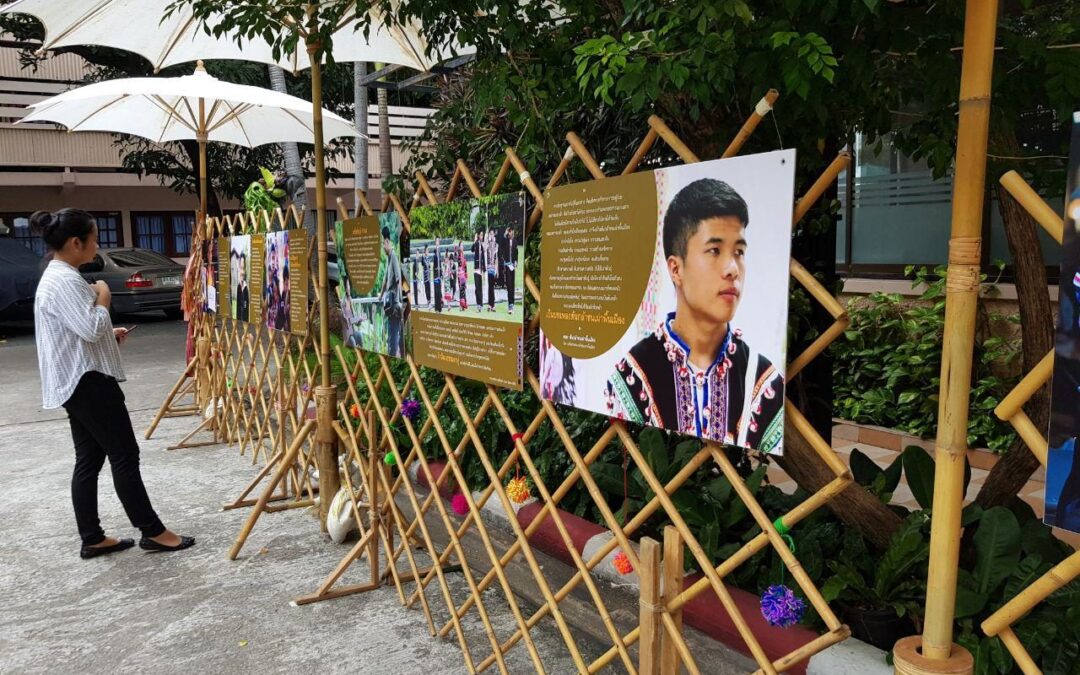
The discussion opened with an art exhibition and Lahu dance show by the Save Lahu group. Human Rights Commissioner Angkhana Neelapaijit then made a presentation on challenges in seeking accountability for extrajudicial killings in Thailand.
A panel discussion on the latest updates in the cases of Chaiyaphum Pasae and Abe Saemu followed, moderated by Pranom Somwong from Protection International.
The panel included relatives of Chaiyaphum Pasae and Abe Saemu; Ratsada Manuratsada, a lawyer representing the families in both cases and Krissada Ngamsiljamras, a representative from the National Human Rights Commission of Thailand.
A second panel considered challenges on the administration of criminal justice in the context of unlawful deaths.
Moderated by Pratubjit Neelapaijit of UN Office of the High Commissioner for Human Rights, the panel included Malee Sittikreangkrai (Chiang Mai University); Sumitchai Hattasan (Human Rights Lawyers’ Association); Namtae Meeboonsalang (Provincial Chief Public Prosecutor, Office of the Attorney-General); Kritin Meewutsom (Forensic doctor, Ranong Hospital); and Sanhawan Srisod (ICJ).
The event was conducted in collaboration with Cross Cultural Foundation (CrCF); Protection International (PI); UN OHCHR; Human Rights Lawyers’ Association (HRLA); Thai Volunteer Services (TVS); Dinsorsee Creative Group; Center for Ethnic Studies and Development, Chiang Mai University (CESD); Legal Research and Development Center, Chiang Mai University (LRDC) and Network of Indigenous Peoples in Thailand (NIPT).
Contact
Kingsley Abbott, Senior Legal Adviser, ICJ Asia Pacific Regional Office, kingsley.abbott(a)icj.org

Jul 13, 2018 | News
The Sri Lankan Government should reconsider and reverse its decision to bring back the death penalty for drug related offences, the ICJ said today.
On 10 July, the Sri Lankan Cabinet unanimously approved an action plan to implement the death penalty for “drug smugglers”.
According to the spokesperson of the Cabinet, 19 people convicted for “large scale drug offences” who “are still involved in drug trafficking…from within prisons” would initially be those initially designated for execution.
Sri Lanka has had a moratorium on the death penalty for over four decades.
The last execution carried out in the country was in 1976.
“The resumption of executions of convicted drug offenders would constitute a violation of the right to life under international law,” said Ian Seiderman, ICJ’s Legal and Policy Director.
”And, based on experience around the globe, it will not in any way serve the purported objective of tackling the problems of drug-related crime in Sri Lanka,” he added.
Article 6 of the International Covenant on Civil and Political Rights (ICCPR), which Sri Lanka acceded to in 1980, guarantees the right to life and requires that states that have not yet abolished the death penalty must restrict capital punishment to only the “most serious crimes”.
The UN Human Rights Committee, the supervisory body for the ICCPR, considers that the death penalty may never be used for drug offences.
The extraordinarily retrograde measure of resuming executions following a 42-year moratorium would also constitute a violation of article 6, which contemplates at least progressive movement towards abolition.
The UN General Assembly has repeatedly adopted resolutions emphasizing that that the use of the death penalty undermines human dignity and calling on those countries that maintain the death penalty to establish a moratorium on its use with a view to its abolition.
In 2016, an overwhelming majority of 117 UN Member States – including Sri Lanka – voted in favor of a worldwide moratorium on executions as a step towards abolition of the death penalty.
“At least 150 countries have now either abolished the death penalty in law or practice,” added Seiderman.
The ICJ considers the death penalty to be a violation to the right to life and the right not to be subjected to cruel, inhuman or degrading punishment.
The ICJ urges Sri Lanka to reinstate its moratorium on executions and take steps towards taking all necessary measures to abolish the death penalty.
Contact:
Ian Seiderman, ICJ’s Legal and Policy Director, email: ian.seiderman(a)icj.org
Reema Omer, ICJ’s International Legal Advisor, South Asia, email: reema.omer(a)icj.org
Jul 11, 2018 | Новости, Статьи
Сегодня МКЮ выразила озабоченность принятием нового закона об адвокатах в Казахстане.
Закон «Об адвокатской деятельности и юридической помощи», подписанный 10 июля 2018 года, противоречит международному праву и стандартам, касающихся независимости юридической профессии, позволяя исполнительным органам власти оказывать влияние или контролировать адвокатов через допуск к адвокатской профессии, а также существенно влиять на дисциплинарное производство в отношении адвокатов.
Закон негативно отразится на защите прав человека и верховенстве права в Республике Казахстан.
«Некоторые ключевые положения принятого закона подрывают независимость юридической профессии, которая является краеугольным камнем верховенства права», сказал сегодня Тимур Шакиров, старший правовой советник Европейской программы МКЮ.
«Закон не только ослабляет юридическую профессию, но и, к сожалению, посылает сигнал обществу о том, что в результате, права человека, включая право на справедливое судебное разбирательство, будет сложнее защитить в рамках правовой системы», добавил г-н Шакиров.
МКЮ особенно озабочена тем, что согласно новому закону, сокращена роль независимой адвокатуры в формировании состава дисциплинарных комиссий.
Кроме непосредственно адвокатов, дисциплинарные комиссии будут включать в свой состав «представителей общественности», предлагаемых Министерством Юстиции.
В то время как закон не устанавливает, как именно будут отбираться эти члены дисциплинарных комиссий, отбор будет производиться Министерством Юстиции.
Не исключено, что так же будут выбираться члены комиссий из числа судей в отставке, которые, согласно закону, тоже должны входить в состав дисциплинарных комиссий.
Хотя многие из предусмотренных процедур неясны, очевидно, что эти положения дают Министерству Юстиции значительное влияние на дисциплинарные комиссии, учитывая, что закон явно не требует от этих членов исполнять их обязанности независимо от указаний Министерства Юстиции.
Влияние исполнительных органов власти на дисциплинарные процедуры адвокатуры противоречит принципам независимости адвокатов.
Основные принципы ООН, касающиеся роли юристов, предусматривают, что дисциплинарные меры в отношении юристов должны рассматриваться беспристрастным дисциплинарным комитетом, создаваемым юристами, в независимом органе, предусмотренном законом, или в суде и подлежат независимому судебному контролю.
Более того, закон продолжает наделять Министерство Юстиции полномочиями по контролю над доступом к профессии.
Закон требует от будущего адвоката, по завершении профессионального обучения, пройти процедуру аттестации, в комиссиях, создаваемых территориальными органами юстиции.
Эти комиссии состоят из семи членов, из которых только трое являются представителями адвокатуры. Состав комиссии и правила их работы утверждаются Министерством Юстиции Республики Казахстан.
Таким образом, закон сохраняет прежнюю процедуру по допуску к профессии, которая ранее уже подвергалась критике со стороны МКЮ и согласно которой, аттестация и выдача адвокатских лицензий находятся в исключительной компетенции Министерства Юстиции Республики Казахстан.
В то же время, многие права защитников в законе ограничены или могут быть подорваны формулировками, которые указывают на необходимость дальнейшего регламентирования таких прав на уровне подзаконных актов, включая то, что принятый закон не позволит адвокатам свободно и без вмешательства собирать доказательства в защиту своих клиентов или то, что адвокатские запросы могут игнорироваться на основе того, что запрашиваемая информация имеет «ограниченный доступ».
МКЮ отмечает, что Основные принципы ООН, касающиеся роли юристов предусматривают, что «компетентные органы обязаны обеспечивать юристам достаточно заблаговременный доступ к надлежащей информации, досье и документам, находящимся в их распоряжении или под их контролем, с тем чтобы юристы имели возможность оказывать эффективную юридическую помощь своим клиентам. Такой доступ должен обеспечиваться, как только в этом появляется необходимость» (Принцип 21).
Прочитать весь текст вы можете здесь
Jul 11, 2018 | Адвокаси, Неюридические заявления
Сегодня МКЮ присоединилась к другим организациям гражданского общества, призывая к тому, чтобы уважение прав человека, защита гражданского общества и участие в нем, играли более активную роль в Глобальной контртеррористической стратегии ООН.
Совместное заявление организаций последовало за принятием Генеральной Ассамблеей ООН 26 июня 2018 года резолюции 72/284, посвященной рассмотрению Глобальной контртеррористической стратегии Организации Объединенных Наций. Глобальная контртеррористическая стратегия ООН, впервые принятая в 2006 году, содержит план действий для ООН и государств-членов на глобальном, региональном и национальном уровнях для борьбы с терроризмом.
Организации подчеркивают ценность глобальной контртеррористической стратегии, в которой права человека являются важным компонентом. Они отмечают, что резолюция Генеральной Ассамблеи в значительной степени подтверждает обязательства государств соблюдать международное право, в том числе международные права человека в условиях борьбы с терроризмом, и что права человека являются «существенной основой борьбы с терроризмом».
В совместном заявлении выражается обеспокоенность в связи с тем, что государства не смогли адекватно устранить нарушения прав человека в отношении мер по борьбе с терроризмом. В нем также выражается обеспокоенность по поводу того, что государства не предоставили благоприятные условия для организаций гражданского общества, в том числе тех, которые касаются женщин, для значительного участия в обзоре Стратегии.
Полное заявление и список присоединяющихся к нему организаций можно скачать на английском в формате PDF здесь: UN-Advocacy-JointStatement-CounterTerrorismStrategy-2018