Jan 21, 2017 | Agendas, Events, News, Training modules
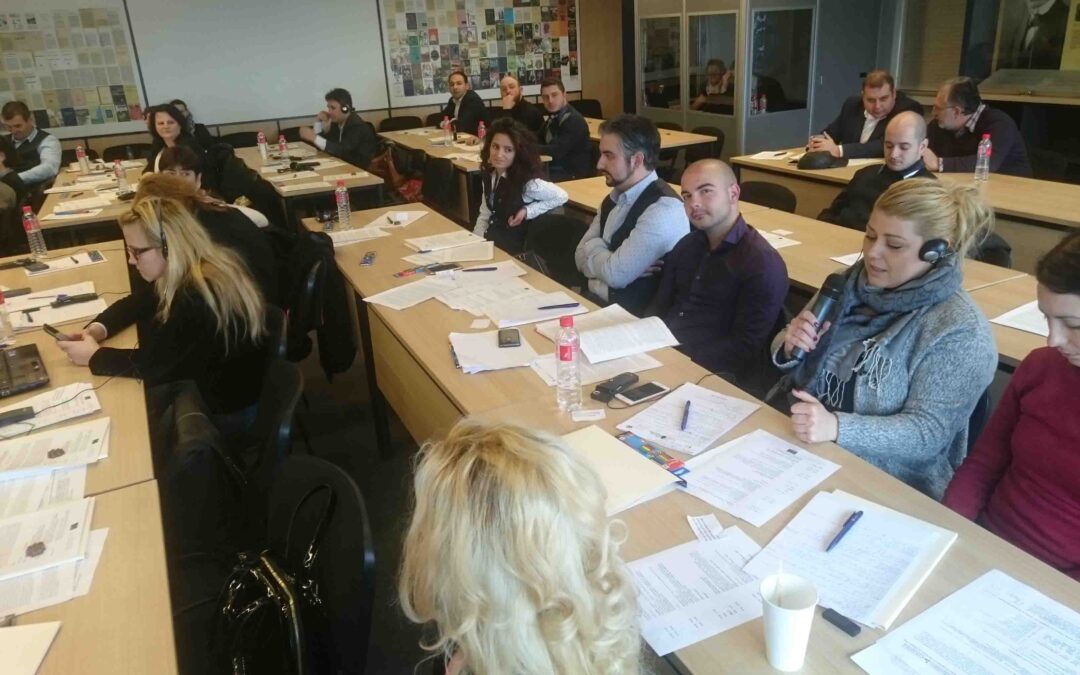
Today, the ICJ and Legal Clinic for Refugees and Immigrants are holding a training for lawyers on the rights of migrant children and on accessing international human rights mechanisms in Sofia.
The training aims to support the strategic use of national and international mechanisms to foster migrant children’s access to justice.
The training will take place over the course of two days from 21-22 January 2017.
The training will focus on accessing the international mechanisms in order to protect and promote the rights of migrant children, the child’s right to be heard and the best interests of the child principle.
A practical session on communication with child clients for lawyers as well as practical case studies will be part of the training.
Trainers include experts from the ICJ, Child Law Clinic of the University College Cork and Foundation for Access to Rights.
The training is based on draft training materials prepared by the ICJ (to be published in the second half of 2017) and the ICJ Practitioners Guide no. 6: Migration and International Human Rights Law.
It is organized as part of the FAIR project co-funded by the Rights, Equality and Citizenship Programme of the European Union and OSIFE.
Download the agenda in English here: Bulgaria-FAIR training-Events-Agenda-2016-ENG

Jan 19, 2017 | News
The Sri Lankan government must deliver on the clear demand for justice from Sri Lankans nationwide by implementing the Consultation Task Force recommendations without further delay, the ICJ said today.
Among these recommendations, the calls for a special court with international judges and a bar against amnesties for crimes under international law are of particular importance, the ICJ added.
The Consultation Task Force on Reconciliation Mechanisms (CTF), a panel of 11 independent eminent persons appointed by Prime Minister Ranil Wickremesinghe in January 2016, publicly released its final report on 3 January 2017.
The report, reflecting the views of people across the country gathered through island-wide public consultations on transitional justice, highlights the lack of public confidence in the justice system’s capacity and will to deliver justice for victims of Sri Lanka’s nearly 30-year armed conflict that ended in 2009.
“The CTF report highlights a widespread lack of trust among Sri Lankans across the country, regardless of region, ethnicity, religion or language, in the ability of the criminal justice system in its current form to address serious human rights abuses stemming from the conflict,” said Nikhil Narayan, the ICJ’s South Asia senior legal adviser.
The report also calls upon the Government of Sri Lanka to take necessary steps to ensure a credible transitional justice process in line with the October 2015 UN Human Rights Council resolution 30/1 that it co-sponsored.
“If the Sri Lankan government wants to restore public confidence in the system, it must seriously consider victims’ voices and implement the CTF recommendations on truth, justice and reparation consistent with the commitments it voluntary undertook at the Human Rights Council,” Narayan added.
Importantly, the CTF report reiterates the commitments pledged in HRC resolution 30/1, calling for active international participation in a special judicial mechanism established to deal with accountability for human rights abuses committed during the conflict by both sides, and for a bar against amnesties for international crimes.
According to the ICJ, the Sri Lankan government took an important first step towards reconciliation when it adopted the UN resolution and later established the CTF to carry out public consultations to hear a cross section of voices on transitional justice.
“Unfortunately, since then, it has been disappointing in its lack of urgency in implementing much of those stated promises and in its apparent disregard for the CTF recommendations,” Narayan said.
Several members of the government have dismissed the CTF’s recommendations, especially with regard to the inclusion of at least one international judge on every bench of the special judicial mechanism.
The Minister of Foreign Affairs recently spoke of the need for “an independent and credible domestic mechanism” without alluding to any international participation, as has been reiterated by those seeking redress as a crucial element to ensure faith in the justice mechanism.
The ICJ has in the past highlighted Sri Lanka’s culture of impunity in the justice system looking at a number of emblematic cases, and called into question the State’s capacity and political will to use the criminal justice system and other ad-hoc measures to deliver justice and accountability to victims and survivors of serious human rights abuses.
“As the situation of Sri Lanka comes before the UN Human Rights Council again this March, the Sri Lankan government is in a position to demonstrate both to the UN Member States but more importantly to its own people at home its seriousness in pursuing truth, justice, reparation and non-recurrence for conflict victims who have been waiting for justice for decades. It must seize this opportunity before it is one more of many missed opportunities,” Narayan added.
Contact:
Nikhil Narayan, ICJ South Asia senior legal adviser, t: +91-8939325204 (Chennai); +94-758898067 (Sri Lanka); +1-562-261-3770 (Whatsapp) ; e: nikhil.narayan(a)icj.org
Download the full text with additional background info, in PDF:
Sri Lanka-CTF recommendations-News-Press release-2016-ENG
Jan 17, 2017 | News
Leading human rights organizations, including the ICJ, have hailed a landmark decision of the UK Supreme Court to hold the UK Government accountable for its role in human rights abuses overseas.
The country’s highest court issued today a long-awaited judgment in the two joined appeals in Belhaj and Others v. Jack Straw & Others and Rahmatullah v. Ministry of Defence and Another.
The Court ruled that the UK Government could not rely on the legal doctrines of sovereign immunity and foreign act of state to escape claims in the two cases alleging UK involvement in breaches of human rights by foreign governments.
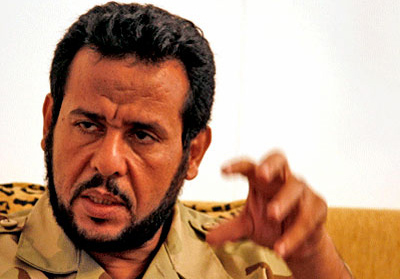
The first case, brought by the former Libyan opposition leader Abdul-Hakim Belhaj (photo) and his wife, Fatima Boudchar, alleges that UK Government officials were complicit in the couple’s kidnap and rendition to Gaddafi’s Libya, where they were arbitrarily imprisoned and tortured.
The second case was brought by Yunus Rahmatullah, who was detained by UK forces in Iraq before being handed over to US forces and allegedly tortured and imprisoned without charge for over ten years.
The Government argued before the Supreme Court that the claimants’ cases should be dismissed because, under the doctrines of sovereign immunity and foreign act of state, the UK courts were not permitted to rule on the legality of acts by foreign governments.
The claimants argued in response that the doctrines only applied in certain limited situations, and that they did not extend to the circumstances in Belhaj and Rahmatullah.
The claimants’ position in Belhaj was supported by several prominent human rights organizations – the ICJ, Amnesty International, JUSTICE and REDRESS – who intervened in the case.
The intervening organizations submitted that dismissing the claims would effectively grant impunity for torture to UK officials, violating international human rights law and weakening international commitments to an effective remedy for torture and other ill-treatment, enforced disappearance, arbitrary detention and other human rights breaches.
The Supreme Court found unanimously in favour of the claimants and dismissed the Government’s appeal.
It ruled that the doctrine of sovereign immunity did not apply because the foreign governments were not parties to the cases and their legal interests were not affected by the claims put forward.
In respect of foreign act of state, while the judges differed in their reasoning, they agreed that the doctrine could not be invoked for such serious violations of law as torture, unlawful detention and enforced disappearance.
The Belhaj and Rahmatullah cases will now proceed to full trials, where the courts will examine the facts of the claims and determine whether the UK Government and its officials were complicit in the claimants’ torture and other human rights abuses.
“The UK Supreme Court has spoken forcefully in affirming that the public interest in ensuring access to justice for victims of serious human rights abuses is paramount,” said Ian Seiderman, ICJ Legal and Policy Director.
“Human rights are universal and their effective enforcement must not be blocked by misapplied juridical doctrine that contrives to deny victims a remedy,” he added.
Contact
Ian Seiderman, ICJ Legal and Policy Director, t: +41 22979 3800 ; e: ian.seiderman(a)icj.org
UK-Belhaj case-News-press releases-2017-ENG (full version of press release, in PDF)
Jan 17, 2017 | Адвокаси, Краткий анализ
В публикации представлен анализ применимого международного права и стандартов, актуальных с точки зрения вопросов, которые обсуждались на круглом столе, включая оценку работы судей и ее воздействие на судейскую независимость; распределение дел; качество судебных решений; а также исполнение решений.
В публикации рассматриваются нормы и стандарты международного и европейского регионального права, связанные с этими основными аспектами внутреннего функционирования судебных органов, которыми должен руководствоваться законодатель и практикующие юристы при анализе национального законодательства и практики в свете данных вопросов.
В документе также представлены рекомендации с точки зрения рассматриваемых норм международного права и стандартов, при этом учитываются актуальные вопросы российской судебной системы, которые поднимались на круглом столе.
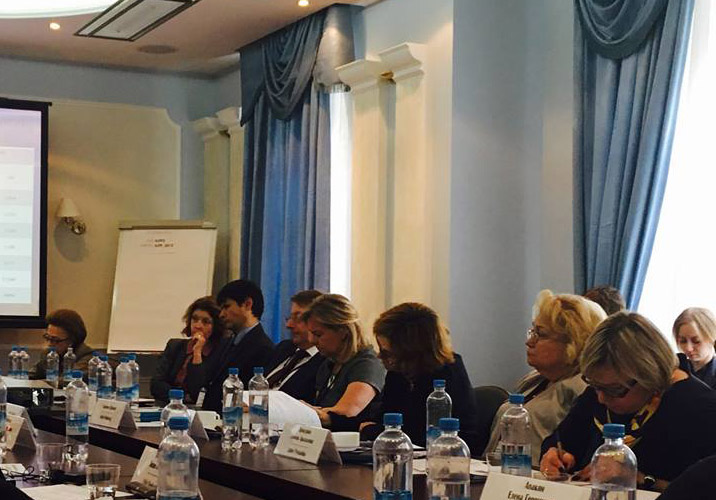
26 сентября 2016 года в Москве Международная комиссия юристов (МКЮ) совместно с Институтом права и публичной политики провела круглый стол на тему «Независимость, эффективность и качество правосудия».
Международные и российские эксперты МКЮ, в том числе судьи из России, Норвегии, Нидерландов и Италии, обсудили ряд вопросов, связанных с эффективностью судебных органов, распределением дел, качеством и исполнением судебных решений, а также иные сопряженные вопросы.
В ходе встречи российские и зарубежные судьи и юристы смогли обменяться опытом и обсудить основные аспекты организации судебных систем.
Участники семинара обсудили проблему сохранения низкого уровня доверия российского общества к судебным органам, а также необходимость дальнейших реформ, которые бы обеспечили, что судебные органы смогут эффективно выполнять свою роль истинного гаранта законности и прав человека.
Вызывает обеспокоенность не только соблюдение гарантий, напрямую связанных со справедливостью судопроизводства, но и сама организация судебных органов.
Несмотря на то, что институциональные аспекты судебной системы не так часто рассматриваются в индивидуальных делах, они крайне важны с точки зрения соблюдения права на справедливое судебное разбирательство по статье 6 ЕКПЧ и статье 14 Международного пакта о гражданских и политических правах (МПГПП), а также иных международных стандартов, касающихся независимости судебных органов и справедливого судопроизводства.
Russia-International standards_Moscow RT-Advocacy-Analysis brief-2017-RUS (брифинг на русском, PDF)
Jan 11, 2017 | News
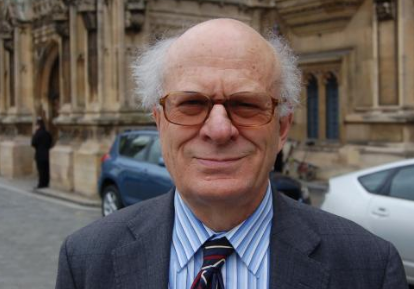
It is with great sadness that the ICJ mourns the loss of Honorary Member Lord William Goodhart QC who passed away on 10 January at the age of 83.
Lord Goodhart, from the United Kingdom, was a long-serving friend of the ICJ, having served as a Commissioner from 1993-2007, on the Executive Committee and also as ICJ Vice-President. from 2007-2009 Lord Goodhart also served as the Chairman of JUSTICE, the ICJ’s independent UK Section.
Lord Goodhart was a Liberal Democrat peer of the UK House of Lords, a Member of the All Party Parliamentary Humanist Group and an eminent human rights barrister. He was knighted in 1989 and made a Life Peer in 1997 as Baron Goodhart of Youlbury.
Our thoughts and condolences are with his family and many friends.