Sep 20, 2016 | News
The ICJ expresses its deep concern at recent developments in Botswana in respect of impeachment proceedings initiated against four judges and their suspension from office pending a disciplinary hearing.
The four judges, constituting one-third of the 12 Member High Court of Botswana, Justices Key Dingake, Modiri Letsididi, Ranier Busang and Mercy Garekwe, were suspended under section 97 of the Botswana Constitution on allegations of misconduct and bringing the name of the judiciary into disrepute.
The ICJ calls on all involved judicial and executive authorities to scrupulously respect the principles governing the independence of the judiciary in their conduct in addressing this serious situation, including in their actions throughout the course of any impeachment and disciplinary proceedings.
On 28 August 2015, the President of Botswana, Ian Khama, suspended the four judges after they, along with the other eight members of the Court, signed a petition directed to the Chief Justice.
The petition had objected, among other things, to alleged poor conditions of service, as well as disparaging comments the Chief Justice was said have made about another judge’s ethnicity and defamatory statements related to corruption.
The petition also advocated for the Chief Justice’s impeachment and was copied to all judges of the High Court.
The Chief Justice and the President took issue with the contents and tone of the petition, alleging it to be disrespectful of the Chief Justice and causing disrepute of the judiciary in the eyes of members of the public.
On the 4th of September 2015, the Law Society of Botswana (LSB) issued a statement in which it condemned the actions taken by the Chief Justice and President against the four judges.
The LSB considered that the case ought to have been resolved administratively rather than through what it said was “selective” impeachment of only four out of the 12 judges, particularly as no prima facie evidence existed that a crime had been committed.
The LSB alleged that “the selective approach in suspending and subjecting to a Tribunal only four (4) of the twelve (12) Judges who had signed the Petition, supported the widely held view that the action was a witch-hunt intended to remove certain Judges and ensure a more Executive Minded Bench.”
On the 23rd of September 2015, the LSB issued another statement following reports that three of the 12 judges had withdrawn their signatures to the petition after the judges had been “offered an ‘amnesty’ against any possible action being taken against them if they retract their association and / or apologise”.
The LSB went on to criticize an amnesty “made only to a select few of the Judges and not all” the 12 judges who signed the petition.
On 24 September 2015, the LSB issued a further statement calling on the Chief Justice to resign or face impeachment after the JSC offered amnesty to three other judges, who had signed or associated themselves with the petition.
The amnesty extended to any possible action being taken against them if they retracted their association and / or apologized. The offer of amnesty was not made to all 12 judges that had signed the petition, and in particular, it was not made to the four suspended judges.
On 28 September 2015, the Impeachment tribunal was to have commenced hearing of the matter, but the four concerned judges instituted litigation against appointment of the Tribunal and their suspension, which litigation is still pending.
Since then, the courts have been irregularly issuing instructions, contrary to proper procedure, through the Registrar of the High Court in the pending litigation, and given that the Registrar is party to the litigation, this creates an inherent conflict of interest.
These developments surrounding this case have raised serious concerns over the independence of the judiciary generally but more specifically the prospects for an independent, impartial and fair hearing for the suspended judges.
Read mor
botswana-impeachment-judges-news-web-stories-2016-eng (full text in PDF)
Sep 19, 2016 | Адвокаси, Новости, Статьи, Юридические заявления
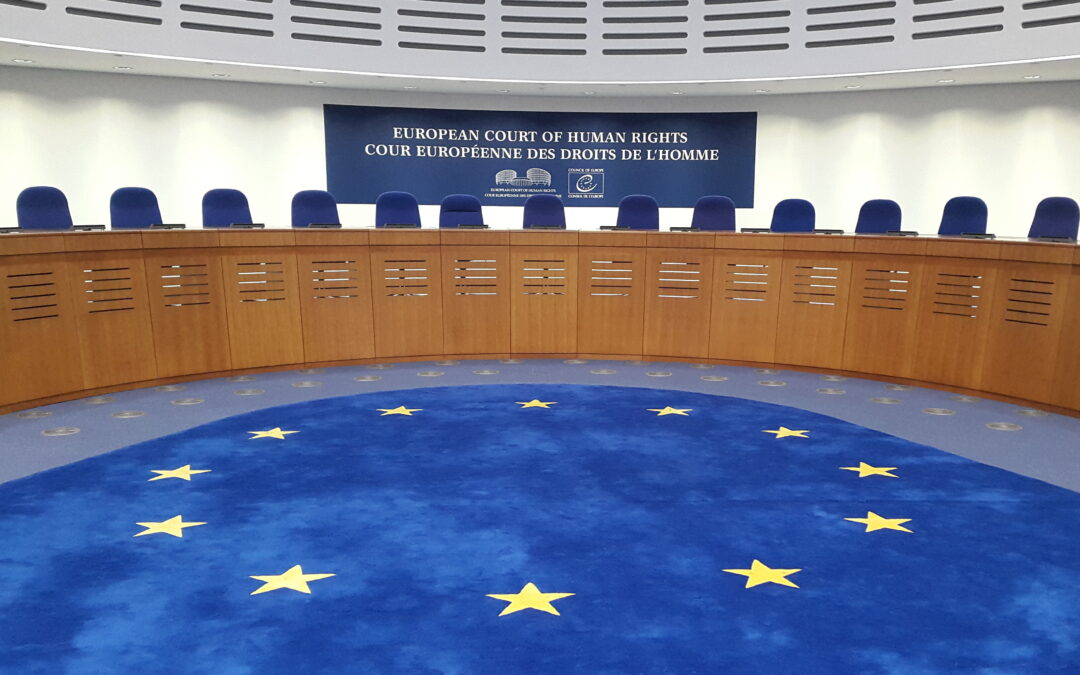
Сегодня МКЮ выступила перед Европейским судом по правам человека в случае экстрадиции узбекского гражданина в страну происхождения, где он может подвергаться риску пыток или жестокого обращения.
Международная комиссия юристов (МКЮ) вмешалась по делу С.У. против России.
В своих материалах МКЮ рассмотрела правовые рамки, регулирующие экстрадицию из Российской Федерации в государства Центральной Азии, в частности Узбекистан, а также практику экстрадиции России, в том числе путем использования дипломатических заверений. Эти материалы направлены на то, чтобы помочь Суду в оценке соблюдения этого закона и практики Европейской конвенцией о защите прав человека (ЕКПЧ) и, в частности, его процедурными обязательствами по невыдвоению.
МКЮ пришла к выводу, что анализ законодательства и практики показывает ряд критических нарушений прав человека.
МКЮ признала, что отсутствие уважения к процессуальному аспекту принципа невыдворения, вытекающая из этого неэффективность внутренних средств правовой защиты в этом отношении в Российской Федерации и ужасающий отчет Узбекистана в отношении соблюдения его обязательства уважать и защищать запрещение пыток или другого жестокого обращения означает, что экстрадиции из Российской Федерации в Узбекистан влекут за собой высокий риск нарушения как основных, так и процессуальных аспектов принципа невысылки.
Sep 18, 2016 | News
The ICJ held a workshop on Environmental Impact Assessment in Kyauk Phyu on 17-18 September 2016. Thirteen women and 30 men attended from Kyauk Phyu town, its surrounding villages and the regional capital Sittwe.
Kyauk Phyu is the proposed site for a megaproject to include a Special Economic Zone and deep seaport in Myanmar’s westernmost Rakhine State.
A Chinese company plans to develop the projects and the newly elected Myanmar Government is considering its future.
The EIA workshop included lawyers and civil society representatives as well as village administrators from each of the nine village administrative tracts in the proposed SEZ area.
An EIA is designed to avoid, minimize, eliminate and reduce harmful impacts of development projects.
It can require revising plans, making alternative arrangements and even cancelling project components.
Myanmar law now requires EIAs, including in SEZs, under the 2014 SEZ Law and 2015 EIA Procedure. Health, livelihood and social impact assessments are critical to this process.
Projects may only commence after the Environment Ministry approves an EIA.
Sean Bain, ICJ Legal Consultant for Myanmar, shared updates from research on SEZ legal frameworks and project plans.
The ICJ’s Legal Researcher, U Hayman Oo, facilitated discussions and linked these laws with local developments.
Participants were encouraged to document their land and livelihoods so they may have an evidence base to refer to in future.
Matthew Baird, an environmental lawyer supporting both the Environment Ministry and civil society groups, outlined each step involved in an EIA.
He emphasized the importance of public participation throughout the process – particularly in the early screening and scoping stages.
Early community engagement is critical to influence the focus and scope of the investigation, which would inform the draft EIA Report developed by an EIA consultancy firm.
Daw Khin Su Su Naing, from Coffey, explained the role of the consultancy firms hired by companies to conduct EIAs.
She described how social impacts are assessed, providing examples from elsewhere in Myanmar. Public participation was again emphasised as crucial.
U Mya Hlaing, from the Thilawa Social Development Group, shared community experiences from the development of Myanmar’s only active SEZ – located in Thilawa, across the river from Yangon. Villagers resettled by the project remain concerned about the standard of relocation sites and loss of livelihood opportunities.
Community organizing in Thilawa has been an important factor in improving public participation in EIA and resettlement processes.
Dr Daniel Aguirre, the ICJ’s International Legal Adviser, discussed international business and human rights frameworks, and the monitoring role of civil society.
From Earth Rights International, U Zaw Zaw explained how an Operational Grievance Mechanism can be a useful tool for creating a communication channel between affected people and companies.
An OGM cannot solve all problems, but can help to discuss issues and remedies as they arise.
Many participants have experienced impacts from irresponsible and at times illegal business activities.
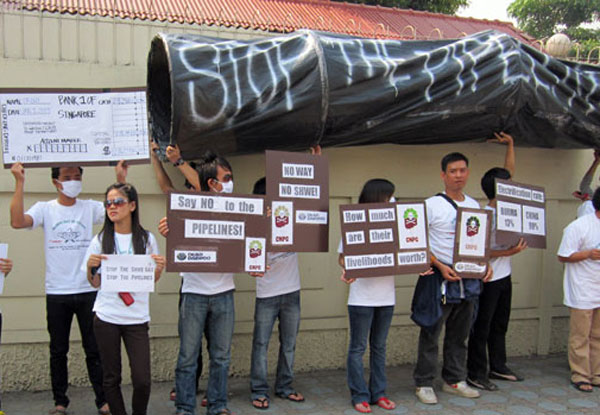
Kyauk Phyu hosts oil and gas facilities that serve a pipeline, finished in 2013, linking the Bay of Bengal with western China. No public EIA was conducted, and locals say the pipeline project led to land loss, deteriorating livelihoods and environmental pollution.
Many are still owed compensation and some were imprisoned for protesting to demand remedies.
Workshop participants expressed concerns that these problems will be repeated.
U Mya Hlaing encouraged locals in Kyauk Phyu to review the legal procedures and understand government obligations: “I am just a poorly educated farmer, but I have carefully read the laws and it has helped our community to demand our rights.”
He encouraged participants to raise concerns with Myanmar’s new governance bodies for SEZ management.
This was the ICJ’s third event in Kyauk Phyu over two years, with further initiatives planned.
Sep 16, 2016 | News
Indian authorities have detained a Kashmiri human rights activist after stopping him from traveling to the United Nations Human Rights Council in Geneva, Human Rights Watch and the ICJ said today.
Khurram Parvez was arrested in his home on 15 September 2016, a day after being prevented from leaving the country with a group of rights activists who were traveling to Geneva to raise concerns about the security force crackdown in Jammu and Kashmir.
Human Rights Watch and the ICJ call on authorities to immediately release Parvez and allow him to attend the Human Rights Council session.
“Indian authorities seem to have missed the irony of blocking a rights activist on his way to the UN Human Rights Council,” said Sam Zarifi, Asia Director at the International Commission of Jurists.
“Monitoring and engage
ment by civil society is necessary to prevent human rights violations and ensure accountability. The Government should immediately release Khurram Parvez and begin working with him and other activists to address the difficult issues facing Jammu and Kashmir,” he added.
Parvez, 39 years of age, is chair of the Asian Federation Against Involuntary Disappearances (AFAD) and program coordinator of the Jammu Kashmir Coalition of Civil Society (JKCCS).
He has documented cases of enforced disappearances and investigated unmarked graves in Kashmir.
According to his lawyer, Parvez has been detained by Kashmir police under “preventive detention” provisions of the Code of Criminal Procedure, including section 151 (arrest to prevent the commission of cognizable offense).
The Government’s actions against Parvez violate his right to freedom of movement.
Under international human rights law, any restrictions on freedom of movement for security reasons must have a clear legal basis, be limited to what is necessary and be proportionate to the threat.
This is further supported by article 5 of the UN Declaration on Human Rights Defenders, which states that “[f]or the purpose of promoting and protecting human rights and fundamental freedoms, everyone has the right, individually or in association with others, at the national and international levels… to communicate with nongovernmental or intergovernmental organizations.”
“Instead of trying to silence human rights activists, India should be addressing the serious human rights problems in Jammu and Kashmir and holding perpetrators of abuses to account,” said Meenakshi Ganguly, South Asia Director at Human Rights Watch.
“Preventing open discussion of these issues, whether in India or in Geneva, sends a message to Kashmiris that the government has no interest in addressing their concerns,” she added.
Background
Violent protests broke out in Jammu and Kashmir state after the killing of Hizb-ul-Mujahedin militant Burhan Wani in an armed encounter on 8 July.
Since then, the authorities have placed large parts of the state under curfew restrictions to try to stop protesters who hurl stones at security forces and attack police posts.
Security forces have used unnecessary lethal force to contain the violence, which has resulted in the death of 80 protesters and 2 police officers, and thousands injured.
Some protesters, including children, lost their vision from pellets fired from riot-control guns.
While police have a duty to protect lives and property, under the UN Basic Principles on the Use of Force and Firearms by Law Enforcement Officials, they should use non-violent means as far as possible, only use force when unavoidable and in a proportionate manner, and use lethal force only when absolutely necessary to save lives, Human Rights Watch and International Commission of Jurists said.
The authorities have also attempted to censor news and restrict access to information.
The Government shut down local newspapers for three days, blocked mobile internet services temporarily, and ordered local cable operators to block the transmission of five news channels on television.
India has failed to address longstanding grievances in Jammu and Kashmir.
Numerous expert committees in India have recommended steps to address past human rights violations, including a repeal of the draconian Armed Forces Special Powers Act, but the Indian Government has ignored these recommendations.
Contact:
Sam Zarifi, ICJ Asia-Pacific Regional Director, (Bangkok); t:+66(0) 807819002; e: sam.zarifi@icj.org

Sep 14, 2016 | Events
This panel discussion features two Iraqi torture survivors, Salah Hassan Nsaif and Ali Shallal Abbas, who will share their first-hand accounts serious abuse suffered at Iraq’s notorious Abu Ghraib prison, and the role of U.S. contractors in that torture and abuse.
The event organised by the International Commission of Jurists, the International Federation of Human Rights (FIDH), and the Center for Constitutional Rights, takes place 15 September 2016, 11:00-12:00, at the Palais des Nations Room XXVII in Geneva, Switzerland.
CCR Senior Staff Attorney Katherine Gallagher will discuss legal cases, Saleh v Titan and Al Shimari v CACI, brought in the United States on behalf of victims as they seek justice. The cases will be placed in context of broader corporate accountability efforts, including those of the UN Working Group on Mercenaries and the Open-Ended Working Group on a legally binding instrument on transnational corporations and other business enterprises.
Speakers:
Salah Hassan, journalist and photographer for Al Jazeera network and Abu Ghraib torture survivor
Ali Shallal Abbas, Founder and President of the Association of victims of the American and Iranian prisons in Iraq, and Abu Ghraib torture survivor
Katherine Gallagher, Senior Staff Attorney, Center for Constitutional Rights
Carlos Lopez, Senior Legal Adviser, Business and Human Rights, International Commission of Jurists (moderator)
Remarks will also be made by Patricia Arias, Chair of the UN Working Group on Mercenaries.
Following the event, there will be the opening of an art exhibit organized by the UN Working Group on the use of mercenaries. Ms. Arias, Mr. Nsaif, and Mr. Abbas will make remarks, and guests are invited to engage with the photographs, multimedia display, and virtual reality film. The exhibit is open to delegates, NGOs, and the public. “Private Actors in Warfare: Stories from victims of private military and security companies and foreign fighters” will take place at 13:00 – 15:00 in Palais des Nations Room XXIII.
A flyer for the event may be downloaded, in PDF format, here: side-event-pmsc-abu-graib-sept2016