Sep 29, 2015 | Events, News
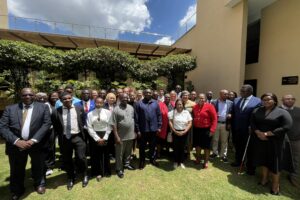
From 30 September to 1 October 2015, the Asian Forum for Human Rights and Development (FORUM-ASIA), International Commission of Jurists (ICJ), and Boat People SOS (BPSOS) will jointly organize a conference in Bangkok.
The regional conference will discuss pressing concerns on the promotion and protection of freedom of religion or belief.
The UN Special Rapporteur on Freedom on Religion or Belief, Mr. Heiner Bielefeldt, will be joined by approximately 60-70 human rights defenders, members of religious groups, rights groups, UN agencies and representatives from the ASEAN Intergovernmental Commission on Human Rights, ASEAN Commission on the Promotion and Protection of Rights of Women and Children, National Human Rights Institutions and other government agencies.
The event will provide a multi-stakeholder platform to discuss key emerging issues, distinct and shared challenges faced by various Southeast Asian religious groups and advocates of religious freedom, identify advocacy strategies and best practices to overcome these obstacles, and to strengthen cooperation between the different stakeholders important in promoting freedom of religion or belief in Southeast Asia.
The event will also be an opportunity for participants to have a better understanding of the mandate of the UN Special Rapporteur on freedom of religion or belief.
Some of the key topics expected to be discussed include state control and regulation of religion, extreme interpretations of religion, and how freedom of religion together with other human rights are complementary or mutually reinforcing.
Upon the completion of the conference, the Special Rapporteur will hold a press briefing at the Foreign Correspondents’ Club of Thailand (FCCT) at 7.30pm on 1 October 2015 to provide an overview of the status of freedom of religion or belief in Southeast Asia and how this right could be better protected and promoted.

Sep 24, 2015 | News
The ICJ and ten other civil society organizations are concerned about the possible refoulement by the Cambodian government of more than 100 Montagnard asylum seekers to Viet Nam and call on Cambodia not to take such action.
They issued a statement that can be downloaded here:
Cambodia-Refoulement of Montagnard asylum seekers-News-web story-2015-ENG (full text in PDF)

Sep 21, 2015 | News
Today, the ICJ has started its mission to the Kyrgyz Republic on organisation and functioning of the legal profession.
During the mission, which will last from 21 to 25 September, the ICJ will assess the implementation of the new legislation unifying the legal profession under a single national bar association, including establishment of new structures and standards for the self-governance of the profession regarding qualification, disciplinary action and professional ethics.
A round table with independent lawyers will be held during the visit, other meetings with bodies of the Bar Association, State officials and other stakeholders that take part in the reform will be held.
The mission will include Jeroen Brouwer, former President of the Dutch Bar Association, Róisín Pillay, Director of the Europe Programme and Temur Shakirov, Legal Adviser of the Europe Programme.
The mission will be followed by a brief report with recommendations for reform.
Contact:
Róisín Pillay: roisin.pillay(a)icj.org
Temur Shakirov: temur.shakirov(a)icj.org

Sep 16, 2015 | News
Myanmar’s government must end the practice of appointing newly retired military officials as judicial officers to its courts and ensure that the judiciary carries out its functions as a separate branch and independent of the Executive, said the ICJ today.
At least 20 former military officers who have just recently resigned from the military were reportedly appointed as vice director generals to the country’s Supreme Court this month.
They will be performing administrative functions but according to section 310 of the Myanmar Constitution will be in line for senior judicial appointments at the state or regional level after 5 years or sooner if the President considers them to be ‘eminent jurists’.
“One of the fundamental aspects of an independent, impartial and accountable judiciary is the appointment of judges, through proper procedures, on the basis of their legal competencies,” said Sam Zarifi, ICJ’s Asia Director. “The process for appointing and promoting judges must be transparent and ensure judicial independence and impartiality.”
A group of leading members of the Myanmar bar launched a “yellow ribbon” campaign last Friday in Yangon to protest the practice of assigning military officers to serve as judicial officers.
“The process of selecting these officers and assessing their legal qualifications is totally opaque,” Zarifi added. “The lawyers wearing yellow ribbons are emphasizing the belief of people in Myanmar that strengthening the rule of law is essential to guaranteeing justice and the country’s political and economic development, so it’s important to improve the judiciary’s qualifications and increase public trust.”
The Supreme Court of Myanmar launched its Strategic Plan 2015-2016, citing “judicial independence and accountability” as one of its key strategy areas.
The UN Basic Principles on the Independence of the Judiciary provide that that “Persons selected for judicial office shall be individuals of integrity and ability with appropriate training or qualifications in law.”
“The Myanmar judiciary is trying to shake off decades of interference from the Executive branch in order to assert its proper role as defender of the rights of people in Myanmar, and it can’t do so without a clear and transparent appointment and promotion process,” Zarifi said.
An exposition and analysis of international law and standards are available in English and Myanmar language in the ICJ’s authoritative Practitioners’ Guide on the Independence and Accountability of Judges, Lawyers and Prosecutors.
Contact:
Sam Zarifi, ICJ Regional Director for Asia and the Pacific, t: +66 807819002; e: sam.zarifi(a)icj.org
Vani Sathisan, ICJ International Legal Adviser for Myanmar, t: +95 9250800301; e: vani.sathisan(a)icj.org
Sep 15, 2015 | News
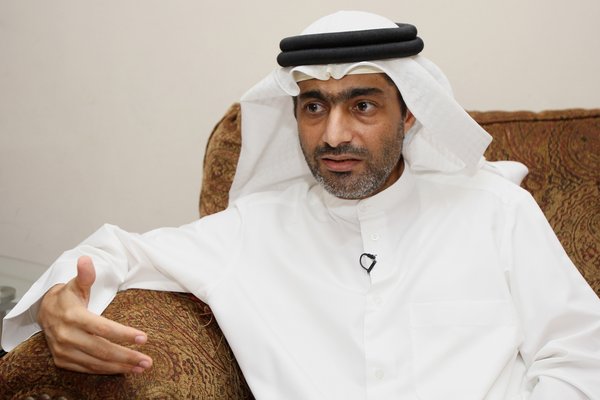
Ten human rights groups, including the ICJ, represented in the Jury, today called on the United Arab Emirates authorities to lift the travel ban imposed on Ahmed Mansoor, one of the three human rights defenders nominated for the 2015 Award, and to issue him a passport.
Widely respected as one of the few voices within the United Arab Emirates (UAE) to provide a credible independent assessment of human rights developments in the country, Ahmed Mansoor regularly raises concerns regarding arbitrary detention, torture or degrading treatment, and failure to meet international standards of fair trial.
He also draws attention to other human rights abuses, including against migrant workers.
As a result, Ahmed Mansoor has faced repeated intimidation, harassment, and death threats from the UAE authorities or their supporters, including arrest and imprisonment in 2011 following an unfair trial.
He and four other activists who called for democratic rights in the UAE were jailed in 2011 on the charge of “insulting officials”.
Although pardoned and released later that year, Ahmed Mansoor has been banned from travel and had his passport confiscated.
As a result of his courageous work, Ahmed Mansoor was selected as one of the three finalists of the Martin Ennals Award who will be recognized at a ceremony hosted by the city of Geneva on October 6th.
The Award is usually handed out by the United Nations High Commissioner for Human Rights.
As matters stand, however, Ahmed Mansoor will be prevented from attending the ceremony because the UAE authorities have arbitrarily imposed a travel ban on him and have refused to return his passport.
Both the travel ban and the confiscation of his passport violate Ahmed Mansoor’s right under international human rights law to freedom of movement, as these measures were taken to punish him for his peaceful human rights activism.
The Martin Ennals Award Jury today noted with concern : “Ahmed Mansoor’s absence at the ceremony would mark a very disappointing position for the UAE, which is a country that prides itself as one of the hubs of international business and tourism in the Middle East, as well a safe haven in the region. As a member of the UN Human Rights Council, which is running for a second term, we expect the UAE authorities to honour their obligations to uphold human rights and protect human rights defenders. The UAE government must match its rhetoric on the international stage with meaningful actions at home, starting with immediately lifting the travel ban on Ahmed Mansoor, to returning and renewing his passport, and allowing him to travel to Geneva for the ceremony.”
Ahmed Mansoor is a member of the Advisory Committee of Human Rights Watch’s Middle East and North Africa Division, as well as the Advisory Board of the Gulf Centre for Human Rights.
The following organizations are represented in the Martin Ennals Award Jury: International Commission of Jurists, Amnesty International, FIDH, Human Rights First, HURIDOCS, International Service for Human Rights, EWDE Germany, Front Line Defenders, Human Rights Watch, World Organisation Against Torture.
Contact:
Michael Khambatta, Director, Martin Ennals Foundation, t +41 79 474 8208 ; e: khambatta(a)martinennalsaward.org
UAE-MEA Jury Joint Statement Ahmed Mansoor-News-Press releases-2015-ARA (full text of press release in ARABIC, pdf)