Sep 14, 2015
The ICJ today called on the members of the Tunisian parliament to amend the draft law on the High Judicial Council (HJC), with a view to ensuring its full compliance with international standards on judicial independence.
In a new position paper, the Geneva-based organization acknowledges that the draft law provides enhanced guarantees for judicial independence, in particular by ending executive control over the HJC, by providing for a majority of the HJC’s members to be judges elected by their peers, and by ensuring that the HJC is the only body competent to manage the career of judges.
But the ICJ remains concerned that in certain key respects, the draft law falls short of international standards.
In particular, it does not provide for specific, concrete measures to ensure women’s full and equal participation and representation in the HJC and the judiciary as a whole, for the HJC to be consulted on, and involved in, the preparation and implementation of the judiciary’s budget, and for adequate financial resources to be available for both the HJC and the judiciary in general.
“The Tunisian Assembly should ensure that the draft law is amended so that the HJC is truly independent, pluralistic and gender-representative and its competencies are expanded to include its involvement in the preparation and implementation of the budget for the entire judiciary, not only that of the HJC,” said Said Benarbia, Director of the ICJ MENA Programme.
The ICJ is also concerned that, while the draft law provides enhanced guarantees for the management of the career of judges by the HJC, the provisions relating to the security of tenure of judges and the transfer of judges, as well as certain aspects of the disciplinary system, are not fully in line with international standards.
“The draft law should be amended to ensure that judges may only be removed for reasons of incapacity or behaviour that renders them unfit to discharge their duties, that in all circumstances their consent is sought for any transfer to another jurisdiction, and that all disciplinary proceedings against them are fair and determined in accordance with established standards of judicial conduct,” Benarbia added.
Contact:
Theo Boutruche, Legal Adviser of the ICJ Middle East and North Africa Programme, t: +96 170 888 961, e: theo.boutruche(a)icj.org
Tunisia-Final HJC Draft Law-Advocacy-Position Paper-2015-ENG (full text of position paper in PDF, English)
Tunisia-HJC law-News-2015-ARA (full news text in PDF, Arabic)
Tunisia-Final HJC Draft Law-Advocacy-Position Paper-2015-ARA (full text of position paper in PDF, Arabic)
Aug 6, 2015
In a position paper published today, the ICJ called on the Tunisian President to refrain from promulgating the flawed Counter-Terrorism Law that was adopted by the Assembly of the People’s Representatives on 25 July 2015.
The ICJ also urged the Tunisian authorities to amend this Law through a transparent and inclusive process, including with a view to ensuring its full compliance with international human rights and rule of law standards.
The adoption of the Law follows a series of attacks against members of the security forces and the army and two deadly attacks in the Bardo Museum and Sousse.
“Legitimate security concerns by Tunisian authorities should not lead to the adoption and the enforcement of repressive laws and other measures that erode the rule of law and curtail fundamental rights and freedoms,” said Said Benarbia, Director of the Middle East and North Africa Programme at the ICJ.
Overly broad and imprecise definitions in many offences created under the Law extend its reach far beyond truly terrorist acts such as hostage-taking, killings or causing serious injuries, and other such violence.
In some aspects, such as offences of glorification and incitement to terrorism, the provisions are so broadly drafted that they have the potential to criminalize the peaceful exercise of fundamental freedoms, including the right to freedom of expression. Some provisions could result in the wrongful prosecution of journalists and whistleblowers.
The ICJ is also deeply concerned at article 68 of the Law, which provides immunity from criminal prosecution for security forces when using force in the course of their duties.
The article could potentially allow law enforcement officers who use force in violation of international standards and the right to life, such as intentional use of lethal force when it is not strictly unavoidable in order to protect life, to escape justice.
Other provisions of the Law raise serious concerns for the right to a fair trial, the right to liberty, and the right to privacy.
In particular, provisions allowing a person to be held in police custody for up to 15 days without access to a lawyer or a judge are inconsistent with the right to liberty, fair trial guarantees, and guarantees for the prevention of torture and other abuses in detention.
“By shielding security forces from accountability and eroding procedural and other fair trial guarantees of terrorism suspects, the Law contradicts Tunisia’s obligations under international law, and its own Constitution,” added Benarbia. “ Tunisian authorities must ensure the Law is revised to fully respect its human rights obligations, including those relating to the right to liberty, to a fair trial, and to effective remedies and reparation in cases of human rights violations.”
Contact
Theo Boutruche, Legal Adviser of the ICJ Middle East and North Africa Programme; t: +96 170 888 961; e: theo.boutruche(a)icj.org
Tunisia-CT position paper-Advocacy-Position Paper-2015-ENG (full text of the position paper in English)
Tunisia-PR CT position paper-News-Press release-2015-ARA (full text of the press release in Arabic)
Tunisia-CT position paper-Advocacy-Position paper-2015-ARA- (full text of the position paper in Arabic)
Jul 9, 2015
In a new position paper, the ICJ calls on the Egyptian authorities to refrain from promulgating the deeply flawed draft Counter-Terrorism Law.
The draft law, which was approved by the Cabinet on 1 July and the State Council the next day, was introduced following the assassination of the Prosecutor-General, Hisham Barakat, on 29 June, and attacks by armed groups in the Sinai two days later that left dozens of soldiers dead.
“Egypt’s draft Counter-Terrorism Law would erode the rule of law and brush aside fundamental legal and human rights guarantees,” said Said Benarbia, Director of the Middle East and North African Programme at the ICJ.
“It contravenes the unanimous declaration of all states at the UN, that human rights should be the cornerstone of counter-terrorism efforts,” he added.
The draft law criminalizes an enormous range of acts using broad definitions and vague wording. Such definitions have the potential to criminalize the legitimate and peaceful exercise of rights, including the rights to freedom of expression, association and assembly, the ICJ says.
A number of these crimes are punishable with the death penalty. The ICJ opposes the death penalty in all circumstances as a violation of the right to life and the prohibition of torture and other cruel, inhuman or degrading punishment.
Furthermore, the draft grants wide powers to investigative and law enforcement officials that present severe risks of arbitrary detention and extensive infringements of the right to privacy without adequate safeguards or judicial oversight, the ICJ adds.
The draft law also grants immunity from criminal prosecution for State officials, including potentially those who unlawfully use lethal force.
A new terrorism court with expedited procedures, which fall short of international fair trial standards, is also provided for under the draft law.
The draft also grants the President sweeping discretionary powers, including the power to take any “necessary measures” when there is a “danger of a terrorist crime.”
“Egyptian authorities must drop the draft Counter-Terrorism Law and ensure that any future counter-terrorism measures are fully in line with Egypt’s obligations under international law, including the obligation to uphold the rule of law and human rights,” Benarbia said.
Contact:
Alice Goodenough, Legal Adviser of the ICJ Middle East and North Africa Programme, t: +44 7815 570 834; e: alice.goodenough(a)icj.org
Nader Diab, Associate Legal Adviser of the ICJ Middle East and North Africa Programme, t: +41 229 793 804; e: nader.diab(a)icj.org
Egypt-Counter-Terrorism Law-Advocacy-Position papers-2015-ENG (full text of position paper in PDF, English)
Egypt-Counter-Terrorism Law-News-Press releases-2015-ARA (full text of Press release in PDF, Arabic)
Latest update (17 August):
Since publication of the ICJ’s Position Paper, certain aspects of the law have been amended, in particular by replacing the proposed “terrorism courts” with the entrenchment of terrorism circuits established within the court system. However, the main points of the criticism in the Position Paper remain valid for the version of the law promulgated on 17 August 2015.
May 18, 2015
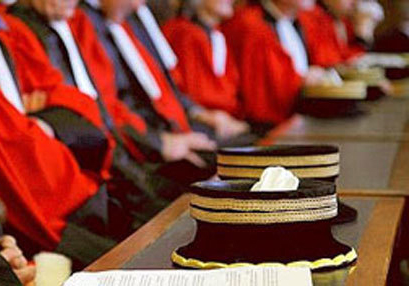
The ICJ today called on the Tunisian President to refrain from promulgating Organic Law No. 16/2015 on the High Judicial Council (HJC), and urged the Tunisian authorities to act to reform the deeply flawed articles of the law in full compliance with international standards on judicial independence.
The ICJ is deeply concerned that the law, which was approved by the Assembly of People’s Representatives on Friday 15 May, falls far short of international standards on judicial independence, in particular the provisions relating to the composition, independence and competencies of the HJC.
Of particular concern is the fact that the law does not provide for the HJC to consist of a majority of judges who are elected by their peers; does not provide for the HJC to be meaningfully involved in determining and ensuring sufficient budgeting for the judiciary; and does not adequately guarantee the security of tenure of judges, including by allowing for judges to be transferred without their consent for a maximum of three years.
The law also grants the Minister of Justice sweeping powers over the Judicial Inspection Service and over the commencement of disciplinary proceedings.
The ICJ is concerned that the drafting process of the law has failed to meet basic principles of inclusive participation and transparency.
Stakeholders, including professional associations of judges and civil society organizations, were not given the opportunity to provide their inputs or to meaningfully comment on the drafts.
“If promulgated, Law No. 16/2015 would perpetuate some of the provisions and practices that undermined judicial independence in Tunisia for decades, including by allowing for the Minister of Justice to initiate disciplinary proceedings against judges,” said Said Benarbia, Director of the ICJ MENA Programme.
“The Tunisian President must refrain from promulgating this law and initiate an inclusive process to draft a new law that unequivocally ends executive interference in judicial matters and empowers the HJC to oversee all issues relating to the judiciary, including judicial administration and the career of judges,” he added.
Contact:
Theo Boutruche, Legal Adviser, ICJ Middle East and North Africa Programme, t: +96 170 888 961, e: theo.boutruche(a)icj.org
Tunisia-Tunisian Law on HJC-News-Press Release-2015-ARA (press release in Arabic, PDF)
Tunisia-Tunisian Law on HJC-Advocacy-Position Paper-2015-ENG (position paper in English, PDF)
Tunisia-Tunisian Law on HJC-Advocacy-Position Paper-2015-ARA (position paper in Arabic, PDF)

May 21, 2014
The ICJ has released a briefing paper entitled ‘International Human Rights Law and Gender Equality and Non-Discrimination Legislation. Requirements and Good Practices.’
Ensuring women’s enjoyment of their human rights on a basis of equality and without discrimination is a fundamental tenet of international law and is enshrined in a range of international human rights treaty provisions. In order to give effect to this obligation, States must enact legislative guarantees of gender equality and prohibitions of discrimination that are effective and fit for purpose.
This short briefing paper provides an overview of the basic components that international treaty monitoring bodies have repeatedly held must be encompassed within national legal provisions in order to meet the requirements of international law and standards.
GenderEquality&NonDiscriminationLegislation-BriefingPaper-Legal-2014 (download briefing paper in PDF)

![Smoke rises after an Israeli air strike on the village of Taybeh in southern Lebanon [Source: Al Jazeera]](https://www.icj.org/wp-content/uploads/2026/03/Screenshot-2026-03-20-at-15.56.24-300x200.png)