Oct 23, 2023
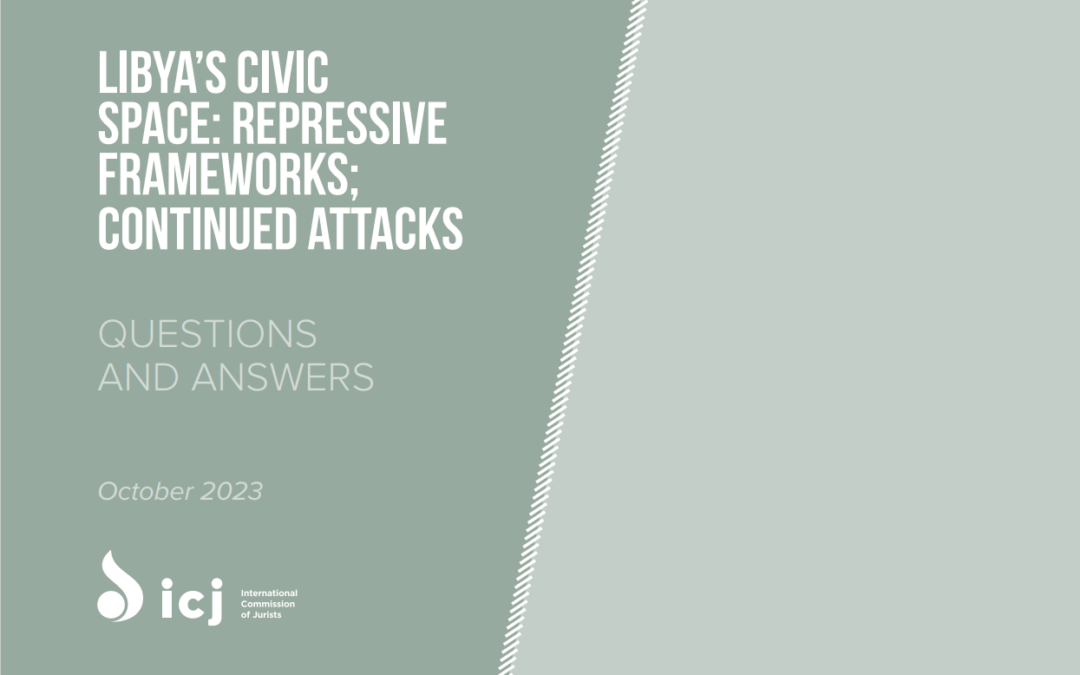
A new question-and-answer briefing by the International Commission of Jurists (ICJ) examines recent developments that have detrimentally affected the right to freedom of association in Libya against the backdrop of an increasing crackdown on Civil Society Organizations (CSOs). Among such negative developments, the authorities have even begun enforcing repressive Gadhafi-era legislation, namely, Law No. 19 of 2001, which had not been enforced since the 2011 uprising.
.هذا البيان الصحفي متوفر باللغة العربية أيضاً
Said Benarbia, ICJ Middle East and North Africa Programme Director, said:
“Instead of subjecting them to the ongoing, relentless crackdown, Libyan authorities must ensure that independent CSOs be able to discharge their functions in defence of the rule of law and human rights independently, without political interference, undue restrictions, harassment, fear of intimidation or reprisal.”
The briefing analyzes the country’s legal framework and its compliance with domestic and international human rights law and standards. It answers the following questions:
- How has the legal framework regulating the right to freedom of association in Libya become more restrictive recently?
- Does the legal framework currently enforced by the Libyan authorities meet domestic and international human rights law and standards on the right to freedom of association?
- What are the impacts of the increasing restrictions on freedom of association on the rule of law and human rights?
Based on the analysis featured in the Q&A and with a view to ensuring full compliance with Libya’s obligations under international human rights law and relevant standards, the ICJ calls on the Libyan authorities to ensure that:
- All existing laws and decrees on CSOs be abolished, and new ones be adopted in accordance with Libya’s obligations under international human rights law and standards. Until then, the authorities shall ensure that any frameworks by the Government of National Unity or the Government of National Stability on the registration, functioning and funding of CSOs be fully in line with articles 14 and 15 of the 2011 Constitutional Declaration;
- CSOs be able to effectively play their watchdog role and act in defence of the rule of law and human rights, without political interference, intimidation, harassment or undue restrictions;
- All ongoing prosecutions and other arbitrary proceedings against civil society actors in relation to their legitimate work be terminated, and all those arbitrarily detained solely for their civil society work be immediately and unconditionally released;
- Accountability for human rights abuses to which civil society actors have been subjected; and
- CSOs be meaningfully consulted on and able to provide inputs in ongoing political processes, including those related to constitutional, electoral and transitional justice reforms.
Contact
Said Benarbia, Director, ICJ Middle East and North Africa Programme; t: +41 22 979 3817, e: said.benarbia(a)icj.org.
Mohamed Hanafy, Legal Researcher, ICJ Middle East and North Africa Programme; e: mh(a)icj.org.
Juliette Rémond Tiedrez, Legal Researcher, ICJ Middle East and North Africa Programme; e: juliette.remond-tiedrez(a)icj.org.
Download
Q&A on the current attacks on the right to freedom of association in English and Arabic.
Press Release in English and Arabic.
Sep 22, 2023
Joint Oral Statement
The International Bar Association’s Human Rights Institute (IBAHRI) and the International Commission of Jurists (ICJ) deplore the widespread and systematic human rights violations in Belarus. We condemn the escalating pattern of retaliation against lawyers for representing the political opposition and protesters and, upholding the rule of law.
Since 2020, over 100 lawyers have faced harassment and have been forced to flee the country. On 27 July 2023, prominent lawyer Yuliya Yurgilevich and journalist Pavel Mazheika were sentenced to six years’ imprisonment on spurious charges, including against Yurgilevich for publicizing her disbarment and disseminating information on political prisoners .
We remain concerned at the apparent enforced disappearance of political prisoners, including Maria Kalesnikava and Viktar Babaryka, detained without access to the outside world, including lawyers.
The recent presidential decree from 4 September, restricting Belarus nationals in exile from accessing consular services, is unacceptable. It jeopardizes the enjoyment of human rights for those exiled and their families including the right to freedom of movement, to work, health, education, and housing
We urge:
- Belarus to immediately release all arbitrarily detained individuals, including lawyers and other political prisoners, and to ensure that all detained person have access to lawyer, doctors and family and cease their persecution, immediately withdraw the presidential decree on consular services.
- Host States to provide all necessary assistance to protect the rights of exiled Belarus nationals and their families.
This statement was delivered by:
Francesca Restifo
Senior Human Rights Lawyer and UN Representative
International Bar Association’s Human Rights Institute (IBAHRI)
For further information please contact
Francesca Restifo, IBAHRI, francesca.restifo@int-bar.org
Sandra Epal Ratjen, ICJ, sandra.epal@icj.org

Sep 21, 2023
For decades within its own borders, Russian authorities have undermined and attacked independent civil society, persecuted human rights defenders, activists, lawyers, and opposition and dissenting voices, banned independent media, silenced journalists, and have effectively outlawed any form of peaceful protest.
It has never been more dangerous to be a human rights defender in contemporary Russia. This environment, at least in part, enabled the Russian authorities to launch a renewed invasion of Ukraine on 24 February 2022. At the same time as the danger has increased, protections have decreased. The judiciary is not independent and cannot provide effective protection for human rights. Victims of Russian human rights violations no longer have the ability to bring their cases before the European Court of Human Rights, and Russia has even failed to turn up to United Nations Treaty Body reviews, specifically those of the Human Rights Committee, in 2022.
Ahead of the first Interactive Dialogue by the new UN Special Rapporteur on the situation of human rights in the Russian Federation at the Human Rights Council, this in-person side event at the 54th session allows for an opportunity to discuss critical updates on the human rights situation in Russia, as well as further action to respond to Russia’s human rights crisis and to the legitimate calls for support from domestic civil society.
The panel will focus on the following key questions:
¨ What are the most pressing human rights issues in Russia today?
¨ Why should the Human Rights Council look to renew the mandate of the Special Rapporteur during the 54th session?
Speakers
Mariana Katzarova
UN Special Rapporteur on the situation of
human rights in the Russian Federation
Violetta Fitsner
OVD-Info
Zhargal Budaev
Memorial Human Rights Defence Centre
Dmitry Gurin
European Prison Litigation Network
Closing statements
Oleg Kozlovsky
Amnesty International
Damelya Aitkhozhina
Human Rights Watch
Moderator
Dave Elseroad
Human Rights House Foundation

Sep 21, 2023
Joint Oral Statement
The International Bar Association’s Human Rights Institute (IBAHRI) and the International Commission of Jurists (ICJ) condemn the widespread and escalating attacks on independent lawyers, including legal harassment, disciplinary actions, disbarments, and arbitrary criminal charges.
We deplore the abusive Foreign Agents Law, with its overbroad definition that covers any persons under “foreign influence”. The Law has been instrumentalized to violate the rights to freedom of expression, association, assembly, and public participation. Lawyers are repeatedly labelled as “foreign agents”, for exercising their human rights and performing their legitimate duties, and many had their licenses suspended.
The Ministry of Justice has listed lawyers as “foreign agents” for lawfully representing human rights defenders, including lawyers Pavlov and Vetoshkina.
Russia’s Constitutional Court has abdicated its responsibility to protect rights by summarily dismissing challenges to legislative provisions criminalizing “public actions aimed at discrediting” the Russian Armed Forces.
We are concerned that the Bar Association intends to set up an Integrated Information System of the Bar of Russia, with the legal obligation for every lawyer to be part of this system, increasing risks of digital surveillance, breach of lawyer-client confidentiality and further harassment.
The repressive legislation in Russia leaves few domestic options to seek justice. It is imperative to maintain rigorous monitoring. We therefore urge this Council to renew the mandate of the Special Rapporteur and ensure additional resources necessary to fulfil its role.
This statement was delivered by:
Francesca Restifo, Senior Human Rights Lawyer and UN Representative
International Bar Association’s Human Rights Institute (IBAHRI)
For further information please contact:
Francesca Restifo, IBAHRI, francesca.restifo@int-bar.org
Sandra Epal Ratjen, ICJ, sandra.epal@icj.org
Mar 8, 2023
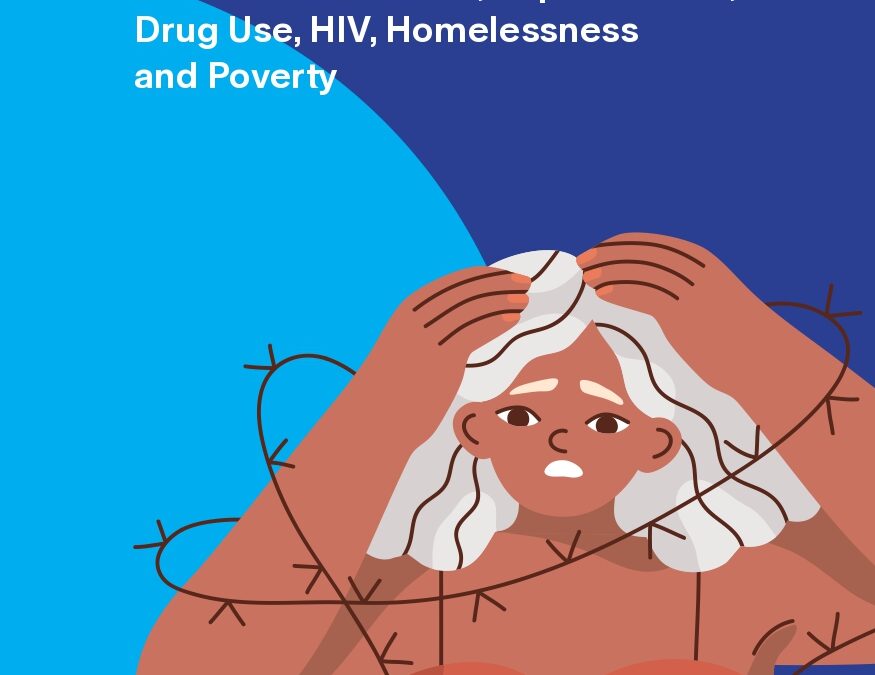
Today, on International Women’s Day, the International Commission of Jurists (ICJ) launched a new set of legal principles elaborated by jurists for a human rights-based approach to criminal laws proscribing conduct associated with sex, reproduction, drug use, HIV, homelessness and poverty.