
Revue de la CIJ no. 57 (Décembre 1996)
Impunité, crimes contre l’humanité et disparitions forcées.
ICJ Review-57-1997-fra (Texte complet en PDF)

Impunité, crimes contre l’humanité et disparitions forcées.
ICJ Review-57-1997-fra (Texte complet en PDF)

This edition remembers Niall MacDermot, former Secretary-General of the ICJ, whose precious legacy will continue to inspire generations of defenders of human rights. He stood up against all dictatorships to defend the right and lives of the oppressed.
This special edition contains:
Part One: Tributes to Niall MacDermot
Part Two: Speeches Given by Niall MacDermot
ICJ Review-57-1997-eng (full text in English, PDF)
ICJ Review-57-1997-spa (full text in Spanish, PDF)

The purpose of the Review is to focus attention on the problems in regard to which lawyers can make their contribution to society in their respective areas of influence and to provide them with the necessary information and data.
This edition features:
ICJ Review-56-1996-eng (full text in English, PDF)
ICJ Review-56-1996-spa (full text in Spanish, PDF)

Impunité, crimes contre l’humanité et disparitions forcées.
ICJ Review-56-1996-fra (Texte complet en PDF)

La CIJ, junto con la Comisión Colombiana de Juristas organizó y llevó a cabo en mayo de 1996 un seminario en Bogotá, Colombia, sobre Derechos económicos, sociales y culturales.
A juicio de los organizadores era necesario y conveniente mejorar la capacitación de los participantes a efectos de que éstos reconocieran tales derechos, los consideraran en un pie de igualdad con los derechos civiles y políticos, y buscaran soluciones para ir logrando su efectiva puesta en práctica, incluyendo la posibilidad de reclamarlos ante la administración de justicia y la administración del Estado en Colombia.
Igualmente, capacitarlos para poder acudir en busca de protección y ayuda ante aquellos mecanismos intergubernamentales de supervisión del cumplimiento por los Estados de los derechos humanos, tanto fuere en el ámbito universal como regional (Organización de las Naciones Unidas, Organización Internacional del Trabajo, Organización de Estados Americanos, etc.).
Los participantes fueron sindicalistas, miembros de organizaciones no gubernamentales, de grupos minoritarios de la sociedad como comunidades indígenas, comunidades autodenominadas afro-colombianas, y de otras organizaciones en que se expresa la sociedad civil, así como abogados y defensores de derechos humanos.
El Seminario contó también con la participación de valiosos expertos extranjeros, venidos de Argentina, Chile, Estados Unidos de América, Francia, Uruguay, así como de expertos colombianos, entre ellos de la Defensoría del Pueblo, de la Corte Constitucional, de Universidades colombianas.
economic social and cultural rights Bogota-conference report-1996-spa (full text in Spanish, PDF)
 Syria: Impartially and independently investigate the crimes committed in Suwayda
 Kenya: The ICJ’s new Report calls for an End to Discriminatory Laws Restricting Persons with Disabilities’ Access to Justice
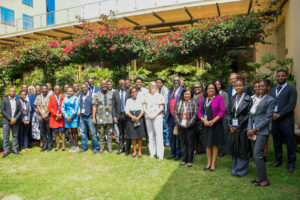 African Region: Regional Launch of Practitioners’ Guide on a Human Rights-Based Approach to Criminal Law to Decriminalize Poverty and Status
 Nepal: Failure to Address the Rights of Conflict-Related Sexual Violence Survivors in Transitional Justice Process