Apr 1, 2010
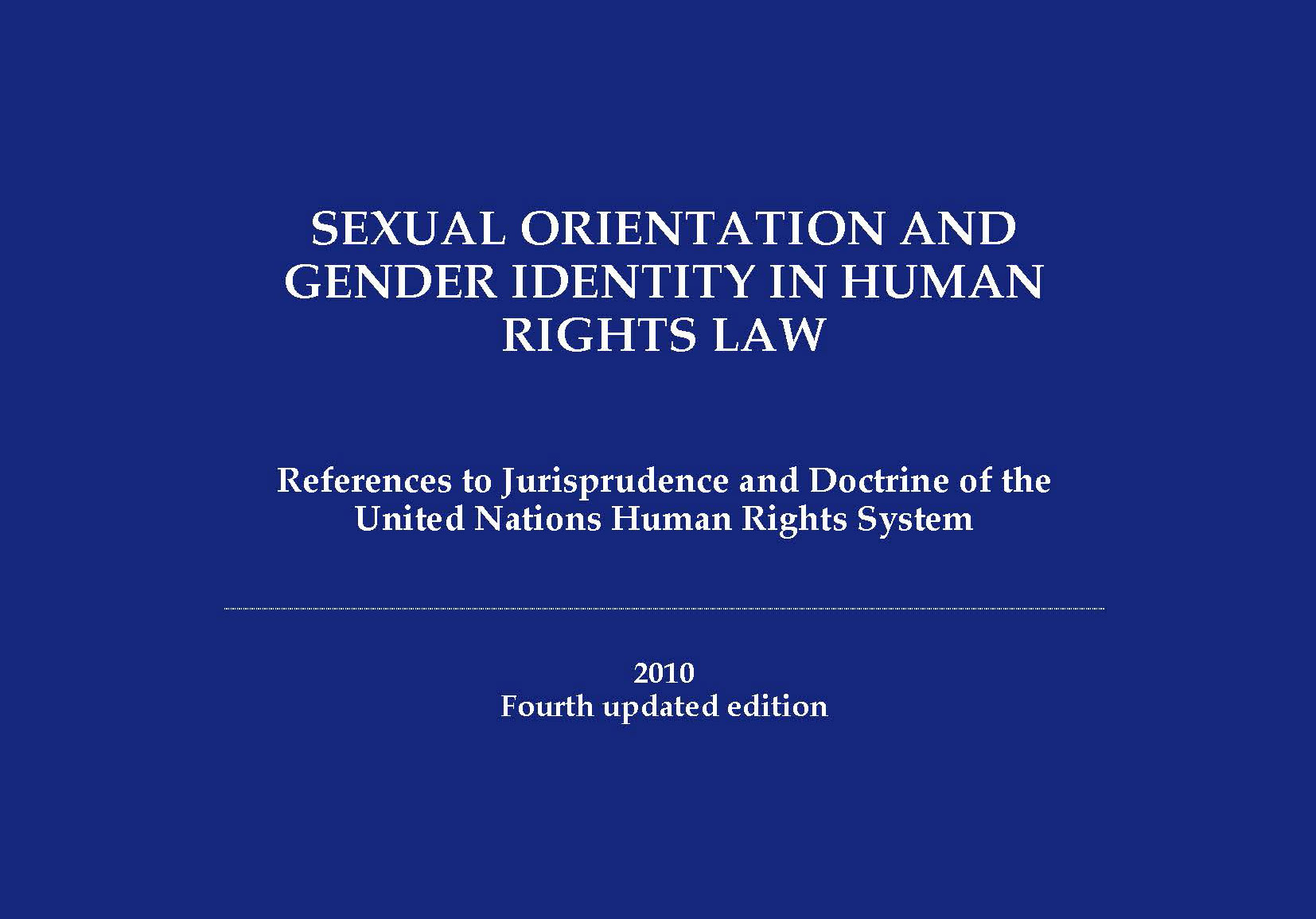 This is the fourth edition of references to sexual orientation and gender identity within the United Nations human rights system.
It is a comprehensive collection of jurisprudence, general comments, concluding observations, and reports from human rights treaty bodies and independent experts (also known as Special Procedures) of the UN Charter-based system.
In addition, it includes:
- speeches and press releases from the Office of the High Commissioner for Human Rights;
- the Joint Statement on Human Rights, Sexual Orientation and Gender Identity, signed by 66 States and presented to the General Assembly in December 2008; and
- excerpts from the UNHCR Guidance Note on Refugee Claims Relating to Sexual Orientation and Gender Identity.
This UN compilation covers the time period January 2007 through March 2010.
sexual orientation gender identity law UN human rights system-publication-2010

Feb 1, 2010
 This ICJ report presents a comprehensive assessment of Thailand’s Internal Security Act (“ISA”) from the perspective of international law and standards.
Jan 18, 2010
 The report “Post-War Justice in Sri Lanka: Rule of Law, the Criminal Justice System, and Commissions of Inquiry” addresses the systematic absence of remedies for gross human rights violations in Sri Lanka.

Jan 1, 2010
 This study assesses the extent to which Polish law provides victims of human rights abuses involving corporate entities with remedies.
Access to legal remedies and justice has become a crucial element in today’s work of protecting human rights in the context of business activities. It is also an area of primary importance for judges and lawyers who work promoting the rule of law and human rights. This study assesses the extent to which Polish law provides victims of human rights abuses involving corporate entities with remedies. Criminal prosecution and civil remedies are important legal tools that can be used to redress human rights violations committed by companies. At the same time, there are numerous legal and practical obstacles, which can render the process of pursuing justice difficult and/or ineffective. Disputes between individuals and/or groups and corporations share common barriers regarding access to justice. The realisation of the procedural principle of “equality of arms” is one such example: the frequent disparity of arms is aggravated when the victim (claimant) lacks high-quality legal advice and has limited resources, both in regards to time and money, whilst the defendant is a powerful corporate entity.
Poland-Publications-HR Abuses involving corporations-Access to Justice-2010-ENG (full text in PDF)
Jan 1, 2010
El sistema judicial tiene varias falencias que hacen que muchos mecanismos a prevenir o hacer cesar los abusos de derechos constitucionales por parte de empresas sean poco efectivos.
El acceso a la justicia y a un recurso efectivo ha devenido un elemento crucial en el trabajo de protección de los derechos humanos en el contexto de actividades empresariales, asi como un area de importancia primordial para jueces y abogados dedicados a promover el estado de derecho y los derechos humanos.
El informe señala que a pesar de que la normatividad colombiana contiene una amplia gama de acciones y recursos encaminados a prevenir o hacer cesar los abusos de derechos constitucionales por parte de empresas, el sistema judicial tiene varias falencias que hacen que muchos de estos mecanismos sean poco efectivos.
La mayoría de los obstáculos identificados tienen origen en condiciones estructurales de la administración de justicia colombiana que se agudizan en los casos en los que las empresas hacen parte de los reclamos y litigios.
Areas de atención especial incluyen: proyectos y mega-proyectos de explotación y/o desarrollo económico que afectan comunidades indígenas y campesinas, y áreas en las que defensores de derechos humanos se encuentran desprotegidos frente a estratégias hostiles de parte de ciertas empresas y actores armados.
Colombia-access to justice corporations-thematic report-2010-spa (full text, PDF)