May 1, 1985
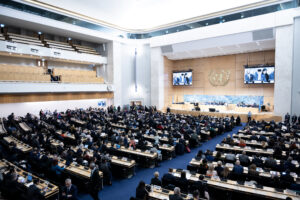
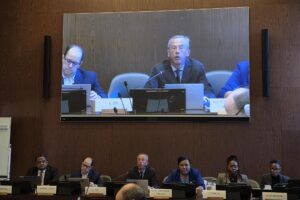
The seminar was held from 1 to 4 October 1984, and organized by the African Bar Association, the All-Africa Conference of Churches and the ICJ.
The report contains an introduction, a list of participants, conclusions and recommendations (introduction, the content and method of educational services, organization, para-legal field workers, training of paralegals, evaluation, the African Charter) and extracts from speeches made at the seminar.
From the Conclusions and recommendations:
“1. Many if not most people living in rural areas
- are unaware of their legal rights, lack formal education,
- are liable to exploitation, have no access to legal services, and
- are too poor to pay for them.
Hence, there is an urgent need to provide legal services of all kinds as a contribution to self-reliant rural
development.
2. The participants were concerned to find ways of making these services available. It was agreed that lawyers
engaged on this task should work together with members of non-governmental organizations (NGOs) working
for community development who have the confidence of the rural people. These include but are not limited to church groups, women’s and youth organizations, health workers, adult education and other extension workers.”
Africa-legal services in rural Africa-publications-seminar report-1984-eng (full text in English, PDF)
Jan 1, 1985
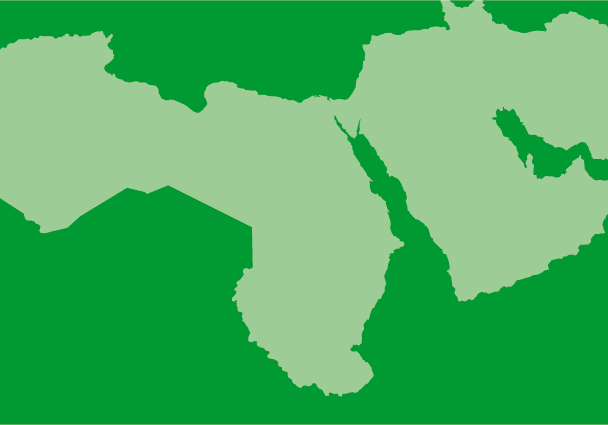
The second report by Law in the Service of Man on al-Fara’a Prison. The first was released in April 1984.

Nov 1, 1984
Report of a mission by Professor Cees Flinterman for the ICJ and Netherlands Institute of Human Rights.
As a result o f a series of seminars, the International Commission of Jurists has become increasingly concerned with the relationship between human rights and development, an d has participated actively in the promotion of the concept of the right to development as a human right.
It was from this perspective that the International Commission was extremely interested in sending a representative to Ghana who would be able to in form it not only a bout the administration and safeguards to ensure fair trials and defence rights, but also more generally about the situation concerning human rights in the light of the right to development.
The report contains an introduction to Ghana and the mission, chapters on the administration of justice and human rights, and final remarks and recommendations.
The report was published by the Netherlands Institute of Human Rights (SIM) as SIM Special No. 4.
Ghana-human rights-fact-finding mission-1984-eng (full text in English, PDF)
Oct 1, 1984
Report of WUS/ICJ mission of enquiry into higher education in the West Bank and Gaza
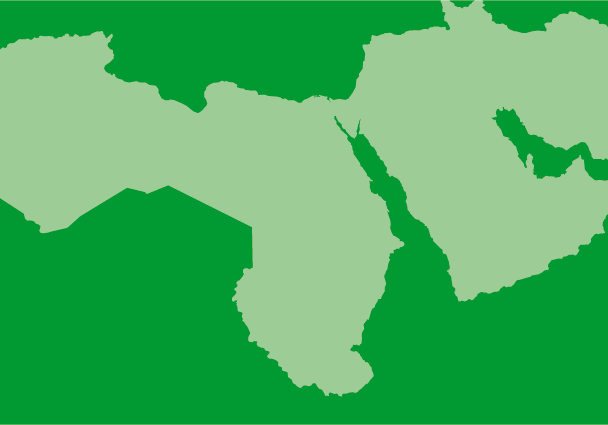
“The International Commission o f Jurists and the UK Committee o f the World University Service arranged in 1983 an independent mission to the West Bank and Gaza to enquire into the persistent problems faced by the Palestinian institutions of higher education in their relations with the Israeli military authorities in the occupied territories. As sponsoring organisations our concern, as expressed in the term s of reference, was to examine ‘the extent to which the academic freedom of these institutions is affected by the military occupation and, in particular, by the
military orders introduced by the occupation authorities’. The concept o f academic freedom of institutions of higher education is nowhere authoritatively defined. The authors o f this report have rendered a signal service in bringing together the various norms of international law relevant to the subject, and have been guided by them in examining the question of academic freedom in the Israeli occupied territories.”
The report contains:
- Terms of Reference
- Basic Facts and Figures
- An Approach to the Problems
- The Occupied Territories: Historical and Legal Framework
- A View of the Universities
- The Problems Regarding Academic Freedom
- Conclusions and Recommendations
Appendix I: Israeli Legal Statement
Appendix II: Select List o f Sources
Palestinian Territory-academic freedom-fact-finding report-1984-eng (full text in English, PDF)

Jan 1, 1984
The government of the United States, uniquely among major nations, is committed through historical tradition, Congressional legislation and Presidential pronouncement to the defense of international human rights.
This policy—pursued fitfully, uncertainly and on occasion even disparaged—exemplifies a set of principles enunciated originally by the Founding Fathers. Traditionally, the pattern for American foreign policy initiatives has been set by the Presidency, and implemented by the Department of State after Congressional deliberation.
Significantly, however, it was the force of legislative directives that provided the essential stimulus to establish human rights objectives as an explicit factor in this country’s relationships with other nations. The application of this policy has provoked recurrent and still inconclusive public discussion on the essential nature, purposes and modalities of American foreign relations.
This report was published by the American Association for the ICJ. It was written by David Heaps, after consultation with members of the Association’s Board of Directors and the Secretary-General of the ICJ.
US-human rights and foreign policy-thematic report-1983eng (full text in English, PDF)