Nov 17, 2020
The ICJ has published Judicial Accountability: An Adaptation of Practitioners Guide No. 13 for Zimbabwe, which analyzes the Zimbabwean legal framework in light of international and regional standards on accountability mechanisms for judicial corruption and judicial involvement in human rights violations.
The Guide reproduces the text of the ICJ’s 2016 global publication, Judicial Accountability: Practitioners’ Guide No.13, supplementing it with detailed information, analysis and recommendations specific to the context of Zimbabwe.
The Guides focus on international and regional standards and best practices on not only the accountability of individual judges, but also the accountability of the judiciary as an institution and State responsibility under international law, particularly in relation to the harm caused to victims of violations by judges.
The adaptation of this Guide to the Zimbabwean context specifically, is meant to assist practitioners in Zimbabwe, including judicial officers and lawyers, to engage with the domestic legal framework from a position informed by international standards and best practices.
This publication should be a particularly useful and relevant resource for the Zimbabwean judiciary whose theme for this calendar year is “Judicial Transparency and Accountability”.
Speaking on this publication and its relevance to the Zimbabwean context, ICJ Senior Legal Adviser, Blessing Gorejena highlighted how topical the issue of judicial independence in Zimbabwe has been:
“Judicial accountability is at the core of a functional and independent judiciary. The independence of a judiciary cannot just be assumed, it must be evidenced by functional and effective accountability mechanisms, systems and processes which leave little to no room for doubts about the judiciary’s ability to dispense justice without fear or favor. As such, like justice, judicial independence must not only be said to exist but must be seen to exist. Accountability is how judicial independence is seen to exist.”
This Guide considers a multitude of topics relating to judicial accountability, including but not limited to an appraisal of Zimbabwe’s duties to ensure an independent, impartial and accountable judiciary under international law and an analysis of the relevant accountability bodies in Zimbabwe.
Recommendations are consequently made in an effort to tackle inconsistencies between the adopted practices in Zimbabwe and its duties under international law.
Contact
Blessing Gorejena, Senior Legal Adviser and Team Leader of ICJ Zimbabwe Project, t: +263 77 215 1989, e: blessing.gorejena(a)icj.org
Elizabeth Mangenje, Legal Adviser, t: +263 77 474 2420, e: elizabeth.mangenje(a)icj.org
Download
Zimbabwe-PG No 13 Accountability adaptation-Publications-Reports-Thematic report-2020-ENG (full guide, in pdf)
Nov 16, 2020
Today, the ICJ published The case for reform: Criminal Law and Sexual Violence in Zimbabwe, a legal brief which examines sexual crimes in the Zimbabwean Criminal Code in light of the country’s obligations under international human rights law and standards.
The brief’s analysis is informed by provisions of the Constitution of Zimbabwe as well as regionally and internationally recommended practices.
It highlights a number of concerns with respect to sections 65 – 72 of the Criminal Law (Codification and Reform) Act [Chapter 9:23] (Criminal Code) and makes specific recommendations for reform.
In particular, the brief highlights the following concerns:
- the limited scope of the crime of rape;
- the problematic characterization of certain acts of a sexual nature as ‘indecent’ when, instead, they should be properly proscribed as violations of sexual autonomy;
- the lack of adequate protection of children against sexual exploitation; and
- the concurrent failure to recognize the sexual autonomy of adolescents engaged in non-exploitative, consensual sexual activity with a peer.
Speaking on the value of this brief, ICJ Senior Legal Adviser Blessing Gorejena noted that: “Sexual offences in Zimbabwe, particularly rape continue to be viewed to a larger extent as a private matter for which silence is a requirement, to the detriment of the victim and society at large. As a result, there is an urgent need to reform sexual offence legislation, including the Criminal Code in Zimbabwe. This brief offers clear and concise recommendations on how this can be done. It is an invaluable tool for legislative reform.”
Background
Zimbabwe has seen an increase in the incidence of rape over the last five years according to 2019 statistics by Zimbabwe National Statistics Agency (Zimstats). The Zimbabwe Gender Commission reports that 22 women are raped daily, with one woman raped every 75 minutes. On average, 646 women are sexually abused monthly, with one in three girls raped or sexually assaulted before they reach the age of 18. The vast majority of sexual offences are committed by men against women, children and other men.
The legal brief published by the ICJ follows on from a November 2015 ICJ reflection paper titled: “Sexual and Gender Based Violence, Fair Trial Rights and the Rights of Victims – Challenges in Using Law and Justice Systems Faced by Women Human Rights Defenders”. This publication compiled information gathered from a regional colloquium held by the ICJ in Swaziland in July 2015.
The 2015 publication highlighted a gap in the protection guaranteed to victims of sexual offences by the criminal law in Zimbabwe. Authors noted that certain provisions relating to sexual crimes in the Criminal Code offered limited protection to victims/survivors of such offences.
Contact
Blessing Gorejena, Senior Legal Adviser and Team Leader of ICJ Zimbabwe Project, t: +263 77 215 1989, e: blessing.gorejena(a)icj.org
Elizabeth Mangenje, Legal Adviser, t: +263 77 474 2420, e: elizabeth.mangenje(a)icj.org
Zimbabwe-Sexual violence-Advocacy-Analysis brief-2020-ENG (full paper, in PDF)
Oct 26, 2020 | News
The ICJ and Lawyers Alert today called on the Nigerian authorities to undertake immediate independent and thorough investigations into credible allegations of extrajudicial killings by the military responding to mass protests against the SARS police unit.
Those responsible for criminal conduct must be brought to justice and held to account, the two organizations said.
The authorities must respect their international legal obligations under international law and cease the unlawful, unnecessary and disproportionate use of force in response to Nigerians’ lawful protest actions.
Protest actions have escalated over the last two weeks as Nigerians have staged a series of protests under the #EndSARS movement. Thousands of people joined the demonstrations, demanding an end to police brutality and corruption.
Reports confirm that more than 56 people have died over the two weeks of protest actions, including 38 protesters who were killed, on the 20 October alone, as a result of the Nigerian military opening fire on thousands of peaceful protesters.
“The right to peaceful assembly is guaranteed under international law, including the International Covenant of Civil and Political Rights (ICCPR) which Nigeria has acceded to. Nigeria’s brutal responses to the peaceful demonstrations, including the use of lethal force on force protestors, not only violates this right but also their right to life,” said Kaajal Ramjathan-Keogh, ICJ Africa Regional Programme Director.
Lawyers Alert Executive Director Rommy Mom said: “The Nigerian government’s responses to the protests have undermined the rule of law. Groups and persons should not be afraid to approach the Judicial Panels of Inquiry to lay their grievance towards identification of culpable SARS officers for appropriate sanctions and the compensation of victims.” The organizations recall that under international law, the use of lethal force by law enforcement officials is permissible only when strictly necessary to protect life.
Police in the SARS unit are credibly alleged to be responsible for a widespread practice of torture and other serious human rights violations.
In addition to ending these violent attacks on protestors, the ICJ and Lawyers Alert call on the Nigerian government to address the demands of protestors and embark on comprehensive reform of the police, with emphasis on oversight functions, tethering oversight to civil society groups, the National Human Rights Commission and the constitutional oversight body of the Nigeria police.
“These protests have gained momentum outside Nigeria and have extended beyond the local borders to Ghana, United Kingdom and South Africa. The world’s attention is currently on Nigeria, as the global support for protestors rise amidst further police brutality. The Nigerian government must ensure that it respects and protects the human rights of all in accordance with its obligations under international law,” added Ramjathan-Keogh.
Background
Founded in 1992, the Special Anti-Robbery Squad (SARS) was mandated to “investigate cases involving armed robbery and kidnapping”. However, since its inception, there have been widespread complaints by Nigerians about the conduct of SARS This year Amnesty International issued a report, documenting at least 82 cases of torture, ill treatment and extra-judicial execution by SARS during the period of January 2017 and May 2020
In addition to the ICCPR, Nigeria is party to the UN Convention against Torture and the African Charter on Human and Peoples’ Rights (African Charter), which guarantees the right to life under Article 4 and the right to assemble freely with others under Article 11. These rights are also respectively protected under sections 33(1) and 40 of the Nigerian Constitution.
Article 6 of the ICCPR prohibits the arbitrary deprivation of life.
Principle 9 of the UN Basic Principles on the Use of Force and Firearms by Law Enforcement Officials affirm that:
Law enforcement officials shall not use firearms against persons except in self-defence or defence of others against the imminent threat of death or serious injury, to prevent the perpetration of a particularly serious crime involving grave threat to life, to arrest a person presenting such a danger and resisting their authority, or to prevent his or her escape, and only when less extreme means are insufficient to achieve these objectives. In any event, intentional lethal use of firearms may only be made when strictly unavoidable in order to protect life.
Contact
Kaajal Ramjathan-Keogh, Director of ICJ’s Africa Regional Programme, c: +27845148039, e: kaajal.keogh(a)icj.org
Tanveer Jeewa, Communications Officer, tanveer.jeewa(a)icj.org
Homepage photo credit: Tshwanelo Mathwai

Oct 22, 2020
Proposed legislation to regulate the operations and functions of the legal profession in Eswatini does not comply with international and regional standards and would severely undermine the right to an independent lawyer, the two organizations said.
The Eswatini Government is reportedly seeking to introduce a bill to Parliament to establish a Legal Services Regulatory Authority which would be responsible for issuing practicing certificates to lawyers, disciplining lawyers in case of unethical conduct, and developing and enforcing performance standards for legal practitioners.
If enacted into law, the bill would severely undermine the independence of lawyers in Eswatini and may set a dangerous precedent for other countries in the SADC region.
The ICJ jointly with Lawyers for Lawyers sent a letter addressing these concerns to the Eswatini Ministry of Justice and Constitutional Affairs.
Eswatini-Support to lawyers-Advocacy-open letters-2020-ENG (full letter, in PDF)
Oct 13, 2020 | News
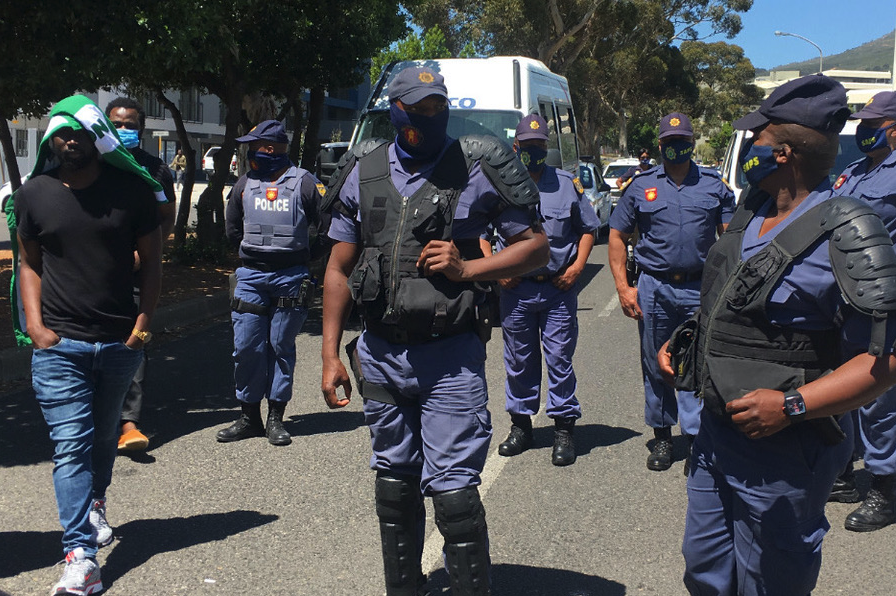
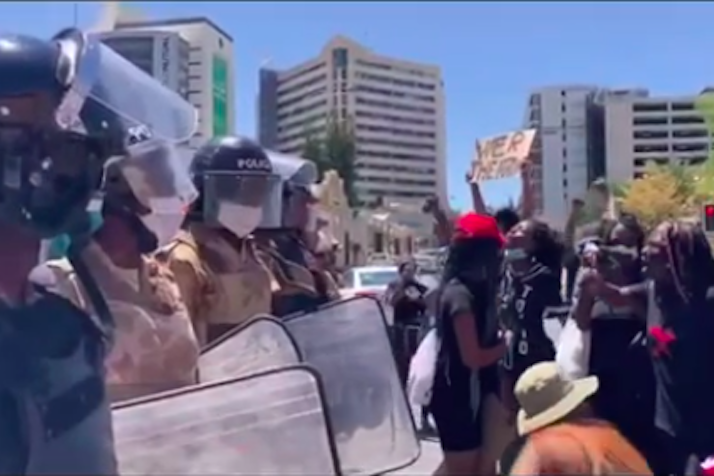
Today the ICJ condemned the apparent widespread ill-treatment and arbitrary arrest of peaceful demonstrators protesting gender based violence on Saturday 10 October in Windhoek.
The demonstrators were allegedly met with tear gas, and a number of them were subject to serious beatings by police forces.
Some 25 persons, including journalists, were arrested during the demonstrations. They were initially charged with breaching a law forbidding the public gathering of more than 50 people, though the charges were dropped on Monday.
The ICJ is calling for a prompt, thorough, impartial and effective investigation into the alleged police abuse, in line with Namibian law and the countries international legal obligations.
Officials responsible should be held accountable.
“Instead of taking seriously the demands made by the protestors and to take steps to ensure that gender based violence is addressed in a meaningful and constructive way, the police themselves appeared to have engaged in violent action against those exercising their rights to peacefully assembly and express their view,” said Kaajal Ramjathan-Keogh, ICJ Africa Regional Programme Director.
The ICJ also called on the authorities to protect the right of individuals in the country to peacefully and protest, rights which are protected under Namibia’s Constitution and international law.
The ICJ said that the Public Gatherings Proclamation Act, requiring prior permission for assemblies of more than 50 people in public spaces, should be repealed or revised, as incompatible with its international legal obligations.
The ICJ has also called on Namibia to address the underlying concerns raised by the protests, notably that during the COVID-19 pandemic, gender-based violence has been exacerbated during lockdown restrictions.
In Namibia, reports of femicide and gender based violence steadily increasing and on average “three rape cases were reported to the Namibian police every day for 18 months.”
Background
The recent #ShutItAllDown and #ShutitAllDownNamibia movements, spontaneously started on social media after the killing of a young woman, Shannon Wasserfall, have led to a series of protests against government’s failure to adequately address the scourge of gender based violence in Namibia.
The protestors, predominantly young women, last week handed over a petition to government which includes a list of 24 demands. raising concerns about the poor State response to gender-based violence in Namibia.
The protestors allege that Namibian police are “negligent and nonchalant” with investigating violent crime committed against women. They are demanding that government do more to protect women against such violence, including by ensuring that survivors of gender-based violence have access to justice.
The rights to freedom of assembly and expression, freedom from ill-treatment, and prohibitions on arbitrary arrest are guaranteed under the international human rights treaties to which Namibia is a party, including the African Charter on Human and Peoples Rights and the International Covenant on Civil and Political Rights, and the Convention against Torture, as well as the Namibian Constitution.
Contact
Kaajal Ramjathan-Keogh, Director of ICJ’s Africa Regional Programme, c: +27845148039, e: kaajal.keogh(a)icj.org
Nokukhanya Farisè, Legal Adviser, nokukhanya.farise(a)icj.org