
Oct 8, 2020 | News
Proposed legislation to regulate the operations and functions of the legal profession in Eswatini does not comply with international and regional standards and would severely undermine the right to an independent lawyer, the ICJ said today.
A Bill that the Government of Eswatini is reportedly seeking to introduce in Parliament would establish a Legal Services Regulatory Authority which would be responsible for issuing practising certificates to lawyers, disciplining lawyers in case of unethical conduct, developing and enforcing performance standards for legal practitioners in Eswatini, the ICJ said.
The proposed Legal Services Regulatory Authority would constitute up to 10 members of which only one would be appointed by the legal bar association (Law Society of Eswatini).
If enacted into law, the bill would severely undermine the independence of lawyers in Eswatini and may set a dangerous precedent for other countries in the SADC region, especially at this time when lawyers in other parts of the region are being persecuted by their governments, the ICJ added.
When discharging their functions, legal practitioners must be independent of control and undue influence in order for them to be able to represent their clients more effectively.
“The Legal Services Regulatory Authority proposed under the Eswatini Bill does not qualify as a self-governing professional body or an independent statutory authority because all but one of its members will be appointed by government,” said ICJ Africa Director Kaajal Ramjathan-Keogh.
“The establishment of this regulatory authority is likely to have a chilling effect on the freedom of lawyers to discharge their functions without being afraid of potential retribution through disciplinary proceedings based on frivolous charges,” she added.
The ICJ calls upon the Government of Eswatini to honour its domestic and international legal obligations to respect the independence of lawyers.
In this case, the ICJ urges the government to withdraw this bill and respect the independence of the lawyers to regulate themselves.
Background:
Eswatini has an obligation, in terms of its domestic constitution as well as regional and international law and standards, to respect and protect the independence of lawyers. Section 21 of the Constitution of Eswatini and regional and international human rights treaties and standards guarantee for every person the right to a fair hearing and the right to legal representation. These rights cannot be enjoyed effectively, unless lawyers are guaranteed the freedom to represent their clients and perform all their other duties without harassment, intimidation and undue interference.
The right of everyone to access to a lawyer as an essential element of a fair trial is recognized in, among other sources, the International Covenant on Civil and Political Rights (ICCPR), to which Eswatini has been a party since 2004. International and regional standards on ensuring the independence of lawyers are set out in the UN Basic Principles on the Role of Lawyers (UN Basic Principles) and the Principles and Guidelines on the Right to a Fair Trial and Legal Assistance in Africa.
Principle 16 of the United Nations Basic Principles, for instance, enjoins all governments to “ensure that lawyers are able to perform all of their professional functions without intimidation, hindrance, harassment or improper interference”.
Principle 24 affirms that, “Lawyers shall be entitled to form and join self-governing professional associations to represent their interests, promote their continuing education and training and protect their professional integrity. The executive body of the professional associations shall be elected by its members and shall exercise its functions without external interference.”
Principle 28 states that “Disciplinary proceedings against lawyers shall be brought before an impartial disciplinary committee established by the legal profession, before an independent statutory authority, or before a court, and shall be subject to an independent judicial review.”
In a recent unanimous resolution, the UN Human Rights Council recognized that “an independent legal profession” is among the “prerequisites for the protection of human rights and the application of the rule of law and for ensuring fair trials and the administration of justice without any discrimination”.
The Human Rights Council specifically expressed its concern “about situations where the entry into or continued practice within the legal profession is controlled or arbitrarily interfered with by the executive branch, with particular regard to abuse of systems for the licensing of lawyers.” It recommended that any domestic legislation should “provide for independent and self-governing professional associations of lawyers” and should “recognize the vital role played by lawyers in upholding the rule of law and promoting and protecting human rights”.
Contact:
Kaajal Ramjathan-Keogh, Director of ICJ’s Africa Regional Programme, c: +27845148039, e: Kaajal kaajal.keogh(a)icj.org
Oct 8, 2020 | News
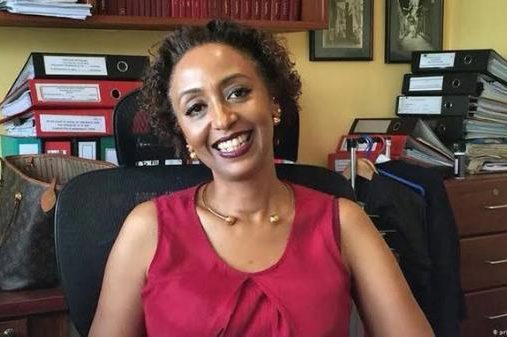
The ICJ today called for reinstatement of Tanzania lawyer Fatma Karume, characterizing a permanent prohibition from her practicing law as a violation of her rights and the independence of the legal profession.
In September 2019, the High Court of Tanzania issued an order suspending senior lawyer Fatma Karume from practising law in mainland Tanzania.
The High Court directed the Advocates’ Disciplinary Committee of Tanzania to conduct a disciplinary hearing and make a final determination on whether Fatma Karume, a former president of Tanganyika Law Society, which is the Bar association of mainland Tanzania, should be allowed to practice law.
Allegations of misconduct against Fatma Karume arose from her written submissions in a constitutional challenge to President Magufuli’s appointment of Professor Adelardus Kilangi as the Attorney General of Tanzania.
The State’s counsel complained that the language used by Fatma Karume in her submissions was unprofessional and disrespectful of the Attorney General, who was the subject of the constitutional challenge.
A year later, on 23 September 2020, the Advocates’ Disciplinary Committee found Fatma Karume guilty of the alleged misconduct and directed that she be permanently disbarred from practising law in Tanzania.
“The ICJ views the decision to permanently disbar Fatma Karume from legal practice, as a grave violation of Tanzania’s domestic, regional and international legal obligations relating to Fatma Karume’s right to be heard, her right to work and a violation of the independence of lawyers,” said ICJ Africa Director, Kaajal Ramjathan-Keogh.
“Fatma Karume’s right to be heard was violated in many ways. First, the complaint of misconduct was made in the State’s rejoinder submissions and Ms Karume was not afforded an opportunity to respond on record, before the High Court made the decision to temporarily suspend her from practice. Secondly, her right to a speedy hearing was violated because it took the Advocate’s Disciplinary Committee of Tanzania a year to make a final determination in her case,” she added.
The ICJ also considers that the substance of the charges of misconduct against Fatma Karume was inconsistent with international and regional standards, in so far as they were based on written submissions made in good faith as part of the due discharge of her professional functions.
The ICJ urges the authorities in Tanzania to rescind the decision to disbar Fatma Karume from legal practice and restore her right to work and in particular, her right to practice law.
In the meantime, ICJ welcomes the decision of the Tanganyika Law Society to support Fatma Karume to appeal against her disbarment.
Background
Articles 21 and 13 (6) (a) of the Constitution of Tanzania guarantee every person with the right to work and the right to a fair hearing respectively. In terms of regional law, Article 7(1) of the African Charter on Human and People’s Rights obliges governments to respect and protect the right of every individual to be presumed innocent until proven guilty by a competent court or tribunal; the right to present a defense; and, the right to be tried within a reasonable time by an impartial court or tribunal. Similar rights are recognised in Article 14 of the International Covenant on Civil and Political Rights (ICCPR). In addition, Principle 27 of the United Nations Basic Principles on the Role of Lawyers (UN Basic Principles) states that “Charges or complaints made against lawyers in their professional capacity shall be processed expeditiously and fairly under appropriate procedures. Lawyers shall have the right to a fair hearing, including the right to be assisted by a lawyer of their choice.”
Principle 20 of the UN Basic Principles provides that “Lawyers shall enjoy civil and penal immunity for relevant statements made in good faith in written or oral pleadings or in their professional appearances before a court, tribunal or other legal or administrative authority.” Similar provisions are included in Part I of the African Principles and Guidelines.
Contact
Kaajal Ramjathan-Keogh, Director of ICJ’s Africa Regional Programme, c: +27845148039, e: Kaajal kaajal.keogh@icj.org
Oct 2, 2020
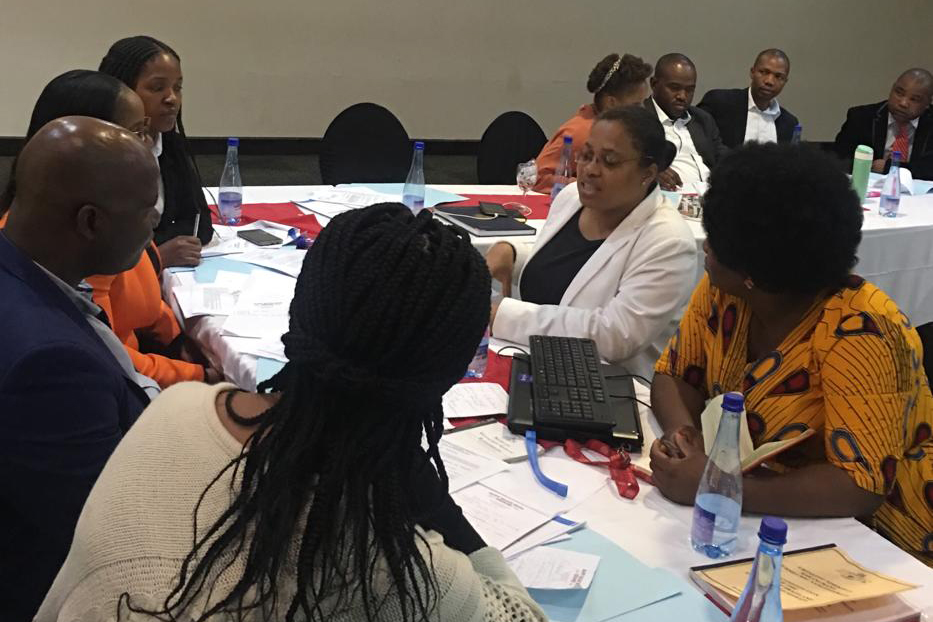
To assist in efforts to combat gender-based violence, the ICJ and Swaziland Action Group Against Abuse (SWAGAA) collaborated to create a guide on reporting gender-based violence for media practitioners in Eswatini.
The guide, designed by SWAGA, was launched on 2 October 2020 in a webinar attended by media practitioners from Eswatini.
Media practitioner, lecturer and trainer Pontsho Pilane gave an introduction to and answered questions about reporting gender-based violence. Her own interests include the intersection between health, race and gender.
Pilane said it was important for journalists to find different ways of presenting accounts in ways that are empowering to survivors and to readers and uphold the dignity of the most important people in the story: the survivors.
In her address, Pilane also highlighted the need for “solutions-based journalism” or reporting that focuses on adequate responses to social issues in addition to describing the problems themselves.
“Supporting survivors is crucial, as well as including things like how a survivor can find help and move forward from experiences with SGBV in our reporting,” she said.
It is also important to connect readers and survivors to NGOs like Swagaa who have the necessary tools to assist them.
In an effort to combat the various challenges presented by SGBV, the Kingdom of Eswatini introduced the Sexual Offences and Domestic Violence (SODV) Act in 2018.
Executive director of Swagaa Nonhlanhla Dlamini said the journey to enacting the SODV Act was a consultative one and that she was impressed with efforts by journalists in reporting on the Act.
“We hope that this manual will help journalists to improve their reporting on gender-based violence,” Dlamini said.
The Guide is intended as a valuable tool and resource as editors and journalists in Eswatini in supporting their collective efforts to contribute towards reporting which is respectful of survivors of gender-based violence, consistent with the law and contributes to ensuring a non-discriminatory public discourse on gender-based violence in Eswatini.
Read this guide with the ICJ Practitioner’s Guide No. 12 on Women’s Access to Justice for Gender-Based Violence and the ICJ Access to Justice: Challenges Faced by Victims and Survivors of Sexual and Gender-based Violence in Eswatini report.
Download
South Africa – Reporting GBV Guide – 2020 – ENG (full paper in PDF)
Contact
Shaazia Ebrahim (ICJ media officer), c: +27716706719 e: shaazia.ebrahim(a)icj.org
Sep 25, 2020 | News
On 24 September 2020, the ICJ held a webinar in collaboration with the Lesotho National Federation of Organisations of the Disabled on the right to education for children with disabilities.
Presenters and participants included representatives from civil society organizations, teachers’ unions, teachers and the Lesotho Department of Education.
“Children with disabilities have a right to access to education on an equal basis with all other children. The COVID-19 pandemic must not hamper the Lesotho governments efforts to ensure access to inclusive education for all children,” said Kaajal Ramjathan-Keogh, ICJ’s Africa Director.
Participants highlighted accessibility-related problems faced by learners with disabilities in the context of the COVID-19 pandemic. Some examples include:
- Ordinary masks necessary to combat the spread of COVID-19 inhibit communication for learners with hearing disabilities who often communication in part by lip-reading. These require access to face visors and/or transparent masks. Some deaf students also had difficulty in understanding the COVID-19 pandemic and virus, despite efforts to explain it to them.
- Blind learners need more access to hand sanitizer as they need to touch their surroundings for mobility. This also makes social distancing more difficult for them.
- Teachers have trouble understanding how to comply with social distancing measures while assisting learners experiencing epileptic seizures.
- Many learners with disabilities have stayed at home during the pandemic, not understanding why they were not at school.
- Many children with disabilities are rendered more vulnerable to sexual violence and exploitation as they observe stay at home rules.
A representative of the Department of Education explained various measures which government had put in place to ensure that these obstacles could be overcome so that learners with disabilities could enjoy their right to education in the context of COVID-19. Learners’ health and safety would also remain a priority.
The Department noted the delays in the implementation of its inclusive education policy as a result of a lack of funding as government resources are diverted to COVID-19 responses.
The need for compliance with Lesotho’s global and regional international human rights obligations was also highlighted with participants agreeing about the importance of ensuring that there is “strength in numbers” in advocacy efforts toward the realization of children with disabilities’ right to education.
“Ensuring the right to education of persons with disabilities does not imply sacrificing and compromising their right to health. All human rights are interdependent and Lesotho should be guided by all of its human rights obligations as it continues to implement its domestic inclusive education policy during the COVID-19 pandemic,” Ramjathan-Keogh added.
Background
Article 24 of the Convention on the Rights of Persons with Disabilities (CRPD) and the Protocol to the African Charter on Human and Peoples’ Rights on the Rights of Persons with Disabilities in Africa require States parties to ensure that their education systems are inclusive and fully realize the right to education of all children with disabilities. The normative content of Article 24 of the CRPD and corresponding obligations of member States are expanded on in the General Comment No 4 of the Committee on the Rights of Persons With Disabilities.
For more information on the impact of COVID-19 on access to education, find the UN Special Rapporteur on the right to education’s report here.
Contact
Nokukhanya (Khanyo) Farisè, Legal Adviser (Africa Regional Programme), e: nokukhanya.farise(a)icj.org
Tanveer Jeewa, Communications Officer (Africa Regional Programme), e: tanveer.jeewa(a)icj.org

Sep 8, 2020 | Advocacy, News
The ICJ, in collaboration with the Zimbabwe Anti-Corruption Commission (ZACC), today launched a whistleblowing application (tip off) mechanism in Harare.
It is common that people reporting corruption, tipping off and submitting key evidence prefer to stay anonymous, as they may have an often, well-founded, fear of reprisal by the parties involved. In such instances it is imperative for the ZACC to adopt a protective solution that guarantees user anonymity. This tip off mechanism will enable ZACC to receive information and evidence securely while the user of the mechanism remains anonymous. In turn ZACC will be able to use the information received to investigate and prosecute cases of corruption. Additionally, the application will also have a case management dashboard which will aid evaluation of ZACC’s efficiency in handling corruption cases.
Corruption undermines the rule of law by impeding access to justice through diversions of public resources for private gain. As such, the ICJ, through the support by the EU, is working towards increased transparency and integrity in the justice delivery system in order to increase access to justice for all. The whistleblowing application is not undertaken in isolation, as it builds on other initiatives to combat corruption under this programme, which include the Anti-Corruption Campaign, establishment of an anti-corruption court, capacity building, and various research initiatives.
“Corruption remains a key challenge confronting Zimbabwe. If unabated, corruption undermines democracy and the rule of law leading to violations of human rights. Its destructive effect on development disproportionately affects the poor. The participation of the public, in augmenting government efforts in combating corruption is therefore critical. It is our hope that through this awareness programme, ordinary members of the public will be able to recognize corrupt behaviour and feel empowered to take a stand against it. Further, we hope that the mechanism will sustain the momentum against corruption and increase the demand for improved accountability and transparency in various sectors in Zimbabwe thereby contributing to reduction of corruption,” said Blessing Gorejena, ICJ’s Zimbabwe Project Team leader.
Once officially launched, the whistle-blowing mechanism will be available to the public. It will be promoted and encouraged by publicizing stories of successful prosecutions and other actions as a result of information provided by whistle-blowers, as well as reporting on the effective protection of such persons from any form of reprisal or other harm.
The project is facilitated through the support of the European Union.
Contact:
Blessing Gorejena, Senior Legal Adviser and Team Leader of ICJ Zimbabwe Project, t:0772151989, e: blessing.gorejena(a)icj.org




