Jan 18, 2021 | News
The ICJ today condemned the arbitrary arrests in recent days of prominent Zimbabwean human rights defenders Hopewell Chin’ono, Fadzayi Mahere and Job Sikhala, who have been critical of the government led by President Emmerson Mnangagwa.
The ICJ is concerned that their arrests and potential prosecutions are based solely on their exercise of protected human rights, including freedom of expression. The ICJ calls for their immediate release and the dropping of the charges against them.
The three have been charged with contravening section 31 of the Criminal Code which prohibits “publishing or communicating false statements prejudicial to the state”.
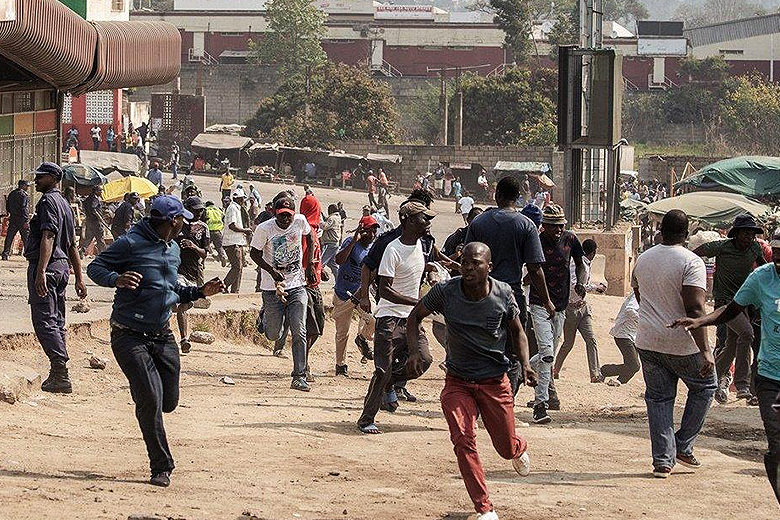
The alleged offences arise from posts made on social media and comments issued by all three in connection with an incident at a Harare taxi rank in which a police officer is alleged to have assaulted a mother with a baby on her back.
ICJ’s Africa Director Kaajal Ramjathan-Keogh said:
“The use of judicial processes to silence these three human rights defenders constitutes a continuing assault on members of the bar and journalists and is a clear attempt to chill others from carrying out their professional functions when these activities offend government authorities. Of concern is the continued use of criminal defamation (section 31) charges which were declared unconstitutional in 2014 yet continues to be weaponised against human rights defenders.”
Chin’ono, a journalist, was arrested on 8 January and had his application for bail rejected on 14 January. He has been handcuffed and held in leg irons during court appearances, despite a Magistrate’s ruling on 12 January that forcing Chin’ono to be shackled in leg irons and handcuffing him amounts to inhumane and degrading treatment.
Mahere is a lawyer and spokesperson of the opposition political party Movement for Democratic Change (MDC) Alliance. She was arrested on 11 January. On 15 January Magistrate Trynos Utahwashe failed to hand down his ruling on her application for bail as required.
Bail was however granted today. Mahere did raise concerns about the absence of essential COVID-19 measures in her detention, including the lack of temperature checks or sanitisers at the entrance to the police station; the failure to practice social distancing in the waiting area or holding cells; the unavailability of masks in the cells and use of old masks by cellmates; as well as the failure to provide sanitary materials to female inmates.
Sikhala is a human rights lawyer, the MDC Alliance Vice National Chairperson, and MP for Zengeza West.
He was part of Chin’ono’s legal team. On 15 January Magistrate Ngoni Nduna dismissed his bail application stating that there was overwhelming evidence against him not to grant it. He remains in prison custody while he awaits trial. Sikhala has also been handcuffed and held in leg irons during court appearances.
Ramjathan-Keogh added:
“The courts have unlawfully employed the denial of bail as well as the repeated prolonged bail proceedings as a punitive tool in these cases. Pre-trial detention without the opportunity for bail, with exceptions not applicable here, is a violation of the right to liberty. The government has an obligation to provide safe and humane conditions of detention.”
The ICJ recalls that that Zimbabwe’s Constitution guarantees the rights to freedom of expression and freedom of the media (Article 61); freedom from arbitrary detention (Article 50). Zimbabwe has an international legal obligation to protect these rights under the International Covenant on Civil and Political Rights (Article 9 and 19) and the African Charter on Human and Peoples’ Rights (Articles 6 and 9).
Contact:
Kaajal Ramjathan-Keogh, Director of ICJ Africa Programme, e: Kaajal.Keogh(a)icj.org ; t: +27845148039
Tanveer Jeewa, Legal and Communications Consultant, e: Tanveer.Jeewa(a)icj.org
Background Information:
Hopewell Chin’ono has been arrested on three separate occasions. He has been denied bail on each occasion and those bail proceedings have been unduly and unfairly prolonged. He was initially arrested in July 2020 after he expressed support on Twitter for an anti-corruption protest, which was planned for 31 July. He was charged with incitement to participate in public violence and breaching anti-corona virus health regulations.
He appeared in court three times to apply for bail and was only granted bail in September 2020, nearly two months after his arrest. On 3 November 2020, he was re-arrested for contempt of court for allegedly violating section 182(1)(a) or (b) of the Criminal Code because of a tweet he posted. His tweet stated: “On day of bail hearing CJ was seen leaving court in light of what has been said by judges what does this say.” The arrest violates Zimbabwe’s constitutional provisions, in particular, section 61, which provides for freedom of expression and the right of a journalist to practice his profession. He was again arrested on 8 January 2021 for allegedly communicating falsehoods by tweeting that police beat a baby to death.
Chin’ono was in 2020 denied access to the legal representative of his choice. The magistrate’s order barring lawyer Beatrice Mtetwa from continuing as defence legal counsel for Chin’ono violated his right to a fair trial and Mtetwa’s right to express her opinions freely. See ICJ’s statement of 21 August 2020.
Dec 16, 2020 | News
Dialogue between Swazi Women Human Rights Defenders and CEDAW Committee Members highlights the obstacles faced by local women in the enjoyment of their human rights.
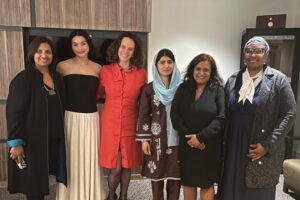
On 14 December 2020, the ICJ and the Southern Africa Human Rights Defenders Network (SAHRDN) facilitated a fruitful dialogue between Swazi Women Human Rights Defenders (WHRD) and members of the UN Committee on the Elimination of Discrimination against Women (the CEDAW Committee) on the key human rights concerns facing Swazi women and possible advocacy strategies to address them.
The CEDAW Committee monitors State parties’ compliance with and implementation of their human rights obligations under the UN Convention on the Elimination of All Forms of Discrimination against Women (the Convention), by which Eswatini is bound.
In light of the Eswatini government’s failure to submit a report to the CEDAW Committee, as required under the Convention, more than 20 Swazi WHRDs’ organizations had a preparatory meeting on 8 December to discuss and prioritize the human rights concerns they wished to bring to the CEDAW Committee members’ attention.
They hoped that, by coming together and agreeing on these issues, they may raise awareness and put pressure on the Eswatini government to comply with its obligations under the Convention, including by promptly submitting the country’s overdue report.
In the wake of this preparatory meeting, on 14 December Swazi WHRDs briefed the CEDAW Committee members about the most critical human rights violations faced by women in Eswatini. This meeting was broadcasted live on Facebook.
The dialogue focused on the Eswatini authorities’ failure to implement their human rights obligations under the Convention, including the previous Concluding Observations of the CEDAW Committee.
High rates of teenage pregnancy, women’s inadequate access to education, healthcare and adequate housing, and ways in which customary and religious laws are used to justify discrimination against them were among the key human rights concerns affecting women discussed during the dialogue.
Watch the animation on CEDAW
Nov 19, 2020 | News
On 18 November 2020, the ICJ hosted a Facebook Live with four transgender human rights activists from Asia and Africa. It highlighted the stark reality between progressive laws and violent lived realities of transgender people.
The 20th November 2020 marks the Transgender Day of Remembrance (TDOR), the day when transgender and gender diverse people who have lost their lives to hate crime, transphobia and targeted violence are remembered, commemorated and memorialized.
The discussions focused on their individual experiences of Transgender Day of Remembrance in their local contexts, the impact of COVID-19 on transgender communities and whether laws are enough to protect and enforce the human rights of transgender and gender diverse people.
The renowned panelists were from four different countries, Amar Alfikar from Indonesia, Liberty Matthyse from South Africa, Tshepo Ricki Kgositau-Kanza from Botswana and Vyjayanti Vasanta Mogli from India. The panel was moderated by the ICJ Africa Regional Director, Kaajal Ramjathan-Keogh.
The panel aimed to provide quick glimpses into different regional contexts and a platform for transgender human rights activists’ voices on the meaning of Transgender Day of Remembrance and the varied and devastating impacts of COVID-19 on transgender people.
The speakers discussed the meaning that they individually ascribe to Transgender Day of Remembrance. A common theme running across the conversations was that it is not enough to highlight issues and concerns of the transgender community only on this day. Instead, these discussions should be part of daily conversations about the human rights of transgender people at the local and international level.
Liberty Matthyse discussed the importance of remembering the transgender persons who have lost their lives over the past years, and added:
“South Africa generally is known as a country which has become quite friendly to LGBTI people more broadly and this, of course, stands in stark contradiction to the lived realities of people on the ground as we navigate a society that is excessively violent towards transgender persons and gay people more broadly.”
Amar Alfikar describes his work as “Queering Faiths in Indonesia”. This informs his understanding of what Transgender Day of Remembrance means in his country and he believes that:
“Religion should be a source of humanity and justice. It should be a space where people are safe, not the opposite. When the community and society do not accept queer people, religion should start giving the message, shifting the way of thinking and the way of narrating, to be more accepting, to be more embracing.”
It was clear from the discussions that a lot of the issues that have become prominent during the COVID-19 pandemic, have not arisen due to the pandemic. In fact, the COVID-19 pandemic has had the effect of a magnifying glass, amplifying existing challenges in the way that transgender communities are treated and driven to margins of society. Speaking about the intersectionality of transgender human rights, Vyjayanti Vasanta Mogli said:
“I don’t think LGBT rights or transgender rights exist in isolation, they are part of a larger gamut of climate change, racial equality, gender equality, the elimination of plastics, and all of that.”
The panelists had different opinions on whether it is enough to rely on the law for the recognition and protection of the human rights of transgender individuals.
The common denominator, however, was that the laws as they stand have a long way to go before fully giving effect to the right of equality before the law and equal protection of the law without discrimination of transgender people.
Tshepo Ricki Kgositau-Kanza, who was a litigant in a landmark case in Botswana in which the judiciary upheld the right of transgender persons to have their gender marker changed on national identity documents, explained the challenges with policies which, on their face, seem uniform:
“Uniform policies… are very violent experiences for transgender persons in a Botswana context where the uniform application of laws and policies is binary and arbitrarily assigned based on one’s sex marker on one’s identity document which reflects them either as male or female. Anybody in between or outside of that kind of dichotomy is often rendered invisible and vulnerable to a system that can easily abuse them.”
This conversation can be viewed here.
Contact
Tanveer Jeewa, Communications Officer, African Regional Programme, e: tanveer.jeewa(a)icj.org
Nov 17, 2020
The ICJ has published Judicial Accountability: An Adaptation of Practitioners Guide No. 13 for Zimbabwe, which analyzes the Zimbabwean legal framework in light of international and regional standards on accountability mechanisms for judicial corruption and judicial involvement in human rights violations.
The Guide reproduces the text of the ICJ’s 2016 global publication, Judicial Accountability: Practitioners’ Guide No.13, supplementing it with detailed information, analysis and recommendations specific to the context of Zimbabwe.
The Guides focus on international and regional standards and best practices on not only the accountability of individual judges, but also the accountability of the judiciary as an institution and State responsibility under international law, particularly in relation to the harm caused to victims of violations by judges.
The adaptation of this Guide to the Zimbabwean context specifically, is meant to assist practitioners in Zimbabwe, including judicial officers and lawyers, to engage with the domestic legal framework from a position informed by international standards and best practices.
This publication should be a particularly useful and relevant resource for the Zimbabwean judiciary whose theme for this calendar year is “Judicial Transparency and Accountability”.
Speaking on this publication and its relevance to the Zimbabwean context, ICJ Senior Legal Adviser, Blessing Gorejena highlighted how topical the issue of judicial independence in Zimbabwe has been:
“Judicial accountability is at the core of a functional and independent judiciary. The independence of a judiciary cannot just be assumed, it must be evidenced by functional and effective accountability mechanisms, systems and processes which leave little to no room for doubts about the judiciary’s ability to dispense justice without fear or favor. As such, like justice, judicial independence must not only be said to exist but must be seen to exist. Accountability is how judicial independence is seen to exist.”
This Guide considers a multitude of topics relating to judicial accountability, including but not limited to an appraisal of Zimbabwe’s duties to ensure an independent, impartial and accountable judiciary under international law and an analysis of the relevant accountability bodies in Zimbabwe.
Recommendations are consequently made in an effort to tackle inconsistencies between the adopted practices in Zimbabwe and its duties under international law.
Contact
Blessing Gorejena, Senior Legal Adviser and Team Leader of ICJ Zimbabwe Project, t: +263 77 215 1989, e: blessing.gorejena(a)icj.org
Elizabeth Mangenje, Legal Adviser, t: +263 77 474 2420, e: elizabeth.mangenje(a)icj.org
Download
Zimbabwe-PG No 13 Accountability adaptation-Publications-Reports-Thematic report-2020-ENG (full guide, in pdf)
Nov 16, 2020
Today, the ICJ published The case for reform: Criminal Law and Sexual Violence in Zimbabwe, a legal brief which examines sexual crimes in the Zimbabwean Criminal Code in light of the country’s obligations under international human rights law and standards.
The brief’s analysis is informed by provisions of the Constitution of Zimbabwe as well as regionally and internationally recommended practices.
It highlights a number of concerns with respect to sections 65 – 72 of the Criminal Law (Codification and Reform) Act [Chapter 9:23] (Criminal Code) and makes specific recommendations for reform.
In particular, the brief highlights the following concerns:
- the limited scope of the crime of rape;
- the problematic characterization of certain acts of a sexual nature as ‘indecent’ when, instead, they should be properly proscribed as violations of sexual autonomy;
- the lack of adequate protection of children against sexual exploitation; and
- the concurrent failure to recognize the sexual autonomy of adolescents engaged in non-exploitative, consensual sexual activity with a peer.
Speaking on the value of this brief, ICJ Senior Legal Adviser Blessing Gorejena noted that: “Sexual offences in Zimbabwe, particularly rape continue to be viewed to a larger extent as a private matter for which silence is a requirement, to the detriment of the victim and society at large. As a result, there is an urgent need to reform sexual offence legislation, including the Criminal Code in Zimbabwe. This brief offers clear and concise recommendations on how this can be done. It is an invaluable tool for legislative reform.”
Background
Zimbabwe has seen an increase in the incidence of rape over the last five years according to 2019 statistics by Zimbabwe National Statistics Agency (Zimstats). The Zimbabwe Gender Commission reports that 22 women are raped daily, with one woman raped every 75 minutes. On average, 646 women are sexually abused monthly, with one in three girls raped or sexually assaulted before they reach the age of 18. The vast majority of sexual offences are committed by men against women, children and other men.
The legal brief published by the ICJ follows on from a November 2015 ICJ reflection paper titled: “Sexual and Gender Based Violence, Fair Trial Rights and the Rights of Victims – Challenges in Using Law and Justice Systems Faced by Women Human Rights Defenders”. This publication compiled information gathered from a regional colloquium held by the ICJ in Swaziland in July 2015.
The 2015 publication highlighted a gap in the protection guaranteed to victims of sexual offences by the criminal law in Zimbabwe. Authors noted that certain provisions relating to sexual crimes in the Criminal Code offered limited protection to victims/survivors of such offences.
Contact
Blessing Gorejena, Senior Legal Adviser and Team Leader of ICJ Zimbabwe Project, t: +263 77 215 1989, e: blessing.gorejena(a)icj.org
Elizabeth Mangenje, Legal Adviser, t: +263 77 474 2420, e: elizabeth.mangenje(a)icj.org
Zimbabwe-Sexual violence-Advocacy-Analysis brief-2020-ENG (full paper, in PDF)