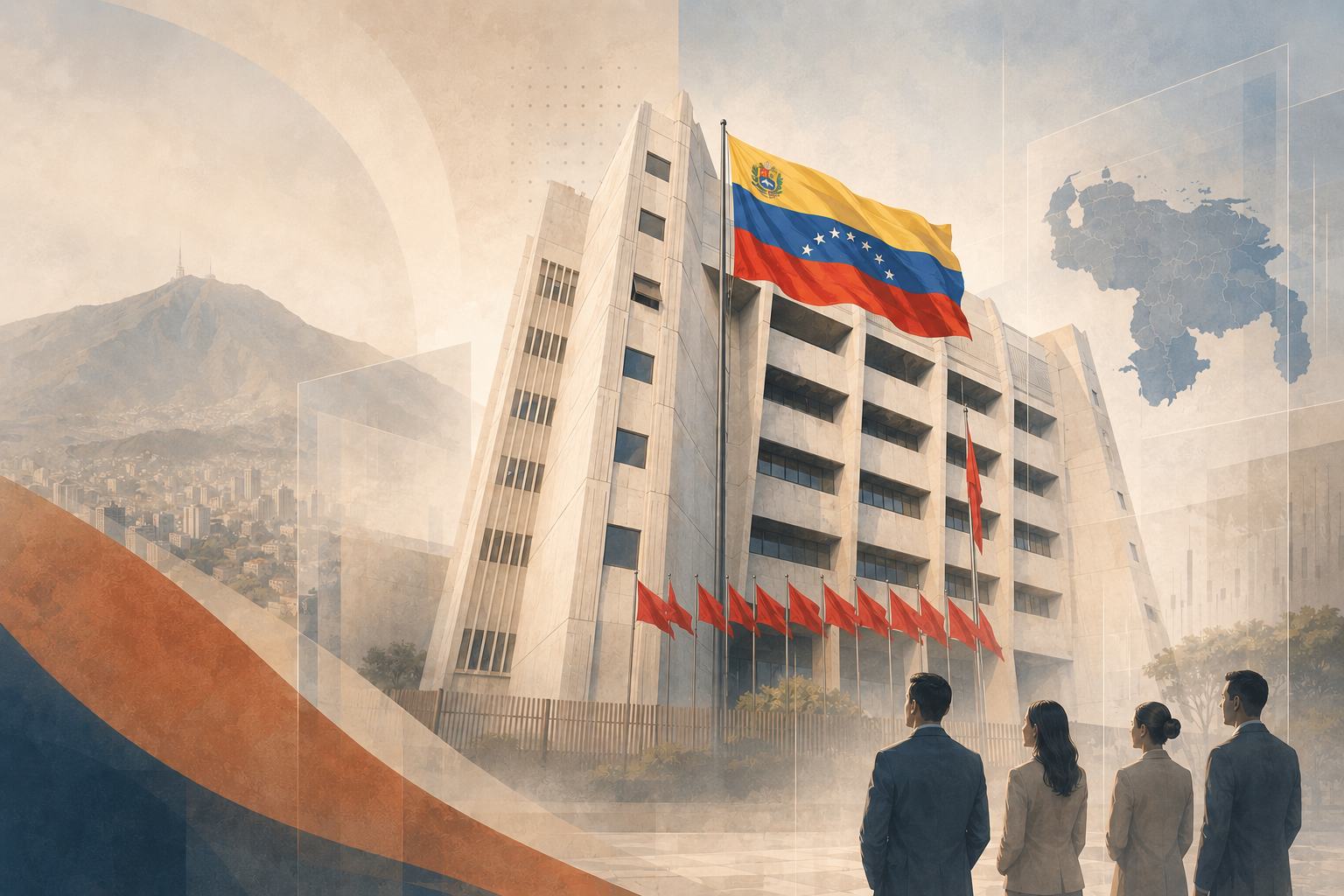
Following the adoption by Venezuelan Parliament of legislation on the constitution of the Supreme Tribunal Justice, and the installation today of the Judicial Nominations Committee, the International Commission of Jurists (ICJ) calls on the Judicial Nominations Committee and the National Assembly of Venezuela to ensure that the process for the selection and appointment of justices to the Supreme Tribunal of Justice is carried out in strict compliance with the Venezuelan Constitution and international standards on judicial independence and human rights.
“The appointment process for Supreme Tribunal justices represents a crucial opportunity to advance the reconstruction of the rule of law and public confidence in justice in Venezuela,” said ICJ Secretary General Santiago Canton.
“However, this will only be possible if there is full transparency and respect for the Constitution and international law in the appointment process”, added Canton.
Since 2000, Venezuela has undergone a prolonged process of effective political capture of the judiciary through successive measures by Venezuela’s legislative and executive administrations, aimed at consolidating influence and control over the Supreme Tribunal of Justice and weakening its independence.
Various legal and institutional mechanisms have been deployed to subordinate the justice system to governmental interests, seriously undermining the separation of powers and judicial guarantees for the Venezuelan population.
In 2004, the expansion of the Supreme Tribunal from 20 to 32 justices, together with new politically driven appointments, enabled then-President Hugo Chávez to consolidate an aligned majority within the country’s highest court. Subsequently, in 2010 and 2015, both the Chávez and Maduro governments promoted forced retirements and appointments to prevent future parliamentary majorities from influencing the composition of the Tribunal.
These measures served to facilitate decisions by the Supreme Tribunal that contributed to the progressive dismantling of democratic space. These included the complete nullification of the constitutional powers of the National Assembly elected in 2015 with a qualified opposition majority, the persecution of the justices appointed by that National Assembly, and the consolidation of institutional structures contrary to the Constitution and the rule of law. They also served to entrench a pattern of impunity for human rights violations and the use of the justice system as a tool of persecution of those engaged in dissent.
Following the 2022 reform to the Organic Law of the Supreme Tribunal of Justice, the number of justices was once again reduced to 20 through a process which lacked transparency and judges were appointed who were not vetted for independence and impartiality. In addition, the terms of office of justices whose mandates were due to expire between 2026 and 2027 were unconstitutionally extended.
The ICJ recalls that the Inter-American Commission on Human Rights, the United Nations Special Rapporteur on the independence of judges and lawyers, the UN Fact Finding Mission on Venezuela established by the UN Human Rights Council has repeatedly documented the lack of judicial independence in Venezuela and the use of the justice system to facilitate arbitrary detention and prosecution of political opponents, undue restrictions on democratic political participation, and violations of due process.
“The experience of the two past decades raises profound doubts, both within Venezuelan civil society and the international community, as to whether this process will genuinely take place under conditions compatible with judicial independence and transparency, particularly considering that the current acting president was part of the political regime that promulaged the socalled reforms that contributed to the deterioration of the rule of law in Venezuela,” added Canton.
The ICJ urges Venezuela’s National Assembly to ensure an open and transparent process, allowing the active participation of independent civil society organizations, as well as public access to the information necessary to evaluate the competence, integrity, and independence of candidates both for the Judicial Nominations Committee and the Supreme Tribunal of Justice.
The ICJ emphasizes that transparency cannot be reduced to mere procedural formalities. The legitimacy of the process will depend on the existence of genuine guarantees of independent and transparent evaluation, disclosure of background information, access to information of public interest, and the absence of undue political interference. The ICJ further calls on the Venezuelan authorities to respect the constitutional integrity of the Supreme Tribunal and to cease the arbitrary modifications in the number of justices.
The ICJ also urgently calls on the international community, the United Nations, and the Organization of American States to maintain close and continuous monitoring of this process.
Background
On 21 April, Venezuela’s National Assembly established a Preliminary Committee tasked with appointing the Judicial Nominations Committee to fill vacancies for principal justices of the Supreme Tribunal of Justice. At that time, only the resignation of one justice (2024) and authorization for three justices to serve as ambassadors (2022 and 2024) and ministers (2026) were publicly known. Subsequently, on 27 April, the Supreme Tribunal of Justice announced that eight principal justices had requested retirement.
On 9 May 2026, the National Assembly approved a reform of Article 8 of the Organic Law of the Supreme Tribunal of Justice, aimed at increasing the number of justices from 20 to 32, allegedly to expedite judicial proceedings. The previous reform of the law took place on 19 January 2022, when the number of justices was reduced from 32 — established through a 2004 reform — to the current 20, purportedly to strengthen efficiency, effectiveness, and performance in the administration of justice.
On 19 May 2026, the National Assembly installed the Judicial Nominations Committee in order to fill 24 vacancies for justices of the Supreme Tribunal of Justice.
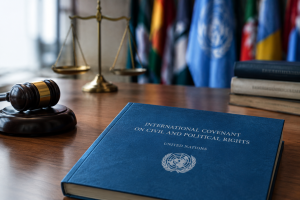
International standards applicable to the appointment of judges, including justices of supreme courts, require that such processes be protected from political influence and based on objective criteria of merit, integrity, professional competence, and independence. They also require transparency at every stage of the process and effective guarantees for public participation and scrutiny. These principles are reflected in international instruments such as Article 14 of the International Covenant on Civil and Political Rights, Article 8 of the American Convention on Human Rights, and the UN Basic Principles on the Independence of the Judiciary.
More information
- Strengthening the Rule of Law in Venezuela (2014)
- Venezuela: The Sunset of Rule of Law (2015)
- Venezuela’s Supreme Tribunal of Justice: An Instrument of Executive Power (2017)
- No Room for Debate. The National Constituent Assembly and the Crumbling of the Rule of Law in Venezuela (2019)
- Judges on a Tightrope: Report on the Independence and Impartiality of the Judiciary in Venezuela (2021)
- Lawyers Under Attack (2022)
No Will for Justice in Venezuela (2024) - Released but not free: the abuse of arbitrary detentions and pre-trial measures to prosecute dissent in Venezuela (2025)
- The Use of Anti-Terrorism Courts to Suppress Dissent in Venezuela (2026)
Download
The English press release is available for download here.
The Spanish press release is available for download here.