Apr 10, 2017 | News
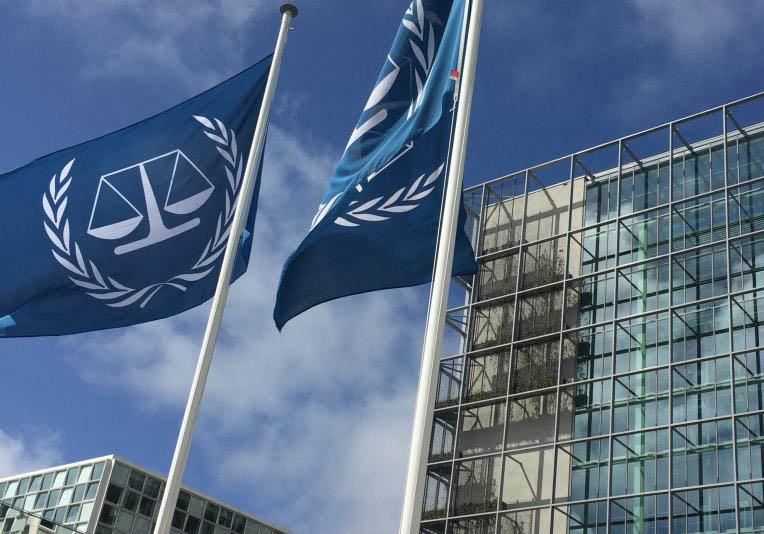
Zambia should reaffirm its membership in the International Criminal Court to best advance justice for victims of atrocities, a group of African organizations and international nongovernmental organizations – including the ICJ – with a presence in Africa said today.
Zambia’s government began public consultations on the country’s ICC membership the week of March 27, 2017.
This was in response to the African Union summit’s adoption in January of an “ICC withdrawal strategy.”
An unprecedented 16 countries, including Zambia, entered reservations to this decision.
Zambia has been a role model on the continent in matters of peace, democracy, and human rights. Leaving the ICC would erode the country’s leadership and threaten respect for the rights of victims of the most brutal crimes across Africa, the group of organizations said.
As a member of the Southern Africa Development Community (SADC), Zambia has a proud history in the establishment of the ICC, they added.
SADC was active in the diplomatic conference in Rome in 1998 where the ICC’s treaty was finalized after six weeks of negotiations.
SADC members developed 10 principles for an effective, independent, and impartial court at a meeting in Pretoria in 1997.
The ICC is a groundbreaking achievement in the fight against impunity, the organizations said.
It is the first and only global criminal court that can prosecute individuals responsible for atrocities.
It is a court of last resort in that it has the authority to try genocide, war crimes, and crimes against humanity committed since 2002, but only when national courts are unable or unwilling to investigate and prosecute.
Since the court’s treaty opened for signature in 1998, 124 countries have become members.
Zambia signed the ICC’s Rome treaty on July 17, 1998, the day it opened for signature, and ratified the treaty on November 13, 2000.
The ICC faces many challenges in meeting the expectations of victims of mass atrocities and member countries, the organizations said.
Its inability to reach crimes committed in some powerful countries and their allies is a cause for deep concern, even as claims that the ICC is targeting Africa are not supported by the facts.
The court’s reach is limited to crimes committed on the territories of countries that have joined the court or offered the court authority on its territory, absent a referral by the United Nations Security Council.
The majority of ICC investigations in Africa have arisen in response to requests or grants of authority by governments in the countries where the crimes were committed – as in Central African Republic, Côte d’Ivoire, Democratic Republic of Congo, Mali, and Uganda – or through referrals by the UN Security Council – as in Darfur, Sudan and Libya.
The ICC has faced backlash from some African leaders since it issued arrest warrants for Sudanese President Omar al-Bashir for alleged genocide, war crimes, and crimes against humanity in Darfur in 2009 and 2010.
In 2016, evidence of the backlash reached new heights when South Africa, Burundi, and Gambia announced they would withdraw from the court, the first countries to take such action.
Gambia has rescinded its withdrawal and South Africa is also re-examining withdrawal, making Burundi the only country to have maintained its withdrawal.
Under the ICC Statute, withdrawal goes into effect one year after the state party submits a notification to the UN Secretary-General.
In the wake of the announced withdrawals, many African countries – including Botswana, Burkina Faso, Côte d’Ivoire, Democratic Republic of Congo, Ghana, Lesotho, Mali, Malawi, Nigeria, Senegal, Sierra Leone, Tanzania, and Tunisia – have affirmed their commitment to remain in the ICC and to work for any reform as ICC members.
The organizations encourage Zambia to reaffirm its support for the court, particularly in the absence of any functioning regional criminal court that can hold perpetrators to account.
The groups expressing support for Zambia’s continued ICC membership are:
Africa Legal Aid
Africa Centre for International Law and Accountability–Ghana
Centre for Accountability and Rule of Law–Sierra Leone
Centre for Democratic Development–Ghana
Centre for Human Rights and Rehabilitation (Malawi)
Civil Resource Development and Documentation Centre (Nigeria)
Coalition for the International Criminal Court
Fédération Internationale des Droits de l’Homme
Human Rights Watch
Institute for Security Studies
International Commission of Jurists
JEYAX Development and Training (South Africa)
Kenya Section of the International Commission of Jurists
Kenya Human Rights Commission
Nigerian Coalition for the ICC
Parliamentarians for Global Action
Southern African Centre for the Constructive Resolution of Disputes (Zambia)
Southern Africa Litigation Centre (South Africa)
Mar 30, 2017 | News
The ICJ expressed its hope today that an arrangement reached between four judges of the High Court and Botswanan President Ian Khama along with Chief Justice Dibotelo would serve to restore the effective functioning of the High Court and its critical role in the administration of justice.
The settlement resulted in Justices Key Dingake, Modiri Letsididi, Ranier Busang and Mercy Garekwe withdrawing a petition and letter they had written complaining about what they considered to be a range of deficiencies in the justice system, as well as a failure of leadership in judicial administration.
The President and executive, for its part, discontinued pursing allegations of misconduct and bringing the name of the judiciary into disrepute against the judges and disestablished the impeachment tribunal that had been set up to try them.
The ICJ had previously expressed its concern about the process of the impeachment of the judges and the impact of the impeachment proceedings on judicial independence and impartiality in Botswana.
The ICJ was also concerned that impeachment proceedings would not accord with the principles of the right to fair trial.
“This settlement paves the way for the four judges to resume their normal duties,” said Arnold Tsunga Director of the ICJ.
“The Botswana executive and judicial officials charged with administration of the justice can now focus their attention on addressing the very real challenges facing the justice system in the country,” Tsunga added.
The ICJ reminds the Botswana authorities of their duty to guarantee the independence, impartiality and accountability of the judiciary under international law, including the International Covenant on Civil and Political Rights and the African Charter on Human and Peoples Rights, treaties to which Botswana is a party.
Contact
Arnold Tsunga, ICJ Regional Director for Africa, t: +27 716405926or +263 777 283 249; e: arnold.tsunga(a)icj.org
Background
The ICJ recalls that the four judges were suspended under section 97 of the Botswana Constitution on allegations of misconduct and bringing the name of the judiciary into disrepute.
The suspension was precipitated by a signed petition directed to the Chief Justice. In the petition the judges objected, among other things, to alleged poor conditions of service, as well as disparaging comments the Chief Justice was said have made about another judge’s ethnicity and defamatory statements related to corruption.
The petition also advocated for the Chief Justice’s impeachment and was copied to all judges of the High Court.
The Chief Justice and the President took issue with the contents and tone of the petition, alleging it to be disrespectful of the Chief Justice and causing disrepute of the judiciary in the eyes of members of the public.
Mar 21, 2017 | News
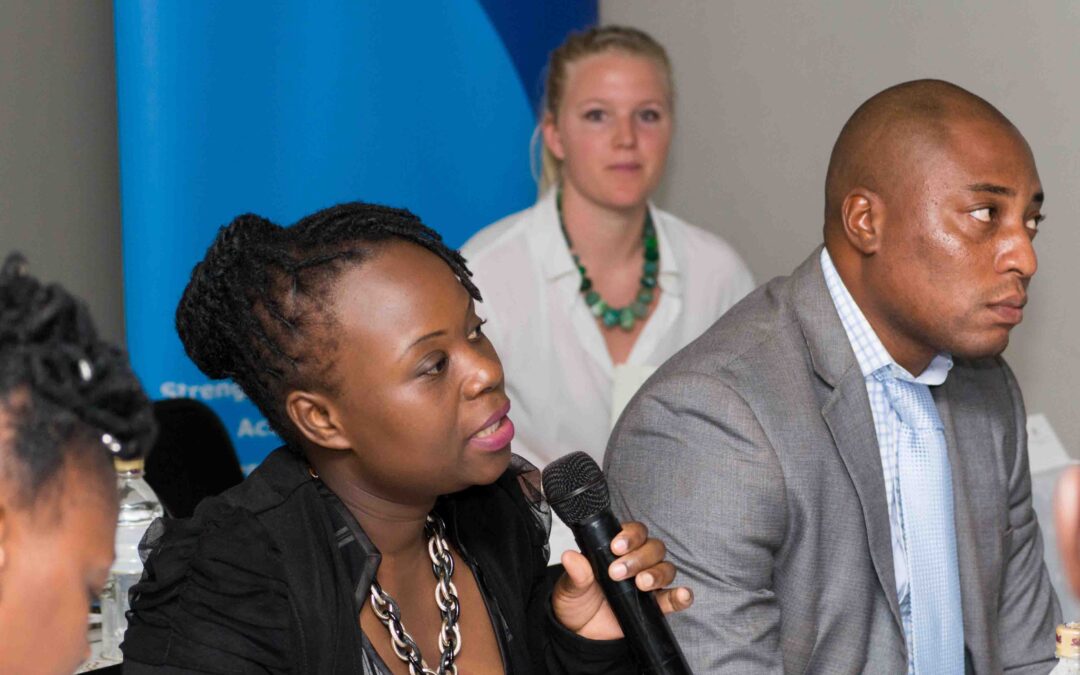
The National Prosecuting Authority (NPA) held a consultation conference on case and docket management system in Harare on 21 March 2017. The ICJ provided technical support.
The consultation conference was intended to validate findings of the field and desk research conducted in respect of case management in Zimbabwe.
The ICJ engaged consultants reviewed the case and docket management system as it relates to other justice actors such as the judiciary, police, prisons and legal aid providers.
The case and docket management assessment was measured against regional and international comparative standards.
The assessment focused on how case and docket management systems address the rights of vulnerable groups’ including women, unrepresented minors, juveniles and persons with disabilities.
From these consultations and field work, the NPA will be supported with a comprehensive, specific and detailed proposal with practical steps for adopting an improved case and docket management system.
Further, the findings will make recommendations on strengthening the case management system in Zimbabwe and how to address the needs and interests of the various justice sector stakeholders.
The consultation conference was attended by the Acting Prosecutor General, Deputy Prosecutor General, National Director of Public Prosecutions, senior law officers, senior magistrates, clerks (criminal courts), representatives from Zimbabwe Prisons and Correctional Services (ZPCS), Zimbabwe Republic Police (ZRP), and Zimbabwe Human Rights Commission (ZHRC).
Civil society representatives included directors and senior staffers from Zimbabwe Human Rights NGO Forum, Zimbabwe Lawyers for Human Rights (ZLHR) among others.
This consultation was held with financial support from the Foreign Commonwealth Office (FCO) Magna Carta Fund, through the British Embassy in Harare.
Contact
Arnold Tsunga, ICJ Regional Director for Africa, t: +27 716 405 926, e: arnold.tsunga(a)icj.org
Mar 3, 2017 | News
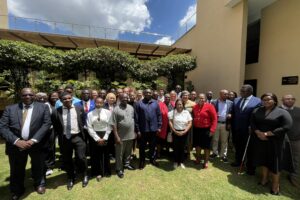
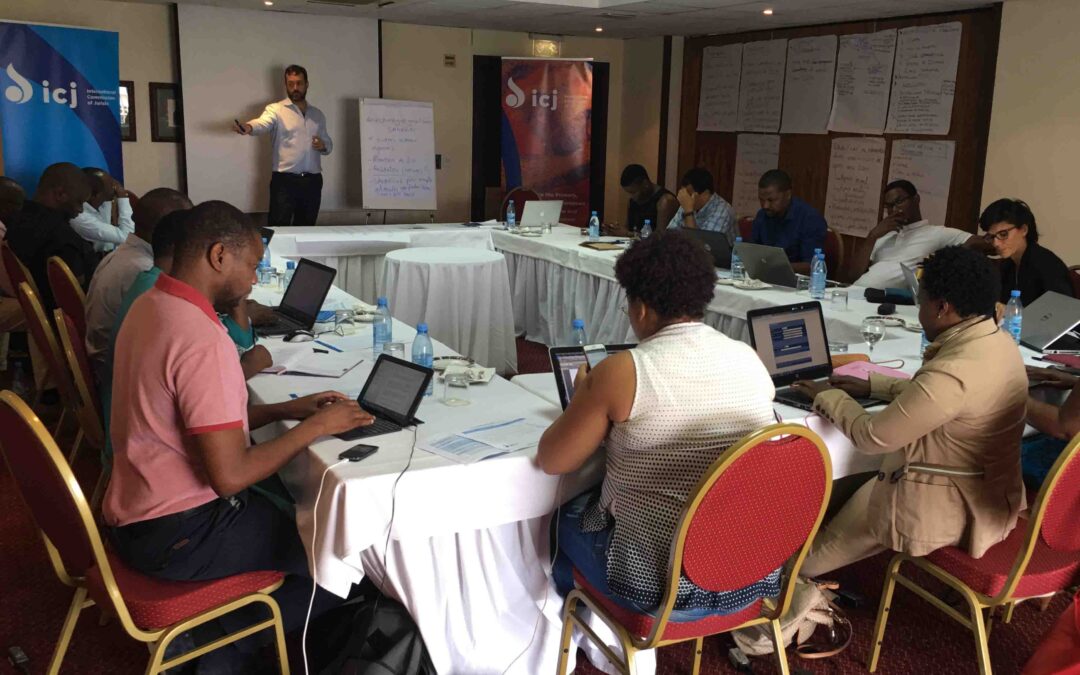
15 HRDs from Mozambique, including lawyers and journalist working in different provinces and towns of Mozambique including Nampula, Manica, Tete, Sofala and Beira held a strategy meeting for the protection of human rights defenders (HRDs) in Maputo from 2-3 March 2017.
The meeting was facilitated by the ICJ in collaboration with the Southern Africa Human Rights Defenders Network (SAHRDN) supported by the Open Society Foundations (OSF) and Open Society Institute of Southern Africa (OSISA).
Participants reflected on the state of human rights in Mozambique with a focus on prevailing political and economic conditions requiring urgent multi-pronged interventions to support HRDs.
The participants developed practical steps for legal protection of HRDs, enhancing a HRDs network, the nature of services and safety mechanisms required to protect HRDs including in violent conflict. In addition, ideas on how to address business and human rights violations were explored.
The use of strategic litigation at the domestic and international level to protect human rights was looked at and specific situations mapped as requiring some attention.
Linkages to regional and international human rights mechanisms for protection purposes and challenging impunity were discussed and some initial measures to take at the African Commission on Human and Peoples Rights were identified.
Contact
Arnold Tsunga, ICJ Regional Director for Africa, t: +27 716405926, e: arnold.tsunga(a)icj.org
Feb 27, 2017 | Multimedia items, News, Video clips
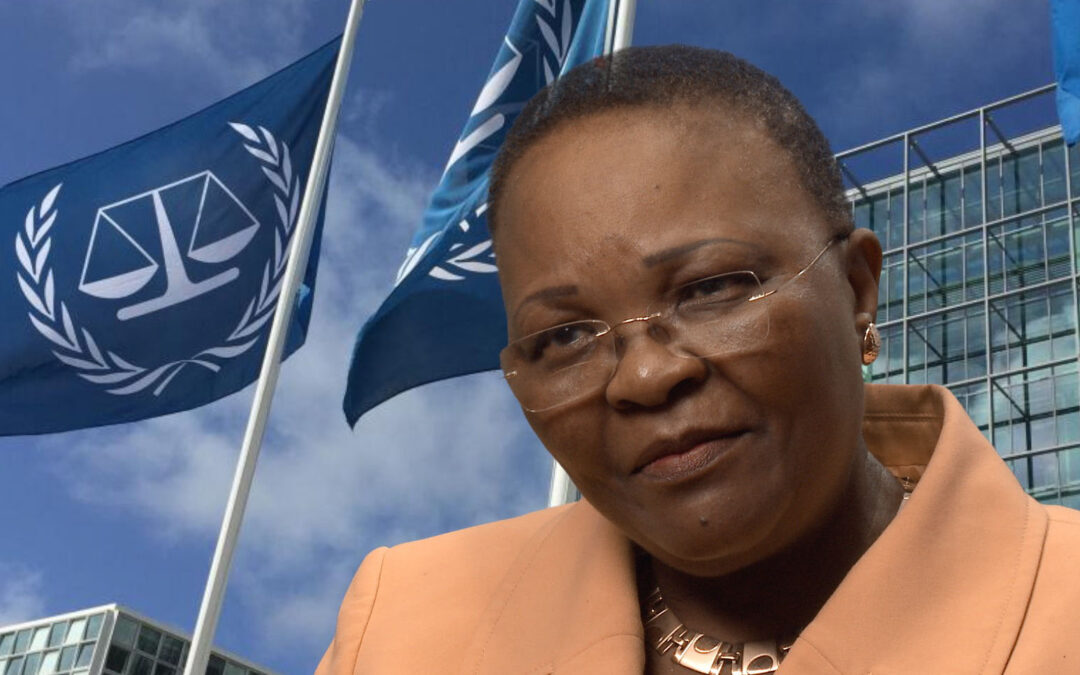
The ICJ continues it’s monthly profile series on women’s rights defenders with an interview with ICJ Commissioner and International Criminal Court Justice Sanji Monageng.
Justice Monageng told the ICJ that her interest in women’s rights began when she went through her own divorce and encountered the injustices that Botswana women suffered. This motivated her to pursue a career in law and align herself with the women’s rights movement that was establishing itself in southern Africa.
She became the Founder and Chief Executive of the Law Society in Botswana, a Magistrate in Botswana and High Court Judge in the Gambia and Swaziland. She was elected a Commissioner of the African Commission on Human and Peoples’ Rights and served as Chair of the Commission. She has been a Judge of the International Criminal Court since 2009 and served as First Vice-President between 2012-2015.
Justice Monageng commented that in Botswana, and elsewhere in southern Africa, women were at a serious disadvantage when it came to access to justice because of cultural, customary and religious restraints as well as economic inequality.
For example, up until only a few years ago women in Botswana were unable to inherit their parent’s property, on the basis of customary law, but a progressive judge was not afraid to challenge this and when this judgement was supported this led to a real change in the lives of women.
Sanji spoke of the importance of a strong civil rights movement and noted how instrumental this had been in Africa in leading the agenda to promote progressive rights protection for women. The African Commission on Human and Peoples’ Rights has a Special Rapporteur on Women and the Protocol to the African Charter on Human and Peoples Rights on the Rights of Women in Africa (the Maputo Protocol) has been hailed as the best in the world.
At the International Criminal Court (the ICC) there is a coalition of some 2,500 NGOs that work very closely with the court and have been instrumental in driving key aspects of the Court’s work including addressing sexual violence and ensuring victim and women’s participation. ‘Without civil society, without NGOs, and we have witnessed very credible civil society organisations’, Sanji says, ‘we cannot move.’
However, Justice Monageng commented that the ICC has not done very well in prosecuting sexual and gender based violence so far but acknowledges that the Court is still young and that progress is being made.
The new Chief Prosecutor, Fatou Bensouda, has undertaken a lot of endeavours to promote this aspect of the Court’s mandate such as creating a policy on sexual violence and gender issues, establishing a dedicated unit to address these crimes and appointing the highly qualified Brigid Inder as her Special Gender Advisor. Sanji commented that it is now evident in the cases she sees as a judge that a lot more attention is being paid to sexual violence.
Justice Monageng suggests that young women interested in defending women’s rights must internalize the importance of human rights. They should start associating themselves with women’s rights organizations even if only in a small way.
Defending women’s rights is difficult work and those that are interested in this must be prepared for criticism, and other unpleasantness but this work needs to be done. ‘The world is upside down and human rights are forgotten in most instances’, Sanji says, so she looks forward to girls joining the women’s rights movement.
Watch the interview:
The series of profiles introducing the work of ICJ Commissioners and Honorary Members on women’s rights was launched on 25 November 2016 to coincide with the International Day to Eliminate Violence against Women and the first day of the 16 Days of Activism Against Gender-Based Violence Campaign.