Feb 9, 2017 | News
The ICJ today condemned the arbitrary arrests and incommunicado detention of lawyer Felix Agbor-Balla and Dr. Fontem Aforteka’a Neba. They have been charged with a number of offences involving terrorism; rebellion against the State; incitement of civil unrest and breach of the Constitution.
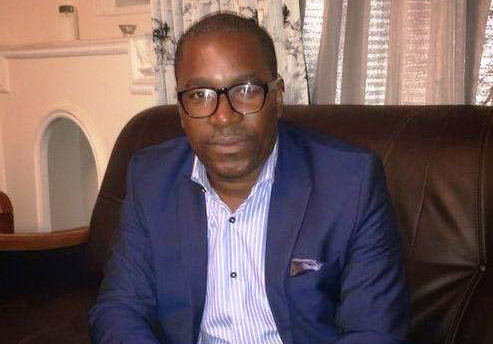
Felix Agbor-Balla (photo) and Fontem Aforteka’a Neba, respectively President and Secretary General of the Cameroon Anglophone Civil Society Consortium (CACSC), were arrested on 17 January 2017, after the Minister of Territorial Administration banned all activities, meetings and demonstrations of the CACSC and the Southern Cameroon National Council (SCNC).
Since late October 2016, Cameroon has faced a number of demonstrations in several cities in the English-speaking regions of the country.
The protesters have been calling for an end of the use of the French language in courts and schools, among other demands, and the government has accused the two organizations, CACSC and SCNC, of supporting these activities.
The protests began after an indefinite strike by school teachers in the city of Bamenda, by youth protesting against alleged neglect of the Anglophone regions of Cameroon.
Felix Agbor-Balla and Fontem Aforteka’a Neba are currently detained incommunicado at the Yaounde Central Prison in Kondegui, which is far from where family members live. Their trial which had been set for 1 February 2017 was postponed without notice or due cause to 13 February 2017.
The charges they face require evidence establishing that they incited or carried out acts of violence or, that they were the instigators of the protests and demonstrations.
The two were arrested on the same day where they had signed a statement calling for protest activities to be carried out without violence.
If convicted of the charges, the two may face the death penalty.
The ICJ is concerned that the two men are being held incommunicado, in contravention of international standards, where they are vulnerable to ill-treatment.
The ICJ is also concerned at allegations that their charges stem from exercise of their internationally protected human rights, including rights to freedom of expression, association and assembly.
“Detaining the two incommunicado and prolonged detention without access to a judge violates their right to liberty and to a fair trial, which is protected under both international law and the law of Cameroon,” said Arnold Tsunga ICJ Africa Director.
The ICJ considers that Felix Agbor-Balla and Dr. Fontem Aforteka’a Neba should be immediately released.
If there should be reliable and admissible evidence to charge them with a cognizable crime for conduct not protected under human rights law, they should be immediately brought before a judicial authority to determine whether there is a lawful basis for trial and to determine whether they may be released.
In any event they should be removed from incommunicado detention and be granted full access to a lawyer, doctor if necessary, and family members.
Under no circumstances should they be subjected to the possibility of the death penalty.
ICJ further calls on the authorities in Cameroon to comply with their obligations under the treaties to which it is party, including as the African Charter on Human and People’s Rights, International Covenant on Civil and Political Rights.
These treaties guarantee the rights to a fair trial, liberty and freedom of expression, association and assembly, among other rights.
The ICJ opposes the use of the death penalty in all circumstances, as a violation the right to life and freedom from cruel, inhuman or degrading punishment.
The ICJ calls on Cameroon to impose a moratorium on the death penalty, with a view to abolition, in line with repeated calls by the UN General Assembly.
Contact
Arnold Tsunga, ICJ Regional Director for Africa, t: +27 716405926 or +263 777 283 249: e: arnold.tsunga(a)icj.org
Mary Pais Da Silva, Associate Legal Adviser, t: +268 7603 0078, e: mary.paisdasilva(a)icj.org
Dec 17, 2016 | News
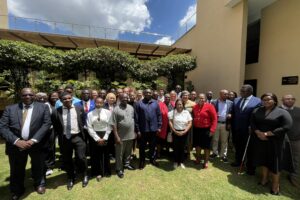
The ICJ jointly convened a two-and-a-half day training workshop with the Raoul Wallenberg Institute.
The meeting congregated lecturers from the four law schools from around the country to look into options for the development of clinical legal education programmes.
One of the objectives of the meeting was to acquaint and equip law schools with the various models and approaches to clinical legal education.
To that end the workshop covered issues including: an overview of clinical legal education programmes and models for law clinics; developing clinical legal education curricula; clinical/interactive teaching methods; and practical placement of students with local, regional and international organizations.
This initiative was a first step in a Clinical Legal Education Programme which is a response by the ICJ to concerns from judicial officers on the quality of legal graduates.
The clinical legal education programme is part of a broader ICJ intervention, which is looking to better equip and motivate lawyers to effectively contribute to the maintenance of the rule of law and preservation of human rights.
The process was jointly facilitated by Professor David Mcquoid-Mason (President, Commonwealth Legal Education Association) and Alex Conte of the ICJ and the University of Sussex.
The 17 participant academics (ten males and seven females) who attended the meeting where drawn from the four law schools in Zimbabwe: the Faculty of Law from the University of Zimbabwe; the Herbert Chitepo Law School at the Great Zimbabwe University; the Zimbabwe Ezekiel Guti University; and the Midlands State University.
Additional participants where drawn from the Institute for Peace, Leadership and Governance, at Africa University.
The workshop was held with the support of the European Union Delegation to Zimbabwe (EU).
Dec 15, 2016 | News
The ICJ and the Judicial College of Zimbabwe (JCZ) have assisted senior prosecutors in their role in strengthening the rule of law and protection of human rights in the country.
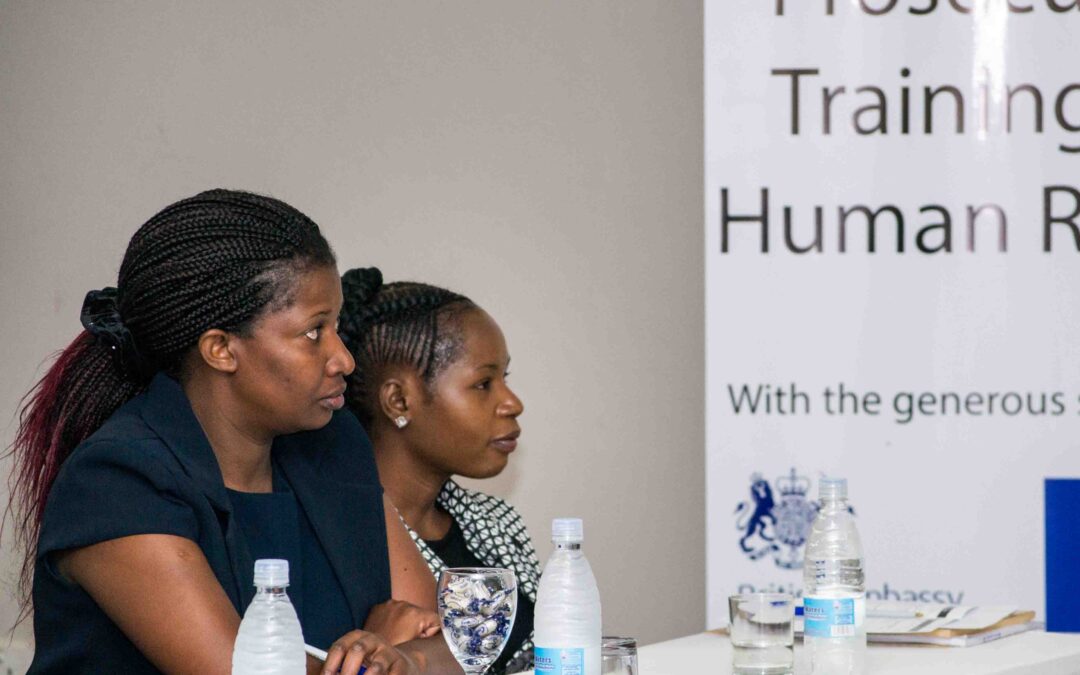
The Zimbabwe National Prosecuting Authority (NPA) held a pilot training of trainers for senior prosecutors on fair trial standards and human rights from 15-16 December 2016.
The NPA received substantive legal and technical support for this training from the Judicial College of Zimbabwe (JCZ) and the ICJ.
In consultation with the ICJ, the JCZ designed the training curriculum.
The JCZ has a statutory mandate to provide continuous professional development to various justice sector actors including the prosecution.
The content of the curriculum includes prosecutorial conduct in upholding the rule of law, constitutional and legislative protection of the rights of accused persons, general powers of the prosecutor general and his/her nominees, and the relationship with the other justice actors, such as the police.
In addition, the training focused on aspects relating to warrants for further detention, bail, right to remain silent, admissibility of statements obtained through illegal or abusive means, discharge at close of state case, sentencing and the prosecutors code of ethics.
The framing of the various topics is informed by universal, regional and domestic law and standards on the role, duties and mandate of the NPA, and individual prosecutors.
Fifty (50) senior prosecutors from different provinces and districts were selected to attend this inaugural intensive human rights training, facilitated by Mr. Shana, the JCZ principal, and Mr. Andrew Chigovera, former Attorney-General, former Commissioner, African Commission on Human and Peoples Rights.
Contact
Arnold Tsunga, ICJ Regional Director for Africa, t: +27 73 131 8411, e: arnold.tsunga(a)icj.org
Oct 26, 2016
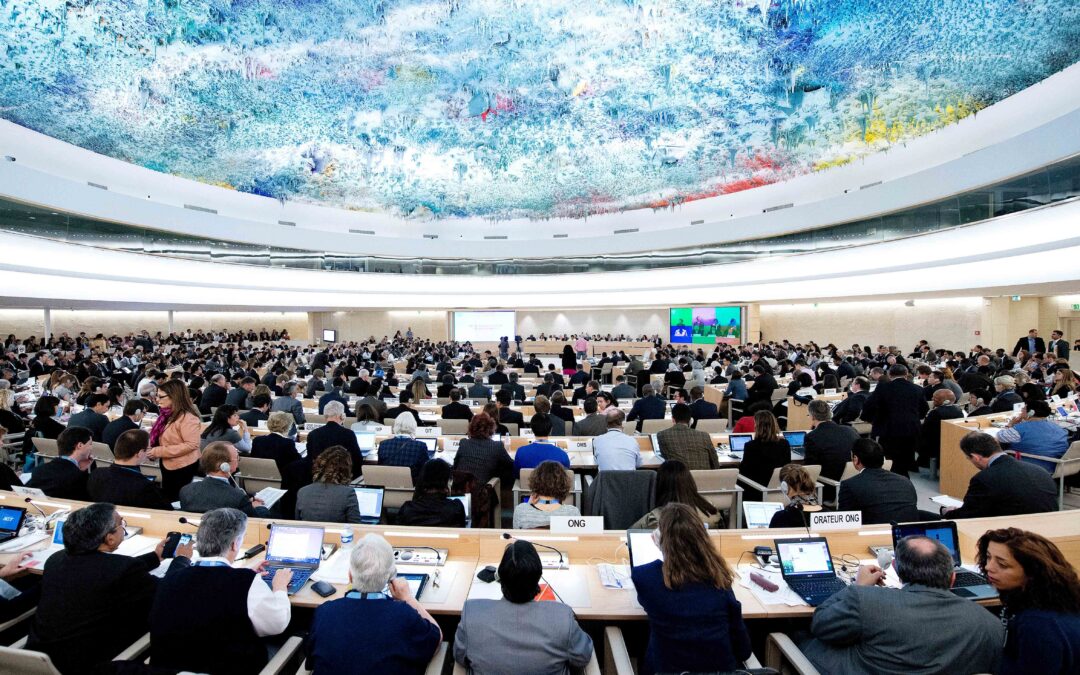
13 leading non-governmental organizations have called for Burundi to be suspended from membership in the UN Human Rights Council, due to its flagrant refusal to cooperate with the UN regarding the gross and systematic violations occurring in the country.
The NGOs cite recent findings by an independent UN panel of experts of ‘continuing and systematic, gross human rights violations which may amount to crimes against humanity’ in Burundi.
The UN experts further found that ‘responsibility for the vast majority of these violations should be laid at the door of the Government’.
The authorities of Burundi have rejected all cooperation with the international human rights system, including by refusing to appear at a hearing of the UN Committee against Torture, by making threats against human rights lawyers and other civil society actors who have provided information to the UN, and by an official government communiqué declaring that Burundi will no longer cooperate in any way with the UN Office of the High Commissioner for Human Rights and that each of the UN experts tasked with investigating the situation will be formally barred from visiting the country.
The open letter setting out the detailed grounds for the call for suspension may be downloaded in PDF format here:
burundi-hrc-suspension-advocacy-open-letters-2016-eng
Sep 22, 2016 | Advocacy, Non-legal submissions
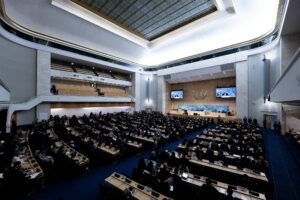
The ICJ today spoke to continuing concerns for human rights and the rule of law in Swaziland, during discussion at the UN Human Rights Council of the outcome of Swaziland’s Universal Periodic Review.
The statement read as follows:
The ICJ is concerned by the lack of implementation of recommendations accepted by the Government of Swaziland during the first UPR cycle.
The Swazi Government undertook to take concrete and immediate measures to guarantee the independence and impartiality of the judiciary. However judges continue to be appointed on the basis of corrupt patronage. The current Chief Justice and another Supreme Court judge are generally perceived to have been appointed on the basis of their traditional roles as former headman and chief, respectively, in the absence of any formal or transparent merit-based recruitment process.
Swaziland still has not ratified key international instruments, including the Rome Statute, the Optional Protocol to the Convention Against Torture, and the Convention for the Protection of All Persons from Enforced Disappearance, which they accepted during the last cycle.
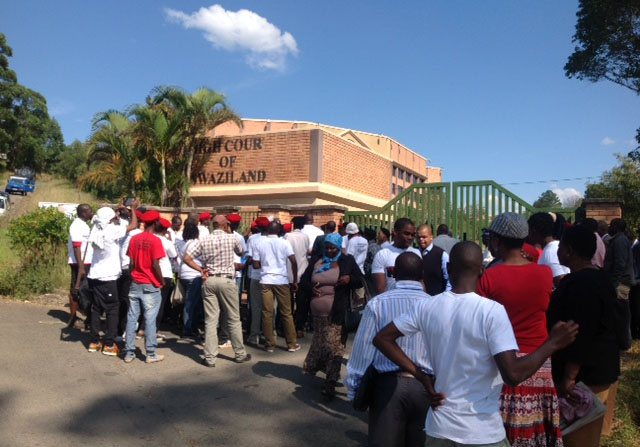
The police have continued to ban and disrupt peaceful protests, relying on the Suppression of Terrorism Act, the Sedition and Subversive Activities Act and Public Order Act. Human rights defenders and political activists continue to be arrested and charged with criminal offences for exercising their rights to freedom of expression, association and assembly.
Swaziland has not enacted into law the Sexual Offences and Domestic Violence Bill, or any other law guaranteeing gender equality.
For these reasons, the ICJ calls upon the Government of Swaziland to accept and fully and promptly implement UPR recommendations from this cycle relevant to:
- Ensuring the independence and impartiality of the judiciary;
- Ratifying and domesticating the international instruments they accepted at the last cycle;
- Aligning national laws with international standards to guarantee freedom of expression, association and assembly;
- Enacting the Sexual Offences and Domestic Violence Bill into legislation.
The statement may be downloaded in PDF format here: hrc33-upr-swaziland-2016