Nov 19, 2013
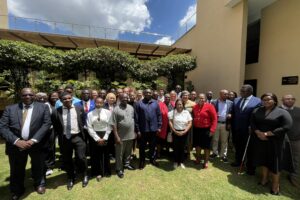
Despite progress for many women in Botswana, access to justice remains a challenge, a new ICJ report says.
Launched today, Women’s Access to Justice in Botswana: Identifying the Obstacles and Need for Change, assesses some of the challenges faced by women in Botswana when seeking justice and legal protection for human rights abuses and other wrongful conduct.
It underlines that a range of practical barriers and legal impediments continue to combine to undermine the ability of women to seek legal redress for such abuses.
“Although Botswana has implemented a number of important measures to advance gender equality, for many women justice remains an abstract ideal rather than a practical reality,” said Leah Hoctor ICJ Senior Legal Advisor on Women’s Human Rights. “Over the coming years further concerted action is needed.”
The report outlines a series of effective and meaningful steps that Botswana can take to ensure laws and procedures support and advance women’s ability to assert their rights.
“This report provides a wide range of stakeholders, including government actors, the judiciary, civil society representatives and the legal profession with important guidance as to the action now necessary,” said Arnold Tsunga, Director of the ICJ’s Africa Programme.
Contact:
Leah Hoctor: leah.hoctor(a)icj.org
Arnold Tsunga: arnold.tsunga(a)icj.org
ICJ Women’s Access to Botswana-publications-2013 (download in pdf)
Oct 27, 2013 | News
The international NGO coalition for the OP to the ICESCR supports national initiatives to promote ratification in Africa.
The International Coalition for the Optional Protocol to the International Covenant on Economic, Social and Cultural Rights ended today a one-week support mission to promote the ratification of the Protocol in West Africa.
Although the group of African States played a fundamental role in the elaboration of the Protocol, none of them have yet ratified this instrument that will give the possibility to victims of violations of ESCR to have their case examined by the UN Committee in charge.
On 21 and 22 October in Cotonou, Benin, two members of the International Coalition, Amnesty International and the International Commission of Jurists, supported national actors, including the Coalition béninoise pour les DESC, Amnesty International-Benin, the Chaire UNESCO-Benin, in the organization of a high-level roundtable discussion to welcome the signature by the State of Benin of the Optional Protocol to the ICESCR on 24 September 2013 and to encourage the State to move quickly towards the ratification of the instrument.
The initiative benefitted from the participation of two Ministers, the Minister of Justice and Human Rights and the Minister in charge of the relations with the institutions, as well as from the support of additional partners including the Office of the High Commissioner for Human Rights.
From 24 to 26 October, and with the support of the International Coalition, a group of national civil society organized in Sokodé (about 400 km from Togo’s capital Lome) a national gathering to discuss the international standards on ESCR, the promotion and protection mechanisms for these rights, including the procedures under the Protocol.
Fifty-two participants from more than 30 civil society organizations from all parts of the country took part in this event.
Following the discussions, the organizers – the Plateforme DESC-Togo, GRADSE, RAPDA-Togo, FETAPH, WILDAF-Togo, FLORAISON et AMNESTY INTERNATIONAL-Togo, in collaboration with the International Commission of Jurists, the OHCHR, Amnesty International and Terre des Hommes France – established an action plan for the promotion and protection of ESCR in the country, including the monitoring of key recommendations of the CESCR and the ratification of the Optional Protocol.

Sep 1, 2013
The ICJ organized a high level mission to the Kingdom of Lesotho in March 2013 to gather facts concerning a crisis in judicial leadership in this country.
The dispute emerged from a dispute between the office of the Chief Justice, presently occupied by the Honourable Justice M Lehohla1, and the office of the President of the Court of Appeal, presently occupied by the Honourable Justice M Ramodibedi, over the issue of which of them is the head of the judiciary.
The mission team’s objective was also to make recommendations on possible solutions to the crisis.
The ICJ considers that a resolution of this crisis is necessary to bring about harmony in the administration of justice in Lesotho, to facilitate access to justice, to protect the independence of the judiciary and to preserve public confidence in Lesotho’s judicial institutions.
The full mission report can be downloaded below.
Lesotho-Crisis judicial leadership-Publications-Mission report-2014-ENG (full text in pdf)
Jul 23, 2013
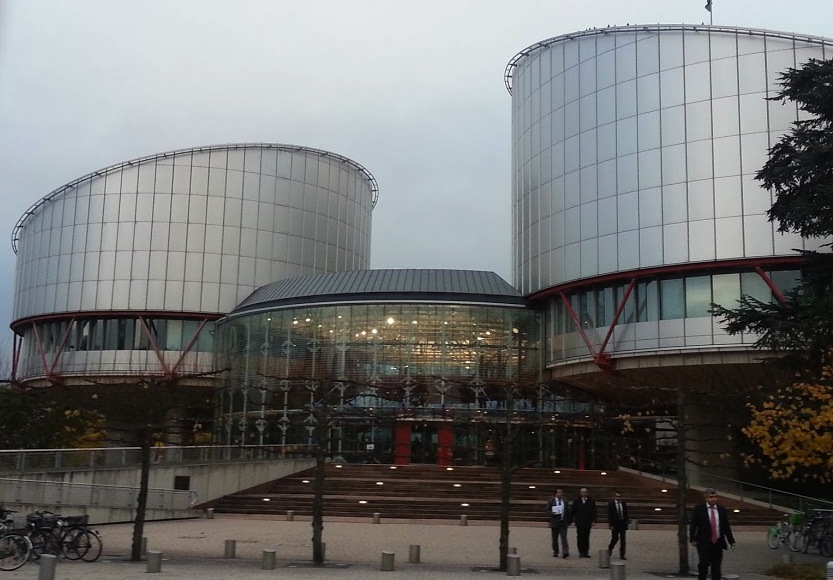
The European Court of Human Rights ruled today that the 17-month detention of a Sierra Leone national asylum seeker was in breach of Article 5(1) of the European Convention on Human Rights (ECHR).
Ibrahim Suso Musa had been detained in the Safi Barracks, an administrative detention centre for undocumented migrants located in a military base, for more than six months pending his asylum application.
He was then held for a further eleven months with view of deportation, after his asylum request had been rejected on 2 April 2012.
The Court further held that Maltese authorities had breached his right to an effective and speedy remedy to challenge the lawfulness of his detention under Article 5(4) ECHR.
The ICJ submitted a third party intervention in the case, arguing, among other things, that the mechanism of review of the legality of detention in Malta was at odds with ECHR standards and that conditions of detention should be taken into account when assessing the arbitrariness of the detention under Article 5 of the European Convention.
The European Court of Human Rights ruled that Maltese legislation did not provide any effective and speedy remedy to challenge detention of undocumented migrants or asylum seekers. It furthermore held that his detention pending his asylum application was arbitrary because it was excessively long, particularly considering the poor conditions of detention in the Safi Barracks detention centre. Finally, it ruled that, because of the conditions of detention, the absence of a means under Maltese law to challenge the detention’s legality and the fact that effective efforts towards deportation had not been pursued, “the national system failed as a whole to protect [Suso Musa] from arbitrary detention”.
The International Commission of Jurists (ICJ) welcomes today’s ruling of the European Court of Human Rights in the case of Suso Musa v. Malta, which corroborates some of the findings of its report, Not Here to Stay, documenting an ICJ mission to Malta in September 2011.
“This ruling is an authoritative statement that the migration detention system is not in line with Malta’s obligations under the European Convention on Human Rights”, said Massimo Frigo, Legal Adviser for the Europe Programme. “The system as it stands opens the door to substantial abuses, adding to the extraordinary strains that are faced by many asylum seekers. The ICJ shares the Court’s view that “general measures at national level are undoubtedly called for in execution of the present judgment” and calls on Maltese authorities to implement the Court’s recommendations on specific measures to bring the system up to standard.”
The ICJ acknowledges that Malta’s situation is particularly difficult and that the European Union must also play its role as guarantor of the EU Charter of Fundamental Rights and of EU standards on asylum. “The EU should intervene to ensure that the Maltese system is put in line with EU and ECHR human rights standards and its Member States should cooperate including by facilitating the resettlement of persons recognized for international protection”, said Massimo Frigo.
SusoMusa-Malta-ECtHR-Statement-2013 (download the statement)
SusoMusa-ECtHR-Intervention-Malta-2013 (download the third party intervention)
SusoMusa-ECtHR-Judgment-Malta-2013 (download the Court’s judgement)
Contact:
Massimo Frigo, ICJ Legal Adviser of the Europe Programme, tel: 41 22 979 38 05, e-mail: massimo.frigo(a)icj.org
Róisín Pillay, ICJ Director of the Europe Programme, e-mail : roisin.pillay(a)icj.org
Jun 19, 2013 | Multimedia items, News, Video clips
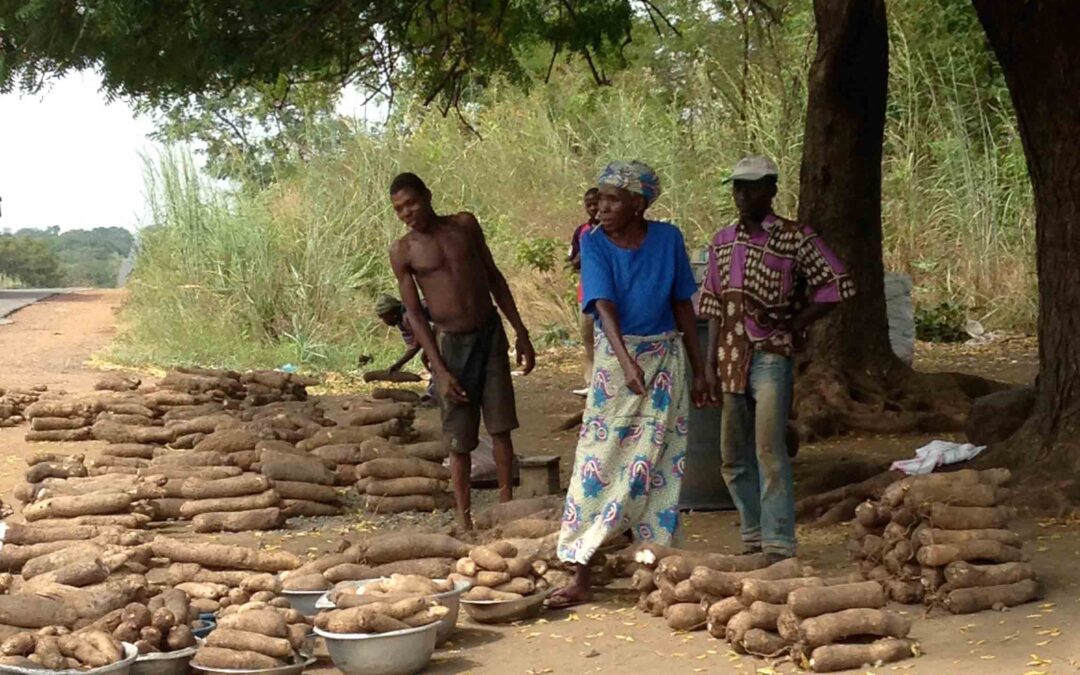
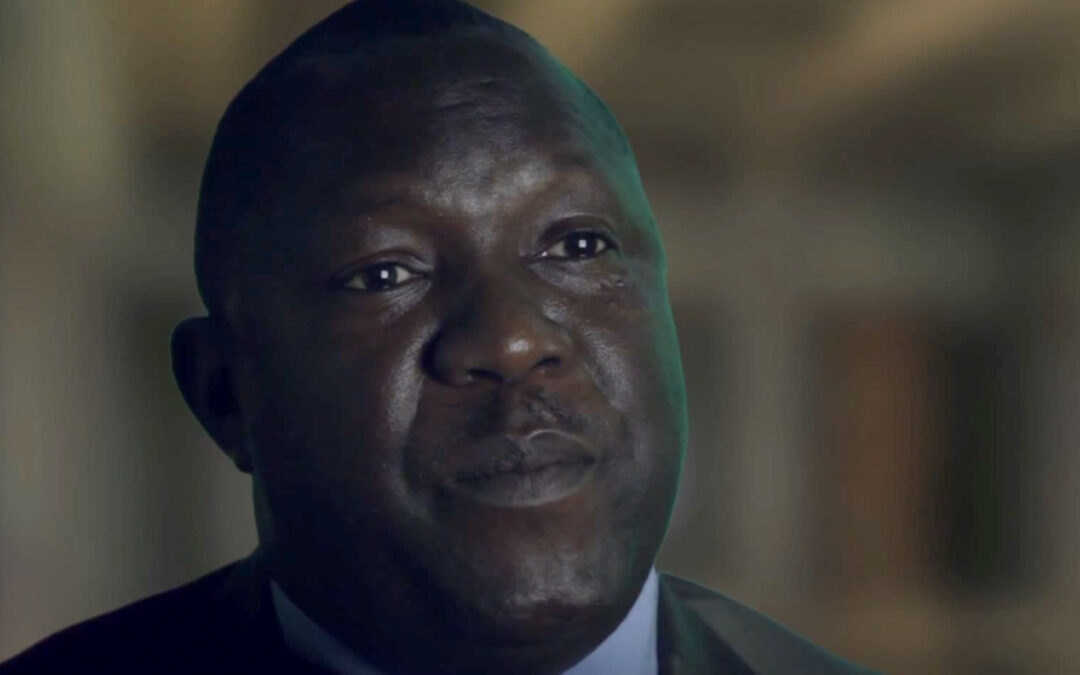
Okay Machisa is the National Director of Zimrights, one of Zimbabwe’s leading human rights organizations, supported by the ICJ. Listen to his video interview.