Mar 27, 2014 | News
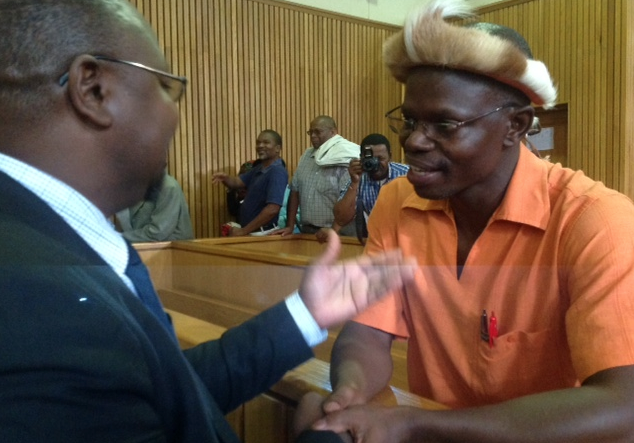
The ICJ consider that yesterday’s order to prolong the detention pending trial of Swazi human rights lawyer, Thulani Rudolf Maseko, and The Nation Magazine editor Bheki Makhubu, for 7 more days, was inconsistent with the right to liberty.
The ICJ sent a team of lawyers to observe yesterday’s court hearing in Mbabane because of concerns that not only was the arrest and detention seemingly arbitrary, but also that the charges for contempt of court may be inconsistent with the enjoyment of the right to freedom of expression.
In the light of its concerns in the case, including with regard to the respect for the rights to a fair hearing before an independent and impartial tribunal, the rights to liberty and the rights to freedom of expression, the ICJ intends to continue to monitor the proceedings against Thulani Rudolf Maseko and Bheki Makhubu, and will send an international observer to the next hearing which is expected to take place on 1 April 2014.
Further information:
swaziland-maseko and makhubu custody hearing-2014 (full press release)
Contact:
Arnold Tsunga, Director, ICJ Africa Regional Programme, Arnold.tsunga(a)icj.org, +27 11 024 8268 or +27 73 131 8411
Martin Okumu-Masiga, Deputy Director, ICJ Africa Regional Programme, martin.okumu-masiaga(a)icj.org, +27 78 234 9125.
Mar 24, 2014 | News
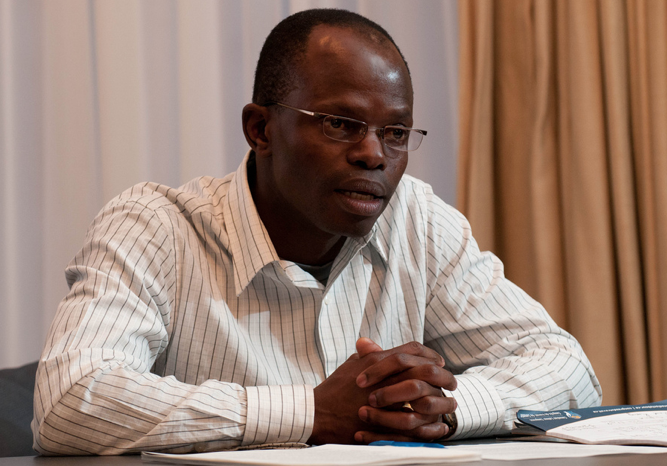
The ICJ, in collaboration with other organizations, has dispatched a team of lawyers to attend the bail hearing of prominent lawyer and human rights defender, Thulani Maseko and journalist, Bheki Makhubu on 25 March 2014.
The ICJ is working with the SADC Lawyers Association, the Southern Africa Litigation Centre, the Zimbabwe Lawyers for Human Rights and the Southern Africa Human Rights Defenders Network.
Maseko and Makhubu were jointly charged on 18 March 2014 and remanded to appear on 25 March for a bail hearing.
Their lawyer was not allowed to make submissions when the accused appeared for initial remand, in contravention of regional and international standards guaranteeing the right to be represented by a lawyer in legal proceedings.
The accused were arrested after Chief Justice Ramodibedi issued a warrant for their arrest on charges of criminal contempt of court.
The charges arise from articles allegedly written by Maseko and Makhubu in February and March 2014, in which they questioned circumstances surrounding the arrest of government vehicle inspector, Vincent Gwebu.
The vehicle inspector had been arrested and charged with contempt of court after he had arrested the driver of a High Court Judge.
They questioned the integrity, impartiality and independence of the Swaziland judiciary in the way they handled the Gwebu case.
The legality of the arrest, detention and charges is likely to be challenged at the bail hearing.
The ICJ trial observer team of lawyers will assess the compliance of the trial proceedings with international standards of fair trial, including those of the African Union.
The ICJ has previously expressed initial concern that the arrest and detention appear to be arbitrary, and carried out in retribution for their exercise of their right to freedom of expression.
The ICJ also previously expressed further initial concern that the lawyer for the two was not allowed the legitimate exercise of his professional functions as a lawyer when the two appeared before the Chief Justice for the initial remand.
The team of trial observers consists of the following lawyers: Arnold Tsunga, Director, ICJ Africa Regional Programme; Martin Okumu-Masiga, Deputy Director, ICJ Africa Regional Programme; Andrew Makoni, Board member, Zimbabwe Lawyers for Human Rights; and Emilia Siwingwa, Deputy Director, SADC Lawyers Association.
Contact
For further information contact Arnold Tsunga or Martin Okumu-Masiga on +27 11 024 8268, +27 73 131 8411 or +27 78 234 9125.
Mar 18, 2014 | News
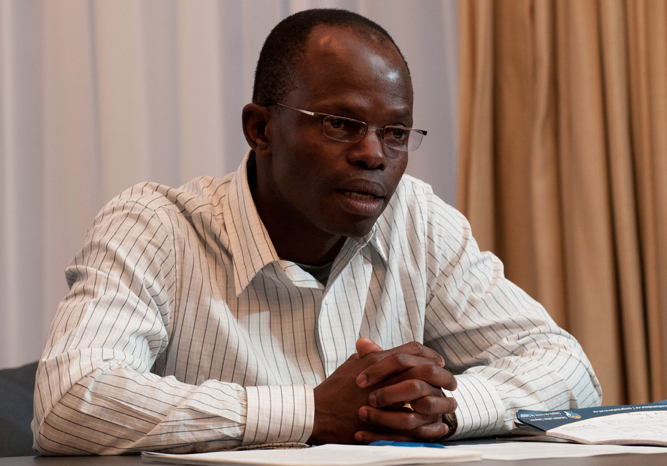
The ICJ today condemned the arrest and detention on 17 March of prominent human rights lawyer, Thulani Maseko and Nation Magazine editor, Bheki Makhubu.
The ICJ is concerned that Thulani Maseko is being subject to persecution for the legitimate exercise of his professional functions as a lawyer, and that both men appear to be detained for exercising their right to freedom of expression.
The men were arrested after Chief Justice Ramodibedi had issued a warrant for their arrest on charges of “scandalizing the judiciary” and contempt of court.
The charges arise from articles allegedly written by Thulani Maseko and Bheki Makhubu in February and March 2014, in which they questioned circumstances surrounding the arrest of government vehicle inspector, Vincent Gwebu.
The vehicle inspector had been arrested and charged with contempt of court after he had arrested the driver of a High Court Judge.
Thulani Maseko and Makhubu, were jointly charged on 18 March 2014 and remanded to appear on 24 March for a bail hearing.
Their lawyer was not allowed to appear on their behalf, in contravention of international and African regional law and standards guaranteeing the right to be represented by a lawyer in legal proceedings.
The ICJ is also concerned that the accused did not appear in open court, but instead in the Chief Justice’s chamber and were not allowed to apply immediately for bail, also in contravention of international and African regional standards.
The ICJ calls upon the Swazi immediately to release the two men. For as long as they are in detention they must be given access to their lawyers.
For further information contact:
Arnold Tsunga, Arnold.tsunga(a)icj.org, Director, ICJ Africa Regional Programme
Or
Martin Okumu-Masiga, Martin.okumu-masiga(a)icj.org, Deputy Director.
Feb 27, 2014 | News
The ICJ is profoundly concerned at the recent enactment of legislation in Nigeria and Uganda that heralds further persecution based on sexual orientation and/or gender identity.
On 24 February 2014, Uganda’s President, Yoweri Museveni, gave his assent to the Anti-Homosexuality Bill recently adopted by the Uganda Parliament by signing it into law.
His Nigerian counterpart, President Goodluck Jonathan, had signed the Same Sex Marriage (Prohibition) Bill into law on 7 January this year.
In both countries pre-existing legislative provisions already criminalized consensual same-sex sexual activity in private in contravention of international human rights law and standards, including the Universal Declaration of Human Rights, the International Covenant on Civil and Political Rights and the International Covenant on Economic, Social and Cultural Rights.
These core global instruments each affirm the universal and inalienable rights to human dignity, equality and non-discrimination.
“Carnal knowledge…against the order of nature,” for example, was already a criminal offence in both Nigeria and Uganda, carrying, upon conviction, maximum sentences of 14 years’ imprisonment in the former and life imprisonment in the latter.
The new Nigerian legislation makes people of the same gender who contract a marriage or civil union liable upon conviction to 14 years’ imprisonment.
Further, it makes criminally responsible anyone who “administers, witnesses, abets or aids” a same-sex marriage or civil union ceremony, rendering those found guilty of the offence liable to 10 years’ imprisonment.
It also outlaws the registration, activities and funding of any “gay” organization, making them offences attracting 10 years’ imprisonment upon conviction.
In Uganda, the new law, among other things, explicitly criminalizes consensual same-sex conduct between women and makes it an offence for people to discuss and be open about their sexuality.
Further, it criminalizes “homosexuality”, “aggravated homosexuality” and same-sex marriages, all of which carry sentences of life imprisonment upon conviction.
Moreover, it makes it a criminal offence to make available information about sexual orientation, safe sex and gender identity. Renting premises to those who may “practice homosexuality” is also a crime.
The ICJ considers that laws or regulations that directly or indirectly criminalize consensual same-sex sexuality or conduct provide State actors with the means to perpetrate human rights violations, including through harassment, extortion and discriminatory “criminal” investigations, prosecutions, trials and imprisonment.
Equally, these laws enable non-State actors to persecute with impunity individuals based on their real or perceived sexual orientation and/or gender identity.
Indeed, laws that criminalize same-sex consensual sexual activity contribute to an atmosphere of State-supported homophobia and transphobia and serve as both the motivation and justification for harassment, extortion and physical abuse of people based on their real or attributed sexual orientation and/or gender identity by non-State actors.
In the circumstances, not only is cruel, inhuman or degrading treatment at the hands of non-State actors on the basis of real or perceived sexual orientation and/or gender identity not prevented, but such treatment and other human rights abuses are fostered when the authorities enact laws criminalizing consensual same-sex sexuality or conduct.
Overall, the existence of such laws works to deprive individuals who are, or are perceived to be, lesbian, gay, bisexual, transgender or intersex of adequate protection from violence and discrimination, including police protection and judicial redress.
This makes the provision of effective protection by State authorities extremely unlikely if not altogether impossible given that extending such protection would in turn be tantamount to aiding and abetting the perpetration of the very acts that such laws criminalize.
Putting the same point another way: protection is neither effective nor available when laws criminalizing consensual same-sex sexual relations or acts exist, because the individuals who need protection would effectively be outing themselves to the authorities should they decide to seek protection from them.
Accordingly, the existence of these laws entails a real risk of violations of the right to life, to liberty and security of the person, and to mental and physical integrity.
In light of the above, the ICJ considers that Uganda’s Anti-Homosexuality Act and Nigeria’s Same Sex Marriage (Prohibition) Act contravene each country’s respective Constitution and their international treaty and customary law obligations by which both countries are bound.
In particular, the Acts directly violate the right to dignity; equality, including equality before the law and equal protection of the law; non-discrimination; liberty and security of person; privacy; opinion and expression; association and peaceful assembly; and the right to access health services and care without discrimination.
Both pieces of legislation also undermine and criminalize the critical work of human rights defenders and civil society organizations that seek to combat discrimination and persecution based on sexual orientation and/or gender identity.
They also have very serious public health implications, including, for example, as a result of the fact that they hinder the prevention and treatment of HIV/AIDS.
The UN High Commissioner for Human Rights, Navi Pillay, has strongly denounced both pieces of legislation.
In relation to the Nigerian law, the High Commissioner said: “rarely have I seen a piece of legislation that in so few paragraphs directly violates so many basic, universal human rights”.
She further noted that the legislation “purports to ban same-sex marriage ceremonies but in reality does much more.
It turns anyone who takes part in, witnesses or helps organize a same sex marriage into a criminal. It punishes people for displaying any affection in public towards someone of the same sex.
And in banning gay organizations it puts at risk the vital work of human rights defenders who speak up for the rights of lesbian, gay, bisexual, transgender (LGBT) and intersex people”.
In his reaction to the enactment of the Nigerian legislation, the Executive Director of UNAIDS, Michel Sidibé, expressed concern that: “The provisions of the new law in Nigeria could lead to increased homophobia, discrimination, denial of HIV services and violence based on real or perceived sexual orientation and gender identity … It could also be used against organizations working to provide HIV prevention and treatment services to LGBT people.”
In relation to the Ugandan legislation, the High Commissioner said: “Disapproval of homosexuality by some can never justify violating the fundamental human rights of others” adding that the law “will institutionalise discrimination and is likely to encourage harassment and violence against individuals on the basis of their sexual orientation. It is formulated so broadly that it may lead to abuse of power and accusations against anyone, not just LGBT people.”
The ICJ urges the Nigerian and Ugandan authorities to urgently repeal the new legislation, as well as the pre-existing legislative provisions criminalizing consensual same-sex sexual activity in private.
Contact:
Livio Zilli, ICJ Senior Legal Adviser, Sexual Orientation and Gender Identity Programme, t +41 22 379 3823; email: livio.zilli(a)icj.org
Dec 3, 2013 | Agendas, Events
The ICJ was at the Club de la Presse in Geneva for a roundtable ahead of the Fourth ICJ Geneva Forum of Judges and Lawyers. The event was live streamed.
Moderated by Leah Hoctor, Senior Legal Adviser at ICJ, the event was a unique opportunity to share the real life experiences of two African women, who have overcome the challenges of poverty and discrimination to become two of Africa’s most senior and admired judges.
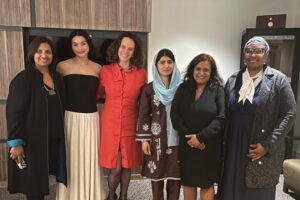
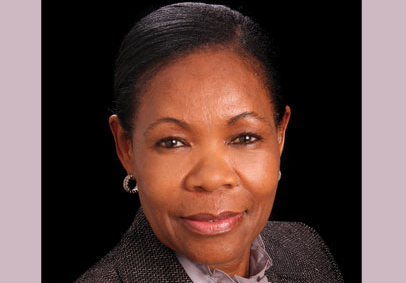
Justice Yvonne Mokgoro (photo) was the first black woman judge in South Africa and a former justice of its post-apartheid Constitutional Court.
Justice Lilian Tibatemwa-Ekirikabinza is an academic leader in Uganda. She was the first Ugandan woman to qualify for an award of a Ph.D. in Law.
The Press Club event came ahead of the Fourth ICJ Geneva Forum of Judges and Lawyers on 5-6 December.
The Forum is convened annually by the ICJ’s Centre for Independence of Judges and Lawyers, bringing together legal practitioners from around the world to help safeguard the independence and impartiality of the judiciary and the legal profession.
This year’s forum promotes the role of women in the judiciary, focusing particularly on women judges and lawyers from Africa and the Middle East.
It forms part of a broader ICJ initiative on women judges, lawyers and human rights defenders as agents of change.
Watch the event here: