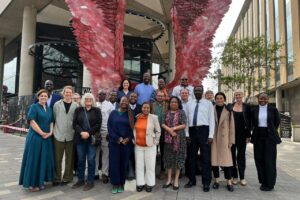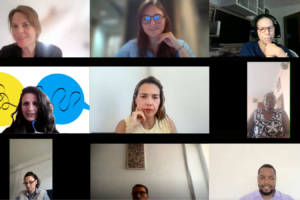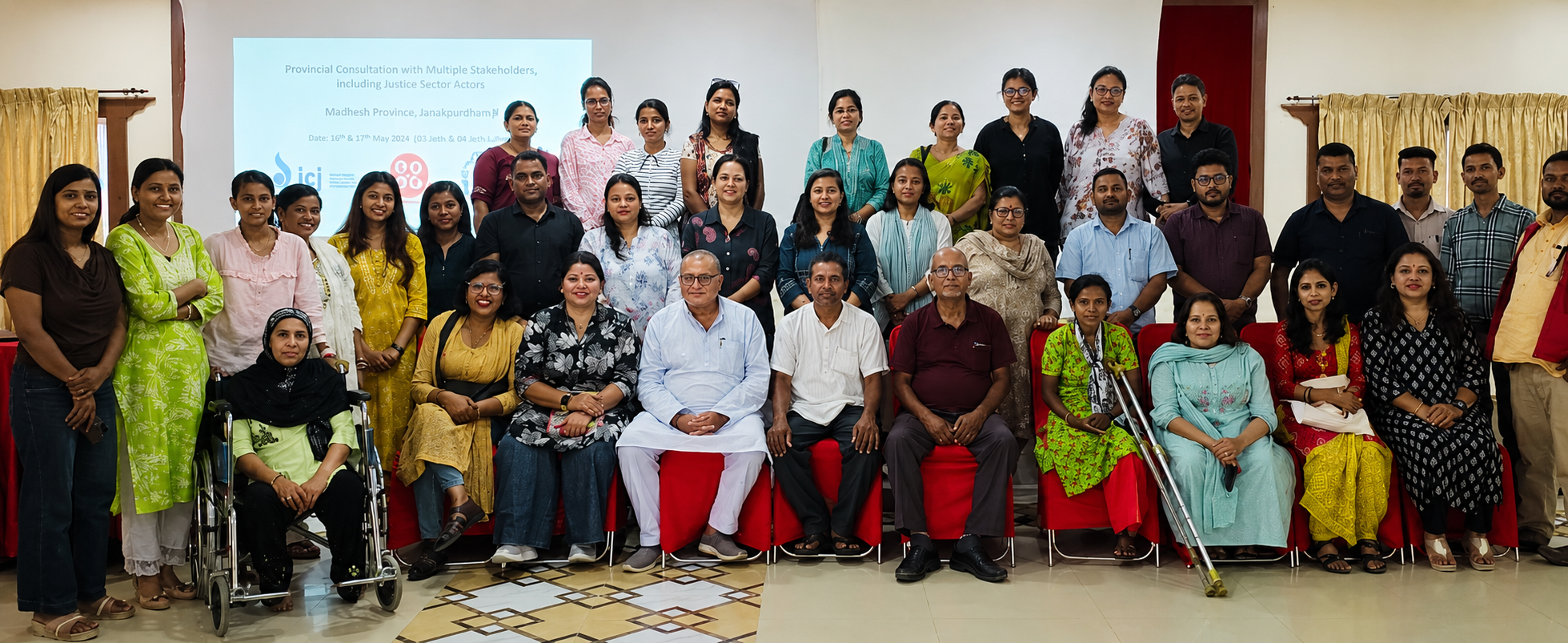
In partnership with the Nepal Disabled Women Association (NDWA) and the Forum for Women, Law and Development (FLWD), the International Commission of Jurists (ICJ) organized a consultation in Janakpur, Madhesh province, Nepal, on 16-17 May with stakeholders involved in promoting access to justice for persons with disabilities.
“Articles 12 and 13 of the Convention on the Rights of Persons with Disabilities (CRPD) guarantee equal recognition before the law and effective access to justice to all persons. Despite this, in Nepal, women and girls with disabilities – and particularly those with psychosocial and/or intellectual disabilities – are often denied the opportunity to even participate in legal processes and proceedings,” said Mandira Sharma, ICJ’s Asia and Pacific Director.
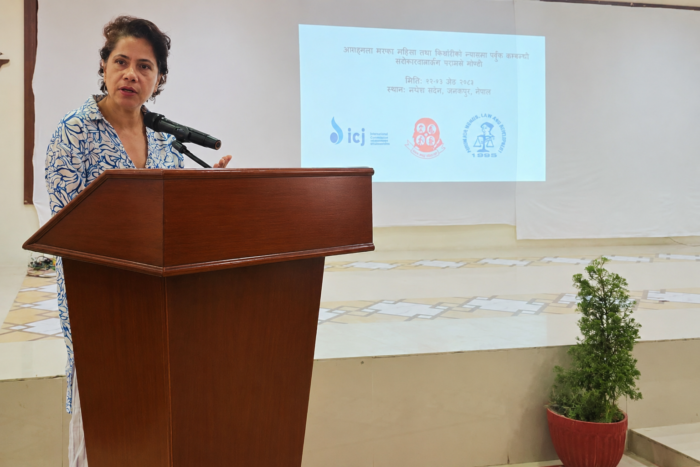
“This is so for a range of reasons, including outdated laws, prevailing discrimination, lack of understanding among justice actors, and the continued prevalence of harmful stereotypes”, she added.
Stakeholders participating in the consultation emphasized the need for gender- and disability-sensitive laws and judicial practices to address barriers faced by women and girls with disabilities.
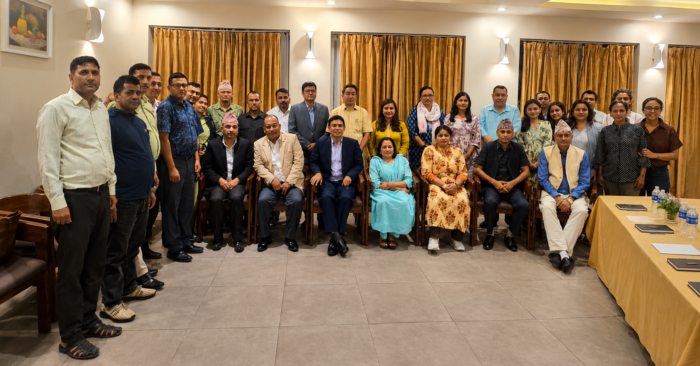
The consultation brought together 30 stakeholders from Madhesh Province of Nepal, including court officials, government attorneys, defense lawyers, self-advocates, representatives of local government, and organizations of persons with disabilities.
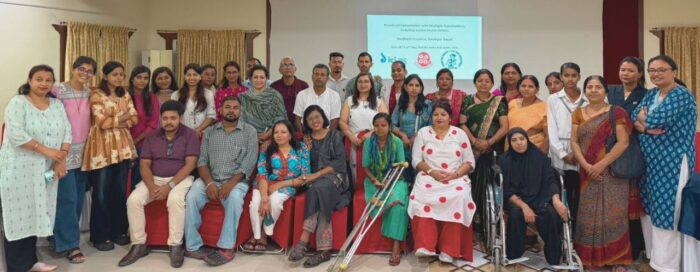
Participants in the consultation highlighted the following key barriers faced by women and girls with disabilities in accessing justice, especially in the Madhesh Province, including:
- Social stigma and stereotypes that portray women and girls with disabilities as dependent or incapable, discouraging them from independently reporting discrimination and violence or, more generally, seeking justice through legal processes;
- Family and community control over mobility and decision-making of persons with disabilities, limiting independent access to courts and police;
- The lack of accessible infrastructure and services within government offices and within the justice sector.
- Limited awareness of legal rights and available justice services among persons with disabilities and their families;
- Language and communication barriers for Maithili and other local language-speaking communities;
- Limited availability of trained support persons – including sign language interpreters, intermediaries, and legal aid providers – and disability-responsive justice personnel at the local level;
- The absence of supportive systems, particularly for women and girls with psychosocial and/or intellectual disabilities, and
- Discriminatory laws, policies, and practices that deny human rights guaranteed by the CRPD and other international human rights law and standards to persons with disabilities generally, and persons with intellectual and/or psychosocial disabilities in particular.
Highlighting persistent stereotypes, a woman with a disability, who provides support to persons with disabilities in accessing justice, said:
“When I support disability-related cases on behalf of my organization, police and court officials doubt how a person with a disability can support others with disabilities. They continue to insist on the presence of parents or other family members of the person concerned, undermining our right to equal treatment and recognition as persons before the law.”
Judge Tek Narayan Kunwar, Acting Chief Judge of the High Court Janakpur, made a presentation on judicial initiatives that seek to address disability-related needs and challenges in Nepal, and considered the role of courts in giving effect to the human rights of persons with disabilities. Judge Kunwar acknowledged that:
“Women and girls with disabilities are still unable to fully enjoy their rights due to social, economic, physical, and legal barriers. In such a context, the role of the judiciary and courts is not limited to resolving disputes; they stand as key mechanisms for protecting constitutional rights, promoting equality, and ensuring inclusive justice.”
Participants at the consultation called for urgent action to:
- address systemic barriers impeding access to justice for persons with disabilities;
- improved accessibility and support services for women and girls with disabilities;
- strengthened awareness on gender and disability at the community level and within the justice sector; and
- the elimination of gender and disability-based stereotypes through advocacy grounded in a human rights-based approach to disability.
Background
The ICJ, in collaboration with its local partners in Nepal, FWLD and NDWA, is developing national guidelines to address discrimination against women and girls, including those with disabilities, across the justice sector in the country. The guidelines will be informed by consultations with a wide range of stakeholders, including judges and other justice actors, litigating lawyers, lawyers with disabilities, organizations of persons with disabilities, and those advocating for the human rights of persons with disabilities.
The development of these guidelines is part of the ICJ’s broader initiative, Empowering Non-Discrimination and Advancement for Women and Girls, Including Those with Disabilities, implemented in Kenya, Nepal, and Uzbekistan. The initiative aims to strengthen the human rights and status of women and girls, including those with disabilities, by addressing systemic gender and disability-based discrimination within justice systems.
Evidence documenting the lived experiences from Madhesh Province, along with the 2018 Concluding Observations of the UN Committee on the Rights of Persons with Disabilities on Nepal, highlights concerns regarding negative attitudes in everyday language and limited awareness of the rights of persons with disabilities, particularly affecting women and girls with disabilities from Madhesi and other marginalized communities. As a result, women and girls with disabilities continue to face intersecting barriers related to gender, disability, and socio-cultural norms that limit their full and equal participation in society.
Contact
Mandira Sharma, Regional Director, ICJ Asia and the Pacific Programme, e: mandira.sharma@icj.org
Karuna Parajuli, Legal Adviser, ICJ Asia and the Pacific Programme: karuna.parajuli@icj.org