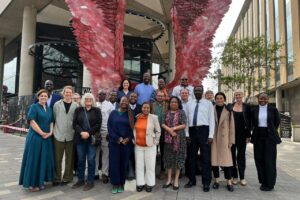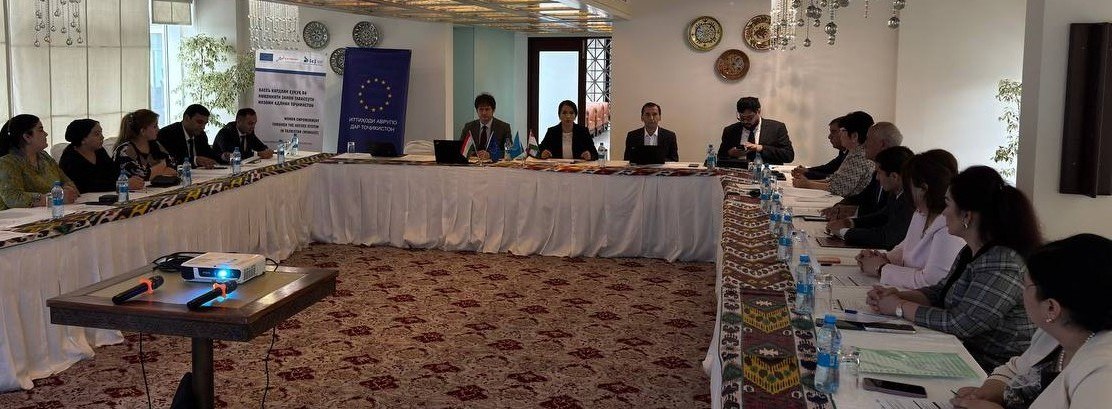
On 21 and 22 May 2026, the International Commission of Jurists (ICJ) and the Office of the United Nations High Commissioner for Human Rights, Regional Office for Central Asia (OHCHR ROCA), in cooperation with the Supreme Court of the Republic of Tajikistan, and with the Public Association “Right and Prosperity”, concluded a series of three judicial trainings in Dushanbe on the application of international human rights law in judicial practice, with a focus on international law and standards on violence against women and gender-based violence (GBV). The trainings brought together some 60 sitting judges from across Tajikistan.
The trainings addressed the international legal framework on the rights of women and the obligations of States to prevent, investigate, prosecute and remedy GBV, with particular emphasis on the Convention on the Elimination of All Forms of Discrimination against Women (CEDAW) and the CEDAW Committee’s General Recommendations and Views.
Sessions covered the sources of international human rights law and the system of UN human rights protection, including treaty bodies, the Universal Periodic Review and Special Procedures; States’ obligations to respect, protect and fulfil human rights; the significance of treaty body recommendations for national judicial practice; the prohibition of direct, indirect, multiple and intersecting discrimination; and gender stereotyping by judges as a form of discrimination under CEDAW and a barrier to women’s access to justice.
The training programme followed directly from the ICJ’s report Nowhere to go: Access to justice for women survivors of gender-based violence in Tajikistan, which documented persistent shortcomings in the national legal and institutional response to GBV, including the absence of explicit criminalisation of domestic violence as a separate offence, limited provision of legal aid to survivors, and inadequate application and enforcement of protective orders. The report called, among other measures, for mandatory specialised training for police, prosecutors, judges, forensic experts and health professionals on GBV, trauma-informed practice and international standards. The trainings also responded to the recommendation, formulated at the April 2025 national conference marking the International Day of Women Judges in Dushanbe, to institutionalise mandatory gender-sensitive training for judicial and law enforcement personnel.
Agenda:
Training session 1: in Tajik, in Russian, in English
Training session 2: in Tajik, in Russian, in English
Training session 3: in Tajik, in Russian, in English