
Attacks on Justice 2005: South Africa
In South Africa, issues of the gender and racial composition of the judiciary, as well as allegations of racism within the judiciary, have come to the fore towards the end of 2004.

In South Africa, issues of the gender and racial composition of the judiciary, as well as allegations of racism within the judiciary, have come to the fore towards the end of 2004.

Deteriorating political and economic conditions are compounded by the decline of the rule of law in Zimbabwe.

Lawyers are frequently subjected to violence as a direct consequence of criticizing the Tunisian government.

After a coup d’état in March 2003, General Bozizé established a transitional government until general elections to be held in March 2005.
A new Constitution was adopted by referendum in December 2004, following a September 2003 National Dialogue and the October 2003 creation of a Truth and Reconciliation Commission. The judiciary is ineffective, unaccountable, corrupt and dependent on the executive. There is collusion between lawyers and judges, and a tribalization of the judiciary.
The High Council of the Magistracy malfunctions. The judicial system is slow, making access to justice ineffective. Impunity remains problematic as human rights violations are ongoing.
Central African Republic-attacks on justice-publications-2005 (full text, PDF)

Despite the principle of separation of powers and independence of the judiciary enshrined in the 1992 Constitution, most judges are under the control of the executive.
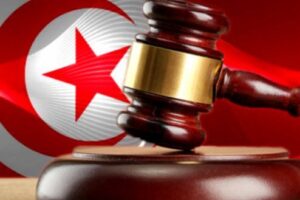 Tunisia: Quash sham conviction and sentence of judges’ association President, Anas Hmedi
 The UN Human Rights Council makes significant but limited progress in addressing human rights around the world, as atrocities multiply in the Middle East and elsewhere
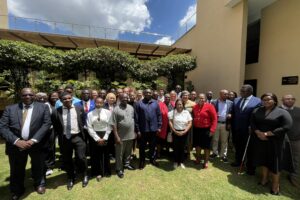 ICJ hosts an African Regional Convening in Kenya on Transformative Equality Jurisprudence
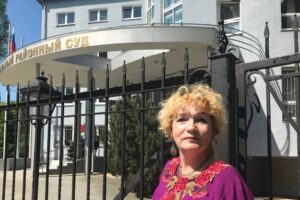 Russian Federation: Arbitrarily detained human rights lawyer Maria Bontsler must be released