Dec 7, 2019 | News
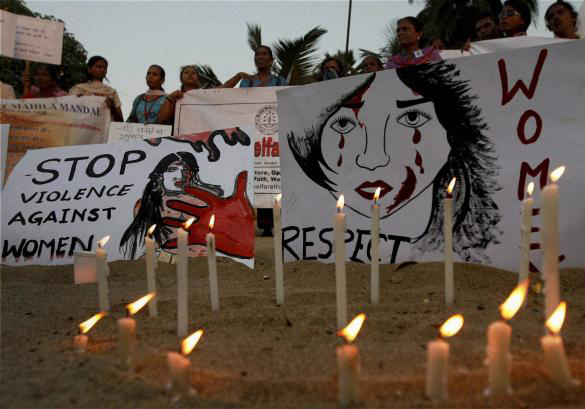
The ICJ called on the Indian government to conduct an independent and impartial investigation into the apparently unlawful killings by Telangana Police of the four men accused of raping and killing of Dr. Priyanka Reddy on November 27, 2019.
The men had been in police custody for over a week at the time of the killings.
“The rape and killing of Dr. Reddy is a heinous crime, and sadly only the latest in a pattern of rampant sexual violence that plagues India. The perpetrators of such acts must be held accountable,” said Frederick Rawski, ICJ Asia-Pacific Director. “However, the unlawful killing of suspects in custody helps no-one. It denies victims true justice, rewards unlawful behavior by the police, and generally undermines the rule of law.”
On November 27, Dr. Priyanka Reddy, a veterinarian, was returning home when she was gangraped. Her body was subsequently burned by the perpetrators. The next day, four suspects were arrested. According to the police, they remained in custody until Friday, 6 December, when all four were shot and killed after they allegedly attempted to take weapons from the police and tried to escape during a re-enactment at the crime scene. Details of the incident remain unclear, though it has the appearance of a custodial execution.
“The suspicious circumstances of these deaths in custody, and the history of the use of extrajudicial killings in India, demands a thorough, independent and impartial investigation,” said Rawski. “The nationwide alarm at the trend of sexual violence is completely warranted. However, celebrating the unlawful behavior of police will not ultimately protect women from sexual violence or address their lack of access to justice.”
Several Indian women’s rights activist groups have also condemned the killings. A statement by the All India Progressive Women’s Association’s statement pointed out that “This is not justice. This is a ploy to shut down our demand for accountability from the police, judiciary, governments, and justice and dignity for women.” The National Human Rights Commission of India has also called for an investigation into the circumstances of the killing.
According to international standards including the International Convention of Civil and Political Rights (ICCPR), to which India is a party, States have a duty to investigate allegations of extrajudicial executions with due diligence and good faith, regardless of whether or not there is a formal complaint. The investigation of extrajudicial, summary or arbitrary executions must be thorough prompt, impartial and independent, towards establishing the crime committed and prosecuting those responsible for the crimes. This has been reiterated by the Supreme Court of India, which has condemned encounter killings, and set out guidelines for their investigation.
The ICJ urges the Indian Government to conduct a thorough and impartial investigation into the killings by the police, in line with the Supreme Court’s decisions, and India’s constitution and international obligations. The ICJ calls upon the courts to ensure that police officials who conduct unlawful killings are held accountable. It also calls upon the Government to take immediate steps to address the lack of an effective response from police personnel to allegations of rape and sexual violence, and to take effective lawful measures to prevent the unacceptable attacks upon victims of rape and other sexual violence seeking a remedy in the courts.
Contact
Frederick Rawski, ICJ Asia-Pacific Director, t: +66 64 478 1121; e: frederick.rawski(a)icj.org
Maitreyi Gupta, ICJ India Legal Adviser, t: +91 77 560 28369 e: maitreyi.gupta(a)icj.org
Dec 2, 2019 | Advocacy, News
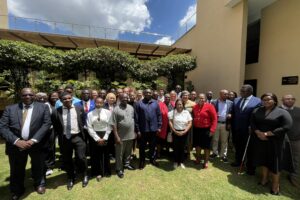
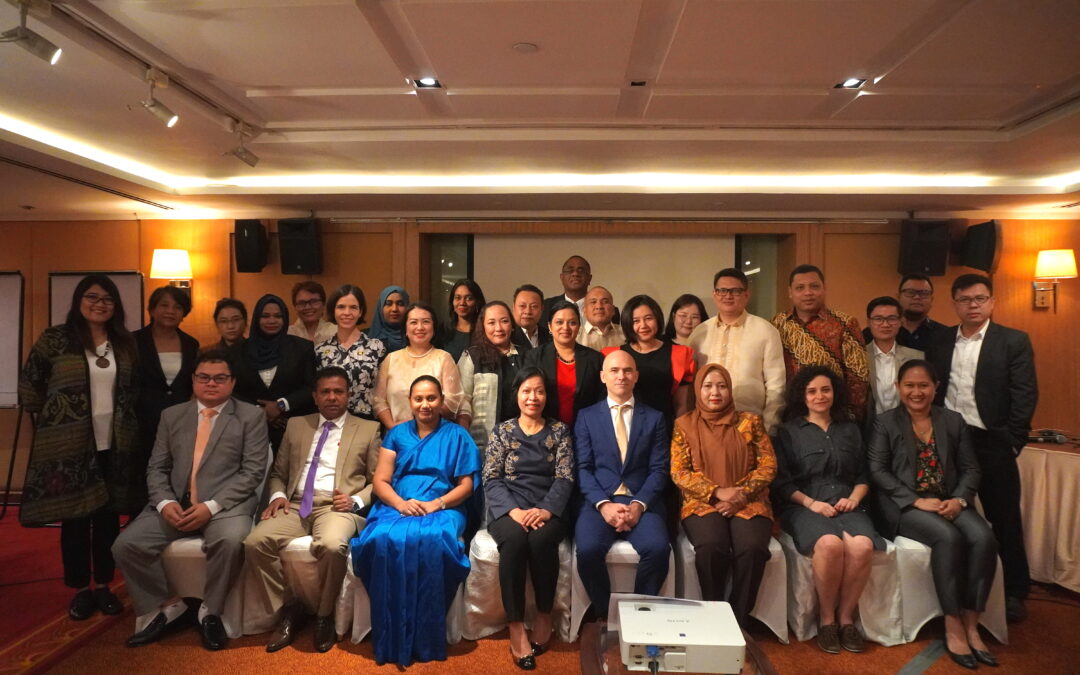
From 30 November to 1 December 2019, the ICJ and the Raoul Wallenberg Institute of Human Rights and Humanitarian Law (RWI) held the Judges’ Workshop on Adjudicating Environmental Cases with a Gender Perspective, in Bangkok, Thailand.
Judges from Fiji, Maldives, Indonesia, Philippines, Sri Lanka and Cambodia participated in the workshop. The discussions aimed at strengthening judges’ understanding of the relationship between women’s human rights and the right to a healthy environment. Throughout the two-day event, judges exchanged views on and considered cases showing how environmental degradation and climate change have a disproportionately detrimental impact on women, and how these phenomena affect them in a significantly different way as compared to men.
“It is through these gatherings that we learn from each other’s experiences and strengthen each other’s knowledge on this area,” said Frederick Rawski, ICJ’s Regional Director for Asia and the Pacific.
He continued, “We hope that this is the beginning of a greater body of work from judges in this region with a view to ensuring equality before the law and non-discrimination in environmental cases.”
During the workshop, the judges referred to the reference manual, Women’s Human Rights and the Right to a Clean, Safe, Healthy, and Sustainable Environment, which was developed by RWI with ICJ’s expert input. At the end of the workshop, judges agreed they would use this manual as a guide when faced with cases involving women and the right to a clean, safe, healthy and sustainable environment.
Contact:
Boram Jang, International Legal Advisor, International Commission of Jurists, t: +66 63 665 5315, e: boram.jang(a)icj.org
Resources:
To access pictures from the event, click here.
Nov 27, 2019 | News
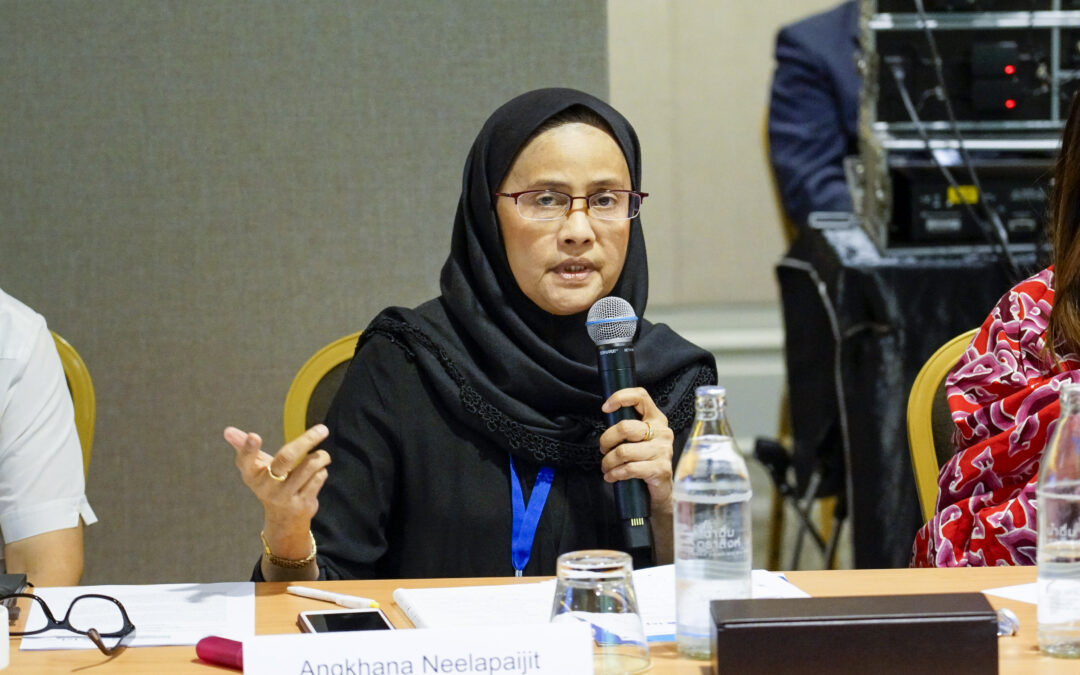
Today, the ICJ condemned Thammakaset Co., Ltd’s use of the criminal defamation provisions of the Thai Criminal Code to harass former National Human Rights Commissioner Angkhana Neelapaijit.
“This action by Thammakaset is a textbook case of how defamation laws are used in Thailand to silence human rights defenders. It is clearly without any legitimate basis, and intended to harass and intimidate Khun Angkhana, who is a leading champion of human rights in Thailand and the region,” said Frederick Rawski, ICJ Asia Pacific Regional Director. “We hope that the Courts will dismiss this frivolous case at first opportunity.”
On 25 October 2019, Thammakaset Co. Ltd., a poultry farm in Lopburi Province, filed a criminal defamation suit under sections 326 and 328 of the Criminal Code against Angkhana Neelapaijit for two posts she shared that contained links to press statements of 16 organizations, including the ICJ, and Fortify Rights.
The statements cited in the warrant as the basis for the action were a post on 3 December 2018 in which Angkhana Neelapaijit re-tweeted an ICJ link to a joint statement co-signed by 16 organizations, including the ICJ. The statement contained a link to a short film in which former employees spoke out about alleged labor abuses; and a post on 28 June 2019 which included a link to a Fortify Rights’ news release containing the same link. The film refers to a previous defamation complaint brought by Thammakaset against 14 of its former workers, and called upon the authorities to drop criminal defamation charges against them and decriminalize defamation in Thailand. Thammakaset claimed that the film was defamatory.
Criminal defamation, under sections 326 of the Criminal Code, carries a maximum sentence of one year of imprisonment, a fine of up to 20,000 Baht (approx. USD 640) or both. Section 328 criminalizes defamation “by means of publication” with up to two years’ imprisonment and a fine of up to 200,000 Baht (approx. USD 6,400).
Thailand is party to the International Covenant on Civil and Political Rights (ICCPR), which guarantees the right to freedom of expression. The UN Human Rights Committee, the supervisory body that provides the authoritative interpretation of the ICCPR, has called on States that criminalize defamation to abolish criminal defamation laws and reserve defamation for civil liability.
“The criminal defamation provisions in the Criminal Code have been repeatedly invoked for nefarious ends, such to target persons seeking to bring public attention to human rights violations, including by business enterprises. They need to be removed from the Criminal Code as a matter of urgency,” said Rawski. “The imposition of criminal penalties for speech, even allegedly defamatory speech, is disproportionate and risks having a ‘chilling effect’ on the exercise of freedom of expression.”
Further reading
Thailand: Drop defamation complaints against human rights defenders Nan Win and Sutharee Wannasiri
Thailand: ICJ and LRWC submit amicus in criminal defamation proceedings against human rights defenders Nan Win and Sutharee Wannasiri
Contact
Frederick Rawski, ICJ Asia-Pacific Director, t: +66 64 478 1121; e: frederick.rawski(a)icj.org
***
Download the press-release with additional information in English and Thai. (PDF)
Nov 27, 2019 | Advocacy, News
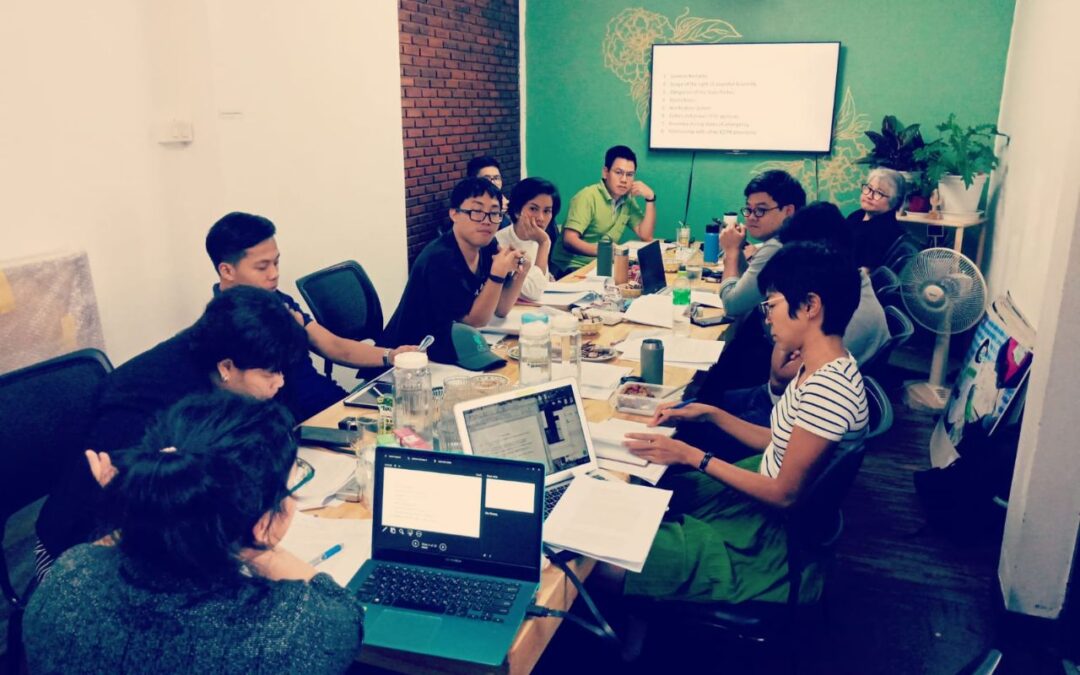
On 26 November 2019, the ICJ, jointly with the Centre for Civil and Political Rights (CCPR Centre), hosted a round-table discussion on the right to peaceful assembly in Thailand. The discussion was held at the office of Thai Lawyers for Human Rights (TLHR).
Fifteen lawyers, members of civil society organizations and academics attended the discussion.
The discussion began with an introduction to the UN Human Rights Committee’s draft General Comment No. 37, which when revised and adopted will constitute an authoritative interpretation of the right to freedom of peaceful assembly, as guaranteed under article 21 of the International Covenant on Civil and Political Rights (ICCPR). Thailand is a State party to the ICCPR.
The UN Human Rights Committee – the body mandated to interpret and supervise the implementation of the ICCPR – made the draft General Comment available for all stakeholders to review between November 2019 and 14 February 2020. The Committee in its draft considers the obligations of States parties in respect of such right to peaceful assembly, including permissible limitations and duties and powers of law enforcement agencies.
During the meeting, participants discussed about Thailand’s existing law governing the exercise of the right to peaceful assembly – including the 2017 Constitution of the Kingdom of Thailand and the 2015 Public Assembly Act. The discussion also focused on comments on the draft General Comment that the participants may submit to the UN Human Rights Committee, and advocacy strategies to strengthen Thailand’s legal frameworks once the draft General Comment is adopted by the UN Human Rights Committee.
Participants identified challenges posed by in the implementation of certain domestic laws, particularly the Public Assembly Act, which may result in unnecessary and disproportionate restrictions on the right to freedom of peaceful assembly in Thailand. These included the lack of a clear definition of “an assembly”; identification of “no-go” zones for protestors; problems arising from the use of notification systems where a failure to notify the authorities of an assembly was used as basis to render participation in the assembly unlawful and for dispersing the assembly; and overbroad powers delegated to authorities to impose conditions for assemblies regulating the time, place and manner of assemblies.
At the meeting’s conclusion, participants considered ways of provided input on the draft General Comment to the UN Human Rights Committee. They also strategies to work to bring existing Thai laws in compliance with international laws and standards that regulating the right to freedom of peaceful assembly.
Nov 25, 2019 | News
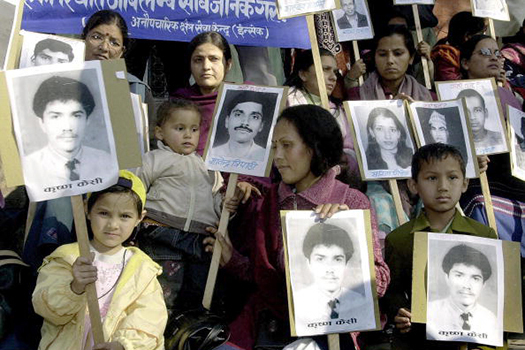
Nepal has made no real progress on questions of justice, truth and reparations for victims of gross human rights violations and abuses during its 10-year conflict, the ICJ, Amnesty International, Human Rights Watch (HRW) and TRIAL International said today.
The Comprehensive Peace Agreement to end the war was signed on November 21, 2006.
While two commissions have been set up to address conflict-era atrocities, they have not been effective and impunity and denial of access to justice to victims remain prevalent. The four human rights organizations are particularly concerned about the recent moves that suggest that the government will go forward with the appointing of commissioners without making necessary reforms to the legal framework.
“Last week marked the 13th anniversary of the Comprehensive Peace Agreement that ended the conflict in Nepal. It is astonishing that so little progress has been made in responding to the clearly articulated concerns and demands of conflict victims,” said Frederick Rawski, ICJ’s Asia-Pacific Director. “These demands have included a transparent and consultative process for the appointment of commissioners, and a genuine good-faith effort by political leaders and lawmakers to address serious weaknesses in the existing legal framework.”
On November 18, a five-member committee formed by the government to recommend names for commissioners to be appointed to the Truth and Reconciliation Commission and the Commission on the Investigation of Enforced Disappearances published a list of candidates. Concerns have been raised by victims and civil society that the government will simply re-appoint past commissioners or make political appointments that will not be adequately impartial and independent.
“It is deeply disappointing that the government has repeatedly attempted to appoint the commissioners without adequate consultation and transparency . The commissions will not gain the trust of the victims and the international community if the political parties continue to interfere in the appointment process,” said Biraj Patnaik, South Asia Director at Amnesty International.
Importantly, the move suggests that the commissions will be re-constituted without amending the legal framework governing the transitional justice process and ensuring its compliance with Nepal’s international human rights law obligations, as directed by Nepal’s Supreme Court and demanded by civil society and victims.
Victims and civil society organizations have issued public statement making it clear that they oppose any appointments prior to the amendment of the legal framework. Notably, the National Human Rights Commission, in its statement commemorating 13th Anniversary of CPA, stated that “…the commission will not support any decision, work or activities that might hurt the sensitivity of the conflict victims…”.
“The government’s move has not only undermined victims’ role in the transitional justice process, but has also once again brought into question its commitment to uphold its international law obligations and ensuring justice for conflict-era crimes,” said Tomás Ananía, TRIAL International’s Nepal Program Manager.
The ICJ, Amnesty International, Human Rights Watch and TRIAL International have repeatedly expressed concern that effective transitional justice mechanisms require strong legal foundations consistent with international law and good practices, and the political will to address the concerns of victims of the conflict. All four organisations reiterated their calls to amend the the 2014 Transitional Justice Act to make it consistent with the Supreme Court’s rulings and international human rights standards, as well as for the initiation of a genuine consultative and transparent process for the appointment of commissioners.
Concerns raised about the existing, and proposed, legal frameworks include: disparities between the definitions of specific crimes under international law and human rights obligations and violations under national, and international law; inadequate provisions to ensure that serious crimes under international law are subject to criminal accountability (including punishment proportionate to the seriousness of the crimes); and a reliance on compensation at the expense of other forms of reparation and remedy for conflict survivors and their families.
Under the principle of universal jurisdiction states may make it possible for their domestic criminal justice system to investigate and prosecute crimes such as torture, committed by any person, anywhere in the world.
This means that a citizen of any country, including Nepal, suspected of such crimes faces the risk of arrest and prosecution for these crimes in countries that apply universal jurisdiction. This is more likely if the Nepali authorities do not appear able and willing to prosecute those responsible for such crimes, the organizations said.
“After initial pledges to ensure truth, justice, and reparations for conflict victims, it appears that the government is once again determined to protect those responsible for the crimes,” said Meenakshi Ganguly, South Asia director at Human Rights Watch. “The international community should remind Nepal that whitewashing egregious crimes will not help to dodge universal jurisdiction.”
Contact:
Download the complete press-release in English and Nepali. (PDF)