Sep 17, 2019 | Advocacy
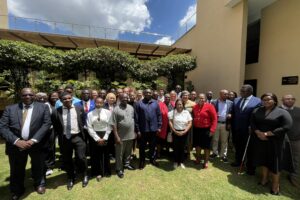
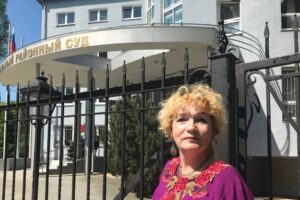
In a statement issued today, the ICJ and other human rights groups, as well as lawyers and members of the legal profession, expressed deep concern over the increasing attacks against lawyers under President Duterte’s administration.
Find the full statement available as PDF here: Philippines-attacks against lawyers escalating-advocacy-2019-ENG
Sep 17, 2019 | Advocacy
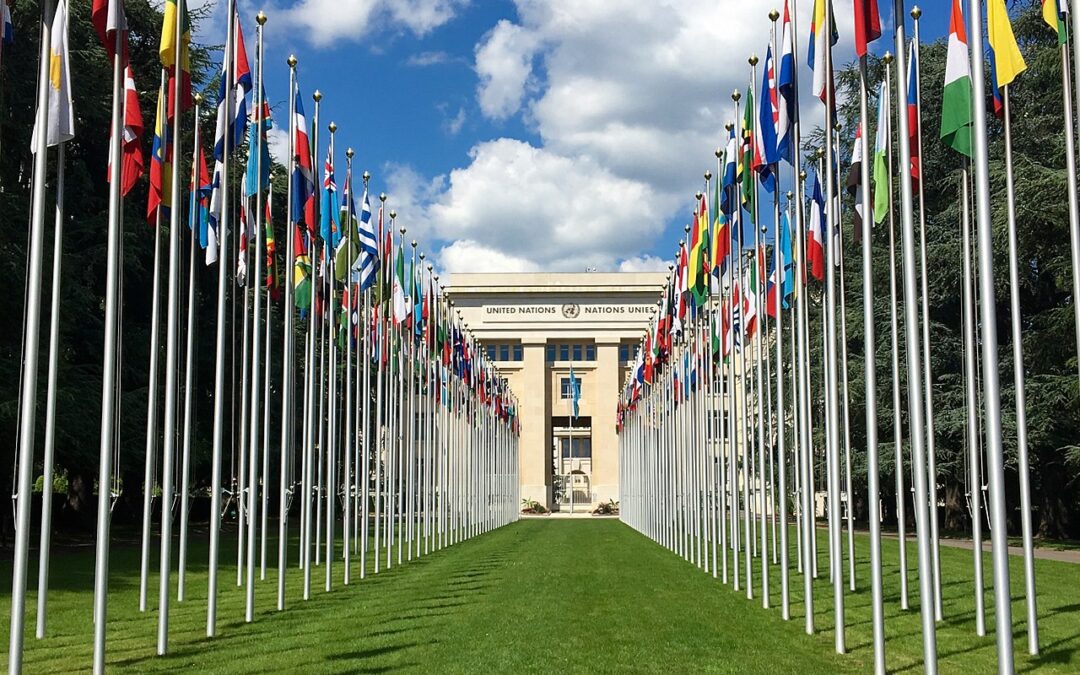
The ICJ welcomes the final report of the FFM (Independent International Fact Finding Mission).
Having monitored justice and human rights in Myanmar for over 50 years, the ICJ has an established presence in the country, and supports justice sector actors to implement reforms necessary to protect human rights through the rule of law.
With this experience, the ICJ concurs with conclusions of the FFM and the Special Rapporteur: particularly those highlighting the pervasive damage of unchecked military power and impunity on human rights, the rule of law, and development of an inclusive democratic society.
Myanmar’s Government has failed to fulfill international law obligations to investigate, prosecute and punish perpetrators of rights violations. In this context, the launch of an IIMM (Independent Investigative Mechanism for Myanmar) is necessary, and welcome. Myanmar should cooperate with the Mechanism, whose files may enable future prosecutions of individual criminals.
But this Mechanism is not a court: all States, particularly Myanmar, must work toward holding criminal trials, in competent jurisdictions, inline with international standards – noting that prosecutions target criminals, not the country.
Other immediate opportunities for Myanmar to protect human rights include: amending the National Human Rights Commission Law to expand its mandate and independence; amending laws that facilitate impunity such as the 1959 Defence Services Act; enacting an anti-discrimination law; and reviewing the 1982 Citizenship Law. These legislative reforms are urgent and possible steps that are necessary to demonstrate if the Government is genuine about its international law obligations. Any constitutional reform must also expand rights protections.
As the FFM’s mandate is ending, the ICJ would like to ask the experts: how can States best monitor and implement your recommendations, particularly related to international criminal accountability?
See also:
ICJ, Achieving Justice for Gross Human Rights Violations in Myanmar, January 2018
Terms of Reference for the UN Independent International Mechanism for Myanmar (unofficial Burmese translation), 16 January 2019, available here.
Statement to the Human Rights Council by Mr. Nicholas Koumjian, Head of the Independent Investigative Mechanism for Myanmar (unofficial Burmese translation with accompanying English text), 9 September, available here.
Sep 16, 2019 | Advocacy, News
Antonio Guterres should publicly condemn China’s widespread violations of the rights of its Muslim minority citizens, especially in Xinjiang Province, the ICJ demanded in a joint letter submitted along with Amnesty International, the International Federation for Human Rights (FIDH), Human Rights Watch, and the World Uyghur Congress.
The joint letter urged the UN Secretary-General to call for an end to widespread arbitrary detention of Muslim and minority communities through the immediate closure of Xinjiang’s ‘political education’ camps. Reports by the United Nations and human rights organizations have estimated that more than one million Muslims have been interned in extra-legal ‘political education’ detention camps.
“In the past few years, China’s violations in Xinjiang, including arbitrary detention, ill-treatment, pervasive surveillance and political indoctrination of Turkic Muslims, have intensified, and continue to worsen,” said Sam Zarifi, ICJ’s Secretary General.
“Quiet diplomacy has not worked. Mr. Guterres must exercise the full extent and power of his mandate as leader of the United Nations to demand and ensure protection of the rights of everyone in China, including all individuals in Xinjiang.”
The joint letter urged the UN Secretary-General to publicly support the creation of a UN fact-finding mission to assess the scale and nature of crimes under international law and human rights violations in Xinjiang. It further called on the UN Secretary-General to refrain from unqualified praise of China’s ‘Belt and Road’ Initiative – an investment initiative in which Xinjiang is a centerpiece – and to meet with representatives from the Uyghur community to hear first-hand of their plight.
“China has exerted immense and often inappropriate political pressure on individuals, governments and organizations criticizing its human rights violations,” said Zarifi. “The United Nations must push back against China’s political pressure and provide principled and steadfast leadership to end China’s political and cultural repression, and ongoing human rights violations in Xinjiang.”
Public criticism of China’s actions in Xinjiang has been growing. In August 2018, a member of the UN Committee on the Elimination of Racial Discrimination noted that China’s treatment of its Muslim minority citizens in Xinjiang had turned the region into a “‘no rights’ zone” with individuals being treated as “enemies of the State based on nothing more than their ethno-religious identity”. In March 2019, the UN High Commissioner for Human Rights, Michelle Bachelet, highlighted the need for her office to gain full access to facilitate independent and impartial investigation into ‘wide patterns of enforced disappearances and arbitrary detentions’ in the region. On 10 July 2019, 25 countries issued a joint statement calling on China to refrain from subjecting Uyghurs and other Muslim and minority communities in Xinjiang to arbitrary detention, surveillance and restrictions on freedom of movement.
Sep 10, 2019 | News
ICJ expressed concern over the decision given on 27 August 2019 by the Malaysian High Court that a fatwa issued against the women’s organization, Sisters in Islam, should be referred to the Syariah Court.
The High Court used as a basis Article 121 (1A) of the Federal Constitution, which states that secular courts do not have jurisdiction over matters pertaining to Islam.
The ICJ called on the Malaysian authorities to ensure that custom, tradition, and religion should not be used as a justification to undermine human rights, including women’s human rights.
In 2014, the Selangor Fatwa Council issued a fatwa declaring the Sisters in Islam a “deviant organization.” For many years, Sisters in Islam has been promoting more egalitarian interpretations of Islamic laws with the aim of ending discrimination against women and achieving equality in the Muslim family.
“For women to fully exercise their religious freedom, they must be able to retain or adopt the religion of their choice, and they must be able to continue belonging to this religion without being discriminated against within the religion,” said Emerlynne Gil, ICJ’s Senior International Legal Adviser.
The ICJ stressed that under international law, States have an obligation to protect people who are prevented from exercising their religious freedom by private actors, such as their own religious communities.
“The Malaysian government, including the judiciary, has the obligation to protect groups like Sisters in Islam when they face persecution from within their religious communities for propounding alternative views about their religion,” said Emerlynne Gil.
Furthermore, the ICJ had previously underscored in a 2019 briefing paper on the challenges to Freedom of Religion or Belief in Malaysia, the tensions emerging from jurisdictional disputes between civil courts, which apply federal and state laws, and Syariah courts, which apply Islamic laws.
In 2018, the UN Committee on the Elimination of Discrimination against Women, in reviewing the performance of Malaysia, voiced its own concern over “the existence of a parallel legal system of civil law and multiple versions of Syariah law, which have not been harmonized in accordance with the Convention on the Elimination of All Forms of Discrimination Against Women (CEDAW).” The CEDAW Committee concluded that this “leads to a gap in the protection of women against discrimination, including on the basis of their religion.
Contact:
Emerlynne Gil, Senior International Legal Advisor, ICJ, e: emerlynne.gil(a)icj.org
Sep 9, 2019
At the opening of the 42nd session of the UN Human Rights Council in Geneva, the ICJ and other NGOs call on States and intergovernmental organisations to address systemic failures of the rule of law in China.
Key concerns include lack of due process, lack of an independent and impartial judiciary, unjustified restrictions on freedom of expression, association and assembly, and on the freedom of lawyers to practice their profession, and other restrictions on civic space.
The letter reads as follows:
Open letter on the rule of law in China
9 September 2019
Across the People’s Republic of China, human rights violations are a systemic reality. Over the past year, the UN has once again documented legal and policy frameworks that fail to protect against discrimination; stigmatise Islam and stifle freedom of religious belief; undermine a wide range of socioeconomic rights and those who defend them; and permit gross violations of due process, including secret trials and arbitrary and incommunicado detention.
Over the past year, UN High Commissioner for Human Rights Michelle Bachelet and other international human rights experts, as well as governments have pressed for access to China, in particular to Uyghur, Tibetan and other ethnic areas. The High Commissioner has urged dialogue and a de-escalation of violence in Hong Kong, following allegations of excessive use of force by police to disperse massive public protests and the criminalisation of demonstrators.
Independent experts of the UN Human Rights Council have requested information and prompt action from the government regarding a broad range of alleged violations and especially the criminalisation of human rights defenders and civil society, such as citizen journalists, lawyers, democracy movement leaders, religious leaders, workers’ rights activists, social workers, public health advocates and students.
In June of this year, more than two dozen governments informed the High Commissioner and the Human Rights Council president of their concerns about the use of re-education camps to target Uyghur and other Muslim minority groups in western China. They reiterated the need for prompt, independent and unfettered access.
Despite these efforts at engagement, the Chinese government has refused to allow independent visits of relevant human rights experts, including the Special Procedures of the UN Human Rights Council; refused constructive dialogue, sowed disinformation and stoked violence in Hong Kong; used a push for sinicisation to eliminate cultural and religious diversity; and continued a fierce campaign against critics within China and many abroad, including other States. Chinese officials have stated, clearly and forcefully in public and in private, that ‘China is a country of rule of law’ and ‘will not accept interference in its internal affairs’.
This is patently misleading.
The Communist Party of China uses China’s laws to maintain state power, not to ensure justice. Overly broad charges that do not comply with the principle of legality are used to wrongfully detain, prosecute, and convict individuals for the peaceful exercise of internationally protected rights and participation in public affairs. In effect, any person who expresses views that differ from the Party narrative, or who seeks to highlight negative impacts of Party and government policies, can be caught in the crosshairs of criminalisation.
The Chinese government has refined and replicated a practice of characterizing all difference or dissent as terrorism, subversion, or a threat to national security. The tactics deployed in Hong Kong are regularly used against Uyghur and Tibetan peoples to justify a hard-line crackdown on the legitimate exercise of human rights. This is a dangerous departure from international human rights standards.
Furthermore, the Chinese government’s human rights record is no longer an issue limited by its borders. The government has actively used laws and practices to disappear and detain foreign nationals, restrict access to information overseas, conduct surveillance of Chinese nationals and other exile communities, embolden its law enforcement outside Chinese borders, and impede public participation, sustainable development and transparency in third countries where China has political and economic interests.
Human rights defenders of all kinds have been specifically targeted. The silence of the international community has not only allowed this to decimate civil society within China, but also to endanger civil society, defenders and other individuals critical of the Chinese government wherever they may be, including in the halls of the UN.
The same laws that allow the arbitrary deprivation of liberty of lawyers, public interest advocates, housing rights activists, and Christians in China’s wealthy eastern areas are further refined and weaponised against ethnic and religious minorities in the west of the country, including Tibet, where international access is a significant concern. The large-scale detention program in Xinjiang, which has detained Uyghurs and other minorities, may amount to crimes against humanity.
Read and download the full letter here, in PDF format: UN-Advocacy-OpenLetter-China-2019