Oct 4, 2018
An opinion piece by Sean Bain, ICJ International Legal Advisor in Myanmar
Last week a partial but significant foundation was laid to provide accountability for gross human rights violations in Myanmar, and hopefully to deter repetition.
After receiving a 444-page UN report extensively detailing human rights violations in Myanmar and making recommendations to address them, the UN Human Rights Council in Geneva passed a resolution that includes the establishment of an evidence-gathering mechanism to enable future trials.
The “independent mechanism” is mandated to “collect, consolidate, preserve and analyze evidence of the most serious international crimes and violations of international law committed in Myanmar since 2011 and to prepare files to facilitate and expedite fair and independent criminal proceedings.”
Similar to an existing mechanism for Syria, it will be responsible for preparing case files to standards required for any future criminal prosecution in a national or international court of law.
The full, final report of the Independent International Fact-Finding Mission (FFM) on Myanmar was presented to the Council on 18 September.
It finds members of security forces responsible for crimes under international law, including crimes against humanity in Rakhine, Kachin and Shan states – and potentially for the crime of genocide against Rohingyas. Findings also noted that restrictions on fundamental freedoms stifle honest constructive public discussion of this.
The application of these findings to the situation in Myanmar is familiar territory. The experience of Rohingyas is particularly egregious but not an isolated case; for more than six decades serious crimes have persisted against communities throughout the country, overwhelmingly perpetrated by members of the military, who enjoy impunity.
In recognition of this, the mandate of the independent mechanism is not limited to any particular area or group within Myanmar. Although, when it becomes fully staffed, it will necessarily refine its focus taking into account the gravity and scale of offences as well as its financial and human resources.
While case files are to be prepared, the UN resolution did not establish a court.
The International Criminal Court (ICC) has the potential to address some aspects of the crimes in question, however, it is not presently in a position to address the situation as a whole.
Certain foreign courts exercising universal or other grounds of jurisdiction are, likewise, only likely to address a limited portion of the overall offenses.
Within Myanmar, no court has the required independence, impartiality, competence and jurisdiction to ensure fair criminal proceedings against perpetrators for the full range of crimes under national and international law.
Myanmar’s national prosecutors and judges have demonstrated they lack the independence, impartiality and competence to hold members of security forces accountable for human rights violations, or to consider redress for victims and their families.
Government reforms offer hopes of establishing genuine Rule of Law, with respect for human rights, but this is undermined by persistent injustices – encapsulated recently in the wrongful prosecution and punishment of two Reuters journalists.
In a recent campaign local activists have worn shirts emblazoned “failed law.” This reflects frustration with a system that prosecutes human rights advocates without justification, but does not punish perpetrators of the most serious criminal violations of human rights, particularly when soldiers are involved.
Impunity continues to embolden these perpetrators of crimes, undermining democracy and peace, and feeding ongoing cycles of violence.
Since the partial power transfer from military to quasi-civilian administration in 2011, several government-commissioned inquiries have investigated human rights violations – including in Sagaing, Mon and Rakhine states.
None have addressed the military’s pervasive influence in the administration of justice, nor provided accountability or redress. The government’s most recent commission of inquiry on Rakhine State is evidently no different, and may even promote impunity by deferring robust accountability measures.
While any evidence held by the new independent mechanism could be available in future should national institutions eventually become sufficiently impartial, independent, competent, and capable to do so – this seems a long way off.
In this context, calls have increased, including from the FFM, for the UN Security Council (UNSC) to refer the situation in Myanmar to the ICC or for the creation of an ad hoc tribunal.
Since Myanmar has not ratified the Rome Statute (the treaty that created the ICC), it has not agreed to submit itself to the jurisdiction of the ICC with respect of the crimes listed in the Statute (the Court may only exercise its jurisdiction in situations where the alleged perpetrator is a national of a State Party or where the crime was committed in the territory of a State Party).
However, as a UN Member State, Myanmar would be obliged to cooperate with any referral to the ICC made by the UNSC.
Furthermore, on the basis that the ICC’s general jurisdiction applies to crimes occurring within a State Party to the Rome Statute such as Bangladesh, ICC prosecutors are conducting a preliminary examination into alleged crimes where an element – or part of a crime – was committed within the territory of Bangladesh, including the crime against humanity of deportation which, by definition, has a cross-border element.
Calls for an international prosecution seem loudest from outside Myanmar, by States, human rights organizations and from diaspora groups.
Yet demand for ICC referral from inside Myanmar is also growing, although this is significantly muted, due to fear of reprisals from government and nationalist groups against civil society, journalists and other public figures.
Whatever the eventual pathway for justice in Myanmar – national, international or a combination of both – effective criminal prosecutions are likely to constitute an important element to provide some accountability, enable redress and deter the repetition of human rights violations in future.
Any of these models will require evidence, and in the case of violations against Rohingyas and in northern Myanmar, having a mechanism to store evidence and prepare case files will serve as a critical aspect of this.
Memories fade while physical evidence either deteriorates or is destroyed, which means there is now an urgency to the gathering of evidence by appropriately trained experts.
Historically and recently much documentation has been collected, both inside and outside the country, often under dangerous and risky conditions.
Human rights documentation has played a critical role in exposing the truth, drawing attention to injustice, and pressuring State and non-State actors to address the situation.
But past experience has taught that documentation of atrocity crimes should, wherever possible, be conducted in accordance with best practice by highly experienced and well-resourced multi-disciplinary teams. The ethical principle at the heart of documentation is “Do No Harm.”
For example, any efforts should be coordinated and careful threat and risk assessments should be conducted before any interviews of survivors so they do not cause avoidable harm.
Multiple interviews of the same person can cause re-traumatization and even potentially impair future prosecutions.
The independent mechanism can contribute to these goals. The Office of the High Commissioner for Human Rights has 20 days to develop its terms of reference, after which it could take up to 12 months to establish (the FFM’s mandate has been extended to bridge any gap in documentation).
A key consideration will be complementing existing or potential national and international justice systems, be that the ICC, foreign courts with jurisdiction, or later in Myanmar, or a mix of these options.
Indeed, criminal accountability is only one tool for justice, and it cannot wholly reverse the damage done. But it can help victims, and critically it can help Myanmar get out of the entrenched cycle of human rights violations.
Eventually criminal trials will be required, which will open a range of other challenges. But right now, an important foundation for effective accountability has been established with the creation of this independent mechanism. Anyone wishing for justice and peace in Myanmar would be right to support it.
Myanmar-UN Mechanisms-News-Op Eds-2018-BUR (PDF of article in Burmese)
Oct 1, 2018 | News
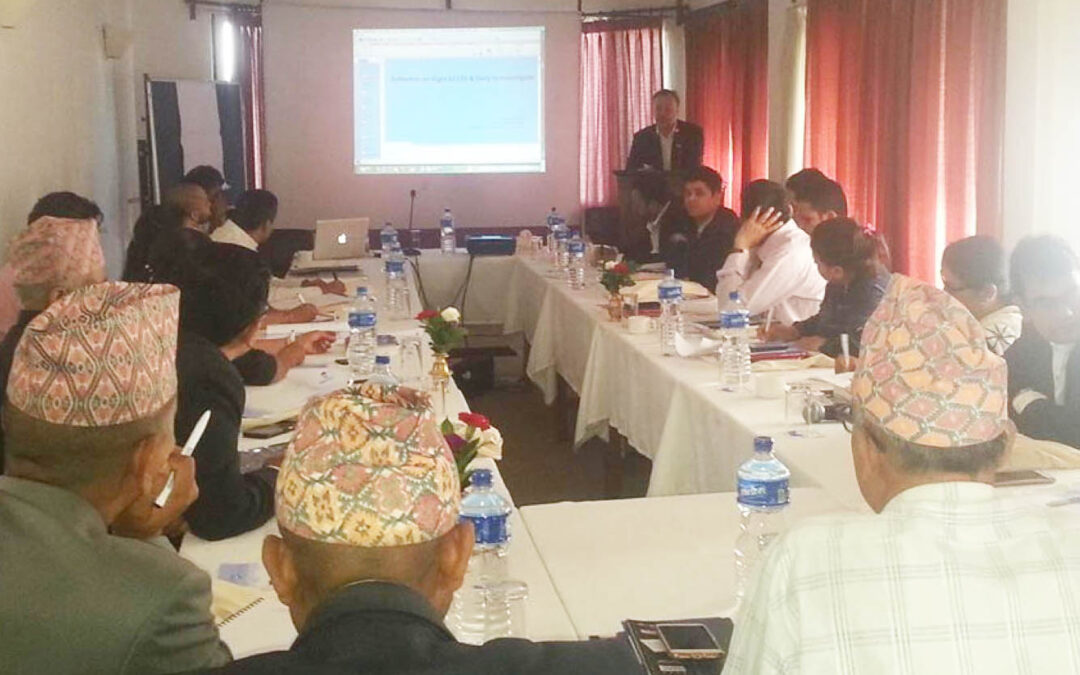
From 29 to 30 September 2018, the ICJ convened a 2nd two-day workshop on application of international law and standards, remarkably focusing on the Minnesota protocol, with special reference to investigation of alleged unlawful killings and enforced disappearances for public prosecutors of Nepal.
The workshop was organized by the ICJ South Asia office and took place as part of the ICJ’s Global Redress and Accountability Initiative, “increasing the knowledge and capacity of lawyers, prosecutors and investigators to deal with challenges of impunity and access to redress.”
The participants of the workshop included 18 public prosecutors working in District Government Office in Kathmandu, Lalitpur, Bhaktapur and Kavrepalanchok, Nepal.
The event started with opening remarks by the Attorney General of Nepal and former minister of Law and Justice, Agni Kharel.
In the opening remarks, Agni Kharel highlighted both commitments made and efforts by the Nepal government in order to protect and promote human rights as well as justice for victims of human rights violations.
Expressing pleasure on the theme of the workshop, he also said the public prosecutors will be benefited as well as be competent to use the knowledge and learning from the workshop in their works.
Senior Legal Consultant of the ICJ Nepal – Govinda Bandi, one of the experts of the workshop and speaker of the opening ceremony, highlighted the objectives of the workshop.
Kingsley Abbott, Senior International Legal Adviser at the ICJ, presented an overview of the relevant international human rights legal framework that applies to the investigation of alleged killing and enforced disappearances.
He further presented an introduction and overview of the revised Minnesota Protocol on the Investigation of Potentially Unlawful Death (2016) and ICJ practitioners Guide no. 9. Both instruments were core materials used at the workshop.
Other speakers included Govinda Bandi, Senior Legal Consultant at the ICJ, who presented on the relevance of the Minnesota protocol in investigating on alleged unlawful killing and enforced disappearances.
Prof. Dr. Hariwar Wasti, Medico-legal expert at the IOM Department of Forensic Medicine of Government of Nepal, presented a power point presentation on the role of forensics in the investigation of gross human rights violations with reference to the Minnesota Protocol.
The workshop focused on investigation techniques of alleged unlawful killings highlighting the significance of public prosecutors in Nepal.
It was also focused on collection and preserving the security of evidences and potential use of the evidences for victims’ right to justice and reparation.
The workshop also covered medico-legal documentation techniques of crime scene and dead wearing tie body, collection of DNA evidence, and drafting of autopsy reports and crime file management.
It was also discussed and outlined some approaches of using the Minnesota protocol in Nepal in the final session of the workshop.
This workshop followed the national workshop the ICJ hosted between 13 to 14 July 2018 in Dhulikhel, Nepal on the investigation of alleged unlawful deaths and enforced disappearances for more than 20 human rights lawyers from diverse regions of Nepal.
Oct 1, 2018 | News
The ICJ expressed disappointment regarding Friday’s ruling by Thailand’s Administrative Court dismissing a case filed against the Royal Thai Police (RTP) for unjustified restriction of the freedom of peaceful assembly and freedom of expression, and again called on Thailand to lift its ban on political gatherings and fully reinstate fundamental freedoms in Thailand.
On 28 September 2018, the Administrative Court dismissed a case filed by the organizers of a “We Walk Friendship March” (‘We Walk march’) against the RTP and six policemen for restricting the march on the basis that it was in violation of Head of NCPO Order No. 3/2558 (2015) (‘HNCPO Order 3’).
The Administrative Court referred to the Thai Constitution, the Public Assembly Act B.E. 2558 (2015), the International Covenant on Civil and Political Rights (ICCPR) to which Thailand is a State party, and HNCPO Order 3, in deciding that the march was a public assembly. Its decision clarified that the case had to be dismissed as the RTP’s actions had complied with the Public Assembly Act.
“It is astonishing that more than four years after the coup, HNCPO Order 3 and other repressive laws, orders and announcements which restrict fundamental freedoms remain in place,” said Kingsley Abbott, Senior Legal Adviser at the ICJ.
“The Administrative Court missed a critical opportunity to deliver an opinion that the ban on political gatherings should be lifted and that all laws, orders and announcements that are inconsistent with Thailand’s international human rights obligations should be amended or revoked immediately to reinstate all fundamental freedoms in Thailand,” added Abbott.
The march, which went ahead peacefully, aimed to bring attention to the need in Thailand for universal healthcare services, policies guaranteeing food security, laws that would not violate human rights, and public participation in the development of the Constitution.
Contact
Kingsley Abbott, ICJ Senior Legal Adviser, email: kingsley.abbott(a)icj.org
The ICJ’s full statement in English is available here: Thailand-Ban on Political Gatherings-News-Web Story-2018-ENG
The ICJ’s full statement in Thai is available here: Thailand-Ban on Political Gatherings-News-Web- Story-2018-THA
Sep 27, 2018 | News
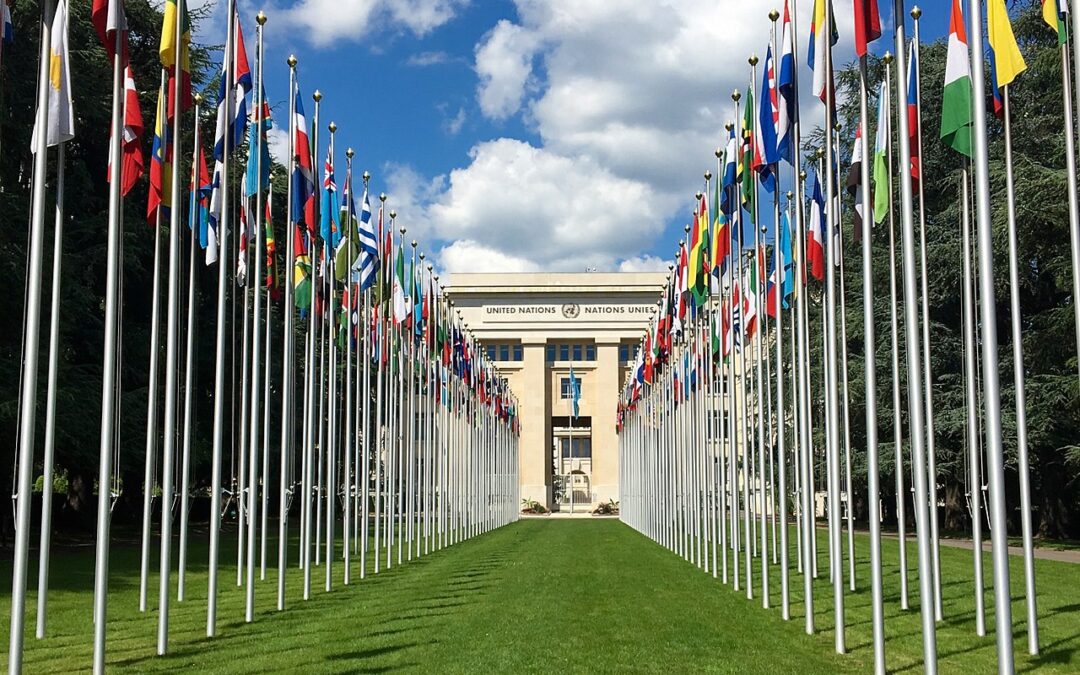
Today’s decision by the UN Human Rights Council to create an ‘independent mechanism’ to collect evidence of crimes in Myanmar, is a significant step toward accountability for gross human rights violations, the ICJ said.
“The creation of this evidence-gathering mechanism is a welcome concrete step towards justice,” said Matt Pollard, Senior Legal Adviser for the ICJ.
“But this is a stopgap measure, effectively creating a prosecutor without a court, that only underscores the urgent need for the Security Council to refer the entire situation to the International Criminal Court, which was created for precisely such circumstances,” he added.
The Council’s decision follows on conclusions and recommendations by the Independent International Fact-Finding Mission on Myanmar (FFM).
The FFM’s 444-page full report described large-scale patterns of grave human rights violations against minority groups in the country, particularly in Rakhine, Kachin and Shan States.
It also highlighted the need for criminal investigations and prosecutions for crimes under international law, something the FFM concluded that national courts and commissions within Myanmar could not deliver.
“National justice institutions within Myanmar lack the independence, capacity and often also the will to hold perpetrators of human rights violations to account, particularly when members of security forces are involved. The latest government-established inquiry in Rakhine State also seems designed to deter and delay justice,” Pollard said.
The Human Rights Council resolution did not create a new international court or tribunal.
Evidence held by the independent mechanism could be made available to international or national proceedings, whether at the International Criminal Court (ICC) or another ad hoc international tribunal, or to national prosecutors asserting jurisdiction over the crimes under universal jurisdiction or other grounds.
While there is no realistic prospect of effective national prosecutions within Myanmar in the near future, evidence held by the mechanism could also be available in future should national institutions eventually become sufficiently impartial, independent, competent, and capable to do so.
A preliminary examination of the situation of Rohingyas, being conducted by the ICC, may also lead to criminal proceedings but will likely be limited to those crimes that have partially occurred within Bangladesh, such as the crime against humanity of deportation.
Bangladesh is a State Party to the Rome Statute of the ICC whilst Myanmar is not.
The Security Council also has authority to refer the entire situation to the International Criminal Court.
“The Myanmar government should stop denying the truth and should work with the international community, and particularly the United Nations, to improve the horrific conditions facing the Rohingya and other ethnic minorities whose rights have been violated so brutally by the security forces, as documented by the Fact Finding Mission,” Pollard said.
“Myanmar’s international partners, including neighbours like India, China, and members of the Association of Southeast Asian Nations (ASEAN), should exercise their influence to help ensure that Myanmar addresses this serious threat to the stability of the country and the region, by ensuring respect, protection and fulfillment of the full range of civil, cultural, economic, political and social rights of the affected minorities,” he added.
The Council resolution makes several other substantive recommendations, including a call on the Government of Myanmar to review the 1982 Citizenship Law, and a recommendation for the United Nations to conduct an inquiry into its involvement in Myanmar since 2011.
Contact:
Matt Pollard, ICJ Senior Legal Adviser (Geneva), e: matt.pollard@icj.org, +41 79 246 54 75.
Frederick Rawski, ICJ Asia Pacific Regional Director (Bangkok), e: frederick.rawski@icj.org
Read also:
Why an IIIM and Security Council referral are needed despite the ICC ruling relating to Bangladesh (13 September 2018)
Government’s Commission of Inquiry cannot deliver justice or accountability (7 September 2018)
ICJ releases Q & A on crime of genocide (27 August 2018)
Myanmar: reverse laws and practices that perpetuate military impunity (16 January 2018)
Summary report of the Fact Finding Mission (12 September 2018)
Full report of the Fact Finding Mission (published 18 September 2018)
Text of the Resolution (unofficial version tabled in advance of the vote)
Myanmar-IIIM statement-Advocacy-2018-BUR (Full story in Burmese)
Sep 27, 2018 | Nouvelles
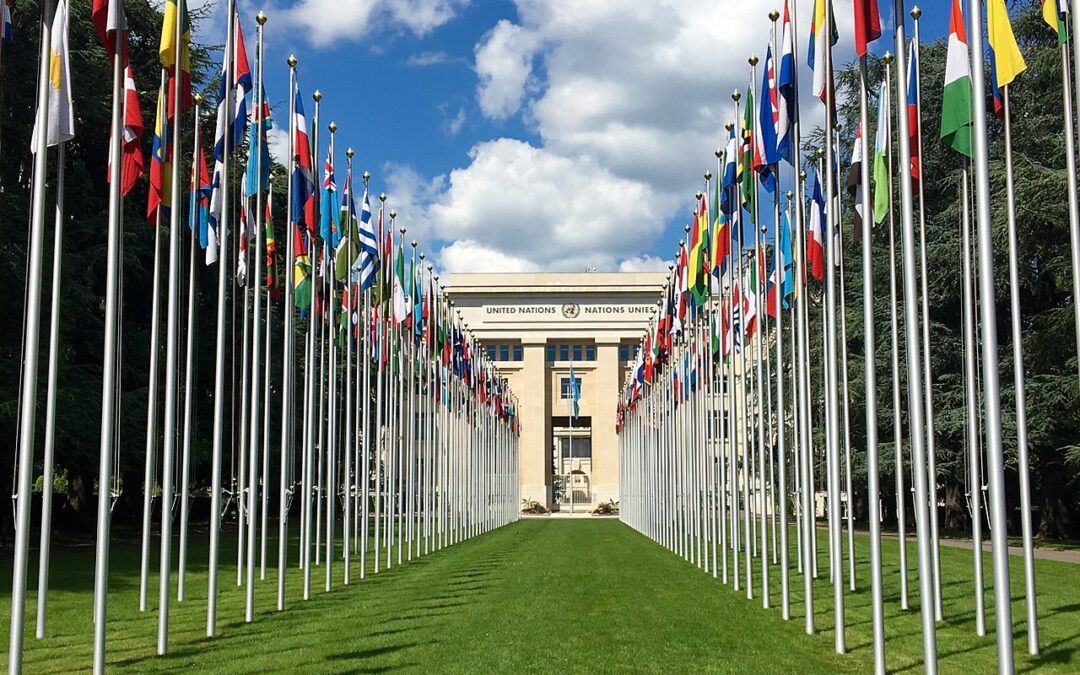
La décision prise aujourd’hui par le Conseil des droits de l’Homme des Nations unies de créer un “mécanisme indépendant” pour recueillir des preuves de crimes au Myanmar constitue un pas important vers la responsabilité pour les violations flagrantes des droits de l’Homme, a déclaré la CIJ.
«La création de ce mécanisme de collecte de preuves est une étape concrète bienvenue vers la justice», a déclaré Matt Pollard, conseiller juridique principal de la CIJ.
«Mais il s’agit d’une mesure bouche-trou visant à créer un procureur sans tribunal, ce qui ne fait que souligner la nécessité urgente pour le Conseil de sécurité de référer l’ensemble de la situation devant la Cour pénale internationale, qui a été créée précisément pour de telles circonstances», at-il ajouté.
La décision du Conseil fait suite aux conclusions et recommandations de la Mission d’enquête internationale indépendante sur le Myanmar (FFM).
Le rapport complet de 444 pages de la Mission d’enquête a décrit de graves violations de l’Homme perpétrées à grande échelle des droits contre des groupes minoritaires dans le pays, en particulier dans les États de Rakhine, Kachin et Shan.
Il a également souligné la nécessité d’enquêtes et poursuites pénales pour des crimes sous le droit international, ce à quoi la Mission d’enquête a conclu que les tribunaux nationaux et les commissions du Myanmar ne pouvaient pas y répondre.
«Les institutions judiciaires nationales du Myanmar manquent d’indépendance, de capacités et souvent aussi de volonté de demander des comptes aux auteurs d’atteintes aux droits de l’Homme, en particulier lorsque des membres des forces de sécurité sont impliquées. La dernière enquête établie par le gouvernement dans l’État de Rakhine semble également conçue pour dissuader et retarder la justice », a déclaré Pollard.
La résolution du Conseil des droits de l’Homme n’a pas créé de nouvelle cour ou tribunal international.
Les preuves détenues par le mécanisme indépendant pourraient être communiquées à des procédures internationales ou nationales, que ce soit devant la Cour pénale internationale (CPI) ou un autre tribunal international ad hoc, ou aux procureurs nationaux faisant valoir leur compétence pour les crimes relevant de la compétence universelle ou pour d’autres motifs.
Bien qu’il n’y ait aucune perspective réaliste de poursuites nationales efficaces au Myanmar dans un proche avenir, le mécanisme pourrait également fournir des preuves à l’avenir si les institutions nationales devenaient finalement suffisamment impartiales, indépendantes, compétentes et capables de le faire.
Un examen préliminaire de la situation des Rohingyas, mené par la CPI, peut également donner lieu à des poursuites pénales mais sera probablement limité aux crimes qui se sont déroulés en partie au Bangladesh, tels que le crime contre l’humanité en matière d’expulsion.
Le Bangladesh est un État partie au Statut de Rome de la CPI, contrairement au Myanmar.
Le Conseil de sécurité est également habilité à référer la totalité de la situation devant la Cour pénale internationale.
«Le gouvernement du Myanmar devrait cesser de nier la vérité et collaborer avec la communauté internationale, en particulier les Nations unies, afin d’améliorer les conditions de vie dans lesquelles se trouvent les Rohingya et les autres minorités ethniques, dont les droits ont été violés de manière aussi brutale par les forces de sécurité, comme documenté par la Mission d’enquête », a déclaré Pollard.
«Les partenaires internationaux du Myanmar, y compris des voisins tels que l’Inde et la Chine, et des membres de l’Association des nations de l’Asie du Sud-Est (ASEAN), devraient exercer leur influence pour faire en sorte que le Myanmar s’attaque à cette grave menace à la stabilité du pays et de la région en veillant au respect, la protection et la mise en oeuvre de l’ensemble des droits civils, culturels, économiques, politiques et sociaux des minorités concernées », a-t-il ajouté.
La résolution du Conseil contient plusieurs autres recommandations de fond, notamment un appel au gouvernement du Myanmar à réviser la loi de 1982 sur la citoyenneté et une recommandation aux Nations unies d’ouvrir une enquête sur son implication au Myanmar depuis 2011.
Contact:
Matt Pollard, conseiller juridique principal à la CIJ (Genève), e: matt.pollard@icj.org, +41 79 246 54 75.
Frederick Rawski, directeur régional Asie-Pacifique de la CIJ (Bangkok), e: frederick.rawski@icj.org