Jun 19, 2018 | Advocacy, Non-legal submissions
The ICJ today joined other NGOs in calling for the UN Human Rights Council to establish an international investigation into extrajudicial killings in the ‘war on drugs’ in the Philippines.The call came in a joint oral statement to the Council, delivered by Franciscans International on behalf of the group of NGOs. The statement, part of the general debate on a global update provided to the Council by the High Commissioner for Human Rights, read as follows:
“Mr President, we welcome the High Commissioner’s update. We are pleased to hear about positive developments that several States have made in granting access to Special Procedures. However, we deeply regret that this is not the case for the Philippines, a member of the Human Rights Council, which has refused access to the Special Rapporteur on extrajudicial executions, in spite of the thousands of killings in the government’s ongoing ‘war on drugs’, and the lack of independent and impartial investigations in the country.
We are further concerned that the lack of cooperation with Special Procedures has been further compounded by the Philippine President’s threats and verbal attacks against several mandate holders and the High Commissioner himself. In the absence of cooperation with Special Procedures, we call on the Council to establish an independent international investigation into extrajudicial killings in the ‘war on drugs’ in the Philippines.
As this was the last update of the High Commissioner to the Council, we would like to express deep appreciation for his hard work and dedication over his four year term, and the attention he has drawn to threats to human rights defenders and their work in the Philippines. We call on the Council to follow up on this work by mandating the OHCHR to monitor the deterioration in the situation of human rights and attacks on democratic institutions, as well as the Philippine government’s moves toward authoritarianism, and ask the OHCHR to report on this to the Human Rights Council.”
In 2016 the ICJ released a briefing paper on investigation of extrajudicial executions in the Philippines, which among other things called for an independent commission of inquiry, after having earlier written directly to President Duterte.
Jun 19, 2018
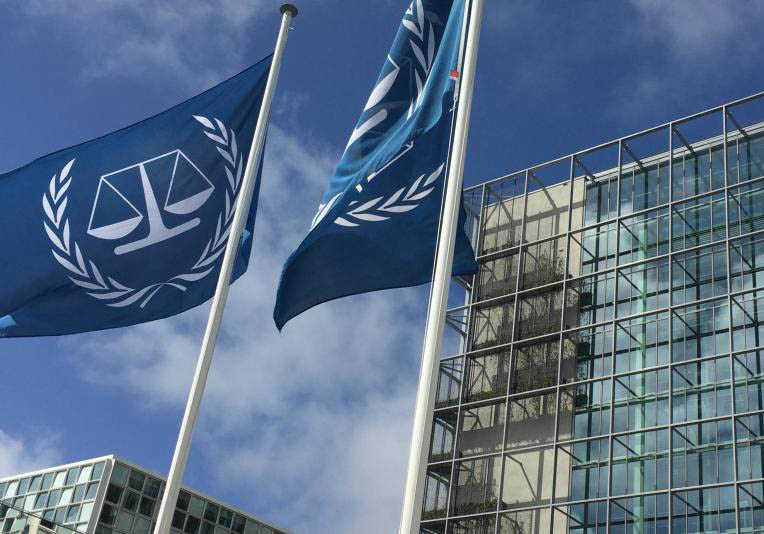
On 18 June 2018, the ICJ submitted an Amicus Curiae (friend of the court) Brief to the International Criminal Court (ICC).
The ICJ submitted the Amicus pursuant to the Prosecution’s Request (ICC-RoC46(3)-01/18) for “a ruling on the Court’s jurisdiction under article 12(2)(a) — specifically, to verify that the Court has territorial jurisdiction when persons are deported from the territory of a State which is not a party to the Statute directly into the territory of a State which is a party to the Statute”.
The Prosecutor made the Request following the alleged deportation of hundreds of thousands of Rohingya people from Myanmar into Bangladesh.
In summary, the ICJ submitted that:
(1) The crossing of an international border is a fundamental constitutive element for the crime of deportation. This position is supported by customary international law, international human rights law and is reflected in the domestic laws of Bangladesh; and
(2) The Court has territorial jurisdiction over the crime of deportation. This position is supported by international principles of territoriality, which are also reflected in the domestic laws of Bangladesh.
The Amicus was filed in light of the ICJ’s global mandate to seek the progressive development of international law with a view to ending impunity and ensuring accountability for gross human rights violations.
The ICJ regularly intervenes in judicial proceedings in domestic, regional and international jurisdictions around the world in an amicus curiae or other third party capacity.
Contact
Kingsley Abbott, ICJ Senior Legal Adviser, t: +66 (0)94 470 1345 ; e: kingsley.abbott@icj.org
Myanmar-Amicus observations-Advocacy-legal submission-2018-ENG (full amicus brief, PDF)
Jun 6, 2018 | News
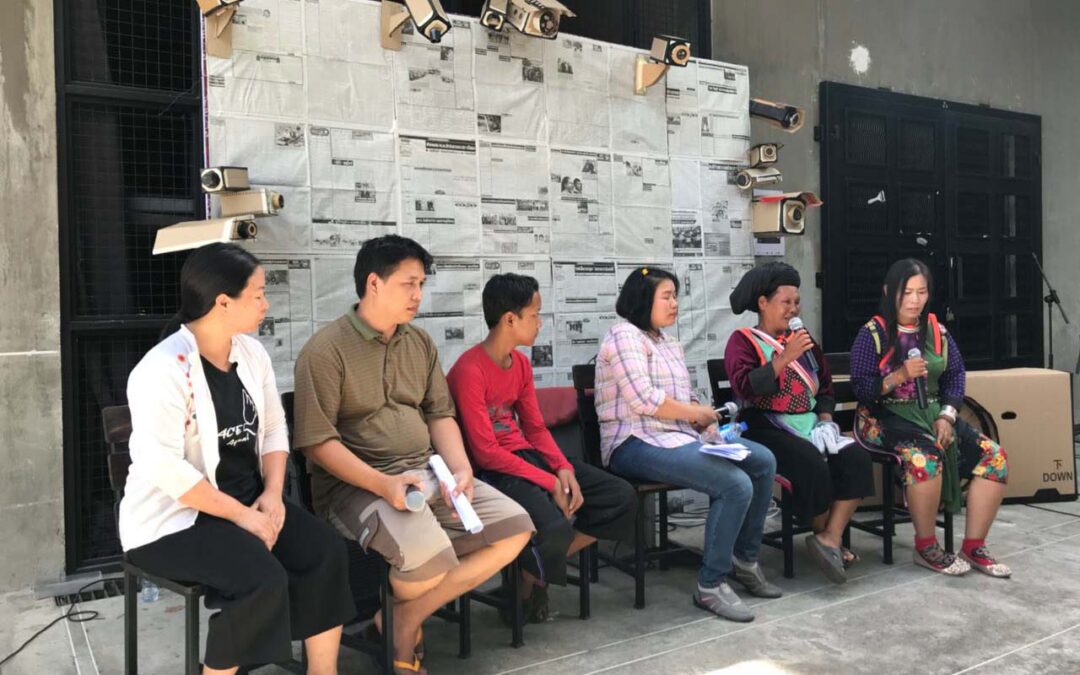
On 5 June 2018, the ICJ co-organized an academic seminar addressing the right to life under international law and the State’s duty to effectively investigate alleged violations.
The event happened on the eve of the post mortem decision to be delivered by Chiang Mai Provincial Court in the case of Chaiyaphum Pasae.
The Lahu youth activist was killed by a military official who was attempting to arrest him as an alleged drug suspect in Chiang Dao district of Thailand’s northern Chiang Mai province in March 2017.
Officials claimed Chaiyaphum had resisted arrest and was subsequently shot in “an act of self-defence”.
On 6 June 2018, Chiang Mai Provincial Court ruled that the bullets shot by the military official had caused the death of Chaiyaphum Pasae.
In its decision, the court made no finding of fault and no finding as to whether Chaiyaphum Pasae had resisted arrest before his death.
The decision by Chiang Mai Provincial Court will now be sent on to the Public Prosecutor and inquiry officers, who will in parallel continue criminal investigations into the case.
The Public Prosecutor is expected thereafter to make a decision regarding any indictment of the military official who shot at Chaiyaphum Pasae.
Participants in the seminar, which was held at Chiang Mai University’s Art Center, included Chaiyaphum Pasae’s family members, interested members of the public, media representatives, students and academics.
Kingsley Abbott, ICJ Senior Legal Adviser, addressed the seminar on the right to life and the international law and standards that apply to investigating potentially unlawful deaths, including the rights of victims and family members, referring to the standards set out in the revised Minnesota Protocol on the Investigation of Potentially Unlawful Death (2016), which was launched in Thailand on 25 May 2017.
The event follows the ICJ’s first regional workshop on the investigation of potentially unlawful deaths and enforced disappearance in Asia, held last week in Bangkok for authorities from Thailand, Cambodia, Myanmar and Nepal.
Other speakers at the Workshop included Ratsada Manuratsada and Sumitchai Hattasarn, lawyers from Human Rights Lawyers Association (HRLA) who represented the family of Chaiyaphum Pasae, and Songkran Pongbunchan, a lecturer from Chiang Mai University’s Faculty of Law.
The Discussion was conducted in collaboration with Legal Research and Development Center Chiang Mai University (LRDC); Center for Protection and Revival of Local Community Rights (CPCR); Center for Ethnic Studies and Development Chiang Mai University (CESD); Human Rights Lawyers Association (HRLA); Protection International (PI); Holding Hands Group; Inter Mountain Peoples’ Education and Culture in Thailand Association (IMPECT); Cross Cultural Foundation (CrCF); Maayimstudio; Save Lahu Group; Lanyim Creative Group; Dinsorsee Creative Group; Northern Activist Community (CAN); and Tonkal Network.
This seminar is part of an ongoing engagement between the ICJ and Chiang Mai University’s Faculty of Law.
Contact
Kingsley Abbott, Senior Legal Adviser, ICJ Asia Pacific Regional Office, t: +66 94 470 1345, e: kingsley.abbott(a)icj.org
Jun 1, 2018 | Events, News
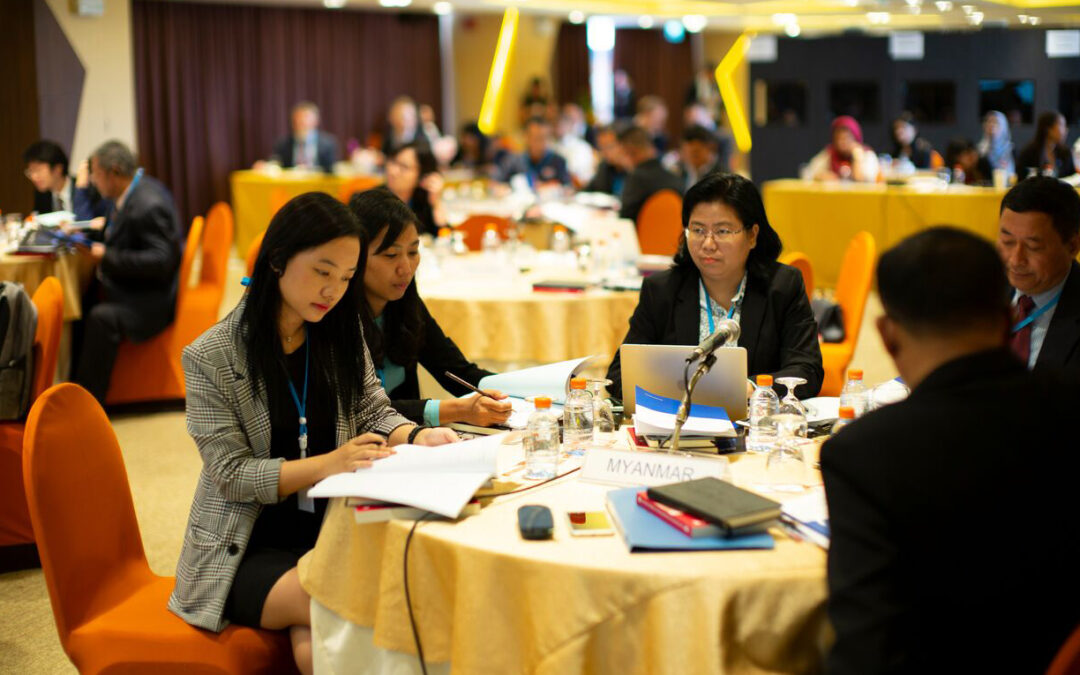
Between 30 May and 1 June 2018, the ICJ co-hosted a workshop for authorities from Thailand, Cambodia, Myanmar and Nepal on the investigation of potentially unlawful deaths and enforced disappearance in accordance with international human rights law and standards.
The workshop was co-hosted with Thailand’s Ministry of Justice and the United Nations Office of the High Commissioner for Human Rights (OHCHR) and took place as part of the ICJ’s Global Redress and Accountability Initiative, which has as one of its core objectives, “increasing the knowledge and capacity of lawyers, prosecutors and investigators to deal with challenges of impunity and access to redress.”
The participants included more than 30 criminal investigators, forensic doctors, forensic scientists, prosecutors, police trainers, senior judges and representatives of the Cambodian Ministry of Justice, the Myanmar Attorney General’s Office, the Thai Ministry of Justice and the Nepal Office of the Attorney General.
The event commenced with opening remarks by the Ambassador of Finland, Ms. Satu Suikkari-Kleven; the Ambassador of Germany, Mr. Peter Prügel; Adviser on the Promotion of the Rights and Freedom from Thailand’s Ministry of Justice, Mr. Pitaya Jinawat; and the Asia Director of the ICJ, Frederick Rawski.
Alex Conte, Senior Law and Policy Advisor, ICJ Global Redress and Accountability Initiative, gave an overview of the international human rights legal framework that applies to the investigation of unlawful deaths and enforced disappearance.
Kingsley Abbott, Senior Legal Adviser at the ICJ, then provided an overview of the revised Minnesota Protocol on the Investigation of Potentially Unlawful Death (2016), which was launched in Thailand on 25 May 2017 and which formed the core of the materials used at the workshop.
Other speakers included Ms. Jennifer Prestholdt, Deputy Director, the Advocates for Human Rights, who presented on the Rights of Victims and Families and witness interviews; Mr. Glenn Williams, Detective Inspector, Field Crime Manager, New Zealand Police National Headquarters, who presented on the investigation process including crime scene management;
Ms. Shivani Verma and Ms. Pratubjit Neelapaijit, of the Office of the High Commissioner for Human Rights who presented on Witness Protection; and Dr. Pornthip Rojanasunan, Adviser, Central Institute of Forensic Science (CIFS)/Member of the Advisory Panel who presented on forensic pathology.
This workshop followed two workshops the ICJ co-hosted between 5 to 8 December 2017 in Thailand on the investigation of potentially unlawful deaths and enforced disappearance for lawyers from Thailand and India, academics and the Thai authorities.
Contact
Alex Conte, ICJ Global Redress and Accountability Initiative, t: +41 79 957 2733; e: alex.conte(a)icj.org
Kingsley Abbott, Senior International Legal Adviser, ICJ Asia Pacific Regional Office, t: +66 94 470 1345, e: kingsley.abbott(a)icj.org
May 30, 2018 | News
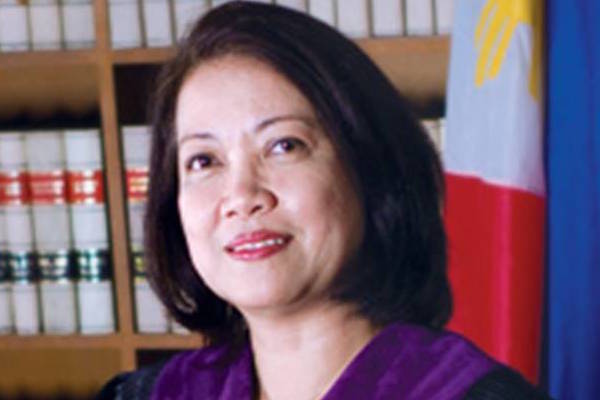
As Chief Justice Maria Lourdes Sereno filed a motion today to reconsider the Supreme Court’s 11 May 2018 decision to remove her from the Court, the ICJ expressed its grave concern that the proceedings in the case had contributed to an overall deterioration in the rule of law in the country.
Sereno’s removal comes on the heels of a series of public statements by President Rodrigo Duterte attacking the Chief Justice, including direct threats to seek her removal from the Court.
The ICJ and other national and international observers have repeatedly and publicly condemned these attacks.
Her removal, through the contrivance of a judicial ruling by a sharply divided Court, adds to the perception that the government institutions are unable or unwilling to safeguard the rule of law, and will attack the institutions that protect it.
“Preserving the independence of the judiciary in the Philippines is crucial at a time when the government is credibly alleged to have been engaged in widespread and systematic human rights violations, amounting to crimes under international law,” said Frederick Rawski, Asia Pacific Director for the ICJ.
“Given the perception of political interference and the potential impact of this case on the credibility of the judiciary as a whole, it is imperative that the Court swiftly and fairly consider the Chief Justice’s motion for reconsideration,” he added.
The removal decision came in response to a quo warranto petition filed by the Solicitor General, the government’s foremost counsel.
The petition sought to nullify her appointment on the grounds that she had failed to comply with disclosure requirements, despite the fact that her qualifications had already been certified as sufficient by the Judicial and Bar Council when her name was included in the short-list submitted to the president for consideration.
The decision superseded ongoing impeachment proceedings in the Congress.
The ICJ raised concerns that the decision could open the floodgates to similar attacks, not only against members of the Court, but to members of the judiciary and other bodies, such as the Philippine Commission on Human Rights.
It called on the Supreme Court to take care to ensure that any proceedings are conducted in line with the highest standards of judicial ethics, as reflected in the international standards such as the Bangalore Principles of Judicial Conduct.
The ICJ also reminded the government of the Philippines that under international standards – including the UN Basic Principles on the Independence of the Judiciary – the judiciary, including individual judges, must be able to conduct itself without “improper influences, inducements, pressures, threats or interferences, direct or indirect… for any reason.”
It is a responsibility of both the judiciary and the political branches of government to ensure that this principle is respected.
Contact
Emerlynne Gil, Senior International Legal Adviser for Southeast Asia, t: +662 619 8477 (ext. 206) ; e: emerlynne.gil@icj.org