Jan 9, 2018 | News
The ICJ today called on the Government of Pakistan to take immediate measures against the increasing practice of enforced disappearances in the country.
A significant number of recent victims were said to be human rights defenders and political activists.
The ICJ highlighted the particular case of Raza Mahmood Khan. Raza, a human rights defender and peace activist, has been “missing” since 2 December 2017 after he organized a public event in Lahore to discuss recent political developments, including religious extremism and the role of state institutions.
Raza is known for his work on human rights, building inter-faith harmony, and promoting peace and tolerance between Pakistan and India. His family and friends have appealed to the police and the courts to trace him, but more than a month since his alleged “disappearance”, his whereabouts are still unknown.
“Many of the victims of enforced disappearances in Pakistan have been activists like Raza, which indicates the shrinking space for activism and dissent in the country,” said Frederick Rawski, ICJ’s Asia Director.
Given that circumstances in which Raza went “missing” are very similar to other cases of enforced disappearance reported recently, the ICJ called on Pakistani authorities to conduct a prompt, impartial, and thorough investigation to determine his fate and whereabouts and hold perpetrators criminally responsible.
“It is not enough for the authorities to deny knowledge of the fate or whereabouts of disappeared people. Are they properly questioning eyewitnesses to abductions? Are they looking for forensic evidence or electronic data from mobile phones? There are clear steps that authorities can and should take to investigate such crimes, and they must act immediately to establish the truth about these cases,” added Rawski.
Pakistan’s Supreme Court has, in multiple judgments, acknowledged the role of security and intelligence agencies in enforced disappearances and secret detentions, holding that the practice constitutes a violation of the “fundamental rights” recognized by the Constitution of Pakistan as well as international human rights law.
The State Commission of Inquiry on Enforced Disappearances has more than 1500 unresolved cases of enforced disappearances as of January 2018.
In 2017 alone, the Commission received 868 reports of alleged enforced disappearances – one of the highest since the Commission’s establishment in 2011. The UN Working Group on Enforced or Involuntary Disappearances also has more than 700 pending cases from Pakistan.
“Despite hundreds, if not thousands, of cases of enforced disappearance reported from across Pakistan, not a single perpetrator of the crime has been brought to justice,” added Rawski. “Not only does this impunity deny truth and justice to victims of the crime, it is also eroding the rule of law and emboldening perpetrators of human rights violations.”
The UN Working Group on Enforced or Involuntary Disappearances (WGEID) has on a number of occasions expressed concern about lack of implementation of the recommendations it made following a country visit to Pakistan in 2012, citing among other things continuing impunity arising from failure to diligently investigate allegations.
The UN Human Rights Committee also, in its review of Pakistan’s implementation of the International Covenant on Civil and Political Rights (ICCPR), noted with concern “the high incidence of enforced disappearances and extrajudicial killings allegedly perpetrated by the police and military and security forces.”
Pakistan must ensure all persons held in secret or arbitrary detention are immediately released or charged with a recognizable criminal offence and brought promptly before a competent, independent and impartial tribunal for a trial that meets international standards.
The ICJ called on Pakistan to become a party to the International Convention for the Protection of All Persons from Enforced Disappearance; recognize enforced disappearance as a distinct, autonomous offence; and hold perpetrators of enforced disappearance, including military and intelligence personnel, to account, through fair trials before civilian courts.
Contacts
Frederick Rawski, ICJ Asia Pacific Regional Director, t: +66 64 478 1121, e: frederick.rawski(a)icj.org
Reema Omer, ICJ International Legal Adviser for Pakistan (London), t: +447889565691; e: reema.omer(a)icj.org
Dec 21, 2017 | News
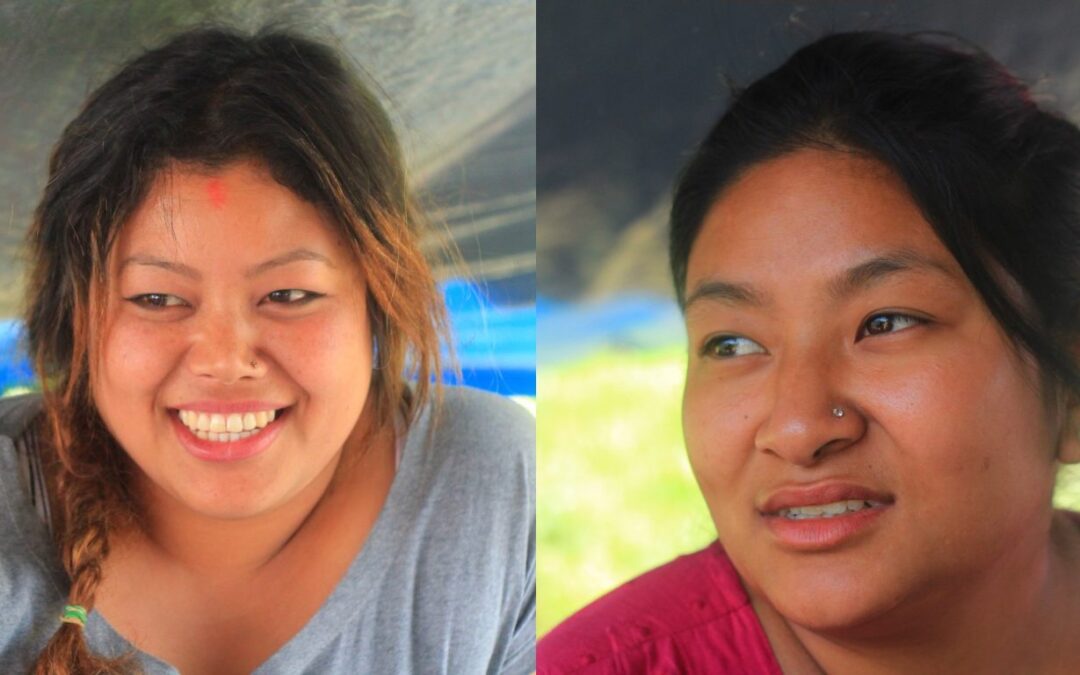
On the 10th anniversary of the Supreme Court’s decision in Sunil Babu Pant on the protection of the rights of lesbian, gay, bisexual, transgender and intersex people (LGBTI), the ICJ calls on the Government of Nepal to fully implement the Court’s ruling.
In 2007, the Supreme Court of Nepal delivered a judgment in Sunil Babu Pant v. the Government of Nepal and others, directing the Government of Nepal to take necessary measures to ensure that people of diverse gender identities and sexual orientations could fully enjoy their rights without discrimination. Such measures were to include the adoption of new laws or amending existing laws.
However, ten years after the judgment, LGBTI persons are denied equal protection of the law, and their rights are still not fully protected.
“The Supreme Court’s 2007 judgment gave hope to LGBTI people in Nepal and inspired judiciaries in the region and the world,” said Frederick Rawski, ICJ’s Asia Director. “Despite some positive measures, the Government has much more work to do to implement the judgment and ensure that the rights of the LGBTI community in Nepal are fully respected.”
The Supreme Court based its findings on international human rights law and standards, particularly in respect of the right to non-discrimination and equality and the right to privacy. The Court relied in particular on Nepal’s legal obligations under the International Covenant on Civil and Political Rights (ICCPR).
The Court strongly rejected arguments that a person’s LGBTI status was the result of “emotional and psychological disorders”, and found that the petitioners faced violence, stigmatization, and discrimination because of their sexual orientation or gender identity. The Court further ordered that a new Constitution under consideration by the Constituent Assembly should guarantee the right to non-discrimination on the grounds of gender identity and sexual orientation.
Since then, some steps have been taken. The 2015 Constitution that was ultimately adopted contains provisions guaranteeing the right to equality for all citizens and establishing special provisions for the protection, empowerment and advancement of gender and “sexual minorities”. Pursuant to a subsequent Supreme Court ruling, transgender men and women can now change their gender markers to “O” on official documents. However, to use “M” or “F”, they still face prohibitive and unclear restrictions. A recently tabled bill would also criminalize unnecessary medical interventions and provide some, though incomplete, protections to intersex children.
Despite these developments, discrimination against LGBTI people remains rampant in the labour market, in schools and in hospitals. LGBTI people are mistreated and sometimes disowned by their families and singled out for physical attack – often beaten, sexually assaulted and subjected to severe physical abuse. Recent revisions to the Civil Code (2017), effective from mid-August 2018, do not recognize equality before the law related to family life.
“These violations continue in the absence of a state strategy or political will to tackle them,” added Rawski. “The Government of Nepal should prioritize enacting reforms to ensure the protection of the rights of LGBTI persons.”
The ICJ calls on the Government of Nepal to fully implement all aspects of the 2007 ruling and subsequent Supreme Court rulings affecting LGBTI communities. This should include, at the minimum:
- Repealing all discriminatory laws, including provisions of the recently introduced Penal and Civil Codes, against sexual orientation and gender identity in line with the principle of equality, equal protection and non-discrimination;
- Enacting legislation that allows same-sex couples full equality before and protection of the law;
- Enacting legislation that removes any prohibitive or unclear restrictions to changing of gender markers on all official documents;
- Enacting legislation that establishes prior, free, full, informed, genuine and consistent consent, and prevents unnecessary medical interventions on intersex persons; and
- Ensuring that the legal protections are given practical effect, including through implementation measures and administrative instructions binding officials at all levels of government.
Contact:
Frederick Rawski, ICJ Asia Pacific Regional Director, t: +66 64 478 1121, e: frederick.rawski@icj.org

Dec 20, 2017 | News
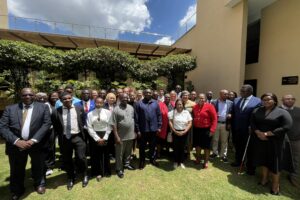
Legal Advisers from the International Commission of Jurists addressed a locally-initiated forum on human rights held in Yangon in December.
Participants who attended from across the country heard from more than twenty presenters and panelists, speaking on topics including: freedom of religion and belief; human rights in armed conflict; freedom of assembly and expression; and economic, social and cultural rights.
The ICJ’s International Legal Adviser Sean Bain joined a panel discussing ongoing human rights violations in areas of conflict and insecurity.
In November the ICJ published a report, “Questions and Answers on Human Rights Law in Rakhine State,” which lays out applicable national and international law in the human rights crisis there, and steps necessary to improve the situation.
Sean Bain emphasized that rights violations against Rohingya Muslims should also be examined with reference to the overall patterns of violations throughout the country, too often perpetrated by security forces with impunity against peoples of many ethnicities and religions, particularly in conflict areas.
On a panel discussion on religious freedom, Advocate Daw Zar Li Aye outlined relevant provisions in national and international law that protect freedom of religion and belief.
She noted, however, that in practice ambiguous and vague provisions of national laws have been applied in a discriminatory manner against members of minority groups.
Zar Li Aye also suggested that any legislative amendments incorporate clearly stated objectives to protect religious freedom, in line with the State’s international law obligations.
Many participants in the forum noted the emergence of a backlash against the language of human rights in recent months, linked to the crisis in northern Rakhine State.
Asked how human rights defenders in Myanmar may continue their work in this context, Sean Bain responded, “To be truly effective in protecting human rights for all we must stay true to our values and not accept violations against any people in any context.”
The ICJ’s involvement in this Forum is part of ongoing engagement with civil society groups in Myanmar.

Dec 18, 2017 | News
The ICJ today called on Myanmar authorities to immediately disclose the whereabouts of two journalists who have been detained incommunicado for nearly one week, and to grant prompt access to lawyers and families.
Reuters reporters Wa Lone and Kyaw Soe Oo have not been heard from since they were arrested by police in Yangon on Tuesday 12 December.
“Fair trial rights violations seriously undermine the rule of law in Myanmar. All detainees must be allowed prompt access to a lawyer and to family members,” said Frederick Rawski, the ICJ’s Asia-Pacific Regional Director.
“Authorities are bound to respect these rights in line with Myanmar law and the State’s international law obligations,” he added.
The right to legal counsel is a bedrock rule of law principle that is set out in a range of international human rights laws and standards, including in article 11 of the Universal Declaration of Human Rights.
Sean Bain, Legal Adviser for the ICJ, said that jurists should assess if the journalists’ detention conforms to applicable laws.
“Their situation appears to constitute arbitrary detention,” he said. “The judiciary should immediately review the lawfulness of detention and demand their release if it is indeed unlawful.”
“Judges and lawyers in Myanmar have an opportunity to assert their independence by challenging the unlawful actions of officials. Such blatant violations of fair trial rights should not go unanswered,” he added.
State media reports the journalists were charged under the 1923 Official Secrets Act in connection with their work investigating actions of security forces in Rakhine State.
More than 650,000 people, mostly Rohingya Muslims, fled to Bangladesh as a result of military operations following attacks on police posts in August by the Arakan Rohingya Salvation Army.
Reuters has reported from both sides of the Myanmar-Bangladesh Border.
“The treatment of these reporters threatens freedom of expression. The harsh penalties they face sends a clear message to other journalists that they could face the same consequences for doing their job,” said Rawski.
In Myanmar, colonial-era laws were invoked to bring criminal charges against journalists in at least three jurisdictions in 2017.
Offences in these laws are often broadly defined, carry harsh penalties, and are open to abuse by authorities.
Journalists who received ten-year jail terms in 2014 under the Official Secrets Act were later released in a Presidential amnesty.
Amendments proposed at the time in parliament were rejected.
“The abuse of archaic laws like the Official Secrets Act must end. It is within the power of the National League for Democracy-dominated legislature to review these laws with a view to aligning them with the rights reflected in Myanmar’s constitution and in international law,” Rawski added.
Contact
Frederick Rawski, ICJ Asia Pacific Regional Director, t: +66 6 4478 1121 ; e: frederick.rawski(a)icj.org
Sean Bain, ICJ International Legal Adviser, e: sean.bain(a)icj.org
Background
The UN Basic Principles on the Role of Lawyers emphasize that, “Governments shall further ensure that all persons arrested or detained, with or without criminal charge, shall have prompt access to a lawyer, and in any case not later than 48 hours from the time of arrest or detention.”
Sections 19 and 375 of the Myanmar Constitution also guarantee the right of legal defense, as does Myanmar’s Code of Criminal Procedure (section 340), Courts Manual (section 455(1)), the Police Manual (section 1198c) and the Prisons Act (section 40).
Sections 21(c) and 376 of the Constitution and section 61 of the Code of Criminal Procedure state that persons cannot be detained for more than 24 hours without a judge’s order.
The right to legal defense implies the right to access legal counsel during this 24-hour period.
Under section 403 of the Courts Manual, a detainee can be remanded only once he or she has appeared before a judge. It is unknown if the two Reuters journalists have appeared in court.
Competent judges are empowered to compel a search for a detainee if they have reason to believe the person is confined unlawfully, as per section 100 of the Criminal Procedure Code.
Lawyers and family members may also request the courts to review the lawfulness of detention, by submitting a habeas corpus petition to the High Court and or to the Supreme Court.
The Tshwane Principles on National Security and the Right to Information, which address the right to access and to share information, as an aspect of freedom of expression in the context of national security, affirm that journalists “should not be prosecuted for receiving, possessing or disclosing classified information to the public, or for conspiracy or other crimes based on their seeking or accessing classified information.”
Read also
Handbook on Habeas Corpus in Myanmar
Right to Counsel: The Independence of Lawyers in Myanmar
Myanmar-Reuters Journos-News-Press releases-2017-BUR (Story in Burmese, PDF)
Dec 15, 2017
On the fifth anniversary of the enforced disappearance of the Lao civil society leader, the ICJ and 121 other organizations, express outrage at the government’s failure to investigate Sombath Somphone’s disappearance and return him to his family.
To read the letter:
Lao PDR-Sombath 5 years-Advocacy-open letter-2017-ENG (English version, in PDF)
Lao PDR-Sombath 5 years-Advocacy-open letter-2017-LAO (Lao version, in PDF)