May 4, 2017 | News
Thailand should immediately end the practice of arbitrarily detaining persons in unofficial places of detention said the ICJ today.
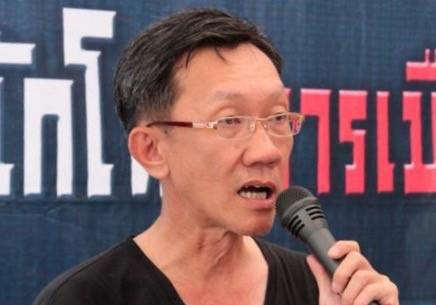
The statement came after it was revealed that human rights lawyer, Prawet Prapanukul, who had been arbitrarily detained for five days at a detention facility inside a military base in Bangkok, finally appeared and was charged at the Bangkok Criminal Court on 3 May 2017.
During the morning of 29 April 2017, military officers invoked Head of National Council for Peace and Order (NCPO) Order 3/2015 to arrest Prawet Prapanukul and search his residence in Bangkok, seizing a number of items located at the property including computers, phones and hard-drives.
The whereabouts of Prawet Prapanukul were unknown until the afternoon of 3 May 2017, when Prawet Prapanukul contacted several lawyers including Thai Lawyers for Human Rights (TLHR) and said he had been held at the Nakhon Chaisri temporary remand facility inside the 11th Army Circle military base in Bangkok.
“Prawet Prapanukul’s five-day incommunicado detention without being brought before the courts or access to legal counsel amounts to an arbitrary detention in violation of his rights under international law and consequently he should be provided with appropriate reparation,” said Kingsley Abbott, the ICJ’s Senior International Legal Adviser for Southeast Asia.
“To ensure the protection of all persons while in detention, Thailand has a duty to detain people in officially recognized places of detention, to have their names and places of detention made available to interested persons and to bring them before a court without delay within 48-hours,” he added.
According to TLHR, on 3 May 2017, Prawet Prapanukul was charged with ten counts of the highly restrictive crime of lese majeste (article 112 of the Criminal Code), three counts of a sedition-like offence (article 116 of the Criminal Code), and violation of article 14(3) of the Computer Crime Act.
The ICJ has previously raised concerns about abusive recourse to these laws.
Pursuant to article 91(3) of the Thai Criminal Code, it is possible that, if convicted of these charges, Prawet Prapanukul could receive a maximum sentence of 50-years imprisonment.
“Freedom of expression, as protected under international law, must never be criminalized. In any event, imprisonment is never a proportionate penalty for the exercise of free expression, let alone the unthinkable possibility of 50-years, which would set a new recorded record for a sentence for lese majeste,” Abbott said.
On 25 April 2017, after reviewing Thailand’s compliance with its obligations under the International Covenant on Civil and Political Rights (ICCPR), to which Thailand is a State Party, the Human Rights Committee, the international expert body charged with supervising the implementation of the ICCPR, issued its Concluding Observations in which it noted that in Thailand “individuals were reportedly often detained without charge and held incommunicado at undisclosed places of detention for periods of up to seven days, with no judicial oversight or safeguards against ill-treatment and without access to a lawyer.” The Human Rights Committee observed that Thailand should immediately release all victims of arbitrary detention and provide them with full reparation.
“The fact that Thailand arbitrarily detained Prawet Prapanukul at a military facility just five days after the Human Rights Committee issued its Concluding Observations criticizing Thailand’s practice of detaining people incommunicado in undisclosed placed of detention demonstrates a worrying contempt for its international human rights obligations as pointed out by the Committee,” Abbott added.
Contact
Kingsley Abbott, ICJ Senior International Legal Adviser for Southeast Asia, t: +66 94 470 1345 ; e: kingsley.abbott(a)icj.org
Thailand-Prapanukul-detention-News-2017-ENG (full text with background, in PDF)
Thailand-Prapanukul-detention-News-2017-THA (Thai version, in PDF)
May 2, 2017 | News
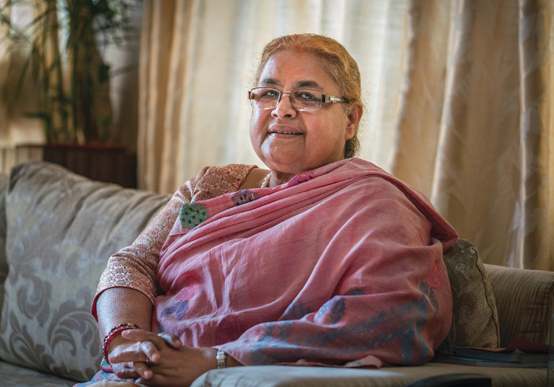
The Nepali legislature should immediately reject the unprecedented motion filed on 30 April 2017 to impeach Chief Justice Sushila Karki because it threatens the independence of the judiciary and the rule of law, said the ICJ today.
“This impeachment motion, the first against a sitting Chief Justice in Nepal’s history, raises very serious concerns about the independence of Nepal’s Supreme Court and the separation of powers in the country,” said Matt Pollard, who heads the ICJ’s Center for the Independence of Judges and Lawyers.
“The impeachment motion seems timed to suspend Chief Justice Karki just as she was scheduled to hear a politically controversial case,” he added.
The impeachment motion comes in the wake of the decision of the full bench of the Supreme Court, chaired by Justice Karki, to revoke the Cabinet’s 12 February decision to appoint a new Inspector General of Nepal Police evidently in violation of existing processes and regulations.
The motion to impeach Chief Justice was sponsored by two ruling parties, Nepali Congress and Nepal Communist Party (Maoist Center), pursuant to Article 101(2) of Nepal’s 2015 Constitution.
This provision allows for an impeachment motion against the chief justice to be moved by one-fourth of the members of the Legislature–Parliament on the grounds of “serious violation of the Constitution and law, his or her incompetence, misbehavior or failure to discharge the duties of his or her office in good faith or serious violation of code of conduct.”
Justice Karki is scheduled to retire on 7 Jun 2017, when she reaches the mandatory retirement age.
“The timing of the impeachment action, so close to the Chief Justice’s scheduled retirement, gives credence to suspicions that it is aimed at preventing her participation in judicial activity during the next few weeks,” Pollard said.
Filing the impeachment motion immediately resulted in the suspension of the Chief Justice from her duties, pursuant to Article 101(6).
“The impeachment process under Article 101 does not comply with international standards on the independence of the judiciary, as the ICJ has pointed out repeatedly in its analysis of the 2015 Constitution,” Pollard added, referring to the ICJ’s Briefing Paper on the Constitutional Draft. “This recent motion starkly demonstrates the problems with the Constitutional provision.”
Nepal’s judiciary, including the Supreme Court, had also recently been criticized by officials in the ruling parties and the military in relation to a number of high profile human rights cases.
“Nepal’s Judiciary has been instrumental protecting human rights, rule of law and enforcement of the Nepal’s obligation under international law,” Pollard said.
“The Nepali judiciary as an institution has strengthened and has gained international respect for its independence, so it should be celebrated and strengthened, instead of being subject to this kind of legislative attack,” he added.
The ICJ calls on the Government of Nepal and ruling parties to withdraw the impeachment motion against the Chief Justice in order to ensure judicial independence and the appropriate separation of powers under the rule of law in the country.
May 2, 2017 | News
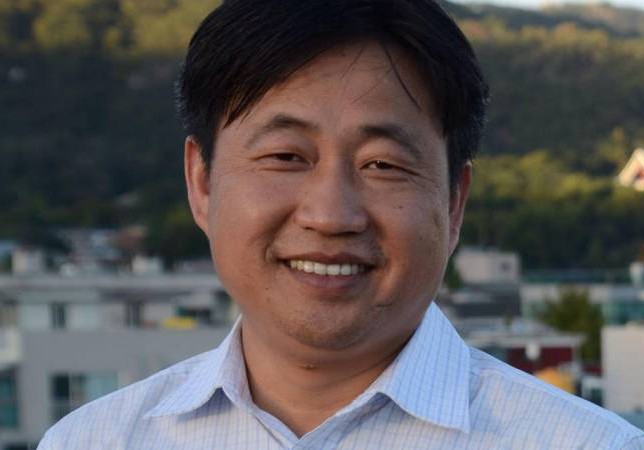
The ICJ today called on the Chinese government to release immediately Xie Yang, a prominent human rights lawyer who was arrested during the crackdown on human rights defenders in July 2015. Authorities have now canceled his scheduled trial without giving a reason.
He was charged on 16 December 2016 with inciting subversion of State power and disrupting court order. He is detained at an undisclosed location.
“Xie Yang’s arrest and prosecution seem to be in connection with his performing legitimate professional functions as a human rights lawyer,” said Sam Zarifi, ICJ’s Secretary General.
“No lawyer should ever be subject to persecution for carrying out their professional duties. Lawyers in China like Xie Yang are indispensable in ensuring human rights protection and upholding the rule of law in China,” he added.
Xie Yang had served as counsel of the family of Xu Chunhe, who was alleged to have been shot dead by police authorities in May 2015 in Heilongjiang Province.
He also acted as counsel for persons alleging religious persecution, alleged victims of unlawful land seizures, and outspoken critics of the government.
The ICJ emphasized that in the absence of evidence that he has committed a cognizable offence, the criminalization of which is consistent with international human rights law, Xie Yang should be immediately released.
In January 2017, the lawyers of Xie Yang alleged that he had been subjected to prolonged sleep deprivation, forced into stress position for more than 20 hours a day, verbally harassed and threatened, and subjected to regular beatings and other forms of torture and ill-treatment.
“The government should release Xie Yang immediately and conduct a prompt, thorough, and impartial investigation on the allegations that he has been subjected to torture,” Zarifi said.
The ICJ received information that Xie Yang has not been able to communicate with his lawyers ever since he reported to them his torture allegations by police authorities.
He has now been assigned State-appointed counsel.
The ICJ further called on the government to bring to justice any persons found to be responsible for the torture of Xie Yang.
Under no circumstances must any statement he may have made during his interrogation under torture or ill-treatment be admitted into evidence at his trial.
Contact:
Emerlynne Gil, ICJ’s Senior International Legal Adviser, t: +66 840923575 ; e: emerlynne.gil(a)icj.org
Additional information
Following his arrest, Xie Yang was detained for the first six months in an undisclosed location, but was subsequently transferred to the Changsa City No. 2nd Detention Center.
He was again transferred to an undisclosed location where he remains detained to this day.
The date and the reason for the transfer are unknown.
Xie Yang’s treatment comes amidst a much wider attack on lawyers and human rights defenders in China.
Since 9 July 2015, the government has launched an unprecedented nationwide crackdown – now commonly referred to as the “709 Crackdown” to mark the start of the crackdown – which resulted in the interrogation, detention, and/or criminal indictment of nearly 250 human rights lawyers and activists.
Photo credit: ChinaChange.com

Apr 29, 2017
The High Court of the Hong Kong Special Administrative Region decided to effectively grant the same spousal benefits to a civil servant in a same-sex marriage that the Government provides to the spouses of other married civil servants whose marriages are to persons of the opposite gender.
The High Court held in the case Leung Cheung Kwong v. Secretary for the Civil Service, et. al, that the denial of spousal benefits under the Civil Service Regulations to same-sex couples legally married under foreign laws amounts to unlawful discrimination based on sexual orientation.
“This decision confirms the critical role that the judiciary can and should play in upholding human rights and combatting discrimination based on sexual orientation and gender identity,” said Emerlynne Gil, ICJ’s Senior International Legal Adviser for Southeast Asia.
Mr. Leung Chun Kwong, the applicant in the case, is a Chinese national and a permanent resident of the Hong Kong Special Administrative Region. In 2005 he met Mr Adams, a national of New Zealand, and they later decided to marry.
In light of the fact that the law in Hong Kong did not allow for same-sex marriage, they married in New Zealand, where the law makes provision for such marriages.
Eventually, Mr. Leung applied for and was denied: a) spousal benefits that the Government provides to the spouses of other married civil servants whose marriages are to persons of the opposite gender; and b) to have his tax liability jointly assessed with that of Mr. Adams, as a married couple.
He then brought judicial review proceedings before the High Court challenging both decisions on a number of grounds, including that the said denials discriminated against him based on his sexual orientation.
Judge Anderson Chow said he was unable to see how the denial of such benefits to legally married same-sex couples would serve to protect “the traditional family”.
The ICJ had been granted leave by the Court to intervene in the case.
The amicus brief submitted by the ICJ described the European Court of Human Rights’ approach to the issues at stake in this case, including, in particular, that the prohibition of discrimination under the European Convention on Human Rights duly covers questions related to sexual orientation, and that if the reasons advanced for a difference in treatment were based solely on a person’s sexual orientation, this would amount to discrimination under the Convention.
The High Court was also presented with the question of whether the marriage of a same-sex couple legally entered into under foreign laws may also constitute “marriage” for the purposes of Hong Kong’s Inland Revenue Ordinance (IRO).
In this instance, however, the Court held that to construe “marriage” under the IRO as including same-sex marriages would run counter to the meaning of this term under Hong Kong laws.
In any event, the High Court further pointed out that the refusal by the Commissioner of Inland Revenue to assess the tax liability of Mr. Leung jointly with that of his spouse, as a married couple, did not cause any prejudice to them as the joint assessment would have made no difference to their total tax liability.
In the circumstances, therefore, the Commissioner’s refusal did not engage the right to equality.
Gil said: “The issue of the equal right of same-sex couples to marriage in Hong Kong was not ultimately at stake in this case. However, we hope that future judicial decisions will continue to push forward the protection of all human rights for all people in Hong Kong.”
Hong Kong-ICJ Amicus-Advocacy-Legal submissions-2017-ENG (ICJ Amicus, in PDF)
Hong Kong-High Court Judgment-Advocacy-2017 ENG (Judgment, in PDF)

Apr 28, 2017 | Multimedia items, News, Video clips
Honorary Member of the ICJ, Asma Jahangir, talks of her experiences as part of the ICJ’s ongoing profile series on women human rights defenders.
Asma Jahangir became interested in human rights legal work after having witnessed the frequent arrests of her father, an outspoken critic of military dictatorships, and seeing the courtroom as a place where justice could be accessed. From these early experiences, Asma identified the importance of rule of law but came to understand that this was something that went far beyond the courtrooms of Pakistan.
As a married women, her in-laws had concerns about her practicing law in a mixed firm so she co-founded Pakistan’s first all-female law firm. Initially the firm was viewed as a hobby but Asma and her other co-founders persevered and the firm still thrives today.
Ms Jahangir spoke about the challenges she faced as a female lawyer where courts and judges were at first patronizing towards her and then became angry at her as she continued to present them with cases that were challenging for them. She worked on a number of landmark cases including about whether women could get married without their fathers’ permission, be entitled to family maintenance and whether women should be judged according to religious or codified law.
Women in Pakistan face many issues in accessing justice, Ms Jahangir said. They lack resources, if they are able to access the courts they are frequently exploited by male lawyers and they encounter prejudice in their cases. In addition many laws are simply discriminatory, however women have been challenging these and will continue to do so.
There has been progress in family law in Pakistan, particularly in relation to the procedures if not the substance, yet Pakistan remains a long way from having equality in the family law framework.
Asma noted that it can be hard to engage men in women’s rights issues but commented that many men who had not considered giving certain rights to their wives had become a lot more conscious about women’s rights issues as their daughters had grown up. Many of her colleagues now ask for internships for their daughters at her law firm and admit how narrow-minded they had previously been in relation to women’s rights and equality.
From 2004 to 2010, Ms Jahangir served as the UN Special Rapporteur on Freedom of Religion and explained that she worked with the Special Rapporteur on Freedom of Expression to address the delicate balance in managing freedom of religion and freedom of expression.
Freedom of expression is currently under threat around the world, Asma commented, and is being undermined in the name of a variety of reasons including security, religion and tradition or social norms. Asma said that freedom of expression is fundamental to basic human rights because stopping freedom of expression stops people from thinking.
“Self-censorship is a by-product of undermining freedom of expression and self-censorship by itself dis-informs people, brings out irrelevant issues, and suppresses the more relevant issues.”
Ms Jahangir told the ICJ that in the course of her work as a human rights activist she has been threatened, put under house arrest and imprisoned. However, rather than deterring her, Asma’s experience in jail made her stronger: “It made every woman who went to jail stronger and more resolute that we want rights.”
There was a particular case that had a strong impact on Asma, which was when she worked in defence of a child who had been accused of blasphemy and was sentenced to death. The initial verdict against the boy knocked her confidence as a lawyer, but senior colleagues encouraged her and she continued with the case, taking this to appeal.
This was a very contentious case that attracted a lot of negative attention against Ms Jahanagir. People claimed she was anti-Muslim and, as she argued for the defendant, crowds gathered outside the court calling for her execution. At one point opposing lawyers asked the judges if they could simply close the case but the judges said that if Asma was prepared to keep arguing they were prepared to hear her arguments.
Asma explained that she was inspired to continue by the defendant himself, a boy of around 14 years of age, who, when given the opportunity to run away whilst on bail, decided to stay and continue the trial rather than risk others being harmed in retaliation if he were to flee. She felt that even if she had to give her life to defend this child then it would be worth it. Ultimately the case was decided in the boy’s favour and he was acquitted.
She advised young women interested in a career as a human rights lawyer not to label themselves as ‘human rights lawyers’ rather than simply ‘lawyers’ or they will not be taken seriously. Asma said that “I think that life where you don’t have dignity and where you don’t fight for people’s dignity is a wasted life.”
Watch the interview:
The series of profiles introducing the work of ICJ Commissioners and Honorary Members on women’s rights was launched on 25 November 2016 to coincide with the International Day to Eliminate Violence against Women and the first day of the 16 Days of Activism Against Gender-Based Violence Campaign.