Sep 28, 2023 | News
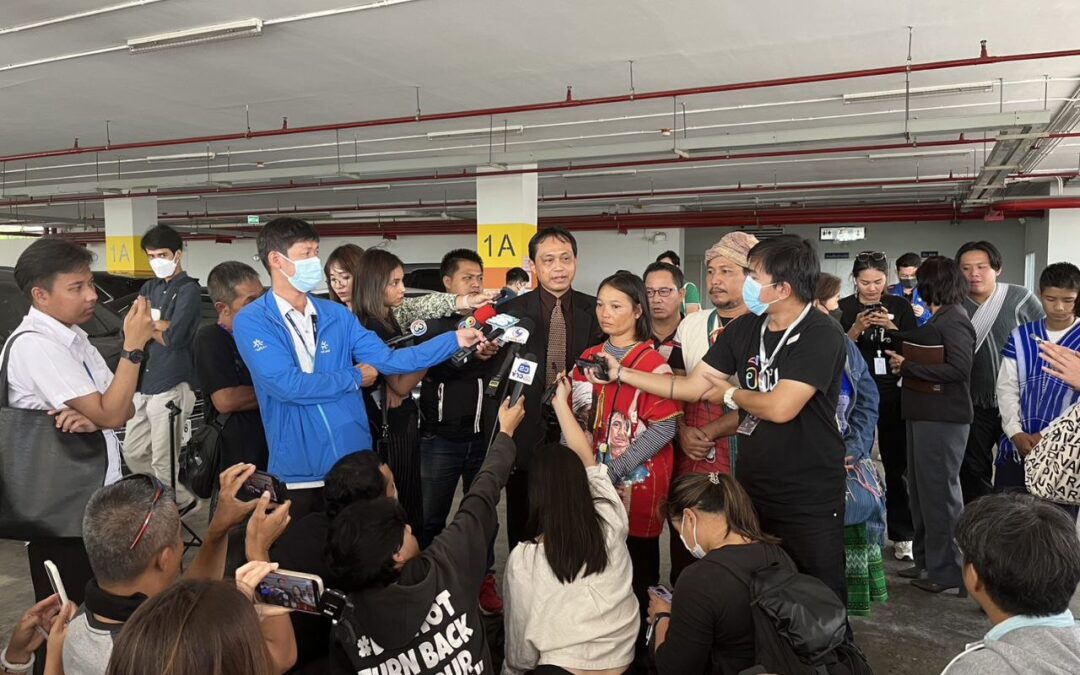
The ICJ is concerned at Thailand’s continued failure to bring justice to the loved ones of Karen activist Pholachi ‘Billy’ Rakchongcharoen, who was the victim of an apparent enforced disappearance in 2014, and apparent subsequent killing.
The ICJ calls on the responsible authorities to ensure that there is continuous effective investigation to determine definitively the fate of Billy and deliver justice to his family.
Today, Thailand’s Criminal Courts for Corruption and Misconduct Cases acquitted four Kaeng Krachan National Park officials, the last individuals seen with Billy, of murder-related charges, including premeditated murder and concealing the victim’s body. Only one of the accused, Chaiwat Limlikit-aksorn, former chief of Kaeng Krachan National Park, was convicted of charges and sentenced to three years in prison related to “malfeasance in office” for failing to hand Billy over to the responsible authorities after his arrest.
The Court, constituted of a panel of two judges, indicated that it did not believe that Billy had been released as claimed by the accused. Nevertheless, the Court concluded that there was not sufficient evidence to prove that the park officials orchestrated the killing.
“More than nine years of delays, including by inaction by the government until recently, and still no justice, is a blow to the victims. This constitutes yet another marker of Thailand’s consistent failure to hold accountable perpetrators of serious human rights crimes, potentially committed by State authorities,” said Sanhawan Srisod, ICJ Legal Adviser.
Billy was the victim of an apparent enforced disappearance, as he was last seen on 17 April 2014 in the custody of Kaeng Krachan National Park officials. The officials claimed they detained Billy for illegal possession of honey, but that they released him later the same day.
On 12 September 2019, the DSI located bone fragments, along with an oil tank submerged in water, which they identified as likely belonging to Billy. The subsequent DNA test indicated a maternal relation between the fragment and Billy’s mother, suggesting a blood relationship through the maternal line. However, the Court ruled today that there was insufficient evidence to establish that they belong to Billy, as opposed to other relatives who may have passed away during the same period.
This decision was made despite testimony from State forensic experts affirming the validity of the DNA test used in this case, which needed to be considered alongside other supporting facts. This includes testimonies given by the relatives and cultural expert about the absence of known blood relatives who had passed away without knowledge, and the Karen practice of not scattering the remains of the deceased in the river. Such testimony also aligns with the opinions of international forensic experts, specifically the Independent Forensic Expert Group established by the International Rehabilitation Council for Torture Victims, who were consulted by the prosecutors’ lawyers.
Enforced disappearance was recently made a specific crime under Thai law, following the adoption of the long-delayed Act on Prevention and Suppression of Torture and Enforced Disappearance, which came into effect in February this year. Under the Act, and international law, enforced disappearance is a continuous crime, which is not completed until the fate or whereabouts of the victim becomes known. Therefore, to the extent that there is any doubt that the discovered remains belonged to Billy, the crime must be considered to be ongoing and the law is applicable to Billy, even if it was not in force when he first “disappeared.”
Nevertheless, the Prosecution did not attempt to charge the accused with enforced disappearance, and the Court consistently rejected any reference to the crime made by the prosecution during the proceedings. This includes the rejection of expert witnesses proposed by the prosecutor’s lawyers who intended to testify about international law and standards governing enforced disappearance, following the rejections made by the accused.
“It is also unfortunate that the Thai court did not take into consideration the specific nature of the crime of enforced disappearance, often accompanied by very limited circumstantial evidence, which may be the only available means of establishing the crime. Such a crime also normally includes the powerlessness of the victim in the hands of the authorities, the use of state power to destroy direct evidence in an attempt at total impunity or to create the illusion of a perfect crime, all factors that have been taken into consideration in many cases in various jurisdictions worldwide when assessing the possible involvement of the suspects in crimes of this nature,” added Srisod.
During the trial, pursuant to the Act on Establishment of the Criminal Court for Corruption Cases B.E. 2559 (2016), the Court also used the so-called inquisitorial system, which is new to both lawyers and public prosecutors accustomed to the accusatorial style of the usual Thai court system. In this regard, lawyers voiced complaints that the judge on several occasions cut short the follow-up questions that the lawyers had planned to ask, citing that these issues had already been covered during their own examinations and other written submissions.
Background
Chaiwat Limlikit-aksorn was convicted under section 157 of the Criminal Code and section 123 of the Organic Act on Counter Corruption B.E. 2542 (1999).
Thailand has signed but not yet ratified the International Convention for the Protection of All Persons from Enforced Disappearance (ICPPED) and is a State Party to the International Covenant on Civil and Political Rights (ICCPR) and the Convention against Torture and other Cruel, Inhuman or Degrading Treatment or Punishment (CAT). The latter two treaties prohibit conduct making up enforced disappearance, and the crime is recognized as violation of both treaties.
The National Human Rights Commission of Thailand and local Thai Civil Society Organizations continue to receive complaints of alleged human rights violations at the hands of security forces constituting serious criminal conduct, including extraterritorial killings, torture and other ill-treatment, and enforced disappearances.
Between 1980 and August 2023, the UN Working Group on Enforced or Involuntary Disappearances also recorded and transmitted 93 cases of alleged enforced disappearance to Thailand. Currently, 77 of these cases remain unresolved.
Unfortunately, the number of cases in which these allegations have been investigated, let alone perpetrators prosecuted, remains low, as are instances where there has been access to effective remedies and provision of reparations for victims. In several instances, alleged victims of torture and other ill-treatment or the families of those who died as a result of these abuses have received some monetary payments falling short of full reparation, but the perpetrators have not yet been brought to justice.
This case also follows the acquittal of five police officers charged with the robbery and coercion of the “disappeared” human rights lawyer Somchai Neelapaijit in December 2015 due to a lack of evidence.
Further reading
Thailand: Indictment of park officials for killing of “Billy” is a significant step towards justice
Thailand: discovery of “Billy’s” remains should reinvigorate efforts to identify perpetrator(s)
Thailand: special investigation into apparent enforced disappearance of “Billy” welcome, but much more is needed
Thailand: ICJ submits recommendations on draft law on torture and enforced disappearance amendments
Justice for Billy: Time for Thailand to Account for Activist’s Disappearance
Contact
Sanhawan Srisod, Associate International Legal Adviser, ICJ, e: sanhawan.srisod@icj.org

Sep 27, 2023 | Advocacy, News
The International Commission of Jurists (ICJ) and four other organizations condemn in the strongest possible terms the arbitrary execution of Mr. Lê Văn Mạnh in violation of his right to life and freedom from torture and cruel, inhuman or degrading punishment. He was executed despite credible allegations that Mr. Lê Văn Mạnh had been subjected to severe beatings amounting to torture by the police in order to extract a “confession,” which was relied on at trial to convict him.
Despite the public outcry and the persistent calls within the international community for an impartial, independent and effective review of his case, the authorities proceeded with the execution of Mr. Lê Văn Mạnh on 22 September 2023, in defiance of international law and contrary to the global trend towards establishing a moratorium on the use of the death penalty and abolition of the death penalty.
According to the death certificate issued by Thu Phong village, Cao Phong district, Hòa Bình province that Mr. Lê Văn Mạnh’s family received on 23 September 2023, he was executed at 7am on 22 September 2023. His execution was carried out only four days after his mother had received the notification from the People’s Court of Thanh Hóa, informing her that as Mạnh’s relative, she could apply in writing to receive her son’s ashes or corpse.
The execution notice issued by Thanh Hóa province police indicates that the responsible authorities had exchanged two official letters in August 2023 to uphold the decision to carry out Mạnh’s execution. This means they had waited for more than one month before notifying Mạnh’s family about his impending execution, hindering any efforts by his family and the public to call for an immediate halt of the execution. Additionally, the notification letter shared with the family did not include the date of the set execution and the family was not given the opportunity of a last visit – a cruel, inhuman and degrading treatment that international human rights bodies have repeatedly condemned.
Allegations of violations of due process and procedural irregularities
Lê Văn Mạnh had been convicted of robbery, rape, and murder of a 14-year-old girl – Hoàng Thị Loan – in July 2005.
According to the case’s official records, the victim, Hoàng Thị Loan, was raped and murdered in Yên Thịnh Ward, Yên Định District, Thanh Hóa Province, in March 2005. On 20 April 2005, Lê Văn Mạnh, who was 23-year old at the time, was arrested pursuant to a temporary arrest warrant issued by the investigative police unit of Đồng Nai Province for an entirely different matter earlier that month.
However, according to the criminal complaint, just three days later, by 23 April 2005, a “confession” letter, claimed to be written by Mạnh while in police detention addressed to his father, had surfaced, admitting guilt to the rape and murder of Hoàng Thị Loan. The police confiscated this letter and used it to prove Mạnh’s guilt. The criminal complaint further showed that the investigation relied on the testimony of a 9-year-old child – who was interviewed by the police without parental permission – for leads.
Between 2005 and 2008, Mạnh underwent a total of seven court hearings, including three trials, three appeals, and one cassation trial. In all of his court hearings, Mạnh vehemently denied all of the charges and retracted his earlier “confession”, alleging that he had to provide it after being beaten by both the police officers investigating his case and his cellmates who were acting under police’s instructions.
There was no physical evidence to tie Mạnh to the alleged rape and murder. The only evidence presented by the prosecution was Mạnh’s “confession” letter, which he had already retracted because it was allegedly obtained under duress and torture. Nevertheless, Lê Văn Mạnh was convicted of the rape and murder of Hoàng Thị Loan and sentenced to death.
Recommendations
The execution was arbitrary, as it took place as a consequence of a denial of the right to fair trial among other rights. The execution also is contrary to repeated resolutions of the UN General Assembly and the overall global trend towards establishing a moratorium on the use of the death penalty with a view to abolition. We strongly urge the authorities to:
- Immediately halt all pending executions and establish a moratorium on executions with a view to abolishing the death penalty in Việt Nam;
- Initiate prompt, impartial and effective investigations into the allegations of torture or other cruel, degrading or inhuman treatment with a view to gaining a “confession” from Mr. Lê Văn Mạnh, noting that his was not the only case where there had been allegations of torture being used to extract a “confession” later used as evidence at trial, which resulted in the imposition of the death penalty; and
- Ensure that there is full transparency in the use of the death penalty, including through ensuring that essential information relevant to a specific planned execution is promptly provided to the prisoner and their family, and making publicly available information regarding death sentences, pardons, number of people on death row, notifications of any set executions and executions carried out.
Background
The UN General Assembly, in repeated resolutions and by overwhelming majorities, most recently in General Assembly Resolution 77/222 of 15 December 2022, has called on all States that retain the death penalty to impose an immediate moratorium on executions, with a view to abolition.
In line with opinions shared by many governments and the United Nations, we emphasize that the death penalty constitutes a denial of the right to life protected by Article 6 of the International Covenant on Civil and Political Rights (ICCPR) to which Việt Nam is a State party; and that it constitutes a form of cruel, inhuman or degrading punishment, prohibited under Article 7 of the ICCPR and the UN Convention against Torture and Other Cruel, Inhuman or Degrading Treatment or Punishment (UNCAT). Countries like Việt Nam where the death penalty is imposed, must ensure, at a minimum, that it is only used in cases of “the most serious crimes” (i.e. intentional killing) following a trial that meets the highest level of compliance with international law and standards of fairness.
As the UN Human Rights Committee noted: “Violation of the fair trial guarantees provided for in article 14 of the Covenant in proceedings resulting in the imposition of the death penalty would render the sentence arbitrary in nature, and in violation of article 6 of the [ICCPR]” (General Comment No. 36 – Article 6: right to life, UN Doc. CCPR/C/GC/36, para. 41). Mạnh’s trial was clearly neither fair nor compliant with international human rights law.
Furthermore, as a State party to the UNCAT and the ICCPR, Việt Nam has an obligation to respect the prohibition of torture and other forms of ill-treatment at all times.
Article 15 of the UNCAT obliges State parties to “ensure that any statement which is established to have been made as a result of torture shall not be invoked as evidence in any proceedings.” International law prescribes that State parties must conduct prompt, impartial and thorough investigations when complaints of torture or other ill-treatment are made (Articles 12 and 13, UNCAT; and Articles 7 and 2(3), ICCPR). In addition, State parties must provide prompt and effective access to effective remedies and full reparations for victims of torture and other ill-treatment (Article 14, UNCAT, and Article 7 in connection with Article 2(3), ICCPR).
Signatories
Amnesty International
International Commission of Jurists
Legal Initiatives for Vietnam
People in Need
Vietnamese Advocates for Change
Sep 26, 2023
The Indonesian authorities should ensure that women are effectively protected against online gender-based violence (OGBV) by implementing Law No. 12 of 2022 on Sexual Violence Crimes (Law 12/2022) and by addressing its shortcomings in line with international human rights law, the International Commission of Jurists (ICJ) highlighted in a briefing paper published today.
In a thirty-page briefing paper analyzing Law 12/2022, the ICJ identified gaps in the recently adopted Law 12/2022 relating to OGBV, and addressed recommendations to the Indonesian authorities on how to enhance the country’s ability to fulfill its international human rights law obligations to prevent and punish acts of OGBV.
“While Law 12/2022 represents a step in the right direction with respect to preventing and punishing OGBV against women in Indonesia, much still needs to be done to effectively protect women against all forms of OGBV, and to ensure that victims/survivors are able to access justice and legal remedies,” said Daron Tan, ICJ Associate International Legal Adviser.
Law 12/2022 entered into force in May 2022. The law criminalizes acts of sexual violence, including certain manifestations of OGBV. Among other things, the legislation also guarantees legal protection and remedies for victims/survivors of certain acts of sexual violence.
The ICJ’s briefing paper underscores that acts of OGBV violate the human rights of victims/survivors guaranteed under international human rights law. Indonesia has international human rights law obligations to prevent acts of OGBV, and to investigate, prosecute and punish them when they occur.
The briefing paper identifies certain shortcomings in Law 12/2022 requiring improvement so as to more effectively address OGBV, including the limited scope of OGBV acts covered by the legislation and the need to ensure its gender-sensitive implementation.
“The Governmental Regulations to implement Law 12/2022, which are currently being formulated with the aim of adopting them before the end of 2023, present a great opportunity for the Indonesian authorities to ensure that Law 12/2022 may better address acts of OGBV in line with the country’s legal obligations under international human rights law and standards,” added Yogi Bratajaya, ICJ Legal Consultant.
The ICJ’s briefing paper also analyzes the human rights responsibilities of technological companies, such as Meta, X (formerly Twitter) and TikTok, to prevent and address acts of OGBV. These companies’ activities may risk enabling acts of OGBV against women, including through the algorithmic amplification of content amounting to or disclosing evidence of OGBV on their platforms.
The briefing paper provides concrete recommendations to the Indonesian authorities on how they can improve the provisions and implementation of Law 12/2022 in line with international human rights law to effectively protect women against OGBV. The briefing paper also provides recommendations to tech companies on how they can fulfil their responsibilities under international human rights standards to prevent acts of OGBV and effectively address them when they occur.
Briefing Paper Launch
The briefing paper was launched on 26 September 2023. The launch included a panel discussion, which drew together women’s rights organizations, journalists, lawyers and tech companies’ representatives to discuss the ongoing efforts in Indonesia to protect women against OGBV and ensure access to justice for victims/survivors.
The panelists at the launch were:
- Daron Tan, Associate International Legal Adviser, ICJ;
- Yogi Bratajaya, Legal Consultant, ICJ;
- Andy Yetriyani, Head of the National Commission on Violence Against Women (Komnas Perempuan);
- Uli Pangaribuan, Director of the Legal Aid Foundation of the Association of Women for Justice Jakarta (LBH APIK Jakarta);
- Endy Bayuni, Member of the Meta Oversight Board; and
- Nani Afrida, Editor in Chief, Independen.id
Download
The full briefing paper is available in English and Bahasa Indonesia (PDF). This press release is available in Bahasa Indonesia here.
Contact
Daron Tan, ICJ Associate International Legal Adviser, e: daron.tan@icj.org
Yogi Bratajaya, ICJ Legal Consultant, e: yogi.bratajaya@icj.org
Further reading
ICJ, “ICJ publishes guidance for laws to prevent and address online gender-based violence against women“, 19 May 2023

Sep 25, 2023 | News
The ICJ considers that revisions made to the draft of proposed anti-terrorism legislation, while positive, fail to sufficiently correct the deficiencies of the earlier draft and, if adopted, would risk serious human rights violations.
The revised bill, in its clause 3 continues to define acts of terrorism in a vague and overbroad matter and undercuts the inherent authority of the judiciary, as people may be detained for two months solely on order of the secretary of the Defence Ministry.
“The overbroad definition coupled with the restriction on the authority of magistrates to review initial Detention Orders is in contravention of fundamental rule of law principles and must be further revised if Sri Lanka is to deliver on its promise to protect the human rights of all of its inhabitants,” said Ian Seiderman, ICJ’s Legal and Policy Director.
The ICJ stresses that these provisions contravene article 13 of Sri Lanka’s Constitution, as well as article 9 of the International Covenant on Civil and Political rights, to which Sri Lanka is a party.
On 15 September 2023, the Ministry of Justice of Sri Lanka published the revised version of the Anti- Terrorism Bill (ATA), which would repeal and replace the Prevention of Terrorism (Temporary Provisions) Act No.48 of 1979 (PTA). A first draft of the Bill was published in March 2023 and according to government ministers the current revision was aimed at removing certain problematic provisions from the earlier draft. The ICJ had previously expressed concerns about that draft.
“Sri Lanka should dispense with special regimes like the ATA and instead address terrorism offences through criminal procedures that comply with the rule of law,” said Ian Seiderman. “At the very least, the Ministry of Justice must revise the present draft in line with international human rights law and standards before parliament takes action on it.”
Among the vague and overbroad provisions of the draft bill are the “encouragement of terrorism” (clause 10) and “dissemination of terrorist publications” (clause 11), under which persons can be detained for sharing or causing to be published statements which are interpreted by the authorities to be in support of terrorism or terrorism activities. The burden of proof for such offences would be unacceptably reversed under the bill, as the accused would be required to prove before the high court that they had not consented to or approved the utterance or publication of such statements.
The prescribed punishment for these offences is imprisonment up to 15 years and/or a fine up to one million rupees. Property owned by the accused may also be forfeited to the State.
The bill would provide the President with excessive powers to restrict the exercise of human rights, including to impose restriction orders on individual persons, proclaim curfews, designate prohibited places, and make regulations to implement “rehabilitation programmes” for persons regarding whom the Attorney-General has recommended a deferment or suspension of criminal action. Rehabilitation programmes in the past have served a punitive function, as accused persons have often been effectively coerced into accepting rehabilitation particularly in cases where the prosecutor has lacked evidence of criminal conduct.
The ICJ notes the several positive changes in the revised draft, including the removal of the death penalty as a possible punishment and removal of the power of the Deputy Inspector Generals (DIGs) of Police to issue Detention Orders (DO). The new draft would also allow the Magistrate to discharge suspects, in the absence of a DO, where the Magistrate determines that there is no justification for the arrest. DOs, which may only be issued by the Secretary to the Ministry of Defence would now allow for detention of two months without charge, as opposed to three months contemplated by the earlier draft of the bill. Finally, the revised bill removes mention of the Board of Review, which would have been empowered to hear appeals against DOs in the previous draft, and provides time limits for declarations of prohibited places by the President.
The revised draft also retains the improvements made to the PTA in the first draft including the removal of a provision which accepts “confessions” made before a police officer while in detention as evidence in courts; the issuance of a document by the arresting officer notifying arrest to a family member of the arrested person; employing women police to question or conduct searches of women detainees; access to translations in a language of the accused’s choice; and production before a magistrate every 14 days when a person is detained under a Detention Order (DO).
However, among its many flaws, the draft law is silent on compensation and redress mechanisms for those affected by abuse and misuse of the law. This is a significant shortcoming, as detainees have languished in custody for years under the PTA and have had the cases against them dismissed decades later.
Background
Past experience with the PTA has shown that provisions relating to ‘encouragement of terrorism’ or ‘dissemination of terrorist publications’ are open to abuse particularly against persons from minority communities including journalists. For instance, Ahnaf Jazeem ,whose book of poetry was spuriously identified as promoting “extremism”, was subjected to human rights violations, including arbitrary detention under the PTA. In May 2022, the UN Working Group on Arbitrary Detention stated that Sri Lanka had violated international human rights law by detaining Ahnaf Jazeem.
The ICJ has repeatedly called for the repeal of the Prevention of Terrorism Act, which has been used to arbitrarily detain suspects for months and often years without charge or trial, facilitating torture and other abuse. United Nations human rights bodies have also called on Sri Lanka to enforce a moratorium on the use of the Prevention of Terrorism Act and to repeal the Act.
Sep 21, 2023
An opinion piece by Daron Tan, ICJ Associate International Legal Adviser, Asia and the Pacific Programme, published on Tech Policy Press on 20 September 2023.
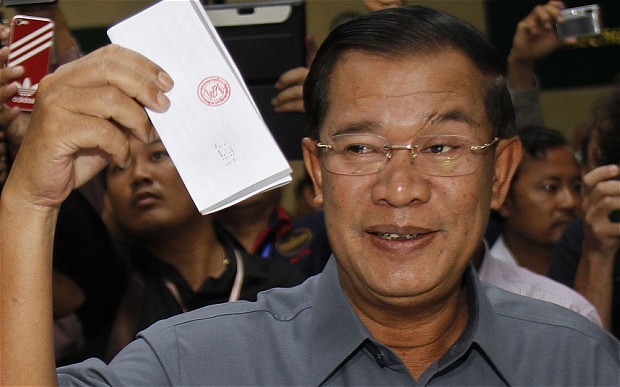
On January 9, 2023, former Cambodian Prime Minister Hun Sen posted a video on Facebook where he threatened his political opponents with violence, which was escalated to Meta’s Oversight Board for its consideration. My organization, the International Commission of Jurists (ICJ), submitted a public comment to the Board on the case, highlighting the ongoing violence and crackdown by the authorities against perceived political opponents in Cambodia and the real risk of further human rights abuses and other harms if Meta did not take action.
The Oversight Board agreed and issued several recommendations, including that Meta suspend Hun Sen’s Facebook page and Instagram account for six months. However, Meta rejected several of the Board’s recommendations, including the recommendation to suspend the accounts, explaining that “suspending those accounts outside our regular enforcement framework would not be consistent with our policies, including our protocol on restricting accounts of public figures during civil unrest.”
Confused after reading Meta’s response? Me too. Meta’s explanations are perplexing and peppered with jargonistic references to its different policies. In essence, what Meta is saying (or at least, from what I understand) is:
- Meta does not think that Cambodia was/is in a situation of crisis under its so-called Crisis Policy Protocol. Thus, the company’s policy on restricting accounts of public figures during civil unrest will not apply.
- Using Meta’s ordinary rules, there is no basis to suspend Hun Sen’s account.
- Meta also refused to update the policy on public figures and civil unrest such that it may apply to Cambodia, where there is a long history of state violence and human rights violations. According to Meta, applying the policy to these situations could lead to indefinite suspensions for public figures.
Meta’s decision has drawn sharp rebuke from human rights groups. For instance, colleagues at Access Now underscored that Meta’s decision “sends a dangerous signal that [Hun Sen’s] rights-abusing speech will be tolerated on its platforms.”
I share these sentiments. Meta’s decision creates the expectation that there will be no accountability for Hun Sen’s longstanding abuse of Meta’s platforms to threaten and incite violence against his real or perceived opponents. Meta has indicated that continued violations of its policies will result in restrictions, but what about the abuse that has already occurred?
Meta’s decision ultimately points to a fundamental issue of how its rules are, in the first place, constructed with overly expansive language, granting Meta significant latitude to do as they please on an ad hoc basis, unencumbered by consistent application of normative constraints. Furthermore, this decision illustrates how the enforcement of Meta’s Community Standards is, like in many other instances, shrouded in secrecy.
De facto impunity for sustained human rights violations
Meta’s decision now creates two separate enforcement regimes for when a public figure incites or threatens violence online. If this happens during what Meta considers to be a situation of sudden civil unrest and violence, Meta may restrict accounts for longer periods of time. However, if this has been going on for an “indeterminate period of time” – which, arguably, makes the situation far more serious than a one-off instance of violence – then Meta’s ordinary rules apply, with a far laxer restriction framework (e.g., ten or more strikes will result in a 30-day restriction). Is Meta effectively encouraging authoritarian regimes to engage in a “history of state violence or human rights restrictions” for an “indeterminate period of time” by allowing them to escape suspension?
In applying Meta’s ordinary penalty framework, it is not apparent why Hun Sen’s repeated violations have not attracted stricter sanctions beyond just removing the January 9 video, irrespective of whether suspension might be deemed a disproportionate and unnecessary measure. Hun Sen’s January 9 video that threatens and incites violence clearly should qualify as violating Meta’s “more severe policies” and attract stricter penalties. The violation should be seen as one of particular egregiousness given that it was not an isolated incident: the Oversight Board’s decision noted at least four instances of content being posted on Meta’s platforms containing threats, including threats of violence. It was also reported that Hun Sen reposted the January 9 video, which Meta removed but without “any visible repercussions.” Evidence suggests these violations resulted in offline physical violence.
Meta claimed that it applied “appropriate account-level penalties associated with that action.” Still, we have no idea what these penalties are and how they may be proportionate sanctions for Hun Sen’s actions. Optics matter, and this failure to explain the penalties, assuming there were any, has contributed to the impression that prominent figures using Meta’s platforms to threaten and incite violence will enjoy impunity and face no consequences for their conduct. Critically, without public knowledge of the penalties, what should be a main function of Meta’s regulatory regime, i.e., deterrence of such misconduct on its platforms, is effectively nullified.
Opaque enforcement and design of Meta’s rules
Meta’s decision also demonstrates a broader pattern of a lack of transparency in enforcing its rules. We do not know what “appropriate account-level penalties,” if any, have been imposed on Hun Sen and the reasoning behind them. We do not know why there is “currently not any basis to suspend Hun Sen’s account under [Meta’s] policies.” We do not know why and how Meta determined that Cambodia did not meet the “entry criteria threshold for crisis designation,” despite the multitude of submissions pointing in the opposite direction, including in the Board’s decision and the ICJ’s public comment to the Board.
The arbitrariness in Meta’s enforcement of its rules is directly linked with how the design of the rules themselves are overbroad and ambiguous, thus granting significant discretion when making decisions. These concerns extend to the ordinary enforcement framework, its newer policies on public figures and civil unrest, and its Crisis Policy Protocol. Ironically, the latter were updated in response to the case on former President Trump’s suspension from Facebook and were presumably aimed at introducing further transparency and consistency.
It is a general principle of law, known as the principle of legality, that rules must be formulated with sufficient precision in order to not grant unfettered discretion to those charged with their implementation – a principle that Meta’s rules patently fail to conform with. For instance, what are considered Meta’s “more severe policies” under its ordinary penalty regime? How is the risk of “imminent harm” under its Crisis Policy Protocol assessed, and what other factors determine what constitutes a crisis?
It is hard not to conclude that the jargon contained in these policies is being used as ex post facto justifications and conceptual smokescreens for inconsistent and opaque decisions.
The newsworthiness allowance
However, not all hope is lost, as Meta is still mulling over the feasibility of the Board’s recommendation to clearly state that “content that directly incites violence is not eligible for a newsworthiness allowance, subject to existing policy exceptions.” The ICJ had made an identical call in our public comment, in line with article 20(2) of the International Covenant on Civil and Political Rights, which requires the prohibition of incitement to violence, hostility, or discrimination.
At present, Meta’s newsworthiness allowance currently allows Meta to keep offensive content that violates its rules if it decides that the public interest value of keeping the content outweighs the risk of harm. This allowance was also a central tenet of the Board’s case, as Meta had been unsure whether Hun Sen’s violent speech should qualify as “newsworthy” and thus be left up.
It bears repeating that one of the very few limitations that is mandatory under international human rights law is the prohibition of incitement to violence. Meta’s current newsworthiness allowance allows for a loophole in this prohibition, which is, as above, exacerbated by the ambiguity and opacity in which the policy is currently constructed and enforced. If not applied with additional protections, this allowance would eviscerate the protection provided by human rights law against expression inciting violence. Meta’s decision to reject the Board’s recommendations to clarify its policy on public figures sets a dangerous precedent going forward.
However, there is still an opportunity for it to at least take some positive steps towards abiding by its human rights responsibility to respect human rights, in line with the UN Guiding Principles on Business and Human Rights, by revising its newsworthiness allowance in line with human rights law and standards. Having an unequivocal carve-out to its newsworthiness allowance for incitement to violence would at least allow Meta to be consistent when adjudicating similar violent content in the future, even if the rest of its rules and standards leave much to be desired.
First published on Tech Policy Press here.