Aug 23, 2016
The ICJ released today a briefing paper on investigation of extrajudicial executions in the Philippines.
This document is meant to contribute to ongoing discussions, following a hearing conducted by the Committee on Justice and Human Rights of the Philippine Senate, on the reported increase in the number of deaths of persons allegedly involved in the trade and sale of illegal drugs in the country.
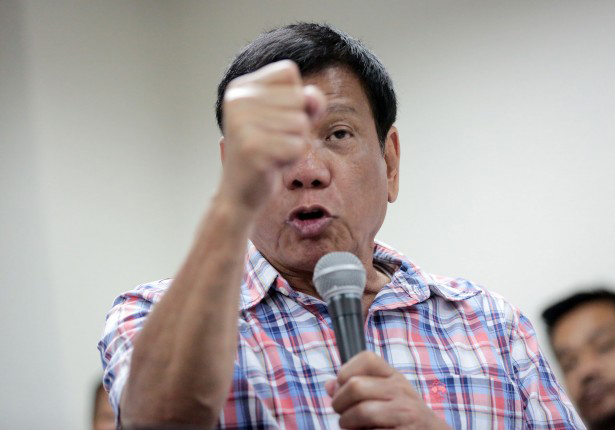
The ICJ had previously written to President Rodrigo Duterte (photo), calling on him to unequivocally denounce extrajudicial killings, whether of alleged criminals or of any person in the Philippines.
The ICJ also urged the government to immediately conduct investigations into police operations that resulted in these deaths.
Philippines-EJK debate-Advocacy-Analysis Brief-2016-ENG
Photo credit: Grig C. Montegrande/Inquirer.

Aug 18, 2016
Today, the ICJ released a briefing paper on the Transgender Persons (Protection of Rights) Bill, 2016, asking that it be withdrawn and revised to be consistent with international human rights law, and directions of the Indian Supreme Court.
The briefing paper answers key questions about the history of this Bill, what measures it seeks to introduce, outlines the ICJ’s key concerns about the Bill as currently drafted – including key omissions – in light of directions of the Supreme Court and applicable international human rights law.
“It is important to have a law guaranteeing transgender rights in India,” said Sam Zarifi, ICJ Asia director.
“However, any such legislation must be consistent with the spirit and directions of the Supreme Court in the case of NALSA v UOI and with international human rights law”.
The Transgender Persons (Protection of Rights) Bill, 2016 was approved by the Cabinet last month.
It was introduced in the Lok Sabha (lower house of Parliament) on 2 August 2016 and is currently pending.
The Bill’s definition of who is “transgender person”, the process of gender recognition it outlines, as well as the lack of adequate provisions on employment, education, anti-discrimination measures, and penalties for offences committed, are deeply problematic and at odds with the Supreme Court’s directions in the judgment of the Supreme Court in the case of NALSA v UOI.
“While a comprehensive transgender rights bill is long overdue in India, the problems and omissions in the current Bill will undermine the progress made on transgender rights in India,” Zarifi said.
“The government must immediately withdraw the Bill, meaningfully consult with the transgender community, and substantially revise its provisions such that it comprehensively protects the rights of all transgender people in India,” he added.
Background
In 2014, in the case of NALSA v UOI, the Supreme Court affirmed transgender persons’ right to their self-identified gender, directed the government to grant legal recognition of the same, and to take specific steps to ensure equality and non-discrimination for transgender persons.
States and government departments have begun to take piecemeal measures to implement the directions in the NALSA judgment, however several aspects of the decision remain unimplemented. See ICJ Briefing Paper on the implementation of the NALSA decision .
In April 2015, the Rajya Sabha (Upper House of India’s Parliament) passed the Rights of Transgender Persons Bill 2014, which was a private member’s Bill. Simultaneously, the government was developing its own draft of a transgender rights bill, which has now been introduced in Parliament. For more details see here.
INDIA-TG BILL CRITIQUE-Advocacy-Analysis brief-2016-ENG (full text, PDF)
Aug 12, 2016
An opinion piece by Sean Bain, ICJ Legal Consultant in Myanmar.
Although Myanmar’s new civilian-led government has said little about the future of controversial, large-scale foreign investments, some projects are gaining ground without adequate public consultation and oversight.
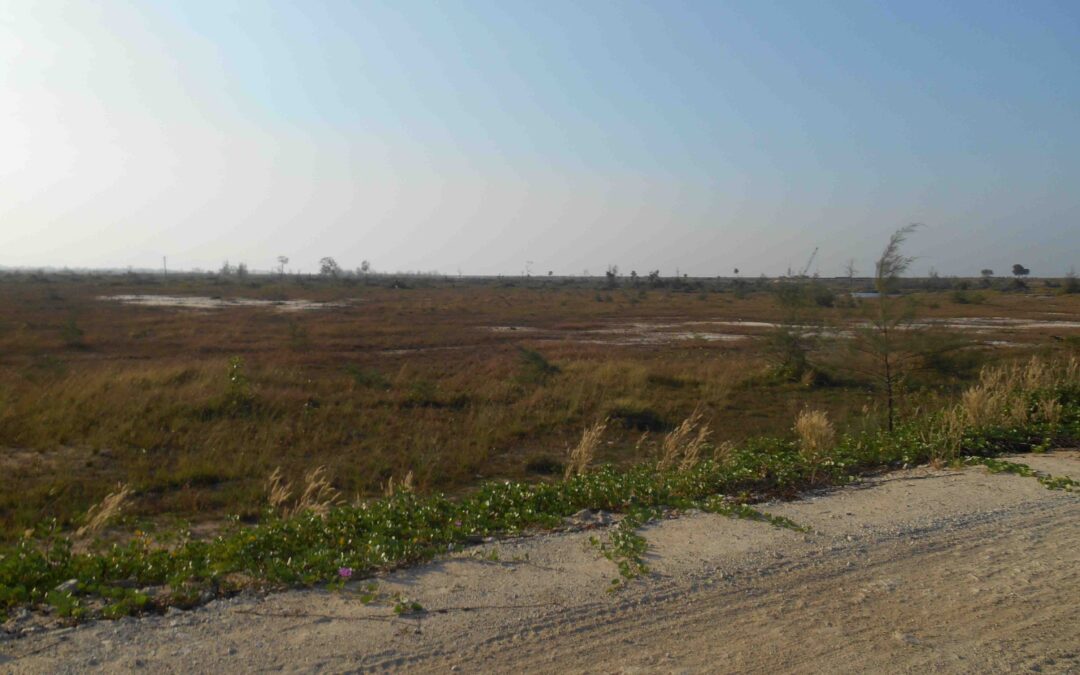
Among them is the Kyaukphyu Special Economic Zone, a China-backed project in Rakhine State.
Communities affected by the development of the Kyaukphyu SEZ are concerned about speculators improperly buying-up land and are worried they will be displaced without due compensation.
This scepticism reflects recent bad experiences with infrastructure projects in the area, where officials reneged on commitments to comply with international standards on resettlement and compensation.
The ICJ has made several visits to Kyaukphyu over the past two years to monitor the human rights and environmental impacts of investment projects.
The ICJ has spoken with community groups, government and business.
As at the sites of the country’s two other SEZs, at Dawei and Thilawa, the ICJ has found that a lack of transparency is a key complaint of affected communities.
Since the National League of Democracy took office in April, the development of large-scale projects has slowed whilst the new government takes stock of Myanmar’s investment agreements.
Yet some of these projects are moving ahead – apparently without direction from the central government.
In the final months of its term, the Union Solidarity and Development Party government announced that the Chinese conglomerate, CITIC, had won tenders to develop an SEZ and build a deep-sea port at Kyaukphyu.
A corporate promotional video suggests the SEZ will create an investment and economic hub akin to Singapore in one of Myanmar’s poorest regions.
The port is expected to establish an alternate shipping route for Chinese trade by linking Yunnan Province with the Bay of Bengal – significant for China’s western provinces and for regional geopolitics.
An oil and gas pipeline completed in 2013 already connects Kyaukphyu with China.
Public access to information about the SEZ project remains scarce.
Research by the ICJ could not establish whether investment agreements have been finalised.
In the meantime, local authorities and project developers are moving forward with preparatory work for land acquisition and the resulting resettlement and livelihood changes for the local population.
The ICJ documented that when the NLD formed government, authorities were conducting land demarcation activities with an inter-departmental team in the Kyaukphyu area.
Plots and property were measured and documented, indicating preparations for future compensation.
Yet community members say they have received limited information about the purpose and method of this process.
Civil society groups have requested maps that collate this data but government officials have not made them available.
Residents recently told the ICJ that land prices are increasing as speculators buy plots in anticipation of future demand in the SEZ area. Farmers toiling in the fields may be unaware of the transactions.
Most don’t have land titles to sell, for a variety of reasons: Customary tenure is unrecognised; there were disincentives for land registration during the Socialist era; and would-be title holders continue to face barriers to registration, including corruption and laws that provide little protection and are poorly enforced.
These property transactions raise questions about who has the right to sell land and indicate that de facto land acquisition is occurring, despite a May 2016 Presidential Notification ordering a temporary halt to state land acquisitions.
Development of a new land law modelled on international standards and drafted in consultation with civil society was among 14 recommendations the ICJ recently made to the new government.
In southeast Myanmar, civil society groups investigating impacts of the Dawei SEZ documented that residents with insecure tenure sold land to speculators for prices below what they would be entitled to receive in an appropriate compensation process.
These sales reportedly occurred in response to pressure, coercion and misinformation from businesspeople in collusion with local authorities.
Depriving displaced persons of adequate compensation impedes their ability to re-establish livelihoods and results in violations of rights enshrined in the International Covenant on Economic, Social and Cultural Rights – that Myanmar has signed and the NLD has indicated it intends to ratify.
The Kyaukphyu project risks repeating these violations.
Access to remedy is severely limited because the judiciary lacks the independence, capacity and willingness to adjudicate conflict and disputes over land.
Authorities and investors associated with SEZs can and must mitigate these risks by immediately sharing plans with communities and establishing accessible lines of communication.
Over the past year CITIC has invested in reaching out to communities affected by the SEZ development. CITIC has offered community members microfinance and has began setting up vocational training opportunities.
These activities are efforts by CITIC to be a responsible investor in Myanmar. But these activities are not enough to satisfy the company’s legal obligations.
Companies are obliged to disclose project-related information in a timely manner and to arrange appropriate consultations that adhere to international standards.
Civil society and local leaders have told the ICJ that they hope future meetings with CITIC will be more inclusive and allow for genuine feedback and dialogue.
Myanmar’s Environmental Impact Assessment (EIA) Procedure, approved last December under the Environmental Conservation Law, requires developers to disclose timely project information with communities and civil society.
The procedure obliges developers to ensure that affected parties have opportunities to express their views and concerns before an EIA starts, as well as during and after the process.
The ICJ has encouraged CITIC to use the EIA as a chance to demonstrate its stated commitments to responsible investment in Kyaukphyu. It is also an opportunity for the government to exercise its regulatory right to protect human rights and the environment.
Communities have a right to timely information about project developments so they can participate in planning and make informed decisions about their future.
Transparency, access to information, and opportunities for genuine consultation and participation are principles of international standards such as the World Bank’s Policy on Involuntary Resettlement.
Through the EIA Procedure, Myanmar law requires that developers of major projects adhere to these standards.
In Kyaukphyu, the NLD government has an opportunity to enforce social and environmental safeguards for investment projects.
This is not without challenges: under the SEZ Law, responsibility for land acquisition is conferred to the military-controlled Ministry of Home Affairs. But the NLD now gets to appoint officials responsible for project approvals.
The NLD will also determine the composition of the peak body for SEZ implementation in Myanmar.
These new powers must be used to ensure that any displacement occurs only when absolutely necessary, and through a process consistent with international standards.
Whilst the NLD government continues to review investment agreements, in Kyaukphyu the situation is transforming.
Affected communities require transparent access to information, genuine consultation and opportunities to participate in decision-making.
The government and developers must immediately demonstrate stated commitments to responsible investment in Myanmar by applying democratic principles of timely and meaningful transparency and consultation.
Aug 11, 2016 | News
The ICJ today urged President Duterte to respect the judiciary’s institutional independence and allow it to conduct its work, particularly in disciplining its own judges, without external influence or undue interference.
This week, President Duterte publicly released a list of public officers, including judges, who are allegedly involved in the illegal drugs trade. In response, on 9 August 2016, Chief Justice Maria Lourdes Sereno wrote to President Duterte noting that it is the responsibility of the judicial branch to discipline judges.
In her letter, the Chief Justice also stated that the disciplining of judges should be done without compromising the independence of the judiciary.
In response, President Duterte warned Chief Justice Sereno not to set off a “constitutional crisis”, saying that he may “order” the executive department not to “honor” the judiciary.
According to the UN Basic Principles on the Independence of the Judiciary and the UN Special Rapporteur on the independence of judges and lawyers, the body responsible for the discipline of judges should be independent of the executive and composed mainly (if not solely) of judges and members of the legal profession.
The ICJ therefore calls for the Supreme Court of the Philippines to be free to establish and employ its established mechanisms to discipline its own judges, in full respect for procedural guarantees.
On a related issue, the ICJ is now in the Philippines to speak to lawmakers regarding a proposal to re-introduce the death penalty and its concerns regarding the recent spate of extrajudicial killings in the country.
The organization has previously written to President Duterte regarding its concerns on the proposal to re-introduce the death penalty and the rising number of deaths of people who are alleged to be involved in the illegal drug trade.
“The proposed reintroduction of the death penalty, the spate of extrajudicial killings, and the fervor currently exhibited by President Duterte in going after allegedly corrupt members of the judiciary are directly linked to his zeal to address a perceived widespread drug menace in the country,” said Sam Zarifi, ICJ’s Regional Director for Asia and the Pacific.
The ICJ strongly urges President Duterte to focus his efforts in strengthening key institutions such as the judiciary so that they can be strong allies in his efforts to address crime in the country.
Contact:
Emerlynne Gil, ICJ’s Senior International Legal Adviser, t +66 840923575 ; e: emerlynne.gil(a)icj.org
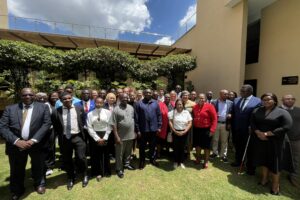
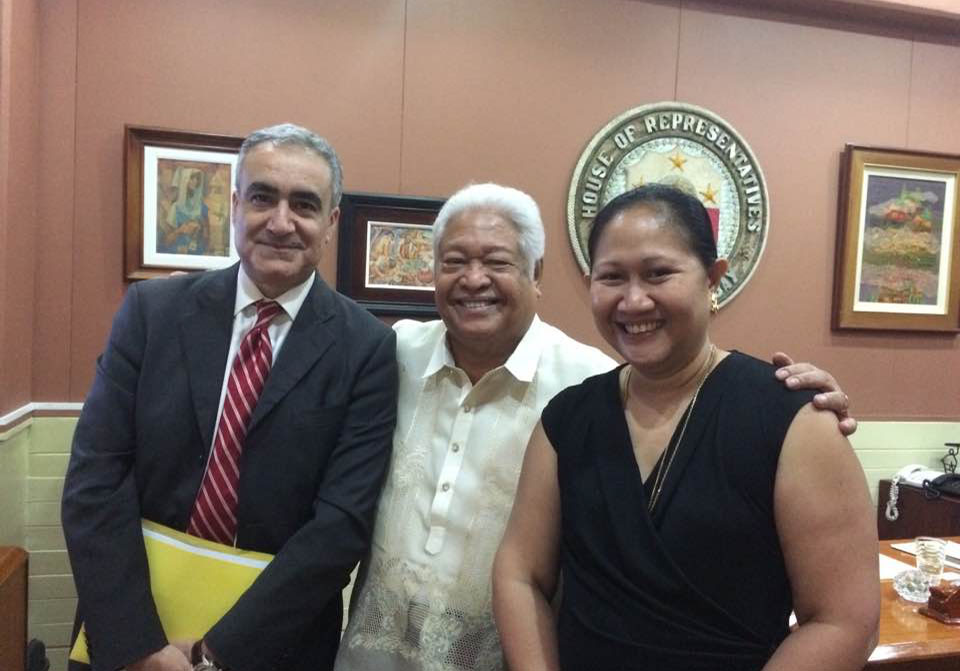
Picture: Sam Zarifi and Emerlynne Gil with Congressman Edcel Lagman (in the center), the main proponent of the law that abolished the death penalty in the Philippines in the past. He is now leading the charge in the House of Representative to try to defeat the proposal to reimpose the death penalty.