Jun 25, 2016 | Advocacy
The ICJ today published a General Guidance aimed at assisting judges and others in the justice sector to effectively incorporate a gender perspective in their work.
The General Guidance is especially significant as it reaffirms that customs and traditions should not be invoked to justify discrimination against women.
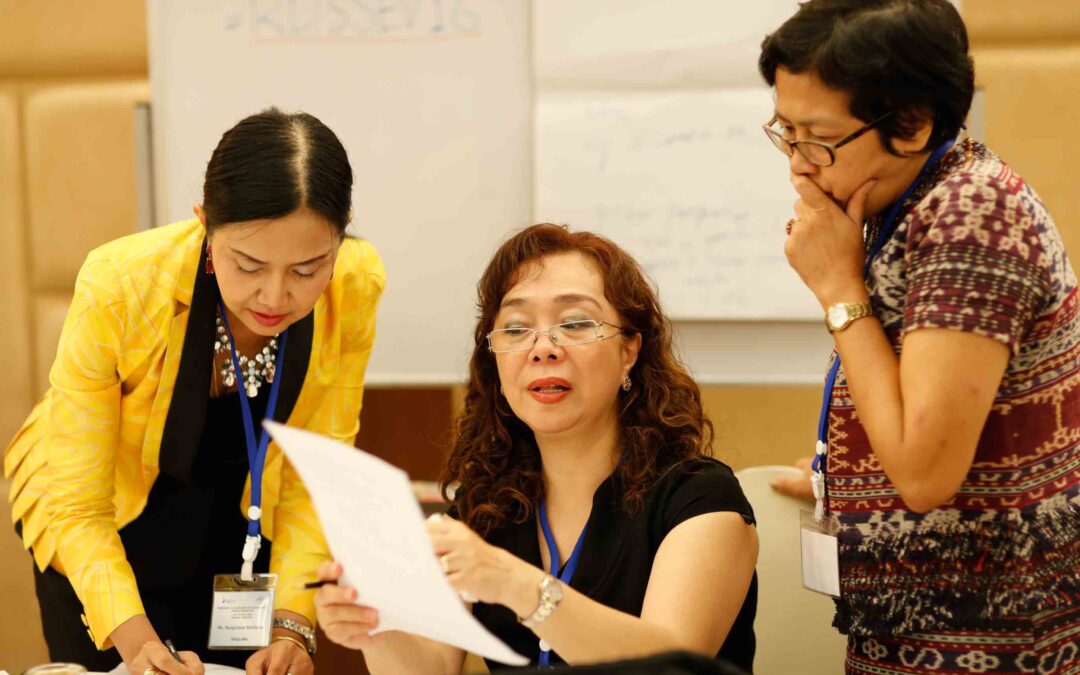
The Bangkok General Guidance for Judges in Applying a Gender Perspective was discussed and adopted by judges from Philippines, Thailand, Timor Leste, and Indonesia, at a gathering in Bangkok from 24 to 25 June 2016, hosted by the ICJ and UN Women.
During the workshop, judges from the four Southeast Asian countries deliberated extensively how best to assist judges in employing a gender perspective in deciding cases before them.
“The Bangkok General Guidance can make a powerful contribution towards achieving gender equality under the law in Southeast Asia,” said Sam Zarifi, Regional Director for Asia and the Pacific at the ICJ. “It is crucial that judges now work to implement this General Guidance in their home countries.”
The idea to initiate the development of th Bangkok General Guidance emerged from the ASEAN Regional Dialogue on Judging with a Gender Perspective, which was held in Jakarta, Indonesia in 2015.
The Supreme Court of the Philippines offered to take the lead on the project during that regional judicial dialogue.
“Women have a right to equal treatment and equal protection and non-discrimination under the law. It is our responsibility as judges to ensure that women receive equal treatment in law and in practice,” said Justice Teresita de Castro of the Supreme Court of the Philippines.
Judges attended several sessions over the course of the two-day workshop, participating in exercises focused on identifying and addressing gender stereotypes.
“Women in the region face many obstacles in accessing justice,” said Roberta Clarke, Regional Director for Asia and the Pacific at UN Women.
“But judges may be either unaware of these issues or unsure how to address these issues through the legal process,” she added.
The Bangkok General Guidance will make judges aware of means to consider evidence without resorting to gender stereotypes and decide cases based on the principle of equality recognized under international human rights standards, including the Convention on the Elimination of All Forms of Discrimination against Women (CEDAW).
Recommendations for institutional policies that should be adopted by courts to help them become more gender sensitive and gender responsive are also set out in the General Guidance.
Contact:
Emerlynne Gil, Senior International Legal Adviser for Southeast Asia, t: +66840923575 ; e: emerlynne.gil@icj.org
Southeast Asia-Bangkok-Guidance-Advocacy-2016-ENG (full PDF, in English)
Southeast Asia-Bangkok-Guidance-Advocacy-2016-BUR (full PDF, in Burmese)
Southeast Asia-Bangkok-Guidance-Advocacy-2016-MON (full PDF, in Mon language)
Southeast Asia-Bangkok-Guidance-Advocacy-2016-SHAN (full PDF, in Shan language)
Jun 24, 2016 | Advocacy
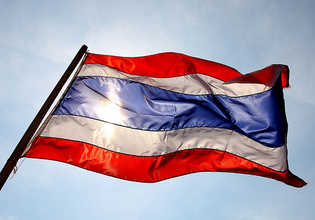
The ICJ, International IDEA (Australia) and the Office of the United Nations Resident Coordinator in Thailand have collaborated to produce an unofficial translation of the draft Constitution of Thailand which is scheduled to be the subject of a national referendum on 7 August 2016.
The original Thai text as formally published by the Royal Thai Government shall in all events remain the sole authority having legal force.
Thailand-Draft-Constitution-EnglishTr-Advocacy-2016-ENG (full text in PDF)
Contact
Sam Zarifi, ICJ Regional Director for Asia and the Pacific, t: +66807819002; e: sam.zarifi(a)icj.org
Kingsley Abbott, Senior International Legal Adviser, t: +66 94 470 1345; e: kingsley.abbott(a)icj.org
Jun 23, 2016
The Pakistan government must stop putting civilians charged with terrorism-related offences on trial before military tribunals, said the International Commission of Jurists (ICJ) in its Briefing Paper Military Injustice in Pakistan released today.
Since January 2015, when Pakistan empowered military courts to try civilians for terrorism-related offences, 11 military courts have been constituted to hear cases related to terrorism.
These 11 military courts have thus far concluded the trials of 105 people, finding the defendants guilty in 81 cases. Seventy-seven people have been sentenced to death and four have been given life sentences. At least 12 people have been hanged after trials that are grossly unfair.
“There is no doubt that the Pakistan government has an obligation to protect people in Pakistan from terrorist acts, but military tribunals are not a proper or effective response to this real threat,” said Sam Zarifi, ICJ’s Asia Director.
“These tribunals are opaque and operate in violation of national and international fair trial standards, and so are not effective in providing justice, truth or even proper remedies for the victims of terrorism,” he added.
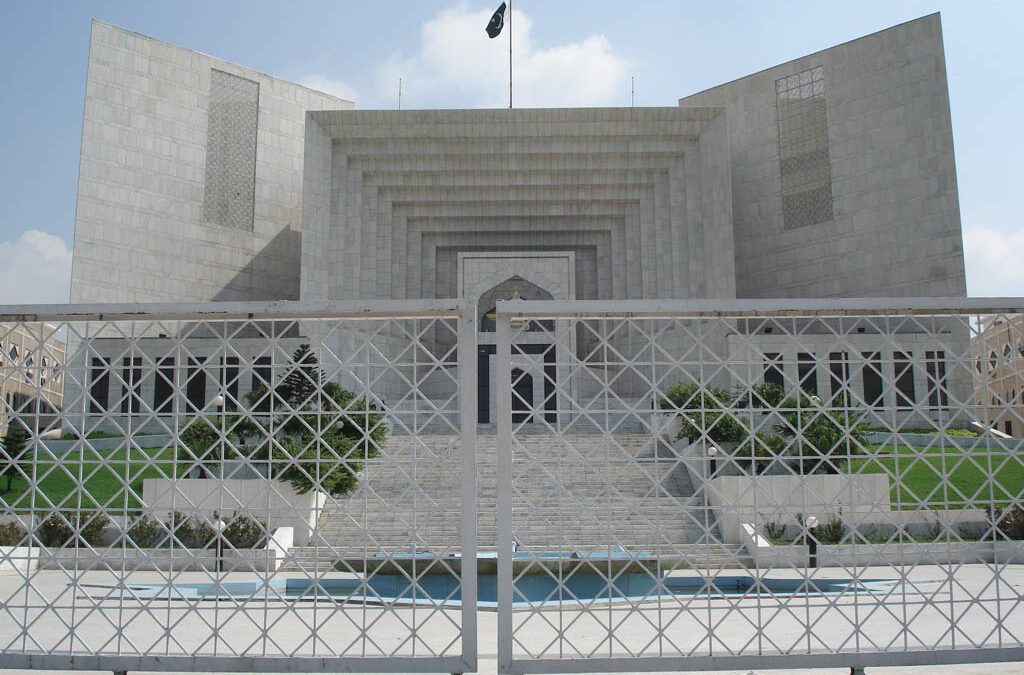
Families of 17 people convicted by military courts have alleged the convicts were denied a right to a fair trial in petitions to the Supreme Court. The Court is expected to issue rulings on the petitions imminently.
Specific violations alleged by the petitioners include: denial of the right to counsel of choice; failure to disclose the charges against the accused; and failure to give convicts copies of a judgment with evidence and reasons for the verdict.
In some cases, the petitioners have alleged the convicts were subjected to enforced disappearance and torture and other ill-treatment, and in at least two cases, the petitioners have also alleged that the convicts were children under the age of 18 at the time they were arrested by law enforcement agencies.
Recent media reports of letters said to be from a judge (unnamed) of a military court have raised concerns about the accuracy of the testimonies against the accused; discrepancies between the charges and the evidence provided; and lack of legal training of military courts’ officers.
The ICJ is not in a position to verify the authenticity of the letters, but, noting the consistency of these concerns with those expressed by the ICJ and families of people convicted by military courts, the organization calls on the Pakistan government to investigate the allegations.
The ICJ reminds that in August last year, the Supreme Court upheld the legality of the trial of civilians before military courts in contravention of long-established principles of international law and the Court’s own jurisprudence.
“The Supreme Court now has the opportunity to ensure that at the very least, the procedures of military courts meet basic standards of fairness,” Zarifi said.
The expansion of the jurisdiction of military tribunals through the amendments to the Constitution and the Pakistan Army Act were a key part of the Pakistani government’s 20-point “National Action Plan”, adopted following the horrific attack on the Army Public School in Peshawar in December 2014.
NAP envisioned military courts to be a short-term “solution” to try “terrorists”, to be operational only for a two-year period during which the Government would bring about necessary “reforms in criminal courts system to strengthen the anti-terrorism institutions.”
“Now, with just six months left before the 21st Amendment expires, Pakistan has also failed to address failures of the criminal justice system, which were used as a justification for military trials for militants,” Zarifi added.
The ICJ has called on the Pakistan government to roll back the system of “military injustice”, and ensure that the 21st Amendment is not extended at the expiration of the sunset clause.
The ICJ has also urged that Pakistan reinstate a moratorium on executions with a view to abolishing the death penalty in law and practice.
Contact
Sam Zarifi, ICJ Asia Pacific Regional Director (Bangkok), t: +66 807819002; e: sam.zarifi(a)icj.org
Reema Omer, ICJ International Legal Adviser for Pakistan (London), t: +44 7889565691; e: reema.omer(a)icj.org
Pakistan-Military court-Advocacy-Analysis brief-2016-ENG (full text in PDF)
Jun 22, 2016
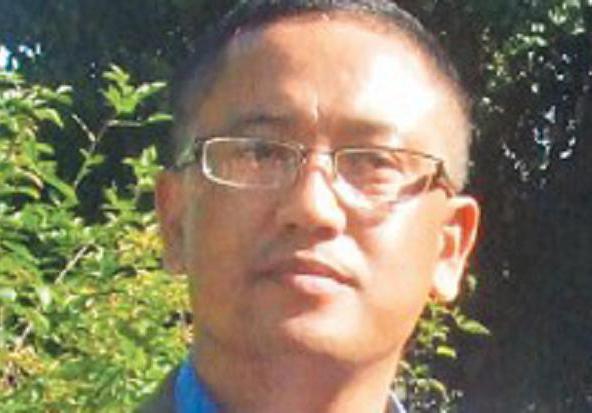
In a briefing paper published today, the ICJ explained the legal issues and political context of the case against Colonel Kumar Lama, a Nepali Army officer.
Earlier this month, Colonel Lama’s trial on allegations of torture of two Nepali detainees in 2005 resumed in the United Kingdom.
“This case is one of the all too rare occasions when the principle of universal jurisdiction has been applied in judicial procedures in the UK, if not the world over,” said Sam Zarifi, ICJ’s Asia Director. “The decision will have far reaching implications, not only for the victims in this case but for all victims of torture and other serious abuses around the world seeking justice.”
In January 2013, the UK exercised a form of “universal jurisdiction” to charge Colonel Lama on two counts of committing torture under Section 134(1) of the Criminal Justice Act, 1988.
The charges are based on allegations that Colonel Lama was involved in the torture of two Nepali detainees in 2005, at the height of Nepal’s decade-long internal armed conflict. Colonel Lama’s trial began in February 2015 in London. After a few weeks, however, the trial was adjourned because there were problems with interpretation in court. The trial began afresh earlier this month.
The briefing paper addresses questions around the charges against Colonel Lama; the political context in Nepal when the acts of torture allegedly happened; the principle of “universal jurisdiction”; and procedural questions around such trials in the UK.
“The case comes at a time when an agreement between the ruling parties in Nepal is threatening to entrench impunity for those who planned and carried out unlawful killings, enforced disappearances, torture and ill-treatment, and other serious crimes in Nepal’s civil war,” added Zarifi.
“It is an important and long overdue opportunity to challenge the systemic impunity for conflict-era human rights abuses in Nepal.”
Contact
Sam Zarifi, ICJ Asia-Pacific Director, t: +66-807-819-002; e: sam.zarifi(a)icj.org
Nepal-Lama Q&A-Advocacy-2016-ENG (full paper in PDF)