Feb 12, 2016 | Advocacy, Non-legal submissions
The ICJ submitted a written statement to the Human Rights Council as a response to the latest report of the Special Rapporteur on freedom of religion or belief.
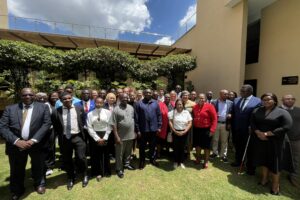
The written submission recognized the Special Rapporteur’s active participation in the Regional Conference on Freedom of Religion or Belief in Southeast Asia, organized by the ICJ in collaboration with the Asian Forum for Human Rights and Development (FORUM-ASIA) and Boat People-SOS (BPSOS) in Bangkok, Thailand from 30 September to 1 October 2015.
It also highlighted the adoption of the Conference Declaration on Freedom of Religion or Belief in Southeast Asia, a document through which participants expressed their commitment to working to enhance the right to freedom of religion or belief in the region.
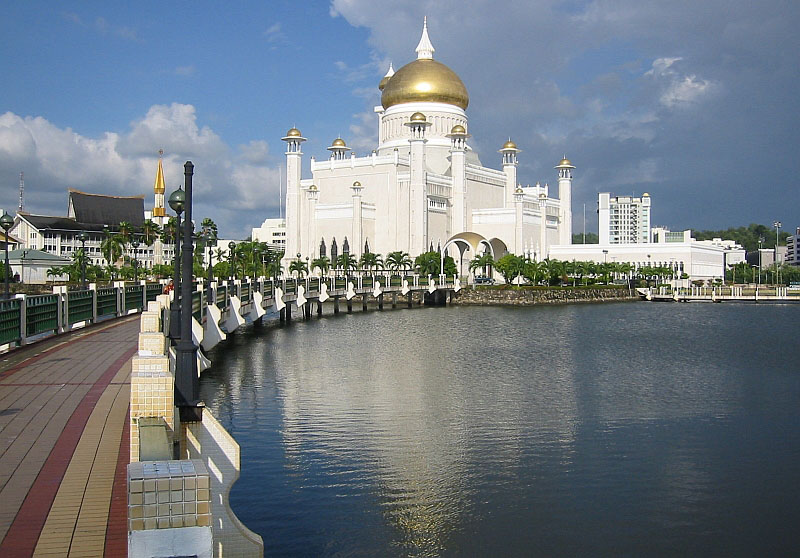
The ICJ expressed its concern regarding the banning of Christmas celebrations in Brunei Darussalam, as the restrictions imposed are inconsistent with international law standards, specifically with the principle of non-discrimination.
Finally, the statement called on Brunei to eliminate the restrictions imposed for celebrating non-Muslim festivities and encouraged the Government of Brunei to implement the measures recommended by the Special Rapporteur in his report.
SouthEast Asia-HRC statement on freedom or belief-Advocacy-Non legal submissions-2016-ENG (full text, in PDF)
Feb 11, 2016
An opinion piece by Daniel Aguirre, ICJ International Legal Adviser in Myanmar.
Disputes over land ownership and use are a major source of social and economic tension in Myanmar as it grapples with political transition and economic development.
Irresponsible investment against the interests and wishes of communities which results in the widespread violation of land-related human rights has been allowed for too long.
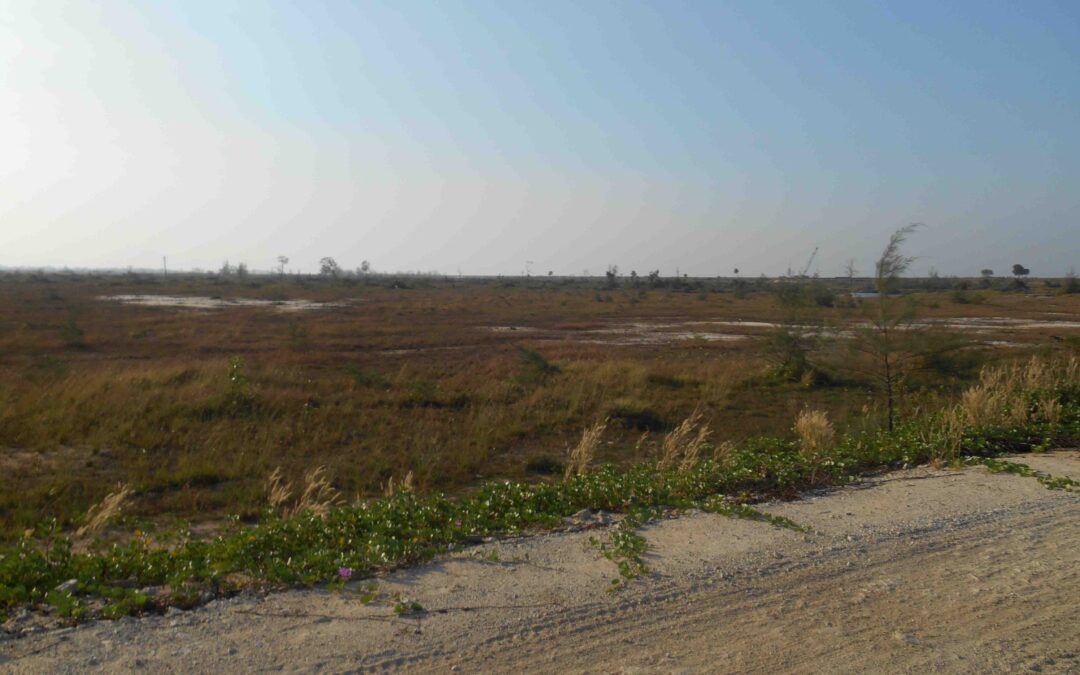
The new National Land Use Policy (NLUP), released in the final days of the outgoing parliament in late January, is a welcome step towards improving the governance of land tenure.
The NLUP could not come sooner. An influx of investment has increased demand for land. Poor regulation and lax implementation mean that investors continue to be granted land obtained illegally or under dubious circumstances.
Many communities have suddenly found themselves trespassing on land on which they have lived for generations. They are routinely charged with trespassing while their environment and livelihoods are degraded.
Experience from around the world has shown than human rights principles should frame land law advocacy.
In a positive step, the NLUP uses rights-based language in its basic principles.
It refers directly to human rights standards in chapters related to land acquisition, the land use rights of ethnic minorities and is framed with explicit reference to the equality of men and women.
On its own, though, the policy is not enough.
Myanmar’s land laws do not adequately protect these rights. Laws enacted in 2012, such as the Foreign Investment Law, the Vacant, Fallow and Virgin Land Law and the Farmland Law, were designed to increase investment, encourage large-scale land use and promote agricultural income.
Under this system fewer than half the population have land title.
The rest are vulnerable to land grabs and forced evictions, which result in further human rights abuses as people are dispossessed of their means of livelihood and habitat.
Myanmar’s problematic practice of land acquisition relies primarily on the colonial era 1894 Land Acquisition Act.
Although it stipulates procedures for preliminary investigations, notification, and objections – which would help mitigate land-related human rights abuses – in practice they have rarely been followed.
Inadequate compensation is a common complaint as people rarely get market value for their land.
At the same time, the courts have proved reluctant to address politically and economically sensitive cases.
The NLUP recognizes many of these grievances. It consistently refers to a need for participatory, transparent and accountable processes and seeks the recognition of customary land tenure and dispute resolution.
To protect existing land users, the policy pledges to develop new procedures and ensure environmental and social impact assessments are completed before land is reallocated.
When the relocation of communities is claimed to be necessary for an overriding public purpose, the NLUP calls for public consultation, negotiation and participatory decision-making, with preference given to local stakeholders.
It promises to avoid the loss of land use along with the protection of the environment.
In managing the relocation, compensation, rehabilitation and restitution from land acquisition and allocation, unfair land confiscation or displacement, the NLUP commits the government to using clear international human rights standards in consultation with civil society.
Much depends on the composition and decisions taken by the various councils and committees mandated by NLUP.
It is unclear how these new bodies will interact with the various committees governing Myanmar’s myriad land-related laws, especially as the policy does not create dispute resolution mechanisms or provide for legal accountability.
It also remains unclear whether the incoming National League for Democracy government will endorse the policy.
To disregard such an important step would set the process back by years.
The next government should endorse the NLUP as a mechanism that can be built on and improved over time, as opposed to starting from scratch.
From there, it is vital that the new government drafts a new law in conjunction with civil society.
If anything is learned from the NLUP it should be that civil society participation is essential to the law reform process.
Only then can the government dispel concerns that the NLUP is window dressing for a law promoting investor interests negotiated behind closed doors.
The NLUP’s references to responsible investment, human rights and the protection of the environment are a sound basis for land law reform.
The protection of human rights, including land rights, in national law through national courts will improve the rule of law and thereby foster a climate in which sustainable, rights-based development is more likely to occur.
The new NLD-led national parliament should move quickly to draft and adopt a new law governing tenure and land use in line with international human rights standards, to ensure that increasing economic investment and development do not lead to more land grabs and forced evictions.
In the scramble for profits, respect for human rights is non-negotiable.
Feb 11, 2016
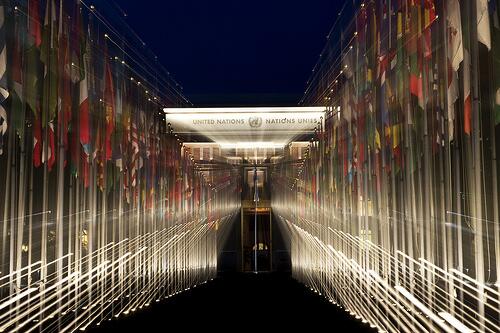
The ICJ today joined other NGOs in calling for the UN Human Rights Council to extend the mandate of the UN Special Rapporteur on Myanmar.
The letter sets out observations and recommendations for the extension, and concludes:
“Our organizations believe that as long as ongoing and systemic human rights issues have not been addressed by the Government of Myanmar, the Human Rights Council should maintain its ability to monitor the human rights situation in the country, work with the country’s authorities on a concrete reform agenda, and work towards the establishment of an OHCHR country office with a full mandate. Acting under its agenda item 4, the Council should therefore, at a minimum, extend the mandate of the UN Special Rapporteur on the situation of human rights in Myanmar, request her to report on benchmarks needed for systemic change, and continue to review the situation of human rights in the country. Any failure on the part of the Council in this regard may seriously compromise and derail what has been achieved so far since the beginning of the reform process in 2010.”
The full text of the joint open letter can be accessed here (pdf): Myanmar-UN-Advocacy-OpenLetter-2015-ENG
Feb 9, 2016 | News
The ICJ today condemned the arrest of Judge Ahmed Nihan and called it a further attack on the independence and integrity of the country’s judiciary.
“President Abdulla Yameen’s Government has dealt another blow to the independence of the judiciary and the rule of law,” said Sam Zarifi, ICJ’s Asia Director.
“The arrest of Judge Ahmed Nihan is another step down in the country’s downward spiral away from democracy and stability, and is squarely at odds with the Maldives’ international obligations,” he added.
Maldivian officials confirmed in a statement that Ahmed Nihan, a magistrate’s court judge, and Muhthaz Muhsin, former Prosecutor General, were arrested on Sunday night on charges of forging a warrant for the arrest of President Abdulla Yameen.
Muhthaz Muhsin was released soon after, but Judge Ahmed Nihan was placed in judicial custody for one week.
“Judge Ahmed Nihan’s arbitrary and seemingly politically motivated arrest is yet another example of executive highhandedness and the corrosion of separation of powers in the Maldives,” said Zarifi.
“Undue interference with the Human Rights Commission, the arbitrary dismissal of the Auditor General, and the unlawful removal of two Supreme Court justices are just a few examples,” he added.
According to the Maldivian media, the arrest warrant, allegedly issued by Judge Ahmed Nihan, related to an on-going investigation against President Abdulla Yameen for embezzlement of state funds.
President Yameen’s spokesperson said in an interview the warrant was “fraudulent” because it “did not originate from any official authority.”
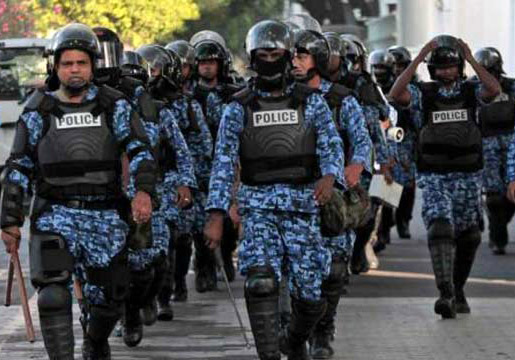
The Maldivian police (photo) claim the arrest warrant was issued using “falsified information”.
The ICJ calls on the authorities to immediately release Judge Ahmed Nihan and allow him to continue his judicial duties.
The ICJ also reiterates its previous calls on the Maldivian Government to implement recommendations on human rights and the rule of law, including the independence of the judiciary, received as part of the UN Universal Periodic Review process.
Contact:
Sam Zarifi, ICJ Asia Pacific Regional Director (Bangkok), t: +66 807819002; e: sam.zarifi(a)icj.org
Additional information:
In a fact-finding report released in August last year, the ICJ noted with concern the serious erosion of the independence, impartiality and integrity of the judiciary, which resulted in the deterioration in the rule of law in the Maldives and the stalling of the country’s transition toward a more representative government.
Article 14 of the International Covenant on Civil and Political Rights (ICCPR), which Maldives acceded to in 2006, safeguards the independence and impartiality of the judiciary.
International standards on judicial independence, including the UN Basic Principles on the Independence of the Judiciary, provide that judges shall be free from any “inappropriate or unwarranted interference with the judicial process”.
The fact that executive or legislative actors may disagree with a judge’s decision or interpretation of the law cannot be a valid ground for removal or punishment of the judge.
The UN Basic Principles on the Independence of the Judiciary further stipulate that judges shall be subject to suspension or removal only through proceedings that guarantee the right to a fair hearing (Principle 17); and then only for reasons of incapacity or behaviour that renders them unfit to discharge their duties (Principle 18); that all disciplinary, suspension or removal proceedings shall be determined in accordance with established standards of judicial conduct (Principle 19), and decisions in disciplinary, suspension or removal proceedings should be subject to an independent review (Principle 20). The Basic Principles elaborate on legal obligations under article 14 of the International Covenant and Civil Rights (ICCPR).
The Commonwealth Latimer House Principles on the Three Branches of Government 2003 contain similar provisions.
Article 154 of the Maldivian Constitution states that a judge may be removed from office only if the Judicial Service Commission finds that the person is grossly incompetent or guilty of gross misconduct.

Feb 9, 2016
The ICJ wrote to Thailand’s Department of Special Investigations (DSI) today further to the latest setback in the enforced disappearance case of Somchai Neelapaijit, who was reportedly abducted by police officers and forcibly disappeared in central Bangkok on 12 March 2004.
Following the Supreme Court’s decision of 29 December 2015 to acquit one police officer and exonerate four others of coercion and robbery, the ICJ wrote to the DSI to urge it to reinvigorate its investigation and provide access to an effective remedy and reparation for Somchai Neelapaijit’s family.
Reminding the DSI of its obligations under international human rights law, the ICJ’s letter drew attention to the fact that enforced disappearance is considered to be a continuing crime until the fate and whereabouts of a ‘disappeared’ person are disclosed or otherwise become known.
12 years have now passed since Somchai Neelapaijit (photo) was abducted in plain sight in the middle of Bangkok.
As the only open channel to justice, the ICJ’s letter underscored the significance of the DSI’s continuing investigation.
At a time when the Royal Thai Government is debating draft legislation that would ‘guarantee prompt, thorough, impartial investigation of any cases of torture and enforced disappearance’, now is the opportune moment to complement these efforts to comply with the International Convention for the Protection of All Persons from Enforced Disappearance.
Thailand’s obligations also include the International Covenant on Civil and Political Rights and the Convention against Torture and Other Cruel Inhuman or Degrading Treatment or Punishment, to which Thailand is a state party.
Enforced disappearance also amount a violation under both of these treaties, which also require that acts constituting enforced disappearance be criminalized and that persons responsibility be brought to justice.
Thailand-DSI Somchai-Advocacy-Open letters-2016-ENG (full text in PDF, English)
Thailand-DSI Somchai-Advocacy-Open letters-2016-THAI (full text in PDF, Thai)
Read also:
Somchai Neelapaijit verdict important test of Thailand’s treatment of cases of enforced disappearance