Dec 10, 2015
An opinion piece by Vani Sathisan, International Legal Adviser for the ICJ in Myanmar.
The world observes Human Rights Day on 10 December to mark the momentous strides in international human rights law since the adoption of the Universal Declaration of Human Rights (UDHR) in 1948. In Myanmar, recent political changes have been both momentous and transformative.
Nonetheless, what was proclaimed by the UDHR as the “equal and inalienable rights of all members of the human family”, continue to be infringed upon by the arbitrary and highly subjective interpretation and application of laws, some of them dating back to British colonial times.
Successive governments in Myanmar have used overly broad or vaguely defined laws to curtail freedom of expression that is protected under international law.
They often invoke the justification, typically inappropriately, of protecting national security, or to prevent public disorder or avoid outraging the religious feelings of a class.
None of these efforts have served or can serve to address or respond to sectarian and religious violence.
On behalf of the ICJ, I have observed trials of those arrested and detained on criminal defamation charges for their Facebook posts that allegedly defame either the Tatmadaw or a political leader.
One of the laws used to charge the accused is the Penal Code, first drafted in 1860.
The ICJ released a briefing paper last month highlighting how the enforcement of Myanmar’s defamation laws can result in violations of a number of international laws and standards protecting human rights, and also have an overall chilling effect on the freedom of opinion and expression and freedom of assembly in the country.
Various provisions of the Penal Code have been used in the past to criminalize free expression and peaceful demonstrations and imprison activists and hundreds of political dissidents, such as popular political satirist Zarganar.
Just last week, authorities arrested and charged five men under Section 505b of the Penal Code with “causing fear or alarm to the public” after they published a calendar referring to Myanmar’s persecuted Muslim Rohingya as an official ethnic minority.
The Myanmar government refuses to recognize the Rohingya as citizens, claiming that they are “illegal” migrants from neighbouring Bangladesh. The accused have been reportedly re-arrested despite pleading guilty to publishing materials that could “damage national security” and paying a fine of one million kyat.
Others in Myanmar face criminal sanctions simply because their acts of expression were perceived to be at odds with particular interpretations of Buddhism, Myanmar’s majority religion.
Section 295a, enacted by colonial authorities in 1927 to curb communal tension, states that, “deliberate and malicious intention of outraging the religious feelings of any class by insulting its religion or religious beliefs” shall be punished with imprisonment, or with fine, or with both.
In Myanmar, courts have convicted individuals in the absence of evidence of any deliberate and malicious intent to insult a religion.
In late 2008, several activists, including monks and nuns, were imprisoned with hard labour on 295a charges.
Earlier this year, Htin Linn Oo, a writer and National League for Democracy information officer, was sentenced to two years imprisonment with hard labour under 295a for publicly questioning the Buddhist credentials of those using Buddhism to incite violence.
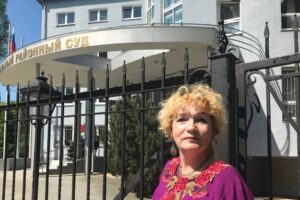
A Buddhist himself, he earned the wrath of nationalist monks who demanded a tougher punishment outside the District Court, which rejected his appeal, reportedly stating it “should not interfere” with the lower court’s decision.
Interestingly, the translated version of a court order in another 295a case in Myanmar shows no regard whatsoever to any evidence of a “deliberate and malicious intent to insult a religion” as required under the charge.
It may be that the defendant had caused offence to some within the Buddhist community. But did he commit a crime punishable under Section 295a?
The UN Human Rights Committee established by the International Covenant on Civil and Political Rights (ICCPR)—a treaty which carries many of the principles of the UDHR into international law—emphasizes that “Prohibitions of displays of lack of respect for a religion or other belief system, including blasphemy laws, are incompatible with the Covenant”.
The only limited exception under the Covenant would be for proportionate and non-discriminatory measures to prohibit “advocacy of…religious hatred that constitutes incitement to discrimination, hostility or violence”.
Section 295A falls far short of this threshold. (The ICCPR has 168 state parties, but Myanmar is not one of them, despite its pledge to consider international recommendations during the UN Universal Periodic Review to become one.)
The Rabat Plan of Action, an outcome of a four-year initiative by the UN Office of the High Commissioner for Human Rights, has underscored that States should ensure that the three part test for restrictions of freedom of expression—legality, proportionality and necessity—also applies to cases of incitement to hatred.
Article 20 of the ICCPR requires this high threshold because limitation of speech must remain an exception and must be “provided by law, be clearly and narrowly defined to serve a legitimate interest, and be necessary in a democratic society to protect that interest.”
The ICJ has observed and documented the pre-trial and trial phases of some of these cases and has concluded that they violate international standards of fair trial.
Hearings sometimes last less than five minutes and bail has been denied repeatedly to an accused suffering from poor health.
These are indicative of the struggles of Myanmar’s judiciary in adjudicating politically sensitive cases with impartiality and competence.
These prosecutions undermine the rule of law in Myanmar and shed light on how Myanmar laws are inconsistent with human rights, including freedom of opinion and expression, freedom of thought, conscience, and religion, and the right to equality before the law without discrimination.
Prosecutors must act in the interests of justice, drop charges inconsistent with human rights and not push for cases without sufficient evidence to back the charges.
The government and the parliament also play critical roles in drafting, amending and repealing laws to anticipate and account for the possibility of aggravated discrimination, and to prevent the entrenchment of institutionalized social intolerance.
Former UN High Commissioner for Human Rights Navi Pillay has described the freedom of expression as “among the most precious and fundamental of our rights as human beings.”
That means respecting the rights of others to their opinions.
Myanmar must cultivate respect for the rule of law.
Those arbitrarily and unfairly languishing behind bars deserve justice.
Calling for their release is a duty for all those who believe in the right to freedom of opinion and expression.
Dec 10, 2015 | News
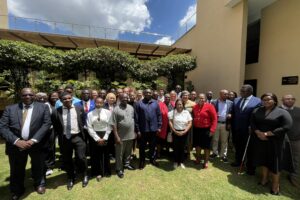
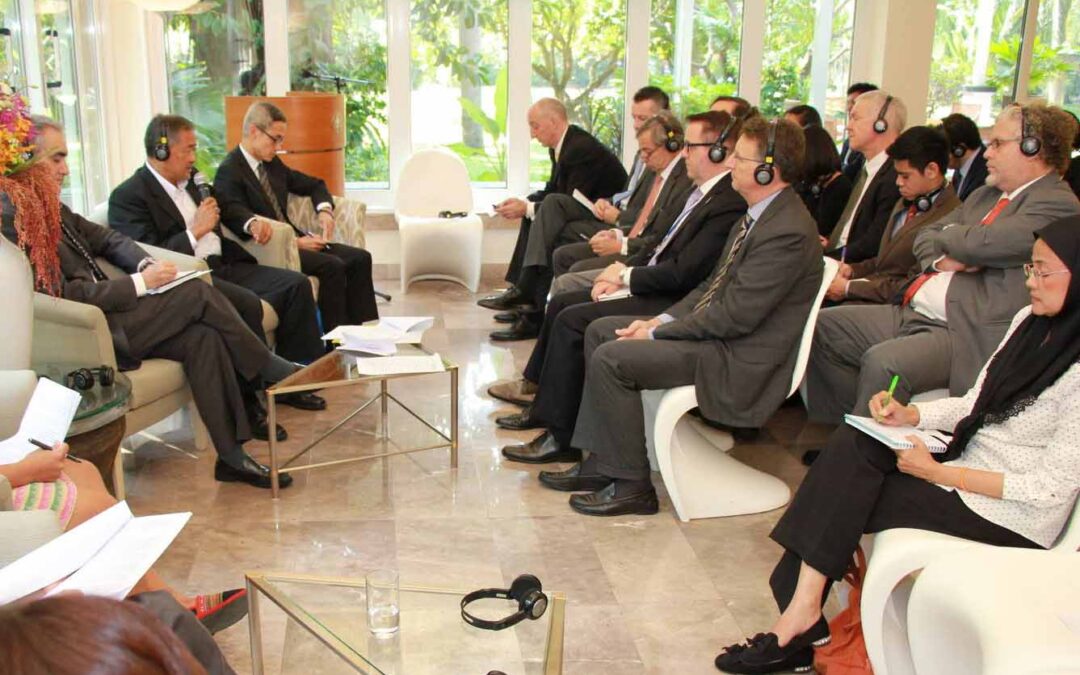
The Ambassador of the Federal Republic of Germany to Thailand and the ICJ held an event at the German Residence in Bangkok to mark Human Rights Day.
In his welcome speech, the Ambassador, Peter Prügel, stressed the importance of the protection of universal human rights which are essential for peace, long-term stability and sustainable development worldwide and referred to Germany’s long-standing support of the ICJ and its partners in Thailand.
Angkhana Neelapaijit, newly appointed Commissioner of Thailand’s National Human Rights Commission, respected human rights defender and victim of enforced disappearance then spoke about her new role and the human rights challenges currently facing Thailand.
A panel discussion on the prevailing human rights situation in Thailand then followed, which touched on a range of topics including the situation in deep South, community rights, migrants and refugees, the current legal framework, freedom of expression and assembly, the requirement to protect human rights defenders under international law and the upcoming Universal Periodic Review of Thailand by the Human Rights Council in 2016.
The panelists were:
- ICJ Commissioner, Professor Emeritus Vitit Muntarbhorn, Law Faculty, Chulalongkorn University;
- Sitthipong Chantarawirod, Chairperson of Muslim Attorney Centre Foundation;
- Pranom Somwong, Representative of Protection International Thailand;
- Somchai Homlaor, Chairperson of Cross Cultural Foundation; and
- Yaowalak Anuphan, Head of Thai Lawyers for Human Rights.
Approximately 100 members of Thailand’s civil society, the diplomatic community, the National Human Rights Commission, affected communities, academia, the United Nations, and Thailand’s Ministry of Foreign Affairs attended the event.
Dec 3, 2015 | News
The ICJ condemned the passage of the National Security Council bill by Malaysia’s House of Representatives today. The passage of the bill underlines the need to establish reforms in the lawmaking processes in the country, the Geneva-based organization says.
The ICJ calls on the Government of Malaysia to undertake these reforms immediately.
The bill, hastily tabled at the House of Representatives on 1 December 2015 by the Government, was passed by a vote of 107 in favour and 77 against the proposal.
Members of the ruling party, Barisan Nasional, voted overwhelmingly in its favor.
The vote took place despite repeated calls from Malaysian civil society, opposition lawmakers, and human rights advocates to delay consideration to allow for extensive debate and adequate consultations on the draft legislation.
The ICJ deplored the manner in which the government steamrolled the bill to passage.
“The same rushed maneuvers occurred when the Prevention of Terrorism Act (POTA) and amendments of the Sedition Act were hastily passed in parliament earlier this year,” observed Emerlynne Gil, ICJ’s Senior International Legal Adviser for Southeast Asia.
“There seems to be a disturbing pattern of avoiding deliberative care on legislation that is both addressed to serious security concerns that have the greatest implications for human rights,” she added.
The ICJ considers that the poorly conceived legislation gives overbroad powers to the Prime Minister and the security forces which is inconsistent with the rule of law and could lead to serious human rights violations
The bill establishes a National Security Council (NSC) that will be the central authority in the government on matters pertaining to national security.
The NSC will be headed by the Prime Minister and composed of the Deputy Prime Minister, Minister of Defence, Minister of Home Affairs, Minister of Communication and Multimedia, Chief Secretary, the Commander of the Armed Forces, and Inspector-General of Police.
Under the bill, the Prime Minister is granted the power to declare any part of Malaysia as a “security area” if it is found by the NSC that such area is under serious threat from any person or entity that could harm the general public, the economy, infrastructure or other national interests.
Any part of the country may be declared a “security area” by the Prime Minister for up to six months and the declaration may be renewed an infinite number of times.
A Director of Operations is also to be appointed to oversee the operations over the “security areas”.
The specific powers of the Director of Operations are left vague, but they are overbroad and therefore prone to abuse.
They apparently include authority to prevent any person from entering these “security areas”, to transfer persons out of these areas, to impose curfews, and at least temporarily, to take possession of any property necessary in the interest of national security or for the accommodation of the security team.
The security team under the Director of Operations will have the power to conduct warrantless arrests and warrantless searches and seizures.
There are no processes specified by which affected persons may challenge such actions, either before a court or administrative body, nor are there other procedural safeguards.
Any members of the security team would be authorized to “use any amount of force against a person or entity to the extent that is reasonable and necessary within the circumstances to protect national security”.
The ICJ notes that under international law, lethal force may only be used to the extent strictly necessary to protect life.
Finally, the draft law provides immunity from any legal proceeding for members of the NSC, the Director of Operations, the security team, and other government staff involved in the administration of the “security area” for carrying out their duties and functions under the law.
There is no exception even in cases involving serious violations of human rights and crimes under international law, for which immunity is not permitted.
“The wide ranging powers conferred to members of the NSC and the security team clearly lack any form of safeguards and will inevitably lead to arbitrary exercise of authority, in contravention of the rule of law. This bill could very likely be used to further restrict freedom of expression and opinion and other rights in the country,” said Emerlynne Gil.
Vague and overbroad language in laws are inconsistent with the rule of law, contravening the principle of legality, the ICJ says.
This poses particular hazards in respect of national security legislation.
The bill will now need to be passed by the Senate and thereafter, the Malaysian King will have to assent to it so that it becomes law.
The ICJ expects the bill to be passed by the Senate and assented to by the King without thorough deliberations.
Nevertheless, it still calls on both the Senate and the King to reject the present draft, with a view to returning it the House to make necessary reforms in line with the rule of law.
Contact:
Emerlynne Gil, ICJ Senior Legal Adviser (Bangkok), t: +66840923575, e: emerlynne.gil(a)icj.org