Aug 20, 2015 | News
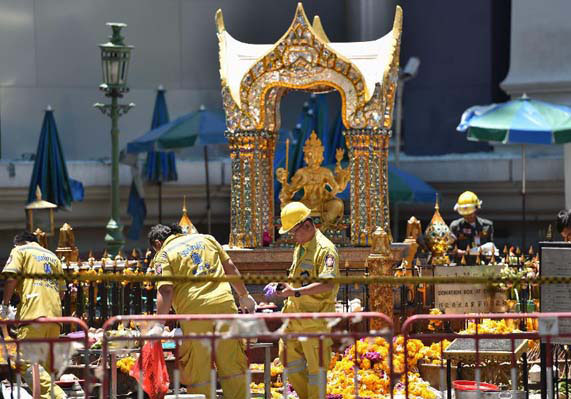
The bombing in Bangkok that killed 20 people and injured more than 120 constitutes a serious attack on human rights and demands an impartial and effective investigation to bring the perpetrators to justice, the ICJ said today.
“Targeting ordinary people, mostly tourists visiting a religious shrine, is an assault upon our shared humanity and human rights,” said Sam Zarifi ICJ’s Regional Director for Asia and the Pacific. “Thailand must counter this vile attack with a credible investigation that aims to deliver justice to the victims by identifying the perpetrators and bringing them to justice in accordance with the rule of law.”
“The Thai authorities must also resist the pressure to display progress through hasty conclusions and commit unwaveringly to an investigation that meets international standards and respects all legal and due process guarantees. Only a credible and fair process will provide truth and justice to the many victims and survivors,” he added.
As part of an effective investigation, the ICJ recommends Thailand to:
- protect the rights of the victims including by ensuring they:
o are treated with respect,
o receive regular information about the progress of the investigation and their rights in relation to it,
o receive all necessary support and assistance;
- ensure that the investigation hypothesis is not influenced by discrimination or bias based on ethnic, religious, political or other such grounds; and
- actively seek out and accept offers of assistance from other states including in the areas of:
o intelligence,
o forensic examination of crimes scenes, bodies and vehicles,
o analysis of phone material including call data and cell sites, and
o enhancement and analysis of Closed Circuit Television (CCTV) footage.
Thailand is required to effectively investigate the attack, to prosecute and punish those responsible, and to ensure victims have access to effective remedies and reparation, as part of its international legal obligations as a Party to the International Covenant on Civil and Political Rights (ICCPR), including pursuant to the right to life and the right to security of person.
Background:
On 17 August 2015 at approximately 19:00, an Improvised Explosive Device (IED) was detonated near the popular Erawan religious shrine at the Ratchaprasong intersection in central Bangkok.
On 18 August 2015 at approximately 13:00, a second IED was detonated near Bangkok’s Sathorn boat pier that exploded harmlessly in the water.
To date, no groups or individuals have claimed responsibility for either attack.
Contact:
Sam Zarifi, ICJ Asia Regional Director, (Bangkok), t:+66 807819002, e-mail: sam.zarif(a)icj.org
Kingsley Abbott, ICJ International Legal Adviser, (Bangkok), t:+66 944701345, e-mail: kingsley.abbott(a)icj.org
Thailand-BKK Blast-News-Press releases-2015-THA (full text in pdf, THAI)
Photo: Xinhua / Li Mangmang
Aug 7, 2015 | News
The SC’s decision to uphold the possibility of trial before military courts of individuals accused of committing terrorism related offences and belonging to “any terrorist group or organization using the name of religion or a sect” is a blow to human rights and the rule of law, said the ICJ.
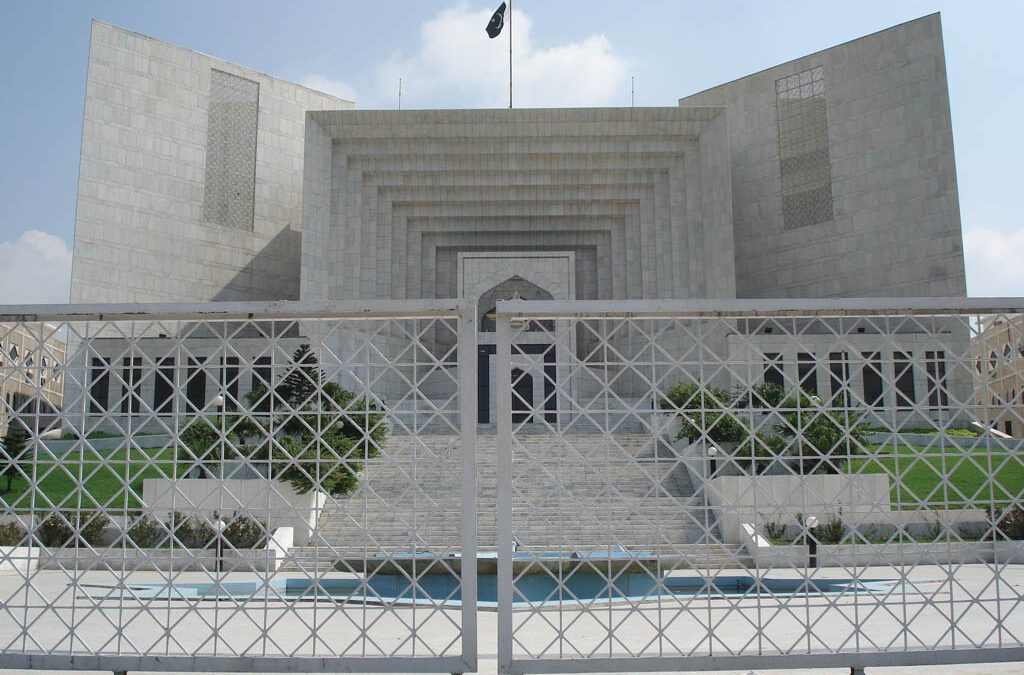
In a split decision on the validity of the 21st amendment to the country’s Constitution, delivered on Wednesday, nine judges of the Supreme Court held that the trial of suspected terrorists, including civilians, by military courts was within the constitutional framework of the country and met principles of criminal justice.
The judges also ruled that individuals who claim to, or are known to belong to “any terrorist group or organization using the name of religion or a sect” constituted a valid classification allowing for differential treatment under the constitution.
Six dissenting judges expressed the view that the 21st constitutional amendment was incompatible with the right to a fair trial and independence of the judiciary. Two judges did not give an opinion on the merits, but suggested that the Supreme Court did not have the jurisdiction to review constitutional amendments.
The 902-page judgment also responds to challenges to the 18th amendment to the Constitution, including the procedure for judicial appointments.
“This judgment squarely puts Pakistan at odds with its international obligations and weakens the Supreme Court’s hard won reputation as the last resort for protecting the rights of Pakistani people,” said Sam Zarifi, ICJ’s Asia Director. “The Court has missed an important opportunity to reverse the militarization of justice in progress under the guise of combatting terrorism and to reinforce independence of the judiciary in the country.”
The trial of civilians in military courts for terrorism-related offences is incompatible with international standards, which require that those accused of any criminal offence are guaranteed a fair trial by an independent, impartial and competent tribunal.
ICJ’s briefing paper, published in April, provides a detailed assessment of the incompatibility of military trials in Pakistan with its international law obligations.
The Supreme Court, however, did not engage with international standards of fair trial and independence of the judiciary.
At least eight judges of the Supreme Court were of the opinion that it is for the Federal Government alone to ensure that their conduct “does not offend against the Public International Law or any International Commitment made by the State”.
“It is very disappointing that the Supreme Court has abdicated its primary role in acting with the other branches of the State to implement its obligations under international law,” added Zarifi. “International law is clear -all organs of the State, including the judiciary, must respect international human rights commitments, which include the right to a fair trial. Indeed, it is a core judicial responsibility to state what the law provides, whether the source of the law is international or domestic.”
The majority judgment also goes against previous Supreme Court rulings on military courts. In the past, the Court had reasoned that military courts do not meet the requirements of independence and impartiality; the establishment of military courts for trial of civilians amounts to creating a “parallel judicial system”; and that impeding the right to a fair trial cannot be justified on the basis of the public emergency or the “doctrine of necessity.
Military courts in Pakistan also have the power to award death sentences. On 2 April 2015, military courts convicted seven people of undisclosed offences in secret trials.
Of them, six were sentenced to death and one was sentenced to life in prison. The Supreme Court’s judgment has cleared the way for their execution.
Contact
Sam Zarifi, ICJ Asia Pacific Regional Director (Bangkok), t: +66 807819002; email: sam.zarifi(a)icj.org
Reema Omer, ICJ International Legal Advisor for South Asia (Lahore), t: +923214968434; email: reema.omer(a)icj.org
Read also:
ICJ denounces law permitting military trials of civilians
Trials of civilians before military tribunals a subversion of justice
HRCP, ICJ demand clarification on juveniles’ trial by military courts
Additional information
In a significant development, by a 13-4 majority the Supreme Court held it has jurisdiction to review constitutional amendments passed by Parliament on the touchstone of the “salient features” and the preamble of the Constitution. What those salient features are, however, was left unaddressed.
On 6 January 2015, less than a month after a terrorist attack on an army public school in Peshawar that killed nearly 150 people, most of them children, the Pakistani Parliament unanimously voted to amend the Constitution of Pakistan, 1973, and the Army Act, 1952, to allow military courts to try civilians for offences related to terrorism.
Military courts in Pakistan are not independent or impartial. Trials before military courts in Pakistan fall far short of national and international fair trial standards.
Pakistan has resumed executions since December 2014, in response to a spate of terrorist attacks in the country. At least 196 people on death row have already been executed. According to available data, only a small fraction – less than 10 pecent – of those executed were convicted of terrorist offences.
ICJ opposes capital punishment in all cases without exception. The death penalty constitutes a violation of the right to life and the right not to be subjected to cruel, inhuman or degrading punishment.

Aug 6, 2015 | News
Thailand’s Department of Special Investigations (DSI) should launch a special investigation into the apparent enforced disappearance of Karen activist, “Billy,” the ICJ and the Justice for Peace Foundation (JPF) said today.
Today, Billy’s wife, Phinnapha Phrueksaphan, delivered a letter to the DSI requesting it to assume jurisdiction over the case after the police investigation has presented little progress since Billy was last seen in the custody of Kaeng Krachan Park officials on 17 April 2014.
“This is precisely the kind of case the DSI was created to investigate,” said Kingsley Abbott, International Legal Adviser at the ICJ.
“The investigation is complex, the suspects include influential administrative officials and if Billy was forcibly disappeared then an extremely serious crime under international law has been committed. The police investigation does not appear to have advanced significantly in more than a year and so now it’s long past time for the DSI to take over,” he added.
Phinnapha Phrueksaphan also asked the DSI for Pol. Col. Traiwit to be part of any DSI investigation team due to the commitment she thinks he has demonstrated to the investigation so far and to disclose the results of the DNA testing of the blood allegedly found in a Park Official’s vehicle (in which Billy was last seen).
She was supported by Angkhana Neelapaijit, the head of JPF, whose own husband, Somchai Neelapaijit, was the victim of enforced disappearance in 2004 and whose case the DSI is still investigating.
“Thailand must act on its repeated commitments to combating enforced disappearance by handing this case over to the DSI. There are strong parallels between Billy’s case and the case of my husband and there is no reason why the DSI should be investigating one and not the other,” said Angkhana Neelapaijit.
The DSI was created by The Special Investigation Act B.E. 2547 (2004) and is sometimes referred to as the FBI of Thailand. It has the power to assume jurisdiction over special criminal cases including complex cases that require special inquiry; crimes committed by organized criminal groups; and cases where the suspect is an influential person or an administrative official.
Background
Since Billy “disappeared” his wife has been raising their five children on her own.
Thailand, pursuant to its international legal obligations, including as a party to the International Covenant on Civil and Political Rights, is required to promptly, independently and effectively investigate and, where appropriate, prosecute, punish and provide a remedy and reparation for the crime of enforced disappearance.
The Royal Thai Government has signaled its recognition of the gravity of the crime of enforced disappearance and its commitment to combating it by signing (but not yet ratifying) the International Convention for the Protection of All Persons from Enforced Disappearance on 9 January 2012. The Convention affirms the absolute right not to be subject to enforced disappearance and places an obligation on states to make it a criminal offence punishable by appropriate penalties that take into account its “extreme seriousness.”
The Thai Cabinet is currently considering a draft law that would make enforced disappearance and torture stand-alone crimes in Thailand.
Since July 2014, the ICJ has repeatedly called for the DSI to assume jurisdiction over the case.
For more information see:
https://www.icj.org/thailand-strengthen-efforts-to-solve-the-apparent-enforced-disappearance-of-billy/
https://www.icj.org/thailand-disappearance-of-billy-demands-special-investigation/
https://www.icj.org/thai-authorities-must-urgently-investigate-billys-disappearance/
Contact
Kingsley Abbott, ICJ International Legal Adviser, email: kingsley.abbott(a)icj.org or mobile: +66 94 4701345
Angkhana Neelapaijit, Justice for Peace Foundation, email: angkhana.nee(a)gmail.com or mobile: +66 84 7280350
Thailand-Disappearance Billy-News-PR-2015-ENG (full text of the press release)
Thailand-Disappearance Billy-News-PR-2015-THA (full text of the press release in Thai)

Aug 6, 2015 | News
Malaysian authorities must stop using vague and poorly defined laws to arrest and harass people for participating or organizing peaceful demonstrations, the ICJ said today.
The ICJ called for the repeal of Section 124B of the Penal Code, or its amendment in line with international standards.
At least 37 people have been swept up in arrests in recent days, many on 1 August at a rally organized in Kuala Lumpur by Demi Malaysia (For Malaysia) – a youth group comprised of activists from civil society groups, political parties and student organizations.
“As an immediate matter, the Malaysian government must ensure that no charges are brought against some 37 people who were arrested and detained this week for organizing a peaceful public demonstration,” said Emerlynne Gil, ICJ’s Senior International Legal Adviser on Southeast Asia. “As the government faces a wave of public criticism, it seems to be resorting to new legal mechanisms to block peaceful assembly and free expression—but these are guaranteed human rights and a crucial component of parliamentary democracy.”
At least 30 people were detained in the past few days under Section 143 of the Penal Code, which addresses “unlawful assemblies”.
Another seven people were arrested and held under Section 124B of the Penal Code, which states:
“Whoever, by any means, directly or indirectly, commits an activity detrimental to parliamentary democracy shall be punished with imprisonment for a term which may extend to twenty years.”
The seven individuals arrested under Section 124B were Adam Adli, Shukri Abdul Razab, Mandeep Singh, Safwan Anang, Hishammudin Rais, Vince Tan, and Fahmi Zainol. They were arrested before the public assembly occurred and are alleged to be involved in organizing the event.
“The use of Section 124B against people organizing a peaceful protest is particularly alarming, as the law’s language is impermissibly vague and broad, and the punishment of 20 years imprisonment is disproportionately harsh,” said Gil. “The Malaysian government must immediately move to substantially amend or repeal this problematic law, and meanwhile ensure that it is not used to charge any peaceful protesters.”
Gil further said: “An activity detrimental to parliamentary democracy’ is defined under Section 130A of the Penal Code to mean actions that are violent or unconstitutional, conditions clearly not present with this group of people arrested”.
“Section 124B has never been used before and the Malaysian government should ensure that this is never used in the future,” she added.
All 37 individuals arrested were released on police bail, except for Adam Adli, Shukri Abdul Razab, and Mandeep Singh, who were released after their lawyers successfully obtained an order from the High Court to review the order to remand them.
“Malaysia’s current political situation will likely see more public demonstrations critical of the government; it is the government’s responsibility to allow these peaceful protests to take place and to defend the rights of the protesters, not to trample on their rights,” Gil said. “Malaysia has the positive obligation under international human rights law not only to protect peaceful assemblies, but also to facilitate the exercise of the right to freedom of peaceful assembly.”
The right to freedom of peaceful assembly is guaranteed in key international human rights instruments.
The UN Human Rights Council underscored its commitment to promote and protect the right to freedom of peaceful assembly and association by adopting several resolutions on this issue, the most recent of which is Resolution 24/5, which was adopted in October 2013.
In Resolution 24/5, the UN Human Rights Council reminded States of their obligation to respect and fully protect the rights of all individuals, including human rights defenders, to assemble peacefully.
Background
On 1 August 2015, youth group Demi Malaysia (For Malaysia) organized a rally in Kuala Lumpur to call for the resignation of Malaysian Prime Minister Najib Razak for having failed to provide adequate responses on how 1Malaysia Development Berhad (1MDB), a strategic government fund, will be able to repay its debts that have amounted to billions of ringgit. Recently, Prime Minister Najib Razak has been facing allegations that he misappropriated RM 2.6 billion (USD 700 million) of 1MDB funds.
Adam Adli, Shukri Abdul Razab and Mandeep Singh were arrested and detained under s.124B of the Penal Code a day before the rally, while four others, Safwan Anang, Hishammudin Rais, Vince Tan and Fahmi Zainol were arrested and detained under the same provision on 1 August before the rally begun.
Contact
Emerlynne Gil, ICJ Senior International Legal Adviser, (Bangkok); t: +668 409 23575; e: emerlynne.gil(a)icj.org.
Photo: Zikri Kamarulzaman / Malaysiakini

Aug 4, 2015
An opinion piece by Kingsley Abbott, ICJ International Legal Adviser for Southeast Asia
The trial of two Thailand-based journalists from the online news outlet, Phuketwan, accused of criminally defaming the Royal Thai Navy, appeared to be a very sabai sabai affair as I monitored the trial for the ICJ between 14 and 16 July in Phuket, Thailand.
But beneath its calm surface, the proceedings were part of an insidious and exceptional legal battle, as a government institution – the Royal Thai Navy – sought criminal punishment for the defamation of its reputation.
The presiding judge was not antagonistic toward the defence, and I observed no obvious procedural irregularities during the trial.
Initially, eight defence lawyers faced off against a sole prosecutor. However, on the morning of the second day the prosecutor notified the Judge that she had no questions for the defence witnesses and disappeared for the remainder of the trial.
On 17 July 2013, Phuketwan published an article that contained a paragraph reproduced from a Pulitzer award winning Reuters article that alleged that ”Thai naval forces” were complicit in the smuggling of Rohingya, a persecuted ethnic minority from Myanmar.
In December 2013, the Royal Thai Navy reacted by filing a complaint against Big Island Media, the parent company of Phuketwan, and the two Phuket-based journalists, Chutima Sidasathian and Alan Morison (photo), alleging criminal defamation under the Thai Criminal Code and violation of Article 14 of the Computer Crimes Act.
The maximum penalties for these crimes are two years and five years imprisonment, respectively.
No charges have been laid against Reuters.
Numerous governments, UN agencies and human rights groups, including the ICJ, have called for the charges to be dropped.
Article 19 of the International Covenant on Civil and Political Rights, to which Thailand is a State Party, guarantees the right to freedom of expression, which includes the right to impart information.
Defamation laws should never be used to criminalize free expression, particularly when the expression involves criticism of public authorities, made without malice and in the public interest, as was undoubtedly the case here.
To guard against such violations of freedom of expression, the UN Special Rapporteur on Freedom of Expression, the Human Rights Committee, the ICJ and other international experts have urged states to abolish criminal defamation entirely.
This case comes against the background of international furor surrounding the discovery of mass graves allegedly linked to traffickers on both sides of the Thailand-Malaysia border and the horrific plight of thousands of Rohingya and Bangladeshis who were found adrift in the Andaman Sea.
Still, the Thai government has pursued the case, which was one of the facts noted by the US State Department when it gave Thailand the lowest rating for the second year running, Tier Three, in its influential 2015 Trafficking in Persons Report.
There has been speculation that the low-key (and eventually, nonexistent) prosecutorial presence suggests the Government is not pushing the case hard, but according to experienced Thai lawyers, the prosecution sometimes leaves a trial when it is confident of its case.
The four witnesses for the prosecution mostly testified about the administrative aspects of the case: the first was the Navy officer who made the complaint, while the other three were the police officers who received and acted upon it.
The investigation appeared to have been rather superficial. For example, the police did not interview anyone other than the two Phuketwan journalists, and had not checked the Thai translation of the article relied on by the Navy which erroneously translated “Thai naval forces” into “Royal Thai Navy,” this being a key part of the defence case.
While waiting for the arrival of the final prosecution witness, the Judge asked one of the journalists, Chutima Sidasathian, why the case had not settled at a mediation facilitated by the National Human Rights Commission.
She answered that despite their best efforts to reach a settlement, she and her co-accused were not prepared to apologize for exercising their journalistic duty to report on matters in the public interest, especially when the facts were reproduced from the story of another news agency.
During the trial, both sides said there was no animosity between the Royal Thai Navy and Phuketwan, which has regularly reported favorably on the Royal Thai Navy’s activities.
Earlier this year, Chutima Sidasathian, who is studying for a Ph.D on the Rohingya, had been asked by the Prime Minister’s office to advise it on the Rohingya crisis.
The defence presented their case through seven witnesses, including the two journalists.
Their evidence sought to establish that the journalists were merely exercising their duty to report on matters in the public interest, that they had never intended to defame the Royal Thai Navy but had simply reproduced a passage from a Reuters article that referred to “Thai naval forces” not the Royal Thai Navy who were therefore not a damaged party, and that the Computer Crimes Act was never intended to apply to cases of this kind.
As the prosecutor was absent during the entire defence case, this evidence was not challenged.
The accused, their Thai media colleagues, and the international community now await the verdict, which will be delivered on 1 September 2015.
Regardless of the outcome and based on the proceedings so far, it is clear that under international law, the Royal Thai Navy and the prosecution must immediately withdraw the charges, and that Thailand’s criminal defamation laws should be scrapped to ensure compliance with its international obligations.
Journalists in Thailand must never again face such ill-founded proceedings, or hesitate to report on matters in the public interest for fear of being unjustly dragged through the courts by the authorities.
Thailand-Phuketwan-News-OpEd-2015-THA (PDF with full text of the opinion piece in Thai)