Aug 3, 2015 | News
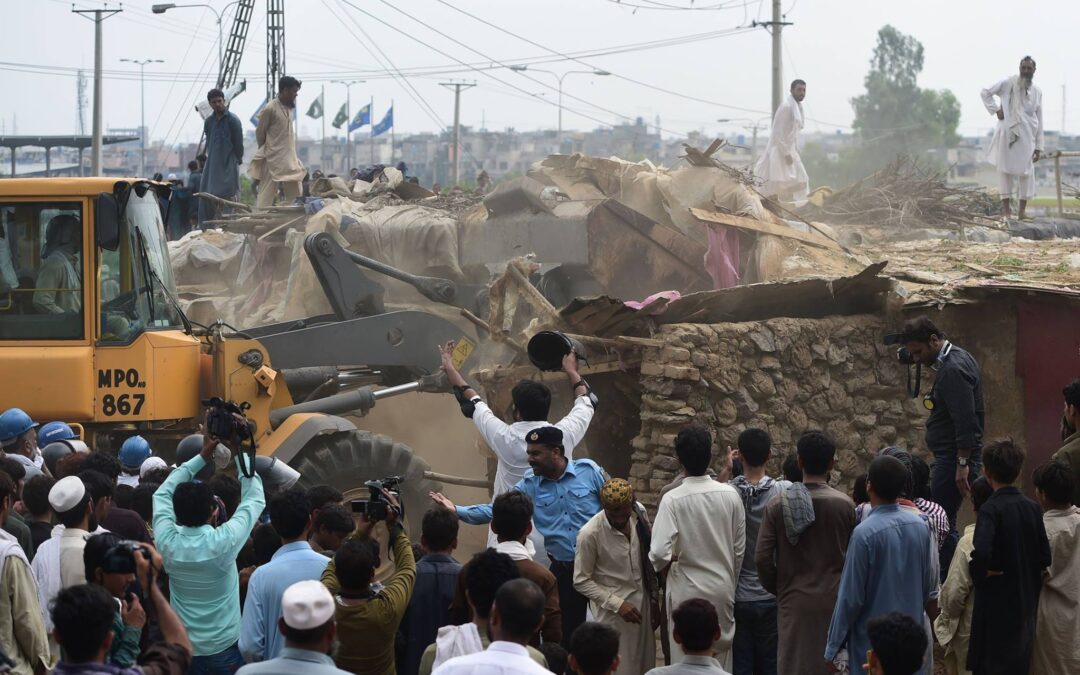
The ICJ is urging the Pakistani Government to immediately release, and drop all charges against, dozens of people arrested on 26 and 30 July in the context of a peaceful protest against forced evictions in Islamabad.
“This is yet another illustration of the Government using Pakistan’s counter-terrorism laws against peaceful protesters to clamp down on dissent,” said Sam Zarifi, ICJ’s Director for Asia and the Pacific.
“Peaceful protest is not an act of terrorism but a fundamental human right recognized by the Constitution as well as international human rights treaties that Pakistan is a party to,” he added.
The protest, forcibly dispersed by the police, was organized against the demolition of houses and the forceful eviction of over 8000 people residing in a slum in the city.
The Government alleges the slum is illegal and all residents are encroachers; the inhabitants claim that under Pakistani law, all informal settlements must either be formalized or the inhabitants must be provided alternate housing.
At least 66 individuals arrested were booked under Section 7 of the Anti-Terrorism Act, 1997 (ATA) for “obstructing the authorities”, “demonstrating force with a view to terrorizing citizens” and “creating mischief”.
Following a court order, they have been placed in police remand (custody of the police) for interrogation, where they may be at imminent risk of torture and other ill-treatment.
An anti-terrorism court released four of the detainees today. The rest, however, remain in police custody, and according to reports received by ICJ, many of them are being denied access to families and friends.
“The risk of abuse is inherent in the Anti-Terrorism Act, which defines terrorism in vague and overbroad terms. The Government must urgently amend the ATA to ensure it meets the internationally recognized tests of necessity, legality and proportionality,” Zarifi said.
Pakistan has a long history of using the ATA against political activists and human rights defenders.
In 2014, a dozen political activists, including Baba Jan, a prominent human rights defender from Hunza, were sentenced to life imprisonment by an anti-terrorism court for protesting against the government’s failure to assist victims of a landslide.
Before that, six power loom workers from Faisalabad were arrested in the context of a protest demanding minimum wage. In 2011, they were sentenced to 81 years in prison each under the ATA.
The International Covenant on Economic, Social and Cultural Rights, which Pakistan ratified in 2008, obligates States to recognize the right to an adequate standard of living, which includes housing.
The Human Rights Commission of Pakistan too has reminded the Government of its duty to provide shelter to the people of Pakistan and make arrangements to provide alternate housing to inhabitants of informal settlements.
“Forcibly evicting people from their homes without providing them any alternate housing can in itself be a human rights violation. Arresting peaceful protesters and denying their right to a fair trial even further adds to the culpability of the authorities,” Zarifi added.
Contact:
Sam Zarifi, ICJ Asia Pacific Regional Director (Bangkok), t: +66 807819002; email: sam.zarifi(a)icj.org
Reema Omer, ICJ International Legal Advisor, South Asia (London), t: +447889565691; email: reema.omer(a)icj.org
Additional Information:
Under Article 11(1) of the International Covenant on Economic, Social and Cultural Rights (ICESCR), which Pakistan ratified in 2008, States Parties recognize the right of everyone to an adequate standard of living, including adequate food, clothing and housing, and to the continuous improvement of living conditions.
States Parties are to take appropriate steps to ensure the realization of this right, recognizing to this effect the essential importance of international co-operation based on free consent.
The right to peaceful assembly is guaranteed under international human rights law, including Article 21 of the International Covenant on Civil and Political Rights (ICCPR), which Pakistan ratified in 2010 and is legally obligated to implement.
The UN Declaration on Human Rights Defenders also reiterates that everyone has the right to participate in peaceful activities against violations of human rights and fundamental freedoms, and obligates the State to take necessary measures to ensure the protection by the competent authorities of peaceful protestors against “any violence, threats, retaliation, de facto or de jure adverse discrimination, pressure or any other arbitrary action as a consequence of his or her legitimate exercise of the rights”.
Photo by Geo News
Aug 2, 2015
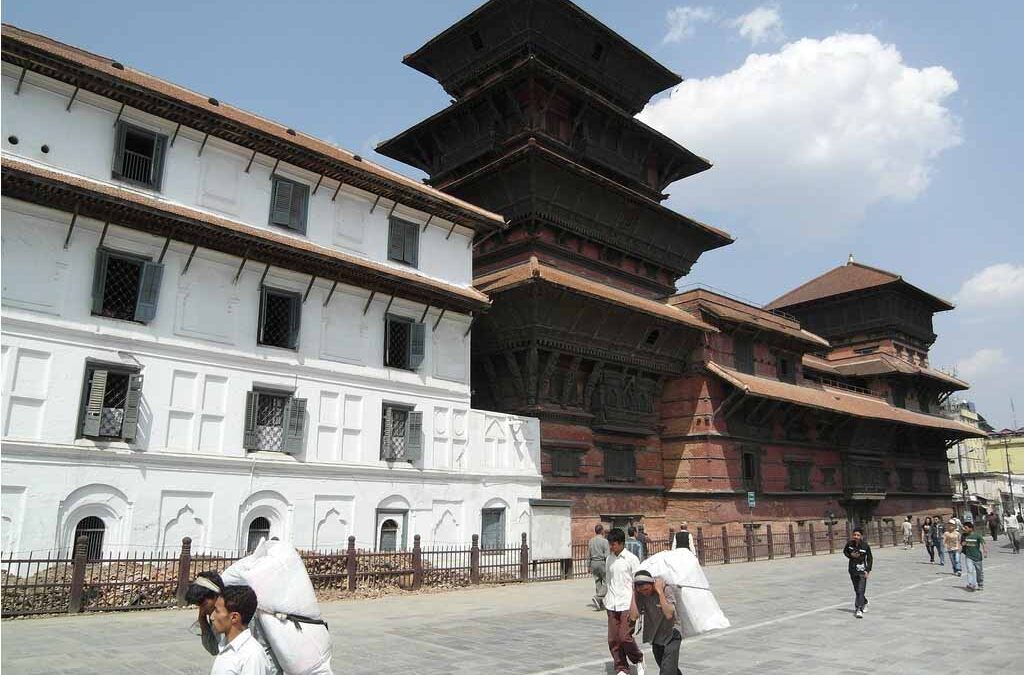
An opinion piece by Nikhil Narayan, ICJ Senior legal Adviser in Nepal and Sanitha Ambast, ICJ International Legal Adviser in India.
When former Nepal Prime Minister and UCPN (Maoist) Chairman, Pushpa Kamal Dahal visited Delhi in mid-July 2015, India’s President, Prime Minister, and members of major political parties voiced their support for the early finalization and adoption of Nepal’s constitution.
Prime Minister Modi asked Nepal to ensure that the constitution was drafted with the support of as many stakeholders as possible.
However, this advice seems to have been ignored given the manner in which the constitution-making process has been fast-tracked in Nepal.
The process underway is seriously flawed, and has resulted in a draft that ignores important human rights obligations.
While continuing to support timely progress, India should encourage the authorities in Nepal to develop a legitimate and rights-respecting Constitution through an inclusive and participatory process.
Nepal’s constitutional drafters began their work over seven years ago, but the process stalled repeatedly due to political disagreements.
However, the earthquake of 25 April 2015, combined with emerging consensus among the major political party elites, has meant that recent weeks have seen sudden and remarkable progress towards the finalization of a Constitution.
Nepal’s four major political parties reached an internal agreement on 9 June 2015, in which they avoided dealing with the contentious federalism issue by agreeing to leave the discussion on the territorial boundaries and names of the new federal entities to a federal commission to be established later.
The Constitution Drafting Committee was then asked to prepare a preliminary text of the Draft Constitution. Nepal’s Constituent Assembly (CA) endorsed this Draft Constitution on 7 July 2015, paving the way for ‘public consultation’ on the provisions of the Draft.
The Committee on Public Relations and Opinion Collection was given 15 days starting 9 July 2015 to consult with and solicit views from the Nepali public throughout the country on the Draft Constitution, consolidate them, and produce a report for the CA. This period ended at the end of last week.
A two-week timeframe to read and respond to a constitutional document that is over 100 pages long is grossly inadequate. As reports have indicated, Nepali people in some regions were effectively given only two or three days to provide inputs.
While a few groups and individuals managed to make submissions, in several other districts people protested the contents of the Draft, and the police responded with force. The monsoon rains further hampered public accessibility to meetings.
It is also unclear whether and to what extent people living in remote areas and/or areas rendered inaccessible by the rains, persons affected by the earthquake, illiterate persons, non-Nepali speakers, and persons living with disabilities, including people who are vision-impaired, were consulted.
It is hard to imagine that the Committee on Public Relations and Opinion Collection was able to process in any detail the views and suggestions collected through the consultation and adequately analyze them within the mandated 15 days.
The Draft Constitution is substantively problematic and several rights are not adequately protected.
The citizenship provisions are vague and discriminatory, and risk rendering people stateless by requiring that children born in Nepal may only obtain citizenship if both mother and father are identified and are Nepali citizens themselves. Non-citizens are excluded from key entitlements and protections.
The provisions on gender equality are controversial, with activists arguing that the current formulation does not guarantee the full range of women’s reproductive rights.
Several economic and social rights are defined inadequately, thus not offering the protections required by international human rights law.
Allowance for restrictions on the rights to free speech, expression, information and press freedom, as well as the rights to freedom of association and assembly, are broad and vague and exceed what is permitted under international human rights standards.
Provisions on remedy for human rights violations are lacking. And guarantees for securing judicial independence are weak and inadequate.
An inadequate consultative process means that people do not have the opportunity to point out these flaws, or to advocate for a Constitution that addresses the root causes of the past conflict and enhances respect and protection of all human rights.
This also means that the Constitution, and the state structures it establishes, may lack necessary public legitimacy and ownership from the outset.
Ensuring genuine consultation and public participation in democratic processes – particularly the constitution-making process – is crucial for the legitimacy of the Constitution and the rule of law in democracies, and would be wholly consistent with Nepal’s obligations under international human rights law.
Public participation is particularly important given the constitutional history of Nepal.
Nepal has had six Constitutions since 1948. Each of these Constitutions, whether authoritarian or democratic in nature, was promulgated without a participatory process.
A major accomplishment of the 2006 Comprehensive Peace Agreement, which marked the end of the civil war in Nepal, was to commit to a Constitution that respected “people’s right to information, transparency and accountability” and “people’s participation”.
While broader consultation may take slightly longer than the “fast tracked” process, it will be a valuable investment if it results in a strong and lasting Constitution.
India has a political and economic stake in a Nepal that is democratic, peaceful and prosperous. A Constitution developed on the basis of a genuine and inclusive participatory process is not just a human right.
It also enhances the likelihood of popular ownership of the Constitution, which was lacking in Nepal’s previous Constitutions, thus improving the chances for peace and stability in the nation.
Photo credit: Sebastian Werner
Jul 30, 2015 | News
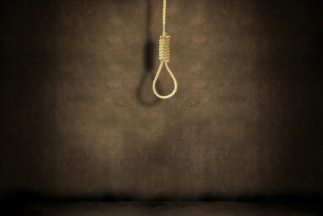
The ICJ strongly condemned the execution of Yakub Memon, who was hanged in Nagpur Central Jail, India this morning.
“Yakub Memon’s execution is a distressing and regressive move, keeping India in the minority of countries which continue to carry out executions,” said Sam Zarifi, ICJ Asia Pacific Regional Director. “While Yakub Memon was convicted of terrible crimes, executing him was not the solution. India should immediately put in place a moratorium on the death penalty.”
A court set up under the Terrorist and Disruptive Activities (Prevention) Act (TADA) convicted and sentenced Yakub Memon to death for a range of offences, including conspiracy to commit terrorist acts, in connection with the deadly terrorist attacks in Mumbai in 1993.
These attacks killed more than 250 people and injured more than 700. The main accused in this case, including Yakub Memon’s brother Tiger Memon, have still not been apprehended or tried.
“In executing Yakub Memon, the Indian government has only fulfilled a desire for retribution and added to the disturbing trend of executions in the name of fighting terrorism in South Asia”, Zarifi added. “The death penalty has not been shown to have any deterrent effect on crime or terrorism anywhere in the world.”
The Indian Supreme Court had confirmed Yakub Memon’s conviction and sentence on appeal from the court set up under the TADA in March 2013.
The Indian government repealed the TADA in 1995, after sustained national and international criticism for its incompatibility with human rights law, particularly the right to fair trial.
Yakub Memon was tried under provisions of the TADA as it was the law in force in 1993, when the terrorist attacks in Mumbai occurred.
The Indian president rejected a first mercy petition on his case in April 2014.
He subsequently filed a review petition challenging his sentence before the Indian Supreme Court, which was rejected on 9 April 2015.
On 21 July 2015, the Indian Supreme Court dismissed his curative petition for the commutation of his death sentence.
A court had authorized his execution before his curative petition was dismissed.
Yakub Memon then approached the Indian Supreme Court challenging, both, the manner in which his curative petition was heard and dismissed, and the validity of the order authorizing his execution. However, the Supreme Court dismissed both these arguments yesterday.
Over the past week, Yakub Memon filed fresh mercy petitions to commute his death sentence before the Governor of the State of Maharashtra and the President of India. Both were rejected yesterday.
Yakub Memon’s lawyers challenged the rejection of the mercy petition, and asked the Indian Supreme Court to stay the execution as per the guidelines issued in the 2014 case of Shatrughan Chauhan v Union of India, for “safeguarding the interests of the death row convicts”.
These included ensuring a minimum period of 14 days “between the receipt of communication of the rejection of the mercy petition and the scheduled date of execution”.
But the Court – in a hearing early this morning – rejected this final plea.
Background:
This is India’s third execution in the past five years. India resumed executions in 2012, after a gap of eight years. Since November 2012, two other people have been executed, Ajmal Kasab and Afzal Guru.
They also were both charged and convicted for their role in terrorist attacks.
The ICJ expresses its solidarity with the victims of the 1993 attack, and their families.
India is a party to the International Covenant on Civil and Political Rights, which guarantees the right to a fair trial as well as the right to life and freedom from cruel, inhuman, or degrading treatment or punishment.
The UN Human Rights Committee, the supervisory authority for the ICCPR, has emphasized: “In cases of trials leading to the imposition of the death penalty scrupulous respect of the guarantees of fair trial is particularly important. The imposition of a sentence of death upon conclusion of a trial, in which the provisions of article 14 of the Covenant have not been respected, constitutes a violation of the right to life.”
In December 2014, the UN General Assembly adopted a resolution, for the fifth time since 2007, emphasizing that the use of the death penalty undermines human dignity and calling on those countries that maintain the death penalty to establish a moratorium on its use with a view towards its abolition. Some 117 UN Member States, a wide majority, voted in favor of a worldwide moratorium on executions as a step towards abolition of the death penalty.
The ICJ opposes capital punishment in all cases without exception. In line with the present international trend, the ICJ calls on India to impose an official moratorium on the death penalty, with a view to abolishing the death penalty.
Contact:
Sam Zarifi, ICJ Asia Pacific Regional Director (Bangkok), t: +66 807819002; email: sam.zarifi(a)icj.org
Jul 24, 2015 | News
The Cambodian Senate’s approval of the draft law this morning brings the Government one step closer to having the power to repressively monitor and restrict the registration and activities of associations and Non-Governmental Organizations (NGOs), the ICJ said today.
According to information provided to the ICJ, the Senate approved the draft Law on Associations and NGOs (LANGO) at approximately 10:00am local time this morning. Opposition Senators boycotted the vote.
“The draft law, once promulgated, will severely restrict the ability of members of civil society to exercise their rights to freedom of association and expression which Cambodia has a duty to protect under its international obligations,” said Kingsley Abbott, the ICJ’s International Legal Adviser.
“The regrettable irony is that in approving this draft law, which contains the stated aims of protecting civil society interests and promoting their partnership with public authorities, the Government has totally disregarded civil society’s calls for consultation and for the draft law to be withdrawn,” he added.
On 13 July 2015, the Cambodian National Assembly adopted the draft law after 55 members of the opposition party, the Cambodia National Rescue Party (CNRP), decided to boycott the vote.
The draft law will be promulgated once it receives the King’s signature, which is largely a symbolic step under the Cambodian Constitution.
The draft law’s most problematic provisions include:
- requirement of excessive documentation for the registration of both domestic and international associations and NGOs;
- arbitrary powers given to the Ministry of Interior and Ministry of Foreign Affairs to deny or revoke registration on the grounds that an association or NGO’s activities endanger public security, stability and order, constitute a threat to national security, national unity or the good culture, traditions and customs of Cambodian national society;
- the requirement that associations and NGOs adhere to a stance of neutrality vis à vis political parties, and provisions that allow for the suspension and dissolution of groups that violate this requirement;
- the requirement that associations and NGOs report to several ministries and submit an annual report summing up work activities and finances; and
- the inclusion of sweeping provisions for the suspension and dissolution of domestic and international associations and NGOs.
Background
The draft law, once promulgated, will bring Cambodia into non-compliance with international law and standards.
As a party to the International Covenant on Civil and Political Rights (ICCPR), Cambodia must guarantee the rights to freedom of expression and association and ensure that no restrictions are put in place except under the strict conditions set out in articles 19(3) and 22(2) of the ICCPR. These conditions clearly have not been met under the terms of the draft LANGO.
In addition, Article 2 of the UN Declaration on Human Rights Defenders provides that each “State has a prime responsibility and duty to protect, promote and implement all human rights and fundamental freedoms, inter alia, by adopting such steps as may be necessary to create all conditions necessary in the social, economic, political and other fields, as well as the legal guarantees required to ensure that all persons under its jurisdiction, individually and in association with others, are able to enjoy all those rights and freedoms in practice.
Article 8 states that everyone “has the right, individually and in association with others, to have effective access…to participation in the government of his or her country and in the conduct of public affairs…[including] the right, to submit to governmental bodies and agencies and organizations concerned with public affairs criticism and proposals for improving their functioning and to draw attention to any aspect of their work that may hinder or impede the promotion, protection and realization of human rights and fundamental freedoms.”
In June and July 2015, the ICJ and other international human rights groups sent joint letters to the Government of Cambodia, including to Prime Minister Hun Sen and the President of the National Assembly, urging for the withdrawal of the draft law.
Contact:
Kingsley Abbott, ICJ’s International Legal Adviser, t: +66 94 470 1345, e: kingsley.abbott(a)icj.org
Jul 22, 2015 | News
Ante los procesos penales que ha iniciado la Comisión internacional contra la Impunidad en Guatemala (CICIG) en el país, la CIJ expresa su absoluto apoyo al Comisionado de la CICIG Iván Velásquez por la batalla que está librando por la depuración del Estado de Guatemala y contra la corrupción.
Todos los casos develados por la CICIG están demostrando los niveles de impunidad existentes, debido a la persistencia de diferentes estructurales criminales, que cuentan con participación de altos funcionarios de Gobierno.
La CIJ lamenta que un partido político esté promoviendo acciones en contra de la CICIG y manifestaciones de diversa índole, para desestabilizar al país y evitar que sus miembros y candidatos sean investigados.
La CIJ se permite recordar que los actos de corrupción afectan seriamente la vida de toda la población guatemalteca, el uso adecuado de los recursos públicos en beneficio de las mayorías y corroe los cimientos básicos del Estado de derecho.
Ramón Cadena, Director de la CIJ para Centro América, declaró: “Hacemos un llamado a todos los partidos políticos, para que apoyen la gestión de la CICIG y faciliten toda la información que coadyuve a las investigaciones que la CICIG está llevando a cabo para erradicar la corrupción en el país.”