Jul 22, 2015 | News
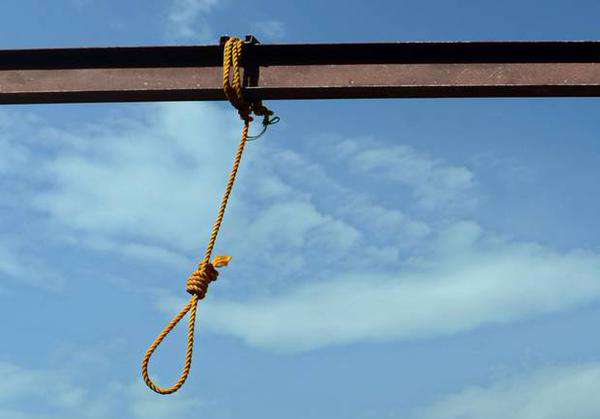
The Indian government should stay the imminent execution of Yakub Memon and commute his death sentence, said the ICJ today. The call comes after the Supreme Court dismissed his curative petition on 21 July.
Yakub Memon was convicted and sentenced to death for a range of offences, including conspiracy to commit terrorist acts, in connection with the deadly terrorist attacks in Mumbai in 1993, which killed more than 250 people and injured more than 700.
A court has authorized his execution for 30 July 2015, although Memon has submitted another mercy petition, according to media reports.
“The 1993 terrorist attacks in Mumbai were heinous criminal acts that devastated the lives of the victims and their families, and amounted to massive human rights abuses,” said Sam Zarifi, ICJ Director for Asia and the Pacific.
“But the death penalty is itself a denial of the right to life and the freedom from cruel and inhuman punishment. Executing Memon only adds to the sum total of inhumanity,” he added.
Yakub Memon was initially sentenced to death by a court set up under the Terrorist and Disruptive Activities Prevention Act, 1987 (TADA) in July 2007.
Yesterday’s Supreme Court decision was the latest in a series of denials of relief.
The Indian Supreme Court confirmed his conviction and sentence on appeal in March 2013.
Memon then filed a mercy petition before the Indian president, who denied it in April 2014.
He subsequently filed a review petition challenging his sentence before the Indian Supreme Court, which rejected the petition on 9 April 2015.
A court set up under the TADA convicted Yakub Memon for his involvement in the terror attacks in Mumbai in 1993.
The Indian government repealed the TADA in 1995, after sustained national and international criticism for its compatibility with human rights law, particularly the right to fair trial.
Provisions of the TADA defined offences vaguely and broadly; reversed the presumption of innocence in certain instances; allowed for long periods of pre-charge detention; made certain “confessions” to specific police officials admissible as evidence; and limited the right to appeal by only allowing appeals to the Supreme Court.
Several provisions of the TADA were later included in the Prevention of Terrorism Act (POTA), which was introduced in 2002 and repealed in 2004.
Subsequent amendments introduced some provisions of the POTA and TADA into the Unlawful Activities (Prevention) Act, which remains in force.
Yakub Memon was tried under provisions of the TADA as it was the law in force in 1993, when the terrorist attacks in Mumbai occurred.
India is a party to the International Covenant on Civil and Political Rights, which guarantees the right to a fair trial as well as the right to life and freedom from cruel, inhuman, or degrading treatment or punishment.
“India, consistent with its international legal obligations, may not impose the death penalty in situations where important safeguards to ensure a fair trial have not been met,” Zarifi said.
The UN Human Rights Committee, the supervisory authority for the ICCPR, has emphasized: “In cases of trials leading to the imposition of the death penalty scrupulous respect of the guarantees of fair trial is particularly important. The imposition of a sentence of death upon conclusion of a trial, in which the provisions of article 14 of the Covenant have not been respected, constitutes a violation of the right to life.”
The ICJ expresses its solidarity with the victims of the 1993 attack, and their families.
The ICJ opposes capital punishment in all cases without exception.
The death penalty constitutes a violation of the right to life and the right not to be subjected to cruel, inhuman or degrading punishment.
In line with the present international trend, the ICJ calls on India impose an official moratorium on the death penalty, with a view to abolishing the death penalty.
India resumed executions in 2012, after a gap of eight years. Since November 2012, two people have been executed, Ajmal Kasab and Afzal Guru. They were both charged and convicted for their role in terrorist attacks.
In December 2014, the UN General Assembly adopted a resolution, for the fifth time since 2007, emphasizing that the use of the death penalty undermines human dignity and calling on those countries that maintain the death penalty to establish a moratorium on its use with a view towards its abolition.
Some 117 UN Member States, a wide majority, voted in favor of a worldwide moratorium on executions as a step towards abolition of the death penalty.
Contact:
Sam Zarifi, ICJ Asia Pacific Regional Director (Bangkok), t: +66 807819002; email: sam.zarifi(a)icj.org

Jul 22, 2015
The ICJ has joined with lawyers’ organisations and other NGOs in an open letter to China’s leaders expressing concern about a recent wave of arrests and other interference with lawyers in the country.The letter can be downloaded in PDF format here:
China-Lawyers-Advocacy-OpenLetter-2015-Eng (English)
China-Lawyers-Advocacy-OpenLetter-2015-Chi (Chinese)

Jul 22, 2015 | News
Cambodian authorities must immediately quash the convictions for insurrection handed down to eleven opposition party activists on 21 July, the ICJ said today.
The Phnom Penh Municipal Court sentenced the National Rescue Party (CNRP) activists to between seven and 20 years in prison following an unfair trial.
“These men were grossly over-charged with insurrection in the first place,” said Kingsley Abbott, ICJ International Legal Adviser.
“The fact they have now been handed down disproportionately severe sentences following an unfair trial only serves to underscore that a serious miscarriage of justice has taken place in violation of Cambodia’s international obligations,” he added.
The charges arose out of their participation in a demonstration on 15 July 2014 against the closure of Phnom Penh’s designated protest site, Freedom Park, that became violent after “public-order” para-police attempted to break up the protest and were attacked by some people in the crowd.
According to information provided to the ICJ, all but one of the accused’s nine lawyers either boycotted or were unable to attend Tuesday’s suddenly-scheduled hearing in protest against a decision by the Court on Monday to fast track the trial.
When the Court unexpectedly called for closing arguments, the accused requested their lawyers to be present, which was denied.
According to observers, no credible evidence was produced during the trial connecting the eleven to the violence and the verdicts were read out after only 15 minutes of deliberation.
“In the event that fresh charges are brought, they must be consummate with the seriousness of the alleged offending, based on reliable evidence, and be adjudicated upon at a trial that scrupulously respects international fair trial standards in accordance with Cambodia’s international obligations,” Abbott said.
Background
Three men – Meach Sovannara, Oeur Narith, and Khin Chamreun – were convicted of participating in and leading an insurrectionary movement and were sentenced to 20 years imprisonment.
Eight men – Sum Puthy, Neang Sokhun, San Kimheng, Tep Narin, San Seihak, An Batham, Ouk Pich Samnang, and Ke Khim – were convicted of participating in an insurrectionary movement and were sentenced to seven years imprisonment.
Tuesday’s verdicts are inconsistent with international law and standards including article 14 of the International Covenant on Civil and Political Rights (ICCPR), to which Cambodia is a State Party, which states that everyone has the right to a “fair and public hearing by a competent, independent and impartial tribunal established by law.”
Contact:
Kingsley Abbott, International Legal Adviser, Asia & Pacific Programme, t: + 662 6198477, + 662 6198478 Ext. 203 ; e: kingsley.abbott(a)icj.org
Jul 21, 2015
An opinion piece by Vani Sathisan, Sanhita Ambast and Reema Omer, ICJ International Legal Advisers for Myanmar and South Asia, respectively.
Blasphemy prosecutions are undermining the rule of law in Myanmar, India and Pakistan.
Blasphemy laws, such as section 295A of the penal code, are inconsistent with human rights including freedom of opinion and expression, freedom of thought, conscience, and religion, the right to liberty, and the right to equality before the law without discrimination.
They are also applied arbitrarily and accused persons are often punished after unfair trials.
Section 295A, enacted by colonial authorities in 1927 to curb communal tension, is the same in all three countries.
It states that, “deliberate and malicious intention of outraging the religious feelings of any class by insulting its religion or religious beliefs” shall be punished with imprisonment, or with fine, or with both.
In a litany of recent cases, however, courts have convicted individuals in the absence of evidence of any deliberate and malicious intent to insult a religion.
People have been severely punished simply because their acts of expression without such intent were perceived to be at odds with conservative interpretations of a religion. In Myanmar, at least, statements offensive to minority religions go unpunished.
Earlier this year in Myanmar, Philip Blackwood and his colleagues Tun Thurein and Htut Ko Ko Lwin, were jailed for two and a half years with hard labour under 295A for distributing on Facebook a psychedelic image of the Buddha wearing headphones to promote their bar.
More recently, Htin Linn Oo, a writer and National League for Democracy information officer, was sentenced to two years imprisonment with hard labour under 295A.
An edited ten-minute video of his two-hours speech at a literary event was posted on social media, outraging some Buddhist groupsA Buddhist himself, he had questioned the Buddhist credentials of those using Buddhism to incite violence.
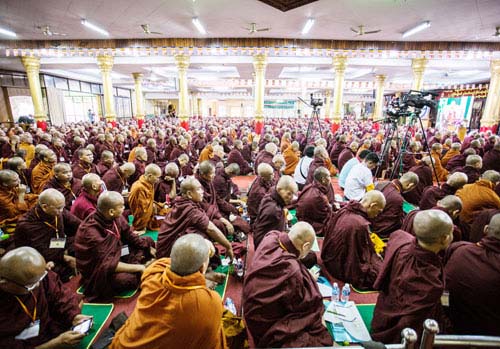
The Ma Ba Tha, an ultra-nationalist movement seeking to “control the spread of Islam” in predominantly-Buddhist Myanmar, and other nationalist monks, protested outside the court and demanded for a tougher punishment.
The District Court rejected his appeal, reportedly stating it “should not interfere” with the lower court’s decision.
These convictions violate international law, including a range of human rights recognized by the Universal Declaration of Human Rights and by international treaties.
Myanmar’s Constitution guarantees the right to freedom of expression, conscience, and to freely profess and practice religion, and this, together with the absence of proof of intent, make the convictions difficult to reconcile with Myanmar’s own laws.
The convictions are a worrying indicator of growing religious intolerance in the country.
Examples from India demonstrate how the very existence of section 295A can chill free speech, even before a case has a chance to reach the courts.
Section 295A has been used to arrest and charge individuals who express allegedly “outrageous” opinions, even without evidence of intent.
Shaheen Dhada and Renu Srinivasan, for example, were originally charged under 295A for criticizing Mumbai’s shut down following the death of right-wing politician, Bal Thackeray, on Facebook. This charge was later modified.
In 2014, Penguin India decided to withdraw publication and destroy remaining copies of Wendy Doniger’s scholarly work “The Hindus: An Alternative History” in response to a case filed under section 295A by a right wing religious group accusing the book of hurting Hindu sentiments.
While police may drop such charges at a later stage, section 295A has still damaged free expression by enabling the initial harassment.
Pakistan has enacted even broader provisions such as section 295C of the Pakistan Penal Code, criminalizing words, representations, imputations, innuendos, or insinuations, which directly or indirectly, lead to “defiling the sacred name of the Holy Prophet”.
Courts are even more willing to dispense entirely with proof of intent or any objective standard for what constitutes blasphemy under this section.
The UN Human Rights Committee established by the International Covenant on Civil and Political Rights (a key human rights treaty to which India and Pakistan are parties), has emphasized that, “Prohibitions of displays of lack of respect for a religion or other belief system, including blasphemy laws, are incompatible with the Covenant”.
The only limited exception under the Covenant would be for proportionate and non-discriminatory measures to prohibit “advocacy of … religious hatred that constitutes incitement to discrimination, hostility or violence”; section 295A, and in Pakistan, section 295C, fall far short of this threshold.
The incompatibility of these laws with international human rights, as well as their discriminatory application, renders the proceedings and punishments based upon them arbitrary.
The concern is all the more acute when the judicial systems lacks independence or impartiality, as the ICJ has found to be the case in Myanmar, or where blasphemy trials are grossly unfair and the prescribed punishment is mandatory death penalty, as in Pakistan.
Those who support prosecutions under the blasphemy laws may honestly believe they are protecting the dignity of their religion, but by violating human rights such prosecutions deny the human dignity of the defendants and undermine the rule of law for all.
The laws must be repealed or fundamentally changed, ongoing prosecutions ended, and those imprisoned for their beliefs or protected speech immediately and unconditionally released.
Photo: Zarni Phyo/The Myanmar Times
Jul 19, 2015 | News
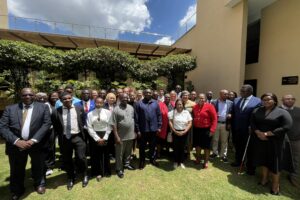
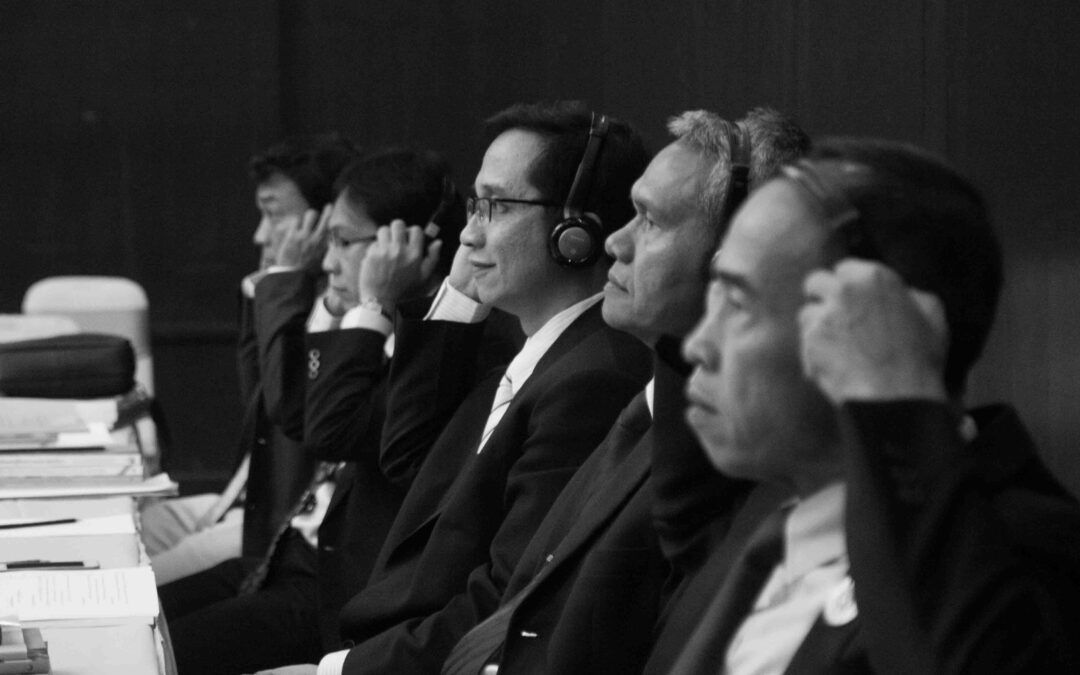
On 18-19 July 2015, the ICJ held a workshop on “The Protection of Victims in Criminal Cases” for 35 judges in Thailand’s deep South. This is the fifth workshop the ICJ has held with the judges of Region 9 since 2011.
The objective of the workshop, held in Hat Yai, was to discuss how to improve procedural measures to protect victims in Thailand with reference to international law and standards.
Speakers at the workshop included Justice John Lawrence O’Meally, an ICJ Commissioner from Australia, Judge Dol Bunnag, Chief Judge of the Juvenile and Family Court of Sakonnakorn Province, Chief Judges from Region 9, and Marie Guiraud, International Civil Party Lead Co-Lawyer at the Khmer Rouge Tribunal in Cambodia.
Background:
Previous ICJ workshops with the Judges of Region 9 have covered the following topics:
- Rule of Law and Strengthening the Administration of Justice in the Context of the Application of Emergency Laws in the Southern Border Provinces (2011)
- Rule of Law and Strengthening the Administration of Justice in the Context of Bail in the Southern Border Provinces (2012)
- Rule of Law and Strengthening the Administration of Justice in the Context of Habeas Corpus in the Southern Border Provinces (2012)
- The Principle of Inadmissibility of Evidence Obtained by Unlawful Means and Hearsay Evidence: International Standards Compared to Thai Law (2014)