May 21, 2015 | News
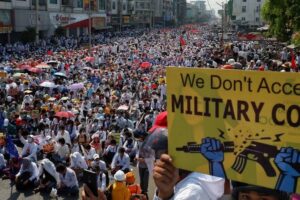
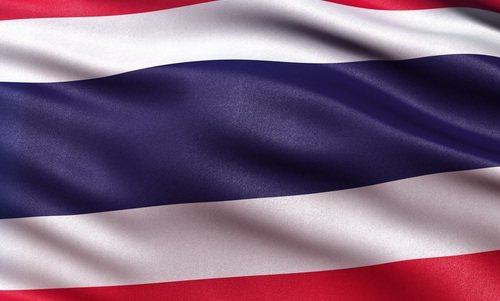
On the one-year anniversary of the military coup of 22 May 2014, the ICJ urges Thailand to restore democracy and the rule of law, revoke the repressive laws passed since the coup, and ensure that any revised Constitution meets international human rights and rule of law standards.

May 21, 2015 | News
The ICJ and the Human Rights Commission of Pakistan (HRCP) have expressed deep concern that following the 21st amendment, juveniles suspected of committing offences related to terrorism could end up being tried by the newly constituted military courts.
May 19, 2015 | News
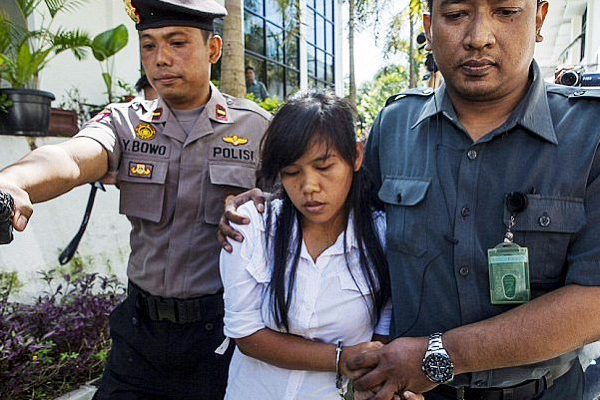
In a letter sent this week, the ICJ urged President Joko Widodo to grant Mary Jane Veloso, a Filipino national on death row in Indonesia, a permanent reprieve from execution and to impose a moratorium on executions, with a view of abolishing death penalty in the near future.

May 15, 2015 | News
The ICJ today condemned the conviction of six human rights defenders after an unfair trial lasting less than five minutes. The six were charged in connection with their participation in a peaceful demonstration against the fatal shooting of a protestor in Letpadaung.
They were sentenced to four years and four months in prison with hard labour.
“Under both international and Myanmar law, a fair trial means independent judges, the need for evidence of guilt beyond a reasonable doubt, and due process. All of these requirements were ignored in the case of these accused, who must be immediately and unconditionally released,” said Sam Zarifi, the ICJ’s Regional Director for Asia and the Pacific.
“Instead of prosecuting peaceful protestors, the Myanmar government must hold those responsible for the killing in Letpadaung accountable and provide justice,” he added.
The ICJ attended today’s hearing at the Yangon Dagon Township Court of Daw Naw Ohn Hla, Daw Sein Htwe, U Nay Myo Zin, Ko Tin Htut Paing, Daw Lay Lay @ Daw San San Win and U Than Swe, who were sentenced for violating Article 18 of the Peaceful Assembly and Peaceful Procession Law, as well as a series of offences under the Penal Code.
These offences include assaulting or preventing a public servant from the discharge of his duty (Section 353); rioting (Section 147); publishing or circulating information which may cause public fear or alarm and may incite persons to commit offences “against the State or against the public tranquility” (Section 505(b)).
It is unclear whether an appeal will be filed, but the ICJ understands that the accused’s appeal in this case would be highly unlikely to succeed.
The ICJ has observed and documented the case’s pre-trial and trial phases and considers that they grossly violate international standards of fair trial.
Bail has been denied to all the accused after hearings that last less than five minutes. The accused have also complained to the ICJ about poor prison conditions, non-nutritious or edible food, dirty water and no access to radio or television.
These do not comply with international standards, including the United Nations Standard Minimum Rules for the Treatment of Prisoners.
The ICJ urges the Myanmar authorities to drop all charges against the accused and take effective measures to ensure that such violations do not reoccur in this or future cases.
The ICJ calls upon the Myanmar authorities and the judiciary to take measures, in law and practice, to ensure that the judiciary is able to decide cases independently and impartially as a separate and co-equal branch of the government.
Background:
The accused were arrested and detained on 30 December 2014 for the lawful exercise of their right to freedom of peaceful assembly.
They protested in front of the Chinese embassy in Yangon calling on the Myanmar authorities to carry out an urgent and impartial investigation into the death of Daw Khin Win.
She was shot dead on 22 December 2014 while demonstrating against illegal land confiscations and forced evictions over the Letpadaung copper mine in Monywa.
There has been so far no arrest or prosecution for the use of incendiary weapons as a crowd-control agent in Letpadaung in 2012 or for the shooting of Daw Khin Win last year.
Contact:
In Bangkok: Sam Zarifi, ICJ Regional Director, Asia-Pacific Programme, e: sam.zarifi(a)icj.org
In Myanmar: Vani Sathisan, ICJ International Legal Adviser, t: +95 9250800301 ; e: vani.sathisan(a)icj.org
May 13, 2015 | News
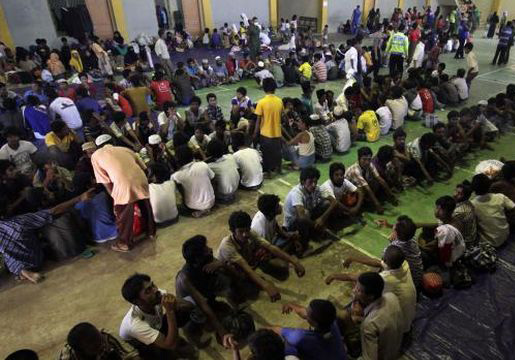
The ICJ today condemned the decisions of the governments of Indonesia and Malaysia to turn away and push back boats carrying hundreds of Bangladeshis and Rohingyas, including women and children, out to sea.
The ICJ emphasized that the increase in the number of Rohingya arrivals in Indonesia and Malaysia underscores the need to address the root causes that drive these people to set off on these perilous journeys, including the longstanding human rights abuses to which Rohingyas are subjected.
The decision by the two governments to return the boats to sea came after the arrival of about 2,000 people, mostly believed to be Rohingya and Bangladeshi nationals, onto the shores of Malaysia and Indonesia earlier this week.
“This should be a wake-up call to ASEAN that human rights is not an internal affair of one Member State,” said Sam Zarifi, ICJ’s Regional Director for Asia and the Pacific.
“Had there been action on the part of ASEAN early on to protect the rights of Rohingyas in Myanmar, this looming humanitarian crisis would not have happened,” he added.
The large majority of Rohingyas have fled Myanmar because of the discrimination and deadly violence they face there as members of a religious minority.
Many of them had no choice but to resort to callous smugglers.
However, a recent crackdown on human trafficking in both Thailand and Malaysia has spooked smugglers who, in order to avoid arrest, have abandoned boatloads adrift at sea instead of taking them ashore.
It is reported that approximately 6000 Rohingyas and Bangladeshi are now on boats adrift in the Andaman Sea in poor and overcrowded conditions.
“The decisions of the Indonesian and Malaysian governments constitute an abject failure of their duty to increase search-and-rescue efforts at sea and to provide humanitarian relief to those in need. Moreover, pushing these people back out to sea is a life-endangering practice and in no way does it provide a safe and effective solution,” said Zarifi.
Under international law, the act of pushing those boats back to the high seas constitutes a collective expulsion and may constitute a violation of the principle of non-refoulement.
Such a practice is also likely to lead to violations of the right to seek and enjoy asylum from persecution, of the right not be subjected to torture and other ill-treatment, and of the right to life.
On 29 May 2015, senior officials and representatives from at least 6 ASEAN member states will be in Thailand to have a “Special Meeting on Irregular Migration in the Indian Ocean”.
“ASEAN member states must ensure that any regional decision taken on this issue will be one that adequately and meaningfully protects the lives of people who embark on those desperate journeys across the Indian Ocean,” added Zarifi.
The ICJ urges ASEAN member states to stop the practice of returning boatloads of asylum-seekers and migrants to the sea and to immediately adopt effective regional measures in line with international human rights standards.
The ICJ also urges ASEAN to strengthen its regional human rights mechanism so that it would be able to effectively address violations of human rights in the region.
Contact:
Emerlynne Gil, ICJ Senior International Legal Adviser, in Bangkok, email: emerlynne.gil(a)icj.org or mobile: +66 84 092 3575
Picture: EPA/Zikri Maulana