May 11, 2015
Today, the ICJ made a submission to the Committee on Economic, Social and Cultural Rights in advance of the examination of Thailand’s initial and second periodic reports under the International Covenant on Economic, Social and Cultural Rights.
The submission provides the Committee with information about certain obstacles that undermine the implementation of the Covenant.
First, the ICJ highlights the obstacles to the enjoyment of the rights guaranteed by the Covenant that have arisen as a result of the new legal and institutional framework since the Thai military implemented Martial Law nationwide on 20 May 2014 and staged a military coup on 22 May 2014.
The submission further describes barriers faced by women to their enjoyment of their rights under the Covenant on the basis of equality and freedom from discrimination.
The submission concludes with a number of recommendations.
Thailand-ICJ CESCR submission-Advocacy-non legal submission-2015-ENG (full text in English)
Apr 27, 2015 | News
The ICJ urged the Government of Indonesia today to stop the imminent execution of nine persons convicted of drug-related offenses.
The ICJ emphasized that the death penalty constitutes a denial of the right to life and freedom from cruel, inhuman, or degrading punishment.
Emerlynne Gil, ICJ’s Senior Legal Advisor, said: “The government is trying to send the message that it is forcefully cracking down on crime, especially on drug-related offenses. Extinguishing the lives of nine people will almost certainly not serve to reduce crime, but it will clearly subvert human rights and the rule of law.”
Recent studies have called into question the notion of any meaningful deterrent effect of capital punishment on the commission of crimes, the ICJ says.
“Indonesia, by imposing the death penalty on those convicted in drugs related cases, is violating its obligations under the International Covenant on Civil and Political Rights,” Gil added.
Indonesia is a State Party to the ICCPR, having acceded to it in 2006.
The ICJ opposes capital punishment in all cases without exception.
In line with the plea by the UN General Assembly in repeated resolutions, the ICJ calls on the Government of Indonesia, as a first step, to establish a moratorium with a view of abolishing the death penalty in the near future.
Background
Nine persons are scheduled to be executed in the next few days: Myuran Sukumaran (Australia), Andrew Chan (Australia), Mary Jane Veloso (Philippines), Rodrigo Gularte (Brazil), Sylvester Obiekwe Nwolise (Nigeria), Okwudili Oyatanze (Nigeria), Martin Anderson (Ghana), Zainal Abidin (Indonesia), and Rahem Agbaje (Nigeria).
Last month, the UN Human Rights Committee strongly criticized Indonesia for its failure to respond to the Committee’s call in 2013 to stop executing prisoners for drug-related crimes.
After a regular review of Indonesia’s human rights record, the Committee in August 2013 urged the State to reinstate the de facto moratorium on the death penalty and to ensure that, if capital punishment was maintained, it was only for the most serious crimes, which do not include drug-related offences.
In December 2014, the UN General Assembly adopted a resolution, for the fifth time since 2007, emphasizing that that the use of the death penalty undermines human dignity and calling on those countries that maintain the death penalty to establish a moratorium on its use with a view to its abolition. A majority of 117 UN Member States voted in favor of a worldwide moratorium on executions as a step towards abolition of the death penalty, with only 37 opposed.
Contact:
Emerlynne Gil, ICJ Senior Legal Adviser, in Bangkok, t: +66840923575, e: emerlynne.gil(a)icj.org
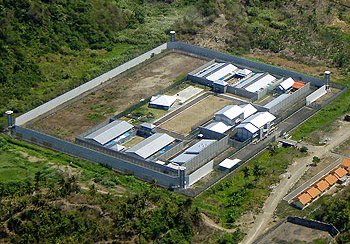
Photo: aerial view of a prison on Nusakambangang, the island where the executions take place.

Apr 23, 2015
An opinion piece by James Tager, a Satter Fellow from Harvard Law School currently working with the ICJ on research focusing on business and human rights in the Asean.
This week, the Asean People’s Forum (APF), an annual convergence of civil society groups coming from all Asean countries, will be held in Kuala Lumpur.
For several days, Kuala Lumpur will be hosting discussions on a number of broad issues of concern, including human rights, development, trade, and the environment.
One way in which the APF is significant is that it constitutes one of very few opportunities for civil society voices to be heard at the regional level.
Asean has always maintained a rather dismissive and condescending approach when dealing with civil society organizations (CSOs).
This approach is very much apparent in the closed and opaque manner in which the Asean Intergovernmental Commission on Human Rights (AICHR) approaches its work.
This has been evident in its development of important regional human rights instruments, such as the Asean Human Rights Declaration (AHRD) and the various thematic studies the AICHR promised to undertake for each year of its Five-Year Work Plan.
Marginalization of civil society has also been reflected in the recently adopted, but not formally released, Guidelines on the AICHR’s Relations with Civil Society Organizations.
One of the AICHR’s thematic studies, on the question of corporate social responsibility, was initiated in December 2011.
Civil society groups, including some with expertise in this area, made queries to the AICHR and offered to contribute to the development of the study.
But with no AICHR procedures in place for CSOs to comment, these offers were essentially ignored.
The development of the study was kept under wraps, with meetings on this topic largely involving handpicked experts, some of whom were not independent.
The resulting Baseline Study on Corporate Social Responsibility and Human Rights in Asean was completed in June of 2014.
It has since been released to the public and posted on the AICHR’s website.
The released document exposes the results of the AICHR’s dismissive approach to the views of civil society.
The study is disappointing in its lack of meaningful content. Several of its aims – most of which were vague to begin with – are either only vaguely addressed or seemingly forgotten, including any discussion of ‘mechanisms allowing effective access to remedy’ for victims of corporate rights abuses.
There is little critical evaluation of the effectiveness of corporate or governmental policies: at one point, the reader is reassured that although one company has been “frequently accused of being a human rights violator,” the company has a good human rights policy described on its website.
The study’s individual country reports may be more substantial, but that is impossible to know as – almost a year since the study was reportedly completed – they have still not been publicly released.
This lack of transparency is astonishing for an intergovernmental regional human rights organization.
Building a foundation on air?
Reading this document, one could forget that entire Asean communities have had their lives and livelihoods damaged by corporate projects, from hydropower dams to coal mines to deforestation.
The AICHR claims that this study could serve as “the foundation for the establishment of a common framework to accelerate the promotion of corporate social responsibility and human rights in the region.”
To build a human rights framework on this foundation, however, is to build on air.
This work did not have to be an empty exercise for the AICHR, which could have built upon well-developed research such as two reports released by civil society groups: The Asian Forum for Human Rights and Development’s (Forum-Asia) Corporate Accountability in Asean: A Human Rights-Based Approach, and the Human Rights Resource Centre’s (HRRC) Business and Human Rights in Asean: A Baseline Study.
The AICHR’s baseline study itself makes repeated reference to these two reports, but refrains from affirming their sensible recommendations.
The two reports contain page upon page of specific and comprehensive analysis that the official AICHR study appears to lack.
These civil society reports also address the framework of corporate accountability, not just voluntary corporate social responsibility.
If the AICHR wants to create a common framework for human rights in the region, whether for corporate behavior or for other fields, it must collaborate with civil society groups that are already doing this important work.
But if the AICHR decides to keep CSOs at arms-length – rather than invite them to be partners in promoting and protecting human rights within Asean – there will surely be more examples of AICHR studies which say little and which mean less.
Malaysia recently took a significant step in developing a national-level policy on business and human rights, with the launch of its Strategic Framework on a National Action Plan on Business and Human Rights.
One notable aspect of the Framework is its provisions identifying how civil society groups can be actively involved in developing the National Action Plan, by using the document to guide their own actions and by providing input to help shape the Plan’s policy recommendations.
Malaysia’s acknowledgment of the positive role that civil society plays in developing and strengthening human rights policies should be commended.
But more than this, Malaysia should use its time as Asean chair to bring this acknowledgment to a regional level.
Malaysia’s chairpersonship includes this opportunity to set a strong foundation for the next several years of human rights protection and promotion.
Involvement of civil society, and commitment to a significant agenda, will help ensure that this foundation is solid.

Apr 16, 2015 | News
Thailand must strengthen its efforts to solve the apparent enforced disappearance of Karen human rights defender, Pholachi “Billy” Rakchongcharoen, who “disappeared” one year ago this Friday, said the ICJ.
“Thailand must strengthen its efforts to carry out a thorough and effective investigation into Billy’s fate and whereabouts in a manner that complies with its international obligations,” said Kingsley Abbott, International Legal Adviser at the ICJ.
“As part of this process, it is essential that the authorities evaluate the investigation objectively to ensure it has been carried out independently and impartially, that the necessary resources have been allocated, and that all investigative opportunities have been pursued,” he added.
The ICJ reiterates its call for the Department of Special Investigations (DSI) to assume responsibility for the investigation because of the need for the DSI’s special expertise.
The DSI has the power to assume jurisdiction over special criminal cases including complex cases that require special inquiry, crimes committed by organized criminal groups, and cases where the principal is an influential person.
A six-day habeas corpus inquiry monitored by the ICJ and which concluded on 17 July 2014, and a subsequent appeal delivered on 26 February 2015, were unsuccessful in shedding any light on Billy’s fate or whereabouts.
Thailand, as a Party to the International Covenant on Civil and Political Rights, is required to investigate, prosecute, punish and provide a remedy and reparation for the crime of enforced disappearance.
Background
Billy (photo) was last seen on 17 April 2014 in the custody of Kaeng Krachan National Park officials. The officials claimed they detained Billy for illegal possession of honey but released him later the same day.
Billy had been working with ethnic Karen villagers and activists on legal proceedings the villagers had filed against the National Park, the Wildlife and Plant Conservation Department, the Ministry of Natural Resources and Environment, and the former Chief of Kaeng Krachan National Park concerning the alleged burning of villagers’ homes and property in the National Park in 2010 and 2011.
The Royal Thai Government has signaled its recognition of the gravity of the crime of enforced disappearance, and its commitment to combating it, by signing the International Convention for the Protection of All Persons from Enforced Disappearance on 9 January 2012.
The Convention affirms the absolute right not to be subject to enforced disappearance and places an obligation on states to investigate acts of enforced disappearance and to make it a criminal offence punishable by appropriate penalties that take into account its “extreme seriousness”, and to take the necessary measures to bring those responsible to justice.
Contact:
Kingsley Abbott, ICJ International Legal Adviser, t: +66 (0) 94 470 1345 ; e: kingsley.abbott(a)icj.org
Thailand-Billy one year-News-PressRelease-2015-THA (full text in PDF)
Apr 15, 2015
In a briefing paper released today, the ICJ provides answers to key questions regarding the legal framework and political context of Pakistan’s move to allow military courts to try civilians for offenses allegedly related to terrorism.
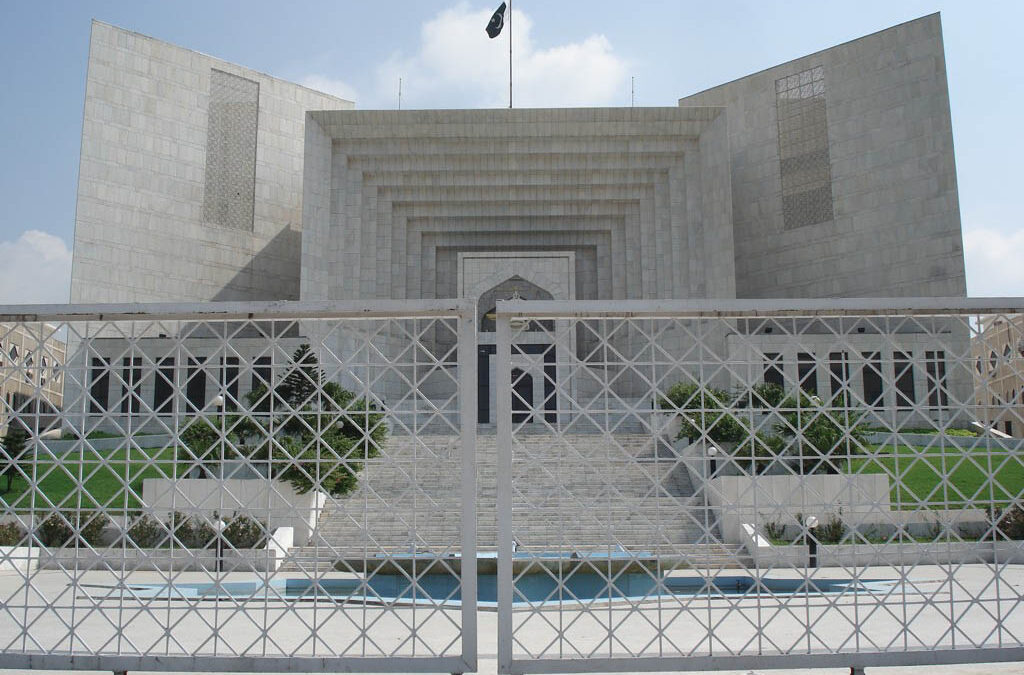
The ICJ is publishing this paper as the Supreme Court of Pakistan (photo) is about to resume hearings (tomorrow), in a constitutional challenge to the newly enacted legal framework granting jurisdiction to military courts to try civilians for terrorism related offences.
The briefing paper analyses the new provisions and military court proceedings in the light of international standards guaranteeing the right to fair trial before independent and impartial courts.
“Pakistan’s new system of ‘military justice’ falls well short of domestic and international fair trial standards, flouts previous Supreme Court rulings, and goes against a regional and global trend of limiting rather than expanding military courts’ jurisdiction,” said Sam Zarifi, ICJ’s Asia director.
Earlier this month, the Chief Justice of Pakistan, Nasir-ul-Mulk, constituted a full-bench of the Supreme Court comprising of all 17 justices to hear over a dozen petitions that argue that the extension of military court’s jurisdiction over civilians is a violation of the right to a fair trial and the independence of the judiciary, and a breach of the principle of separation of powers.
“The failure of the government and military authorities to make public information about the time and place of the trials, the charges against accused persons as well as the procedures used by military courts have confirmed fears of human rights groups and the legal community that the military trials in Pakistan are secret, opaque and violate Pakistan’s domestic and international fair trial obligations,” Zarifi added.
“The Supreme Court has in the past contributed positively to protecting human rights, notably in cases of enforced disappearance and the rights of religious minorities,” he said.
“All eyes are now on the Court to remedy the militarization of justice in progress in Pakistan under the guise of combatting terrorism.”
Background
On 6 January, Pakistan’s Parliament passed the 21st amendment to the Constitution and amendment to the Army Act, 1952, to allow military tribunals to try civilians accused of belonging to “a terrorist group or organization using the name of religion or a sect” carrying out acts of violence and terrorism.
On 2 April, military courts delivered their first set of verdicts under the new legal provisions. Seven accused persons were convicted for undisclosed offences: six were sentenced to death and one was sentenced to life imprisonment.
Contact
Sam Zarifi, ICJ Asia Pacific Regional Director (Bangkok), t: +66 807819002; email: sam.zarifi(a)icj.org
Reema Omer, ICJ International Legal Adviser for Pakistan (London), t: +447889565691; email: reema.omer(a)icj.org
Pakistan -Q and A Military Courts-Advocacy-Analysis Brief-2015-ENG (full text in PDF)