Apr 7, 2015
The draft Prevention of Terrorism Act (POTA) should either be rejected or amended by the parliament of Malaysia, said the ICJ today in an open letter to the Speaker of the Lower House of the Parliament of Malaysia.
“This law is really prone to abuse and violates international human rights standards,” said Emerlynne Gil, ICJ International Legal Adviser for Southeast Asia.
“This is just the unlawful Internal Security Act with another name. Persons may be sent to prolonged administrative detention on security grounds, on a permanent basis, while the draft law also precludes any effective inquiry by the judiciary into the lawfulness of any other aspect of the arrest or detention of persons arrested under this law.”
“There is a very high threshold that needs to be met to justify the creation of a system of administrative security detention. The government of Malaysia has not shown how the current situation in the country meets this threshold,” Gil added.
Malaysia-Open Letter to Parliament on POTA-Advocacy-open letter-2015-ENG
Mar 31, 2015 | News
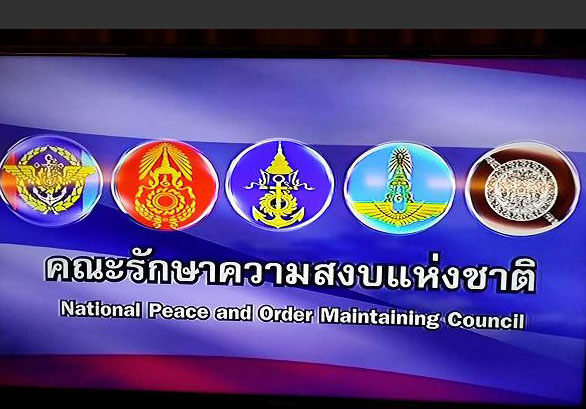
Thailand must lift martial law and return the country to civilian rule, instead of invoking arbitrary powers under Article 44 of the country’s interim constitution, said the ICJ today.
Today, Prime Minister and head of the ruling National Council for Peace and Order (NCPO), General Prayut Chan-o-cha, announced that he had submitted a revocation of the Martial Law, imposed nationwide on 20 May 2014, to King Bhumibol Adulyadej.
Gen. Prayut stated that in place of Martial Law, he would invoke Article 44 of the Interim Constitution, which effectively gives him the authority to rule without any legal restrictions or accountability.
“Ending Martial Law is a necessary step, but replacing it with Article 44 does not address the serious violations of Thailand’s obligations under international human rights law. Article 44 of the Interim Constitution is drafted so broadly that it could give the head of the junta even greater powers than Martial law,” said Wilder Tayler, Secretary General of the ICJ. “Article 44 would allow the head of the NCPO to issue any orders he wishes under the pretext of strengthening public unity and national security, and also deems any such order to be legal and constitutional, removing any possibility of judicial oversight.”
Article 44 of the interim Constitution gives the NCPO power to give any order deemed necessary for “…the benefit of reform in any field and to strengthen public unity and harmony, or for the prevention, disruption or suppression of any act which undermines public peace and order or national security, the Monarchy, national economics or administration of State affairs …,” and provides that any such order “…is deemed to be legal, constitutional and conclusive…”
“Article 44 violates the fundamental pillars of the rule of law and human rights, including equality, accountability, and predictability. Article 44 could potentially allow for arbitrary rule by the head of the NCPO, so using it would not be a real improvement over the Martial Law, which at least has been in existence since 1914, and has a degree of clarity to its scope and application,” said Tayler.
“The NCPO should revoke Martial Law and also explicitly commit itself to observing Thailand’s international obligations, which means avoiding any use of Article 44,” he added.
International law strictly regulates attempts by governments to suspend or restrict protection for human rights on grounds of emergency.
Such “derogations” are permissible under Article 4 of the International Covenant on Civil and Political Rights (ICCPR), to which Thailand is a State Party, only “in time of public emergency which threatens the life of the nation”.
“The situation in Thailand does not meet the extremely high threshold required for derogating from international human rights law,” said Tayler. “Thai authorities have repeatedly promised a rapid return to the rule of law and respect for human rights in the country, but replacing Martial Law with rule by Article 44 doesn’t suggest an improvement for the rule of law or respect for human rights.”
Thailand-Martial Law-Article 44-News-Press release-2015-THA (Thai version, full text in PDF)

Mar 31, 2015 | News
The present form of the recently tabled draft Prevention of Terrorism Act, also known as POTA, violates international standards and seeks to reintroduce detention without trial, said the ICJ.
The Malaysian government claims that the draft POTA, which was tabled yesterday in Parliament for its first reading, together with 7 other amendments, is aimed at curbing terrorist threats in the country.
“The draft law, as it is now, is susceptible to abuse,” said Emerlynne Gil, ICJ’s International Legal Adviser for Southeast Asia. “It is very disturbing that the POTA has very similar elements that were in the problematic and now repealed 1960 Internal Security Act that was previously used to silence government opposition and curtail freedom of expression in the 1980s.”
For example, the ICJ notes with concern that the draft law allows a “board” that is not a court to order and extend detention for up to four years.
Only one of the members of the board is required to have any legal training at all.
Detention orders issued by the “board” cannot be challenged in any court, except on procedural issues.
The ICJ urges members of Parliament in Malaysia to amend the existing draft law so that it will not reintroduce draconian preventive detention measures, as in the repealed Internal Security Act.
The Parliament of Malaysia should either reject the draft law or amend its provisions to respect human rights.
CONTACT:
Emerlynne Gil, ICJ International Legal Adviser, e: emerlynne.gil(a)icj.org or m: +668 4092 3575
Mar 30, 2015 | Advocacy
The statement was signed by a group of nine human rights organizations, including the ICJ.
The statement can be read here:
ASEAN-Statement on Shafee-AICHR-Advocacy-2015-ENG (full text in PDF)

Mar 26, 2015 | News
The conviction of the Maldives’ former president, Mohamed Nasheed, on terrorism charges after a grossly unfair trial marks a significant deterioration of the independence and impartiality of the country’s judiciary, said the ICJ.
On 13 March, Mr. Nasheed (photo) was sentenced to 13 years in prison for the dismissal and alleged unlawful detention of the Chief Judge of the Criminal Court, Mr. Abdullah Mohamed, in 2012, when Mr. Nasheed was president.
He was convicted of an “act…of kidnapping or abduction of person(s) or of taking hostage(s)” under Section 2(b) of the Prevention of Terrorism Act 1990.
“The Maldivian judiciary’s independence has been compromised for years by serious pressure from the government, and this grossly unfair conviction highlights the numerous problems with the politicization of the judiciary in the country,” said Sam Zarifi, the ICJ’s Regional Director for Asia and the Pacific. “It is crucial for Maldivian authorities to allow Mr. Nasheed to appeal his case effectively, with transparency and monitoring by Maldivian and international observers.”
The case’s pre-trial phase and trial were marked by gross violations of international standards of fair trial, including Article 14 of the International Covenant on Civil and Political Rights, to which the Maldives acceded in 2006.
Two of the judges on the three-judge bench testified as witnesses against Mr. Nasheed in the 2012 investigation; these statements were submitted as evidence in the present trial.
Mr. Nasheed’s defense team was not allowed to be present on his behalf during the first proceeding, nor was he given the opportunity to seek bail.
The defense team was repeatedly denied full access to prosecution evidence and witnesses or to regularly consult with Mr. Nasheed during the course of the trial.
When Mr. Nasheed’s defense team recused itself in protest of the lack of fairness, the court proceeded with the trial without legal representation present for Mr. Nasheed rather than granting him the opportunity to obtain new counsel. The defense was also denied the opportunity to call its own witnesses.
Mr. Nasheed now has the right to appeal the conviction, but his right to appeal has been infringed by the unprecedented amendment of the statutory period for appeal from 90 days to 10 days, via Supreme Court circular six weeks prior to the trial.
In addition, the court has still not released to Mr. Nasheed’s defense team the full court record required to prepare and present an effective appeal within this accelerated timeframe.
The ICJ has previously documented the politicization of the judiciary and the polarized political climate in the Maldives, calling attention to a justice system characterized by vested interests and political allegiances rooted in the country’s authoritarian past (See Maldives: Securing an Independent Judiciary in a Time of Transition (February 2011)).
“Recent events reflect a justice system that still remains deeply politicized along the same lines of entrenched political loyalties that pre-date the transition period,” Zarifi said. “The Maldivian judiciary must allow a proper appeal in this case if it is to establish itself as a separate and equal branch of the government dedicated to supporting the rule of law.”
The ICJ urged Maldivian authorities to ensure Mr. Nasheed’s defense team full access and adequate opportunity to prepare an effective appeal, and to ensure that the appeal proceeding is conducted fairly and transparently, with full access to media and domestic and international observers, in compliance with fair trial and due process standards under both Maldivian and international law.
The Maldives must also take effective measures to ensure that such violations do not reoccur in this or future cases.
Background information can be downloaded here:
Maldives-Background Brief Nasheed Trial-Advocacy-Anylysis brief-2015-ENG (full text in PDF)