Dec 11, 2014 | News, Publications, Reports
Two years after prominent Laotian activist Sombath Somphone was last seen at a police checkpoint, the Laotian government must do more to investigate his suspected enforced disappearance, said the ICJ in a new report released today.
In the report, Missed Opportunities: Recommendations for Investigating the Disappearance of Sombath Somphone, which was co-authored by Michael Taylor QPM, a leading international investigator, the ICJ noted that despite the passage of two years since Sombath Somphone’s apparent enforced disappearance on December 15, 2012, very little information about the progress of investigation has been released to the public or his family.
“The fact that the Lao PDR government’s last report on the progress of the investigation was released over 18 months ago raises serious concerns as to whether the Laotian authorities are in fact carrying out an effective investigation into this case as they are required to do under international law,” said Sam Zarifi, ICJ’s Regional Director for Asia and the Pacific.
“It is not enough for the Laotian government simply to assert it is investigating this case. International law obliges Lao PDR authorities to conduct an investigation that is credible and effective, along the lines suggested in ICJ’s report.”
Among other recommendations, the ICJ’s report suggests a range of investigative steps that should be addressed by the authorities of Laos PDR including establishing a relationship with Sombath Somphone’s family, carrying out a proper technical assessment of the Closed circuit Television (CCTV) footage of his abduction, analyzing relevant cell phone information from telephone cells and towers, and mandating an independent expert body to review the results of the investigation to date and make recommendations.
The Lao PDR government has denied any involvement in Sombath Somphone’s abduction.
But reports released by police reveal a wholly inadequate investigation that has not come any closer to a credible explanation as to his fate or whereabouts.
“The ICJ hopes that this report will assist the Laotian authorities to identify potential leads in the case so that the truth as to the whereabouts and fate of Sombath Somphone can finally be established and those who are responsible for criminal conduct and violations of his rights can be brought to justice,” said Zarifi.
“One of the conclusions of the ICJ’s review of the publicly available material regarding this case is that this case remains ‘eminently solvable’ if proper investigative methodology is followed.”
Key recommendations in the report include:
- Formulate a sensitive family liaison strategy that ensures that their right to be regularly provided with information about the progress and results of the investigation are respected in a manner that also ensures the effectiveness of the investigation.
- Implement a CCTV strategy that ensures the capture and systematic analysis of all relevant material and the submission of material to accredited independent and expert laboratories that will provide the best opportunity for enhancement of critical detail.
- Seek the assistance of appropriate agencies in other countries in the forensic examination and analysis of crime scenes, vehicles, phone and CCTV data, and any physical or other evidence.
- Ensure an independent comprehensive review of the scope, methodology and results of the investigation to date is carried out by a competent, independent and relevantly expert body. Such a body should have the authority to request and receive all relevant information, question individuals and make recommendations. All officials and experts who have been involved in the investigation to date should cooperate and provide information to the independent body carrying out the review.
Contact:
Sam Zarifi, ICJ Asia Regional Director, (Bangkok), t:+66 807819002, e-mail: sam.zarif(a)icj.org
Kingsley Abbott, ICJ International Legal Adviser, (Bangkok), t:+66 944701345, e-mail: kingsley.abbott(a)icj.org
Background:
Sombath Somphone, Lao PDR’s most prominent community development advocate and a Ramon Magsaysay Award winner, was last seen on December 15, 2012, on a road in the capital Vientiane.
Closed circuit Television footage showed him being stopped at a police checkpoint, exiting his vehicle, and after his vehicle was driven away by an unidentified man, getting into another vehicle with unidentified men and being driven away. He has not been seen since.
As a State Party to the International Covenant on Civil and Political Rights (ICCPR and Convention Against Torture and Other, Inhuman or Degrading Treatment or Punishment (CAT), the Government of Lao PDR has the duty to carry out independent, impartial and effective investigations into cases of alleged enforced disappearance.
Download the report in PDF:
Lao-Somphone disappearance-Publications-report-2014-ENG (full report in English, PDF)
Lao-Somphone disappearance-Publications-report-2014-LAO (full report in Laotian, PDF)
Read also:
Lao PDR: government must tackle enforced disappearance case
ICJ submission on the Universal Periodic Review of Lao
Dec 10, 2014
An opinion piece by Reema Omer, ICJ Legal adviser in Pakistan.
The 64th world Human Rights Day held 10 December marked thirty months since Pakistan passed the National Commission for Human Rights Act, providing for the establishment of a National Commission for Human Rights (NCHR) for the promotion and protection of human rights in the country.
The Government’s failure to constitute the legally mandated Commission is another indictment of its commitment to human rights.
A NCHR by itself will not fix all of Pakistan’s serious human rights problems, but if constituted properly, the NCHR can be an important step forward.
In South Asia, Pakistan is the only country that has not established a National Human Rights Institution (NHRI) -India constituted a National Human Rights Commission in 1993, Sri Lanka in 1996, Nepal in 2000, and Bangladesh in 2008.
This deficiency was manifest when Pakistan accepted multiple recommendations during the 2012 review of its human rights record by the Untied Nations (the Universal Periodic Review) that called on Pakistan to speedily operationalize the National Commission for Human Rights.
It is critical – for at least three reasons – that Pakistan swiftly establishes a NCHR compliant with the UN Principles relating to the Status of National Institutions (Paris Principles), which provide the minimum standards required by national human rights institutions to be considered credible and effective.
First, a major function of a national human rights commission is to ensure access to remedies to victims of human rights violations and accountability for perpetrators.
Pakistan has long faced a crisis of impunity, with perpetrators of the gravest human rights violations, especially those belonging to state security agencies, escaping accountability with ease.
Questionable political will, lack of legal aid and a judicial system fraught with delays are some of the reasons why victims have little chance at getting justice.
An independent and effective NCHR, with powers of investigation and quasi-judicial authority, can provide an additional avenue for redress.
In India, for example, the NCHR played an integral role in ensuring compensation for victims of the anti-Muslim Gujarat riots in 2002, and fake “encounter killings” in Manipur in 2014.
Second, another important function of NHRIs is to advise on existing laws, policies and proposed legislation, as well as their implementation, particularly on their compliance with international human rights laws and standards.
In the last couple of years alone, Pakistan has passed multiple laws that violate its international human rights obligations.
The Fair Trial Act, 2013 and the Protection of Pakistan Act, 2014, are just two examples.
In addition, Pakistani is currently debating on a bill that aims to incorporate the Convention against Torture and Other Cruel, Inhuman or Degrading Treatment or Punishment (CAT), which Pakistan ratified in 2010, into domestic law.
The proposed bill has many deficiencies, which could benefit from a detailed analysis by a competent body familiar with international human rights law.
And finally, NHRIs have the responsibility to promote human rights, including by organizing public awareness and education programs as well as trainings public officials.
Disturbingly, human rights continue to be thought of as “Western propaganda” in Pakistan, including by some public officials.
NGOs working in the human rights field as often demonized as working on a “foreign agenda” for personal enrichment.
In such a climate, it is essential that a national administrative body counters the negative propaganda, and makes the public and public officials more aware of their rights as well as their human rights obligations.
However, for a NCHR to be effective in all these areas, it must comply with the Paris Principles, which require independence and pluralism, and the capacity to participate in essential human rights work, including engaging with the Government on “any situation of violation of human rights which it decides to take up”.
The NCHR Act, 2012, significantly limits the Commission’s mandate where the armed forces are accused of committing human rights violations.
In such cases, the Commission is only authorized to seek a report from the Government, and make recommendations if it sees fit.
The law further emphasizes that the functions of the Commission “do not include inquiring into the act or practices of the intelligence agencies”.
As the NCHR law stands, it seems questionable that the Commission will get accreditation by the International Coordinating Committee of NHRIs, which is a requirement for an NHRI to be recognized internationally.
Also, unless its mandate is broadened to include intelligence and security agencies –accused of the gravest violations –it risks being toothless, or even worse, a cover for government inaction.
It is therefore paramount that the Pakistani Government meet the commitments made to the people of Pakistan and the international community by swiftly establishing the NCHR after amending the NCHR Act, 2012, to give the Commission mandate to investigate human rights violations committed by the military, including the intelligence agencies.

Dec 9, 2014 | News
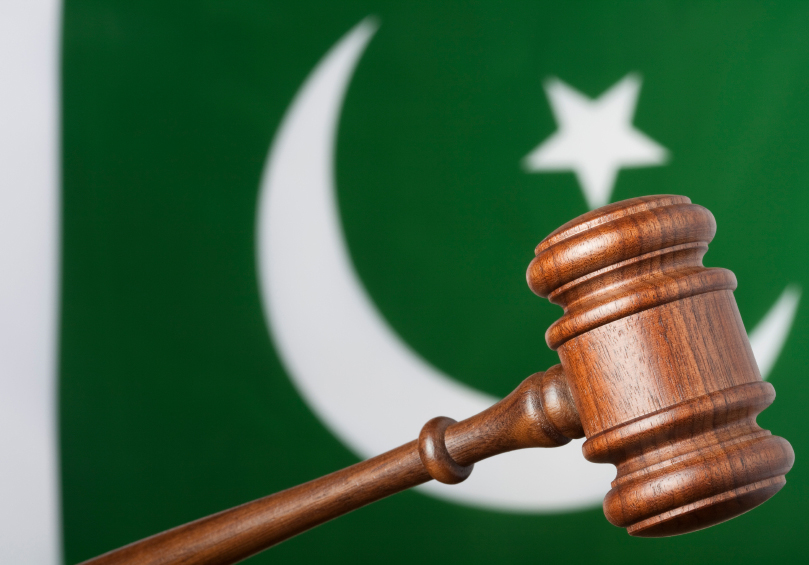
On the eve of the 64th annual world Human Rights Day, the ICJ urges the Pakistani Government to promptly constitute a strong and effective National Human Rights Commission that is compliant with the UN Principles relating to the Status of National Institutions (Paris Principles).
“Independent and credible national human rights institutions can be helpful for protecting and promoting human rights,” said Sam Zarifi, ICJ’s Director for Asia and the Pacific. “The Pakistan Government has been inexplicably dragging its feet despite repeated promises to constitute the Commission.”
In South Asia, India, Sri Lanka, Nepal and Bangladesh have established National Human Rights Institutions (NHRIs), making Pakistan a regional exception.
“A properly constituted national human rights commission will not by itself fix any country’s human rights problems, but it can be part of the solution,” said Zarifi. “Pakistan can and should learn from the lessons of failed NHRIs in the region and constitute an institution that can address the real needs of all people in the country.”
Pakistan passed the National Commission for Human Rights Act in 2012. The law provides for an independent commission with broad powers to promote human rights and to investigate human rights violations.
However, the law significantly limits the Commission’s mandate where the armed forces are accused of committing human rights violations.
In such cases, the Commission is only authorized to seek a report from the Government, and make recommendations if it sees fit.
The law further emphasizes that the functions of the Commission “do not include inquiring into the act or practices of the intelligence agencies”.
“The proposed Commission’s restricted mandate over the armed forces, and especially the intelligence agencies, is of grave concern given that Pakistan’s military and intelligence services are accused of perpetrating gross human rights violations, including enforced disappearances, extrajudicial killings, and torture and ill-treatment,” Zarifi added.
“A human rights commission that does not have jurisdiction over abuses by these actors risks being toothless and ineffective—and worst, a cover for continuing government inaction in response to these violations.”
Contact:
Sam Zarifi, ICJ Asia Pacific Regional Director (Bangkok), t: +66 807819002; e: sam.zarifi(a)icj.org
Reema Omer, ICJ International Legal Adviser (London), t: +44 7889565691; e: reema.omer(a)icj.org
Background:
Section 3 (a) (ii) of the Paris Principles, which provide the minimum standards required by national human rights institutions to be considered credible and effective, states that a NHRI should have the power to hear a matter without higher referral over “any situation of violation of human rights which it decides to take up”.
Because of the proposed Commission’s limited mandate over the military, it is questionable whether the proposed National Human Rights Commission is compliant with the Paris Principles.
During its 2012 Universal Periodic Review, Pakistan accepted multiple recommendations to speedily operationalize the National Commission for Human Rights.
Over two years since the Review, there has been little progress in constituting the Commission, let alone amending the law establishing the Commission to ensure that it complies with the Paris Principles.

Dec 3, 2014 | News
The December 2 conviction of journalist David Bergman on contempt charges by the International Crimes Tribunal (ICT) further shrinks the narrowing space for observers to comment on the war crimes proceedings, the ICJ, Amnesty International and Human Rights Watch said.
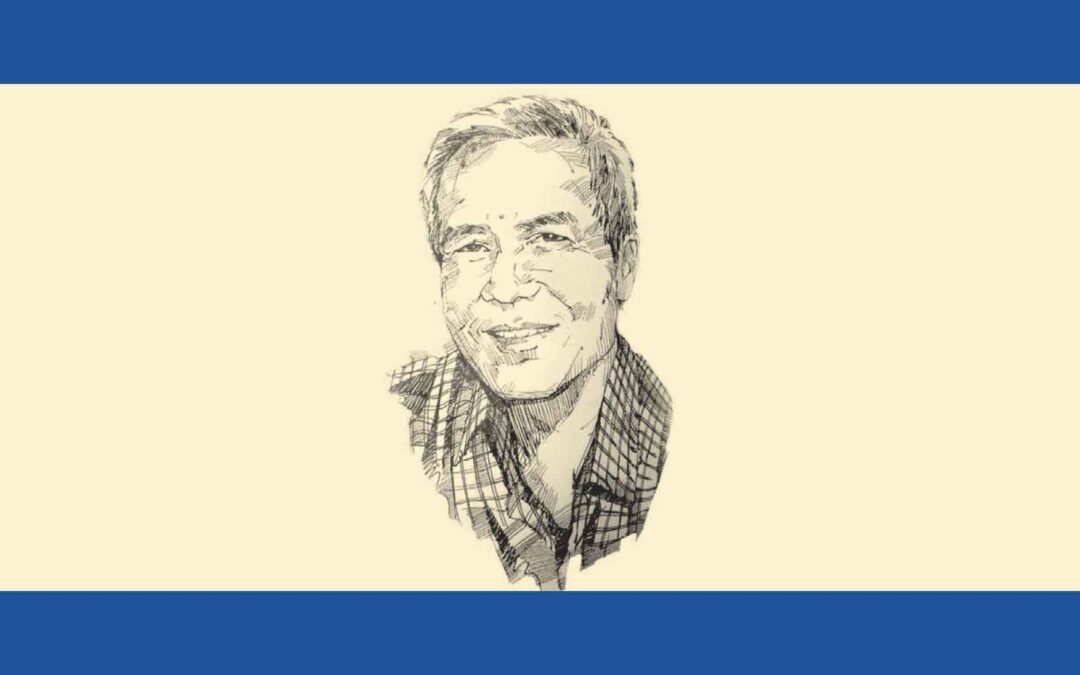
Bergman (photo) was sentenced to a symbolic “simple imprisonment till the rising of the court” and a fine of Taka 5,000 (about US$56) for comments he made in three separate blog postings regarding legal proceedings before the ICT.
The ICT is a specially constituted court set up to bring to account those responsible for grave violations of international law during the country’s 1971 war of independence.
Concerns over its statute, rules of procedure, and practices have been raised since its inception, including by international monitors and legal experts.
“The ICT is dealing with incredibly complex factual and emotional issues of tremendous interest to people in Bangladesh and across the world, and part of this process is establishing public confidence in the legal system,” said Sam Zarifi, ICJ’s Director for Asia. “Holding a credible and highly regarded journalist in contempt for raising important questions doesn’t end the debate surrounding the ICT’s performance, in fact it undermines confidence in the court’s commitment to justice.”
Download the full story in PDF here:
Bangladesh-Conviction of Journalist-News-Press release-2014-ENG

Dec 3, 2014 | News
Vani Sathisan, ICJ’s International Legal Adviser in Myanmar, and Carlos Lopez, ICJ Senior Legal Adviser on Business and Human Rights made presentations at the annual Business and Human Rights Forum.
Vani Sathisan’s statement highlighted the State duty to protect human rights and provide access to remedies; the need for greater cooperation between businesses and local communities; and possibilities for home governments to cooperate on business and human rights issues.
She underscored that the State duty to protect, respect and fulfil human rights is one that is already grounded in international human rights law and accordingly, Myanmar must adopt and enforce laws – including policies, legislation, and regulations – that are preventative and remedial, and to regulate business conduct and protect the economic, social and cultural rights of its people.
Without proper investment, land and environmental laws, as well as an effective judiciary to enforce these laws and provide appropriate judicial remedies, development projects risk being counterproductive for sustainable development and the protection of human rights in Myanmar.
This panel discussion can be viewed on the UN’s Web TV.
Carlos Lopez Carlos Lopez focused on the work of the Committee on the rights of the child on business and human rights through the adoption of General Comment 16 on States obligations regarding the impact of business on the rights of the child.
The Guiding Principles on Business and Human Rights do not establish legal obligations, but elaborate on the practical implications of those obligations. The legal obligations for States to protect, respect and fulfil human rights are contained in international human rights treaties. One of them is the Convention on the Rights of the Child.
Besides examining State reports and providing conclusions and recommendations, the Committee elaborates General Comments to assist States in their implementation of their legal obligations under the Convention. In February 2013 the Committee adopted General Comment 16 on States obligations regarding the business impacts on the rights of the child. This General Comment was necessary:
· First, because in the Committee’s examination of State reports the issue of impacts of economic actors had arisen repeatedly. The General Comment is a more organized response to these practical and recurrent issues.
· Second, the Committee considered that the existing instruments and guidance did not sufficiently address the particular situation and needs of children. GC16 aims at fulfilling that gap in relation with States while the UNICEF Child Rights and Business Principles does so in relation to business enterprises.
The Committee, with the support of a core group comprising UNICEF, ICJ, Save the Children and OHCHR started a process of reflection, research and global and regional consultations (these took place in Kenya, India and Argentina and an international seminar was held in Sion, Switzerland.
This panel discussion can be viewed on the UN’s Web TV.
Carlos Lopez also moderated a Panel on the rights of the child and business enterprises, under the title Measures for implementing the Convention on the Rights of the Child in the context of business operations.