Oct 15, 2014 | News
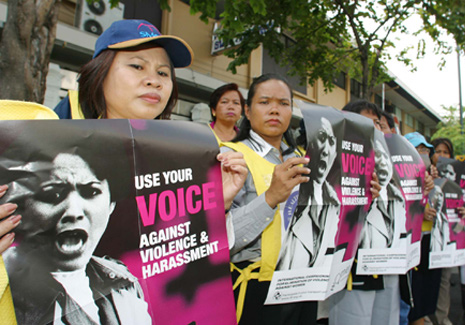
Judges and representatives from judicial institutes from across Southeast Asia are attending a regional workshop to discuss how they can help counter gender-based violence and gender stereotypes.
The workshop, organized by the UN Women Regional Office for Asia and the Pacific, in collaboration with the Office of the Thai Judiciary and the ICJ is held in Bangkok on 15 and 16 October 2014.
This Regional Workshop for Judicial Training Institutions on Good Practices in Promoting Women’s Human Rights Compliant Justice Delivery will focus on using the CEDAW Convention and on eradicating gender stereotypes, especially in cases related to violence against women.
It also aims to improve the progress of the implementation of the CEDAW Convention and strengthen the regional network of judicial training institutions in eight Southeast Asian countries, namely Cambodia, Indonesia, Lao PDR, Myanmar, the Philippines, Thailand, Timor-Leste and Vietnam.
Speakers at the opening session include Hon. Justice Pattarasak Vannasaeng, Secretary-General of the Office of the Thai Judiciary; H.E. Mr. Philip Calvert, Ambassador of Canada for Thailand; Ms. Roberta Clarke, Regional Director of the UN Women Regional Office for Asia and the Pacific; and Sam Zarifi, ICJ’s Regional Director for Asia and the Pacific.
Thailand-Women Judicial training-News-web story-2014-ENG (full text in PDF)
Oct 7, 2014 | Multimedia items, News, Video clips
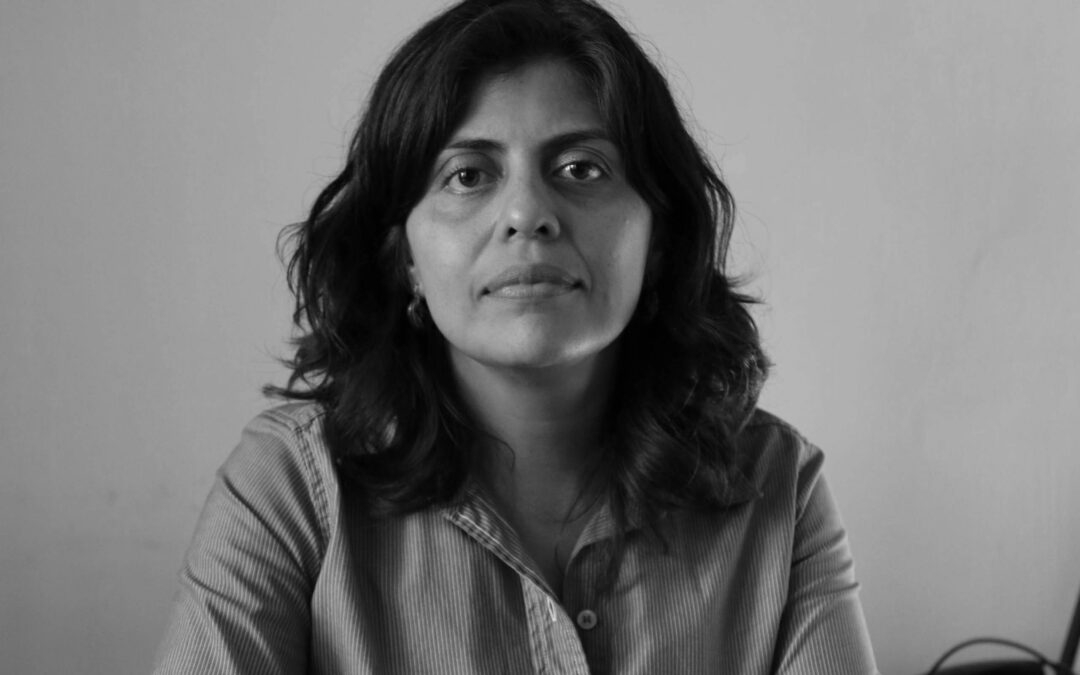
Alejandra Ancheita, founder and Executive Director of ProDESC, is one of the pioneers in seeking accountability for transnational companies in Mexican courts when local communities’ rights are not taken into account.
Alejandra Ancheita has worked with migrants, workers, and indigenous communities for over 15 years to protect their land and labour rights vis a vis transnational mining and energy companies.
These disputes have included violent attacks on those she is trying to protect.
In Mexico, there is a clear pattern of attacks, threats, criminalization, and murders of human rights defenders.
Alejandra Ancheita and ProDESC have been subjected to surveillance, a defamation campaign in the national media, and a break in at their offices.
“This recognition calls attention to the increasing violence being suffered by human rights defenders in Mexico, particularly women defenders,” she said. “I hope that it will provide better conditions and increased security not just for me, but for all human rights defenders in my country.”
“The ICJ is extremely pleased by the decision to pay tribute to the work of Alejandra Ancheita, not only because of her outstanding commitment and courage as an individual, but also because of the recognition that this award will provide to the area of human rights work that she has been dedicating herself to for many years,” said Olivier van Bogaert, ICJ Director of Media and Communications, and ICJ Representative on the MEA Jury.
The ICJ which also developed a longstanding work on economic, social and cultural rights, and on business and human rights, will devote the 2014 edition of its Geneva Forum for judges and lawyers to the role of courts in protecting economic, social and cultural rights.
The two other finalists, Cao Shunli (China) and Adilur Rahman Khan (Bangladesh), received Martin Ennals Prizes.
Cao Shunli, who died in in detention in March 14th after being denied medical attention for known health conditions had vigorously advocated for access to information, freedom of speech, and freedom of assembly.
She disappeared in September 2013 shortly before boarding a flight order to participate in the Human Rights Council.
Chinese authorities only acknowledged her detention months later.
A special foundation is planned in her honor.
Since the 1990’s, Adilur Rahman Khan worked on a wide range of human rights issues, such as illegal detention, enforced disappearances, and extra-judicial killings.
Personally he is facing criminal prosecution for documenting the extrajudicial deaths of 61 people during demonstrations against the government.
His organization, Odhikar, is one of the few independent voices left in Bangladesh.
It is facing closure as donor funds destined for Odhikar are being blocked by the Prime Minister’s Office.
The “Nobel Prize of Human Rights”, the Martin Ennals Award for Human Rights Defenders (MEA) is a unique collaboration among ten of the world’s leading human rights organizations to give protection to human rights defenders worldwide.
Strongly supported by the City of Geneva, the award is given to Human Rights Defenders who have shown deep commitment and face great personal risk. Its aim is to provide protection through international recognition.
The Jury is composed of the following NGOs: ICJ, Amnesty International, Human Rights Watch, Human Rights First, Int’l Federation for Human Rights, World Organisation Against Torture, Front Line Defenders, EWDE Germany, International Service for Human Rights, and HURIDOCS.
Contact:
Michael Khambatta, Director Martin Ennals Foundation, t: +41 79 474 8208, e: khambatta(a)martinennalsaward.org
Olivier van Bogaert, ICJ Director of Media and Communications, and ICJ Representative on the MEA Jury, t: +41 22 979 38 08, e: olivier.vanbogaert(a)icj.org
Multimedia gallery:
Livestreaming of the Martin Annals Award 2014 Ceremony
Alejandra Acheita film:
Cao Shunli film:
Adilur Rahman Kahn film:
Oct 6, 2014
An opinion piece by Vani Sathisan, ICJ International Legal Adviser in Myanmar
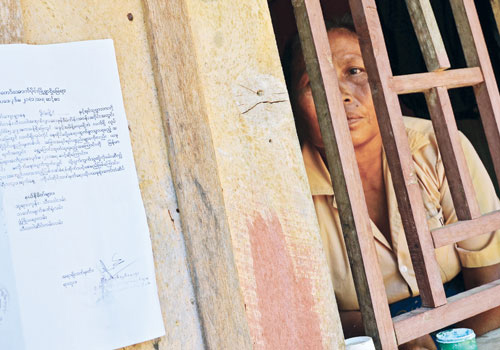
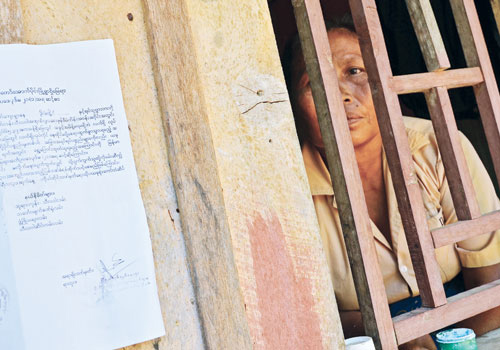
The village elder from Mutu, a small village near Dawei, in southern Myanmar, held out the 30 complaint letters residents had sent to Tanintharyi Region Chief Minister U Myat Ko.
The letters sought to highlight alleged human rights violations related to the development of the Dawei Special Economic Zone (SEZ) and requested that adequate compensation be paid to those affected.
In Mutu and neighbouring villages, farmers and fishermen lamented the displacement of communities, loss of livelihoods and culture, and forced relocations due to the development of the Dawei SEZ and related infrastructure.
Some told us they were being charged with trespassing on government land because they had refused to leave their homes after their land had been confiscated.
While the Dawei SEZ has been stalled for some time, Thai Prime Minister Prayut Chan-o-cha will visit Myanmar – his first official overseas trip – and is expected to hold talks aimed at reviving the project.
But the complaints emanating from Dawei are not isolated incidents.
Amid the euphoria of the investment gold rush, Myanmar faces an epidemic of land disputes exacerbated by the development of SEZs.
With reforms underway, the government has sought to shed its pariah image and promote SEZs that combine industrial estates and deep-sea ports in order to attract foreign investment, boost the job market and shift its economic dependence away from the dominant agricultural sector.
But without proper environmental and land laws, as well as an effective judiciary to enforce these laws and provide appropriate judicial remedies, these development projects risk being counterproductive for sustainable development and the protection of human rights in Myanmar.
For Myanmar to embark on a path of sustainable development that advances, rather than undermines, the rights of its people, it must create a legal framework consisting of primary laws and secondary regulations.
Two components are crucial in such a framework. First, it must ensure there are robust procedures to ensure justice and effective remedies for those harmed by development projects – including investors – by strengthening the ability of courts and administrative bodies to hear such cases.
Second, it must prevent violations by creating an obligation to undertake environmental and social impact assessments, particularly human rights impact assessments.
There are some indications that the judiciary is beginning to act more independently.
The use of litigation against the government for human rights violations – unheard of in Myanmar under military rule – seems to be gaining some traction.
The ICJ met villagers suing state-owned Mining Enterprise 2 – which operates the Heinda mining project, one of the biggest in Myanmar, with a Thai firm – for damage to their homes and crops.
The lawsuit has been accepted for trial by the Dawei District Court.
This is believed to be the first time that a lower-level court in Myanmar has accepted a case of this nature against a government entity.
Up in northern Shan State, a coffee plantation company recently announced that it plans to take legal action against the Ministry of Agriculture and Irrigation, which has allegedly failed to take adequate steps to resolve a land dispute with local farmers.
These cases are a test of the effectiveness and independence of Myanmar’s judiciary, and its capacity to fairly administer justice, as it seeks to emerge from years of repression and submission to military rule. It remains unclear whether they will be effective.
“Villagers are now turning to the courts to seek justice but we may be fighting a losing battle,” U Thant Zin, a senior coordinator of the Dawei Development Association, told us during a visit to the site of the proposed SEZ.
But such problems can be prevented in the first place if robust environmental and social impact assessments are contemplated in the investment process.
Impact assessments are important before a project is approved in order to identify potential impacts, assess alternatives, and avoid or mitigate serious human rights and environmental violations.
Typically, they would lead to the formulation of environmental and social management plans to be applied throughout the duration of a project to identify specific risks and deal with them effectively.
In Myanmar, there is still ambiguity about the roles of environmental impact assessments and environmental management plans.
The Environmental Conservation Law enacted in 2012 requires significant refinements.
Even though impact assessments are required for all major development projects under the new Foreign Investment Law, the precise environmental and social standards expected for investors have yet to be articulated.
The procedures for impact assessments remain in draft form.
Domestic environmental legislation must be further improved and finalized to protect the environment and human rights.
Meaningful steps to mitigate risks relating to corruption and unjust land acquisitions are urgently needed to protect Myanmar’s vulnerable communities and ensure environmentally benign outcomes from investment deals.
These include environmental and human rights impact assessments to address forced evictions and resettlement, and conducting public consultations with potentially affected communities.
Investment permits should be approved only after such strategic assessments are undertaken and the results are publicly and transparently disclosed.
Regional and global stakeholders must also support this rights-compliant investment culture, as part of their international duty to promote the realization of human rights through international cooperation.
In the absence of a robust system of impact assessments, Myanmar civil society has taken some encouraging steps to enforce the rights of people affected by development projects.
Environmental groups have challenged the Letpadaung copper mine in Monywa for the failure of developers to undertake an environmental impact assessment.
Displaced villagers from Thilawa recently travelled to Tokyo to demand adequate compensation and due process from the Japanese International Cooperation Agency, which is supporting the development of the SEZ.
Dawei residents have also met Niran Pitakwatchara, the managing director of the National Human Rights Commission of Thailand, and a public hearing is expected later this month in Bangkok.
The approval of investments without requisite legal safeguards and enforcement mechanisms clearly has undesirable effects for the country.
On the other hand, well-regulated investment may be harnessed to help realize the rights of the people of Myanmar.
The Myanmar government must do more to fulfill its responsibility to protect human rights and the environment instead of derogating that duty to investors.
Photo credit: Aung Htay Hlaing/The Myanmar Times