Mar 26, 2014 | Advocacy, Non-legal submissions
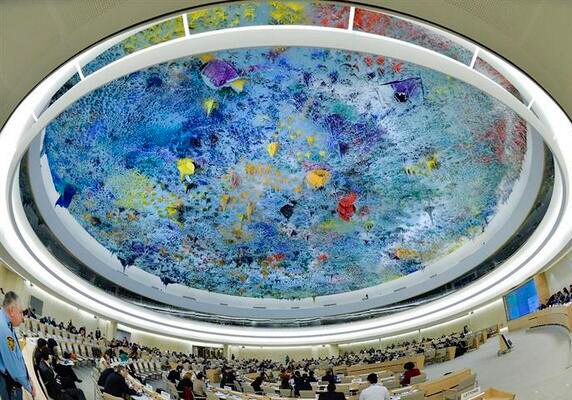
The ICJ emphasised the need for an international inquiry to monitor and investigate human rights violations in Sri Lanka, during discussion at the UN Human Rights Council.
The ICJ stated that an international investigation mechanism such as a Commission of Inquiry is needed in part because the Sri Lankan justice system today simply cannot be relied upon to function as an independent and impartial institution.
- The judicial appointment process is subject to political interference.
- Judges and lawyers are subjected to threats and intimidation.
- Security of tenure for the judiciary is not protected by an independent, impartial and fair procedure for the removal or discipline of judges.
The UN High Commissioner for Human Rights has repeatedly expressed concern about “the continuing high levels of harassment and intimidation meted out to human rights defenders, lawyers and journalists”. Further incidents against human rights defenders occurred during the Human Rights Council session itself.
The ICJ urged the Council to establish an international independent and impartial investigation mechanism to give a glimmer of hope to victims and families, that their rights under international law to truth, justice and reparation will ultimately be upheld.
A number of delegations have jointly presented a draft resolution that would establish an international investigation with the backing of the Human Rights Council. A vote on the resolution is expected later in the week.
The full statement can be downloaded in PDF: Advocacy-UN-HRC25-SriLanka-OralStatement-26032014-rev
Video of the discussion of the report, including the ICJ oral statement, is available in the UN webcast archive.
See also:
Briefing note on independence of judges and lawyers in Sri Lanka
Mar 21, 2014 | Advocacy, Non-legal submissions
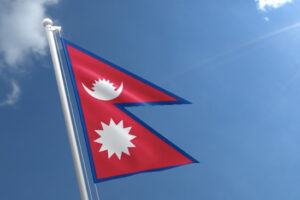
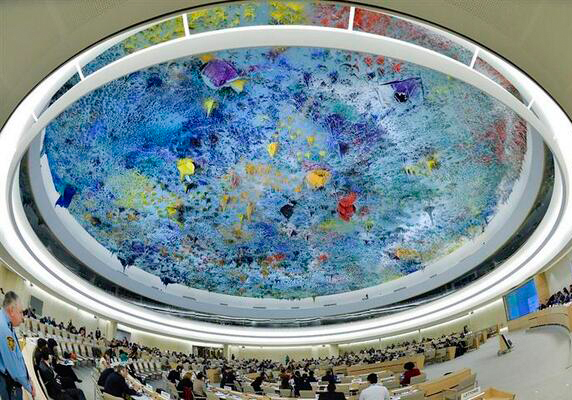
The ICJ spoke at the UN Human Rights Council on the lack of progress in Nepal on ending impunity.The oral statement was delivered during the general debate on the Universal Periodic Review (UPR).
Nepal has failed to take concrete action to implement key UPR recommendations, including those crucial to implementing the right to an effective remedy and reparation, creating effective mechanisms for transitional justice and ending impunity.
The Government continues to try to force through a Truth and Reconciliation Commission that is not human rights complicant and has already been ruled invalid by the Supreme Court of Nepal.
Nepal has also failed to take meaningful measures to investigate human rights violations and abuses that arose during the armed conflict.
The ICJ called on Nepal to take specific measures towards ending impunity.
The full written statement can be downloaded, in PDF format: Advocacy-UN-HRC25-Nepal-OralStatement-2103214
The representative of Nepal exercised the right of reply in response to ICJ’s oral statement.
Video of the oral statement, and Nepal’s statement in reply, via the official UN webcast.

Mar 20, 2014 | News
Thailand’s caretaker government must remove emergency measures throughout the country following the lifting of the Emergency Decree in the capital Bangkok and its surrounding provinces this week, the ICJ said today.
On 18 March, the caretaker government voted to lift the Emergency Decree (effective 19 March) that had been in place in Bangkok and surrounding provinces since 21 January 2014 in response to protests led by the People’s Democratic Reform Committee (PDRC).
At least 20 people have died in protest-related violence and hundreds have been injured.
The Emergency Decree was replaced by the Internal Security Act (ISA), which also does not fully comply with international standards, but provides better remedies for victims of human rights violations than the Decree.
“The imposition of the Emergency Decree creates an environment conducive to abuse of power and human rights violations such as arbitrary arrest and detention, torture and enforced disappearance,” said Sam Zarifi, ICJ’s Regional Director for Asia and the Pacific. “Lifting the Emergency Decree in Bangkok is a positive step, but it is crucial that the authorities remove the Emergency Decree and other measures of emergency rule, including martial law, that are in force in all or parts of at least 30 of Thailand’s 77 provinces.”
These measures should be replaced by law and action that are consistent with international human rights standards, Zarifi said, adding that martial law should not be used as a political tool.
The caretaker government must respond to demonstrations, unrest and emergencies in a manner which complies with its obligations under the International Covenant on Civil and Political Rights (ICCPR), and other international standards, including the Code of Conduct for Law Enforcement Officials, adopted by the UN General Assembly in 1979, and the Basic Principles on the Use of Force and Firearms by Law Enforcement Officials, adopted by the UN Congress on the Prevention of Crime and Treatment of Offenders in 1990.
These standards set out the circumstances in which resort to necessary and proportional force may be lawfully exercised. Article 8 of the Basic Principles on the Use of Force and Firearms states that “exceptional circumstances such as internal political instability or any other public emergency may not be invoked to justify any departure from these basic principles.”
In order to safeguard the rule of law and enhance the protection of human rights in Thailand, the ICJ calls on the caretaker government to repeal the Emergency Decree and other emergency measures including martial law, and to ensure accountability for violent acts through the thorough and effective investigation of criminal acts and prosecution of those reasonably suspected of committing them, in the course of fair, human rights-compliant criminal proceedings.
CONTACT: Sam Zarifi, ICJ Asia-Pacific Regional Director, (Bangkok), t:+66 807819002, e-mail: sam.zarifi(a)icj.org
Craig Knowles, ICJ Media & Communications, (Bangkok), t:+66 819077653, e-mail: craig.knowles(a)icj.org
For further reading on ICJ’s work on emergency laws in Thailand see: Thailand’s Internal Security Act, Risking the Rule of Law? (2010) https://www.icj.org/thailands-internal-security-act-risking-the-rule-of-law/ Implementation of Thailand’s Emergency Decree (2007) https://www.icj.org/thailand-implementation-of-thailand%C2%B4s-emergency-decree/ More Power, Less Accountability: Thailand’s New Emergency Decree (2005) https://www.icj.org/more-power-less-accountability/
Mar 18, 2014 | News
The arbitrary arrest and detention of prominent human rights defenders is an attempt to silence criticism and divert the spotlight from ongoing abuses, leading global and Asian human rights monitors said today in a joint statement.
The statement was issued by Amnesty International, Forum Asia, Human Rights Watch, the International Crisis Group, and the International Commission of Jurists.
Ruki Fernando of the Colombo-based INFORM and Father Praveen Mahesan, a Catholic priest, were arrested in Kilinochchi on March 16, and are believed to be detained without formal charges under Sri Lanka’s notoriously draconian Prevention of Terrorism Act (PTA).
“The Sri Lankan authorities need to release Fernando and Father Praveen, and end the ongoing state harassment of human rights defenders,” said David Griffiths, Amnesty International’s deputy director for Asia Pacific. “How can the international community take Sri Lanka’s claims to respect rights seriously when rights defenders continue to face intimidation and criminal charges for demanding accountability and human rights protection?”
The police Terrorism Investigation Division (TID) detained and questioned Ruki Fernando and Father Praveen after they sought to ensure the welfare of 13-year-old Balendran Vithushaini, who had been ordered into probationary care following the arrest of her mother, Balendran Jeyakumari, on March 13. Both mother and daughter are active opponents of enforced disappearances in Sri Lanka and have been prominently featured in international media coverage of demonstrations by families of the disappeared, most recently in Jaffna in November 2013 during a visit by British Prime Minister David Cameron.
Fernando and Father Praveen were questioned separately in two different buildings for more than three hours by several TID officers. Lawyers acting on their behalf were given contradictory information about the arrests and the reasons for their detention. The most recent information is that Fernando and Father Praveen have been taken to police Terrorism Investigation Division headquarters in Colombo, and their lawyers are still seeking access to them.
Fernando and Father Praveen have not been charged to date, but according to Sri Lankan Police spokesperson Senior Superintendent Ajith Rohana, they will be charged with “attempting to create instability among communities” and “allegedly promoting separatism” under the Prevention of Terrorism Act.
The PTA has been widely criticized by Sri Lankan civil society, international monitoring organizations, and United Nations bodies. In its report, Authority without Accountability: The Crisis of Impunity in Sri Lanka, the International Commission of Jurists documents how provisions of the PTA have resulted in arbitrary detention, contravened suspects’ right to a fair trial and due process, and facilitated torture and other ill-treatment and enforced disappearances
The human rights groups said that the arrests are particularly disturbing since a resolution on Sri Lanka’s failure to address accountability is under discussion and will be voted on soon at the ongoing Human Rights Council (UNHRC) sessions in Geneva. The international community has long called for Sri Lanka to take meaningful steps to end its culture of impunity.
“This ongoing campaign of reprisals against those speaking out against human rights violations shows the extent of the government’s impunity,” said Sam Zarifi, Asia director at the International Commission of Jurists. “The international community, through its voting at the Human Rights Council, must judge Sri Lanka not by its promises, but by its actions.”
In spite of two prior resolutions by the UNHRC in 2012 and 2013, Sri Lanka has taken no measurable steps towards ensuring justice for the victims of its civil war, and has instead launched an aggressive campaign against those who advocate for accountability. Human rights defenders, activists, journalists, and civil society members who are critical of the government have regularly been threatened and harassed. Those who have an international profile, such as Fernando, face particular government hostility.
“Sri Lankan authorities systematically clamp down on those who seek to reach out to the international community, especially around significant events such as the Human Rights Council sessions or the Commonwealth Heads of Government Meeting,” said Evelyn Balais-Serrano, the executive director of Forum-Asia. “Instead of protecting human rights defenders, the latest arrests show the Sri Lankan government is stepping up its aggressive stance towards those seeking justice and answers.”
The arrests also call into question the Sri Lankan government’s stated commitment to improving respect for human rights since the end of the armed conflict with the Liberation Tigers of Tamil Eelam in 2009, the groups said.
“Arresting peaceful activists known for their work with victims of rights violations from all ethnic communities is not a way to build trust and restore relationships damaged by the war,” said Jonathan Prentice, the International Crisis Group’s chief policy officer. “If sustainable peace is to be more than an illusion, the rights of Sri Lanka’s victims and human rights defenders to speak freely and safely must be protected.”
The organizations stressed that Fernando and Father Praveen should be given full rights while they remain in detention. Under international law, including the International Covenant on Civil and Political Rights, to which Sri Lanka is a state party, people deprived of their liberty must be promptly informed of the reasons for their detention, be given prompt and regular access to lawyers, and be promptly brought before a judge or judicial officer.
“Human Rights Council members should demand the immediate release of Fernando and Father Praveen and be clear that this will not deter them from adopting a necessary resolution on Sri Lanka,” said Brad Adams, Asia director at Human Rights Watch. “The arrest of these human rights defenders shows just how important it is for the international community to stand up for human rights in Sri Lanka.”
Signed by:
- Amnesty International
- FORUM-ASIA
- International Commission of Jurists
- International Crisis Group
- Human Rights Watch
For more information, please contact:
In London, for Amnesty International
In Bangkok, for International Commission of Jurists, Sam Zarifi: +66-857-200-723; orsam.zarifi@icj.org
In Bangkok, for International Commission of Jurists, Sheila Varadan: +66-857-200-723; or sheila.varadan@icj.org