Mar 17, 2014 | Advocacy, Non-legal submissions
The ICJ made an oral statement at the UN Human Rights Council, on the need for fundamental reform of the legal system in Myanmar.
The oral statement was delivered during an interactive dialogue with the Special Rapporteur on human rights in Myanmar.
While noting some progress on legal reform to establish the rule of law during Myanmar’s economic and political transition, the ICJ noted that reforms are fragile and legal obstacles continue to block improvements to the extremely poor state of the rule of law and respect for human rights.
The ICJ considers that Myanmar’s judiciary is not yet independent. State authorities continue to exert improper influence on politically sensitive cases.
The ICJ was therefore deeply disappointed to hear the Representative of Myanmar state during the Council session that the Government rejected as “intrusive and prescriptive, infringing upon the national sovereignty” the Special Rapporteur’s basic recommendation that “the Government … Initiate fundamental reforms to establish a judiciary that is impartial and independent, including from the direct control of the Government and the military”.
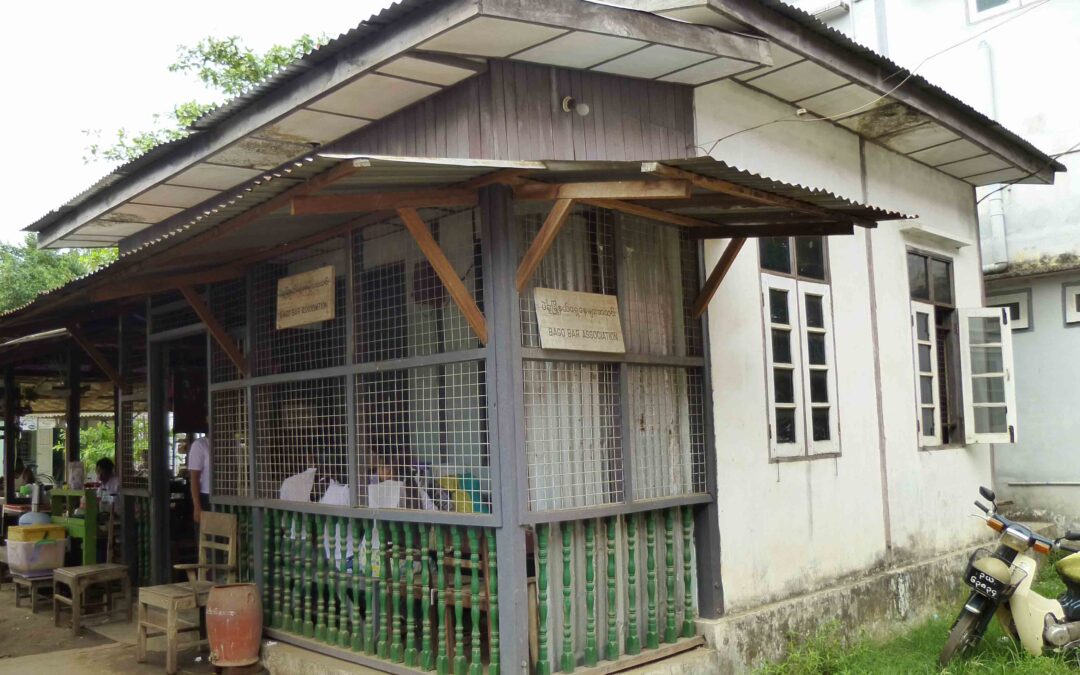
Systemic problems affect the independence of lawyers, including the poor state of legal education and undue restrictions on licensing. Lawyers in Myanmar lack an independent Bar Council.
The ICJ stressed the need for Myanmar to ratify and implement all core human rights treaties, to cooperate with international human rights mechanisms, and to agree to the establishment of an OHCHR office in the country. At the same time, ICJ emphasised the continued need for a robust mandate for the UN Special Rapporteur on Myanmar.
The full statement may be downloaded in PDF: Advocacy-UN-HRC25-Myanmar-OralStatement-032014
The report of the Special Rapporteur is available here in Word format: SR Myanmar Report March 2014
For further information, please see the recent ICJ report Right to Counsel: The Independence of Lawyers in Myanmar (click to download PDF).
Mar 17, 2014 | Advocacy, Non-legal submissions
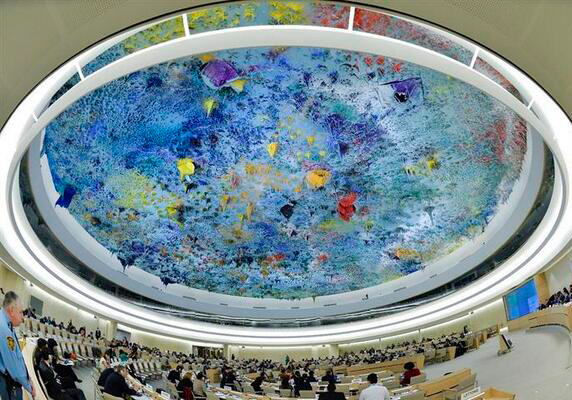
The ICJ made an oral statement at the UN Human Rights Council responding to the report of the Commission of Inquiry on the Democratic People’s Republic of Korea.
The statement called on the Council to take action on the findings and commending the Commission of Inquiry for overcoming the challenges to its work
The ICJ underlined the need, in view of the findings, for the Council to act with a view to ensuring accountability of perpetrators, including through means of international criminal responsibility.
The statement commended the innovative methodology adopted by the Commission of Inquiry and emphasised the need to protect victims and witnesses.
The full statement may be downloaded in PDF: Advocacy-UN-HRC25-DPRK-OralStatement-032014
Mar 12, 2014 | News
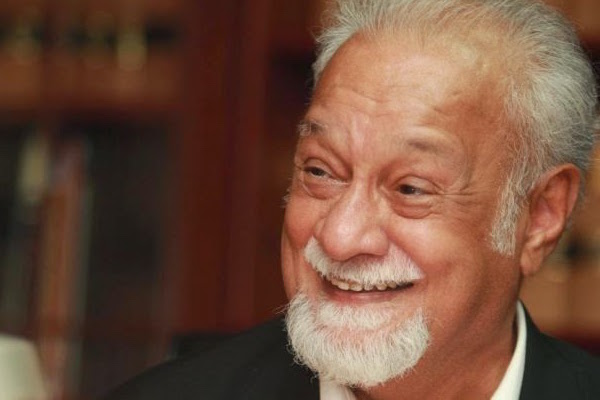
The ICJ condemned the High Court decision sentencing prominent Malaysian lawyer and chairman of the opposition Democratic Action Party Karpal Singh with a criminal sanction. He was found guilty of sedition on 21 February 2014.
The sanction amounts to RM 4,000 fine (approximately US$1,220).
The High Court’s decision was based on a statement made by Karpal Singh at a press conference on 6 February 2009 that Sultan Azlan Shah’s decision to remove the Perak’s state Chief Minister from office in 2009 could be challenged in a court of law.
“The Malaysian government is brazenly utilizing a draconian and outdated sedition law to restrict freedom of expression in the country by lawyers and public figures,” said Emerlynne Gil, ICJ’s International Legal Adviser on Southeast Asia.
The Malaysian government on 21 July 2012 announced that it planned to repeal the colonial-era 1948 Sedition Act, but has been slow to act on its announcement.
“Public discussion, including debates on the interpretation of laws, are an integral part of the nature of the legal process and a crucial step in the strengthening of a country’s democracy and rule of law,” said Gil. “A lawyer’s right to freely and independently engage and express their views on the law fulfills an important aspect of their professional role.”
In June 2010, the High Court initially ruled that the prosecution had failed to prove a prima facie case and acquitted Karpal Singh. The prosecution, however, later appealed, and the Court of Appeal reversed the High Court’s decision and ordered a retrial.
Pursuant to article 48(e) of the Federal Constitution, Karpal Singh now risks losing his Parliamentary seat unless the High Court’s decision is overturned during appeal.
Karpal Singh was the lead counsel for opposition leader Anwar Ibrahim during his Sodomy II appeal from 6 – 7 March 2014, which saw the Court of Appeal overturn his acquittal and sentenced him to five years in prison.
Karpal Singh is expected to appeal both the conviction and the sentence to the Court of Appeal.
Contact:
Emerlynne Gil, ICJ International Legal Adviser for Southeast Asia, t +66 2 619 8477; email: emerlynne.gil(a)icj.org
Craig Knowles, ICJ Media Consultant, t +66 81 9077653; email:craig.knowles(a)icj.org
Mar 10, 2014 | Agendas, Events
This side event to the 25th Human Rights Council session will take place on Wednesday, 12 March 2014, 16.00 – 18.00 pm, in Geneva, Palais des Nations, Room XXII.
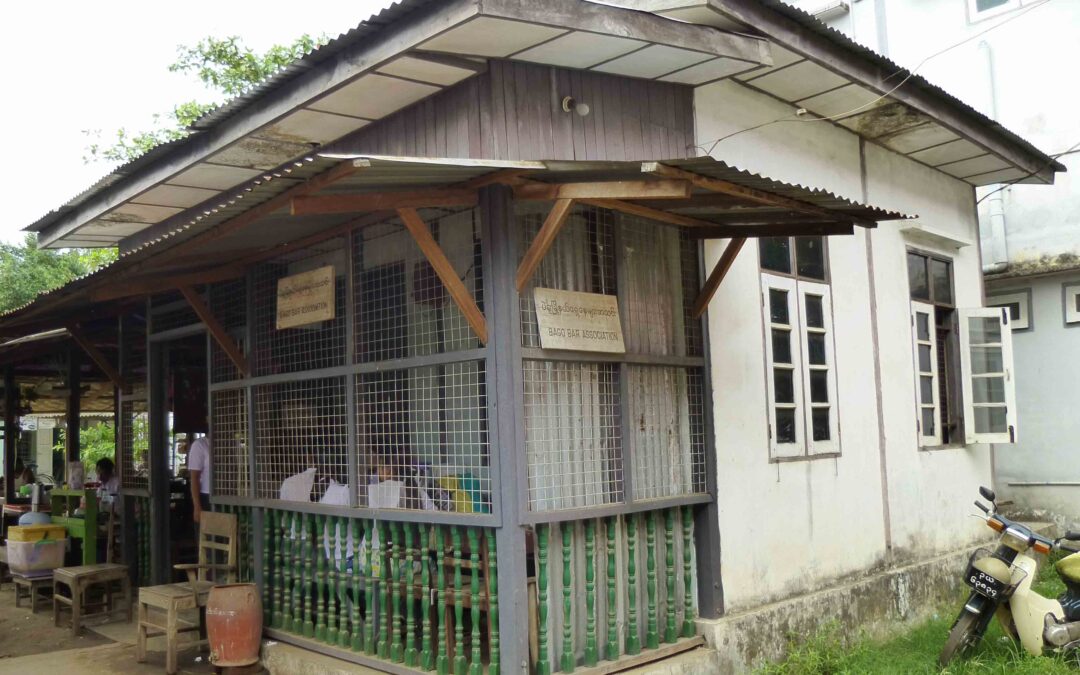
The members of this panel are in a unique position to highlight on-going challenges to the rule of law in Myanmar and their impact on the enjoyment of human rights.
They will provide personal insight into the important international presence for human rights monitoring, practical challenges facing lawyers concerning the rule of law, and link these issues to sustainable economic development on the ground in Myanmar today.
This panel argues that it is crucial to maintain a robust engagement with the UN human rights mechanisms in order to support and facilitate the reform process in Myanmar and improve the country’s human rights situation.
Speakers:
Tomás Ojea Quintana, UN Special Rapporteur on the situation of human rights in Myanmar
Kyaw Min San, Myanmar lawyer, Pyoe Pin and Justice For All
Daniel Aguirre, International Commission of Jurists, Myanmar
Chair/moderator:
Carlos Lopez, International Commission of Jurists
The presentations by panellists will be followed by an open interaction with the audience. Copies of the recent ICJ report Right to Counsel: The Independence of Lawyers in Myanmar will be available.
Myanmar – HRC25 Side event – March 2014
Mar 8, 2014 | News
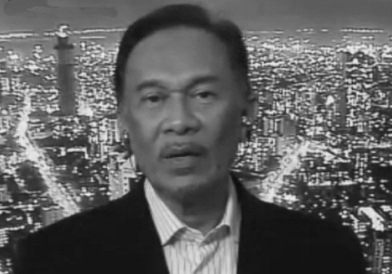
The ICJ today condemned as a miscarriage of justice, Malaysian opposition leader Anwar Ibrahim’s conviction on sodomy charges.
The ICJ said the overturning of his 2012 High Court acquittal — following an appeal by the Malaysian government — by a Court of Appeal panel contravenes international human rights standards and the rule law.
“The ICJ condemns the use of the colonial-era Article 377B of the Malaysian Penal Code, which prohibits consensual same-sex sexual conduct, in conflict with international standards regarding respect for the right to privacy,” said Sam Zarifi, ICJ’s Regional Director for Asia and the Pacific.
“This article is seldom used in Malaysia, but this is the second time it has been used to convict Anwar, and both times its use seemed clearly motivated to hobble his ability to challenge the government as a politician.”
The sodomy charges against Anwar, which date back to 2008, were dismissed by the High Court on 9 January 2012, but the Court of Appeal today overturned that acquittal and instead sentenced Anwar to five years’ imprisonment. The Court of Appeal ruling took less than two hours.
The ICJ has been observing the proceedings in what has been called Anwar’s ‘Sodomy 2’ trial. ICJ Commissioner Justice Elizabeth Evatt AC, from the Australian High Court and a former member of the United Nations Human Rights Committee, was at the Court of Appeal today on behalf of the ICJ.
“This decision certainly casts doubts on the independence and impartiality of the Malaysian judiciary and tarnishes the reputation of the country’s legal system,” said Zarifi.
The judgement means Anwar will not be able to run for election in a local state seat later this month.
After sentencing, Anwar’s lawyers were successful in arguing for a stay in execution and bail, pending appeal.
CONTACT
Sam Zarifi, ICJ Asia-Pacific Regional Director, (Bangkok), t:+66 807819002, e-mail: sam.zarifi(a)icj.org
Craig Knowles, ICJ Media & Communications, (Bangkok), t:+66 819077653, e-mail: craig.knowles(a)icj.org